# The Road That Wasn't on Any Map
When Dad hitches up the family’s **Coachman Pastiche caravan** to their **2025 Toyota RAV4**, it is supposed to be just another New Zealand holiday. But somewhere between small towns, strange bush tracks, and places that should not exist on any map, the road begins to change.
**Ivy**, fierce, red-haired, and halfway into her goth era, is convinced something weird is following them. **Amber**, creative, curious, and always ready to dive into a mystery, starts noticing patterns no one else can see. Little **Oakley**, rocket-mad and full of fearless questions, may be the only one brave enough to say what everyone else is thinking: the world out there is not normal.
From eerie campgrounds and hidden coastal roads to forgotten attractions, magical creatures, and secrets buried deep beneath the land, every stop on the journey pulls the family closer to a mystery bigger than any one adventure. And back home in **Woodend**, with **Auntie Erin** and the cat **Meow Meow** holding down the fort, clues are beginning to surface there too.
Funny, spooky, strange, and full of heart, **The Road That Wasn’t on Any Map** is the first book in a magical family adventure series about caravans, secrets, and the wild places waiting just beyond the ordinary.
# The Family
[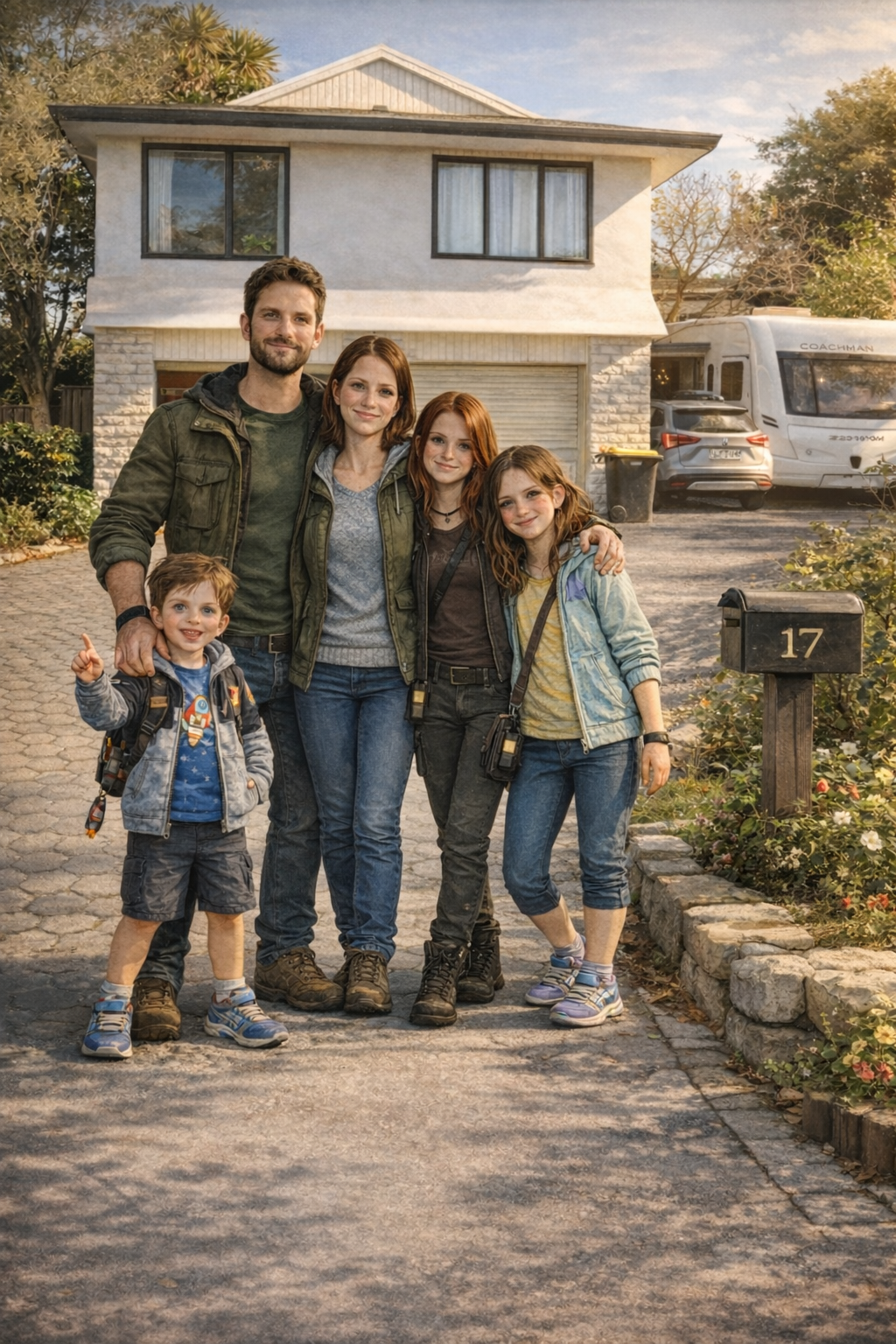](https://bookstack.thecartwrights.nz/uploads/images/gallery/2026-04/UiKimage.png)
# Chapter 1 - Leaving

By eight-thirty in the morning, the house in Woodend looked less like a home and more like a very small country trying to evacuate.
The front hall was full of bags. The kitchen bench was full of snacks. The dining table was full of things nobody could agree on. Rain jackets. Chargers. A torch with no batteries. A packet of marshmallows that had already somehow been opened. One gumboot. Nobody knew where the other gumboot was, which felt about right.
Outside, the silver RAV4 sat in the driveway with the Coachman Pastiche caravan hitched behind it, both of them damp with the kind of South Island morning mist that made everything look as if it had not quite woken up yet.
[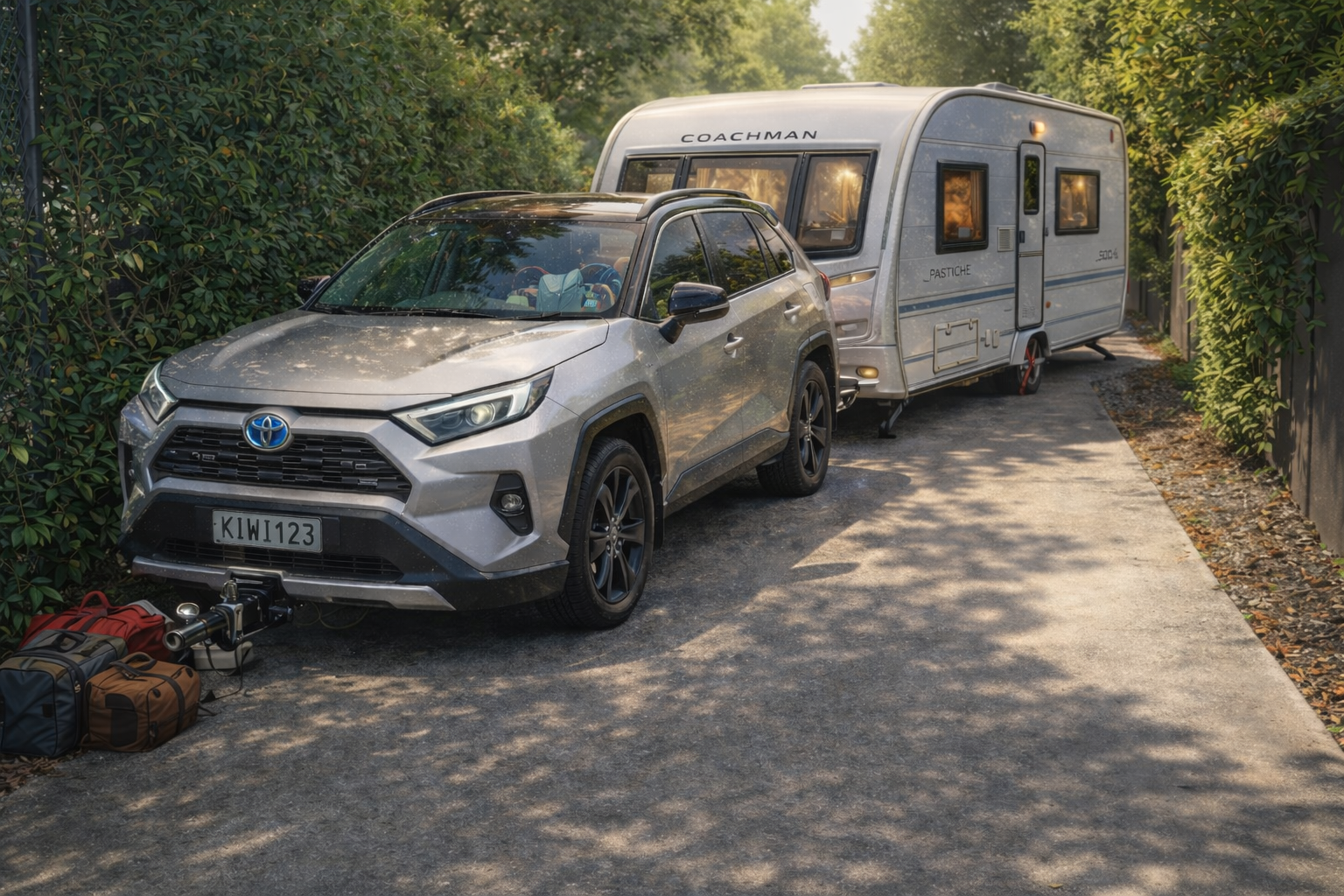](https://bookstack.thecartwrights.nz/uploads/images/gallery/2026-04/dNKimage.png)
Inside, everyone else had.
“Who packed six books and no toothpaste?” Mum called from the kitchen.
“I packed toothpaste,” Amber said, offended.
“You packed **your** toothpaste,” Ivy said, dragging a duffel bag across the floor with both hands. “That glitter one that tastes like bubblegum and regret.”
“It does not taste like regret.”
“It tastes like a unicorn died in a lolly aisle.”
“It tastes like berries.”
Oakley shot through the hallway in one sock and a NASA hoodie, holding a plastic rocket above his head like it was escaping re-entry.
“T-minus nine minutes!” he shouted.
“We are not launching in nine minutes,” Dad said from outside.
“We **have** to,” Oakley yelled back. “The mission window is closing!”
Dad’s head appeared through the open front door. His hair was already damp. He had a ratchet strap over one shoulder and the expression of a man who had entered battle against luggage and was beginning to understand the enemy.
“The mission window,” he said, “can wait until somebody tells me why there are three pillows in the fridge.”
There was a beat.
Amber blinked. “To keep them cold?”
Mum closed her eyes for one second. Not dramatically. More in the way people do when their soul steps outside for fresh air.
At the bottom of the stairs, Meow Meow sat like a small furry landlord, tail wrapped around her paws, watching the entire disaster with contempt.
From the downstairs door, Auntie Erin rolled out into view with a travel mug in one hand and a permanent expression of highly selective patience.
“I’d like the record to show,” she said, “that I am not surprised by any part of this.”
“You never are,” Mum said.
“That is because I plan for reality, Belinda, instead of whatever this is.”
Dad came back inside, boots squeaking faintly on the floorboards. “This,” he said, “is a family holiday.”
Erin looked past him at the teetering bags, the open pantry, Oakley climbing onto a box marked GAMES, and Ivy trying to zip a bag so stuffed it looked medically unwell.
“No,” Erin said. “This is a hostage situation with snacks.”
That got a laugh out of Mum, which was probably why Erin said things like that. She had a way of throwing a dry little joke into the middle of chaos and making the whole room feel less likely to explode.
Ivy shoved the zipper one last time and won. Barely. She pushed her red hair out of her face and stood up, already too warm in her black hoodie. She had insisted on wearing it because the morning was cold and because it made her feel less like she was being dragged on a family holiday and more like she was choosing to attend one. Those were not the same thing.
She liked holidays. Usually. She liked beaches and camp kitchens and late-night card games and torchlight in caravans when rain hit the roof. She did not like being treated as free labour by every other person in the house simply because she was the oldest and apparently knew where things went.
“Ivy,” Mum said, “can you grab the blue bag from your room?”
“I already did.”
“The other blue bag.”
“There are four other blue bags.”
“The toiletry one.”
“That narrows it down to three.”
Dad picked up a packet of pegs from the bench and pointed it at her. “Attitude.”
“That’s rich coming from the man who tried to pack the wheel chocks in the cereal cupboard.”
Dad looked offended. “That happened once.”
“It happened this morning.”
Oakley was now halfway into the caravan, making spaceship noises.
“Do not touch anything in there,” Dad called.
“Copy that!” Oakley yelled, which in Oakley language meant the opposite.
Mum went to the fridge and started checking things off on her phone. Ivy saw the tiny crease between her eyebrows that meant she was thinking about twelve things at once and pretending she wasn’t stressed about any of them.
Amber came through carrying her sketchbook, a pencil case, a paperback fantasy novel with a cracked spine, and her VR headset case.
“No,” Mum said at once.
Amber stopped. “No to which one?”
“The headset.”
“But there might be rain.”
“There will be beaches.”
“There can be both.”
“There cannot be you tripping over a caravan step because you’re trying to fight digital zombies.”
“They’re not zombies. They’re corrupted moon knights.”
Dad put a hand over his face.
Ivy smirked. “That does sound more educational.”
Amber stuck her tongue out at her, then ruined the effect by hugging the headset case to her chest like a Victorian orphan.
From inside the caravan came a sharp metallic clink, then Oakley’s voice.
“I found treasure!”
Dad dropped his hand. “That sentence has never once led to anything good.”
He went out fast. Ivy followed, because treasure in Oakley’s hands usually became damage in everybody else’s lives.
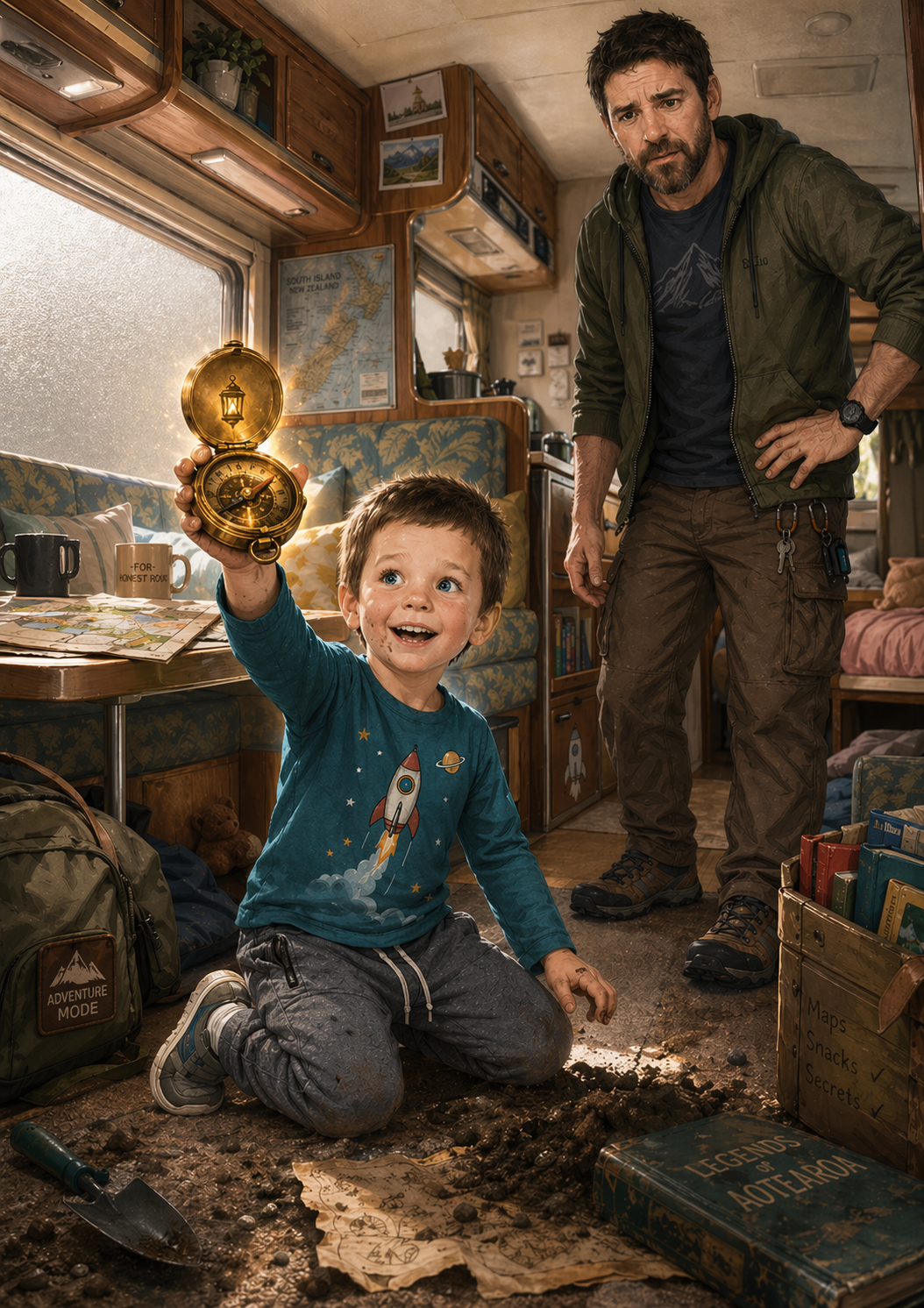
The caravan smelled faintly of cold upholstery, plastic containers, and the lemon wipes Mum always used before trips. Oakley was kneeling on the floor by the dinette seat with one arm buried in the storage compartment.
“Do not pull random things out of mystery holes,” Dad said.
Oakley looked over his shoulder, grinning. “But I already did.”
He yanked his arm free.
In his hand was a small brass compass.
Not new-brass shiny. Old-brass. Dull in places and rubbed bright in others, with a glass face cloudy around the edges. It was heavier-looking than a normal toy-shop compass and stranger somehow, though Ivy could not have said why at first. Then she saw the lid.
A tiny lantern had been engraved into the metal.
Not printed. Cut in, carefully, with lines so fine they looked like they belonged on something expensive or important or both.
[](https://bookstack.thecartwrights.nz/uploads/images/gallery/2026-04/vY8image.png)
“Huh,” Dad said.
“Treasure,” Oakley repeated, delighted with himself.
Amber leaned in at once. “That’s cool.”
“Let me see,” Ivy said.
Oakley held it above his head. “No. I’m the finder.”
“You’re four.”
“I’m four and a finder.”
Dad took the compass gently before Oakley could drop it into a cereal box or a toilet. He turned it over in his hand. On the back, beneath the lantern symbol, there were words scratched in tiny letters.
He frowned.
“What does it say?” Mum asked from the caravan door.
Dad angled it toward the light. “Bit worn out. Something about… honest?”
Ivy stepped closer. The letters were old-fashioned and cramped, but she could make them out.
**FOR THE HONEST ROAD**
“That’s not creepy at all,” she said.
“It’s not creepy,” Amber said immediately. “It’s interesting.”
“Those are cousins.”
Dad snapped the lid open. The needle spun hard, flicking once, twice, three times, then settled.
Not north.
Dad checked again, holding it flatter.
The needle pointed sideways. Towards the caravan wall.
“That’s useful,” he said dryly.
“Maybe it’s broken,” Mum said.
“Maybe it’s magic,” Amber said.
“Maybe,” Ivy said, “it came free with a haunted caravan.”
Auntie Erin rolled up to the caravan door and raised an eyebrow. “Now that,” she said, “would be a decent sales angle.”
Dad held the compass out to her. “Ever seen this before?”
Erin took it, and for the briefest moment, something in her face changed.
It was small. So small Ivy might have missed it if she had not been watching. Erin’s joking expression thinned, just for a second, into something sharper. Not fear exactly. Recognition, maybe. Or the shape of a memory she did not want.
Then it was gone.
“No,” Erin said, too casually. “But if your haunted caravan starts demanding sacrifices, use the cheap marshmallows first.”
Mum gave her a look. “Helpful.”
“I’m full of help.”
Erin ran her thumb over the lantern engraving once before handing the compass back. “Keep it,” she said. “Old things like that always turn up for a reason.”
Dad laughed. “That sounds ominous.”
“It was meant to.”
“I nailed it then.”
Ivy looked from Erin to the compass and back again. Auntie Erin was very good at sounding like she was joking when she wanted to avoid a question. That did not mean Ivy knew **why**. It only meant she noticed.
Dad slid the compass into the shallow tray under the dashboard. “Right,” he said. “No more mystery treasures. We are already late.”
Oakley puffed out his chest. “I found the mission artifact.”
“You found dirt and old receipts first,” Ivy said.
“That was the practice artifact.”
An hour later, against all logic and several laws of physics, they actually left.
Mum locked the front door. Erin waited under the porch overhang with Meow Meow tucked like a smug scarf in her lap. The cat’s ears were turned back, which probably meant she disapproved of holidays, weather, or people in general.
“Text when you get there,” Erin said.
“We always do,” Mum said.
“You text three hours after you get there.”
“We’re building suspense.”
Erin snorted. Then she looked at Dad. “Check the hitch again after the first stop.”
“I already did.”
“Good. Do it again.”
Dad gave her a salute. “Yes, boss.”
She leaned sideways and looked into the car at the kids. “No summoning ancient evils till after lunch.”
“That’s such a weirdly specific rule,” Ivy said.
“That’s how you know it’s a good one.”
Amber smiled. “Can you send me a photo of Meow Meow if she sits in my room?”
“No. I will send you a photo of Meow Meow judging your room.”
“Same thing.”
Oakley pressed both hands to the window. “Bye, Erin! Bye, Meow Meow! Defend the base!”
Meow Meow blinked once, as if to say she already did everything around here.
[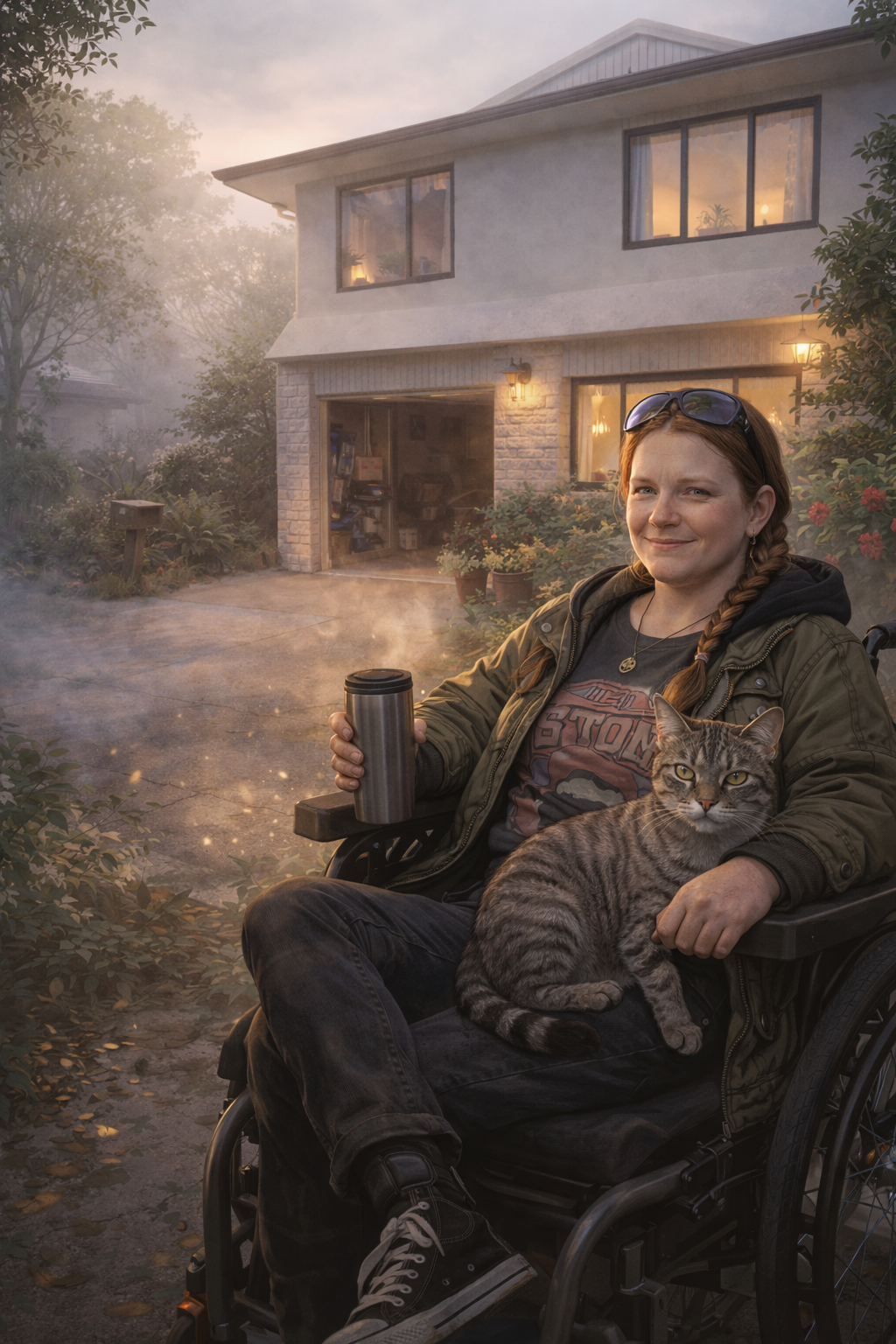](https://bookstack.thecartwrights.nz/uploads/images/gallery/2026-04/PLsimage.png)
Dad eased the RAV4 out of the driveway, caravan following with a soft tugging weight, and the house slipped behind them.
Ivy twisted in her seat for one last look.
Two-storey house. Wet hedges. The porch. Auntie Erin lifting her travel mug in farewell. Meow Meow like a small dark ornament in her lap.
Then they turned the corner, and home was gone.
For a while, the trip was normal in exactly the loud, cramped, slightly sticky way family trips were supposed to be.
Oakley demanded the launch playlist, which meant movie soundtracks and anything with drums. Amber demanded something less “boom boom apocalypse.” Ivy demanded headphones. Mum demanded that nobody open snacks that would instantly coat the car in orange powder. Dad demanded silence for six seconds while he got used to towing.
No one got exactly what they wanted, which was how family democracy worked.
The road unwound north. Houses thinned. Paddocks spread out wet and green under the low cloud. Sheep stood around in groups, chewing with the blank confidence of creatures who had never packed a caravan in their lives.
Amber drew in her sketchbook for a while, her hair bent over the page. Oakley did countdowns for bridges. Dad drove with both hands on the wheel and the serious face he used when trailers were attached to his existence. Mum passed back muesli bars and fruit and reminders to drink water.
Ivy watched the world slide by and tried not to think about the start of school next term, or whether her friends would post things without her while she was away, or whether she had packed the black nail polish she was pretty sure she had packed and now no longer trusted at all.
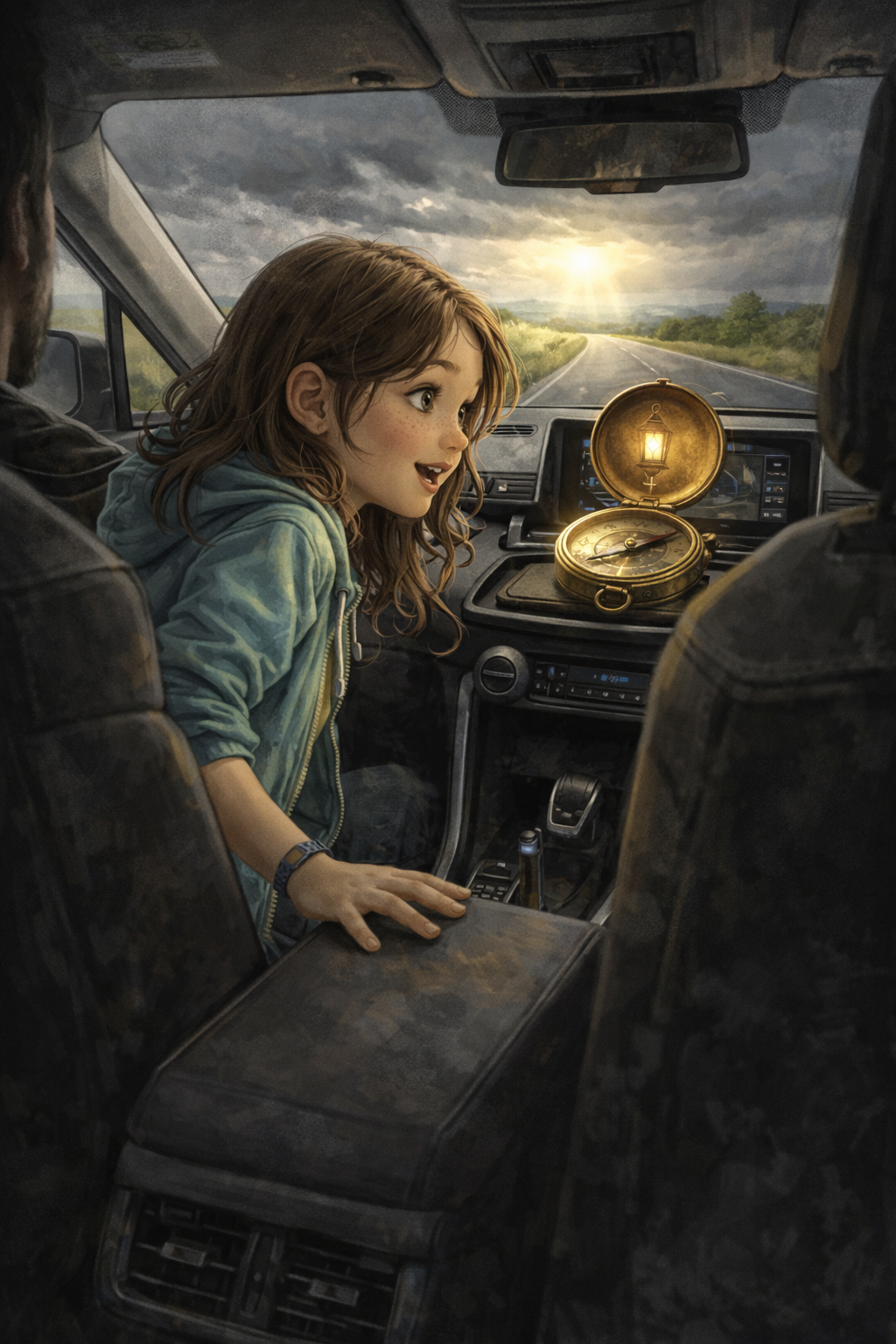
At Amberley, the compass in the dashboard tray rattled softly.
Ivy looked down.
The tray was flat. Nothing else was moving. But the compass lid had clicked open by itself.
“You see that?” she said.
Dad glanced over for half a second. “Probably the bumps.”
There had not been a bump.
The needle spun once, slow as if thinking, and settled pointing straight ahead.
“Still broken,” Dad said.
Mum turned slightly in her seat. “Maybe put it in the glovebox if it’s going to slide around.”
Amber craned forward. “No, leave it. I want to watch.”
[](https://bookstack.thecartwrights.nz/uploads/images/gallery/2026-04/OOiimage.png)
“It’s a compass,” Ivy said. “Not a livestream.”
Amber ignored her. “Maybe it only works in certain places.”
“Sure,” Ivy said. “Maybe it’s waiting for a side quest.”
Oakley gasped. “I want a side quest.”
“You are a side quest,” Ivy muttered.
They stopped late morning at a roadside pull-over with toilets, a picnic table, and a view over damp fields toward the sea. The wind smelled cold and salty. Dad crouched to check the hitch because Erin had told him to, which meant he was definitely going to pretend it was his own excellent idea.
Mum poured tea from a thermos into a cup and stood with her shoulders tucked up against the breeze.
Amber found a line of snails along the concrete edge and tried to name them.
Oakley held his rocket into the wind and shouted, “Crosswinds! Crosswinds!”
Ivy wandered a little way to the signboard near the fence. Local walks. Tide times. The usual stuff.
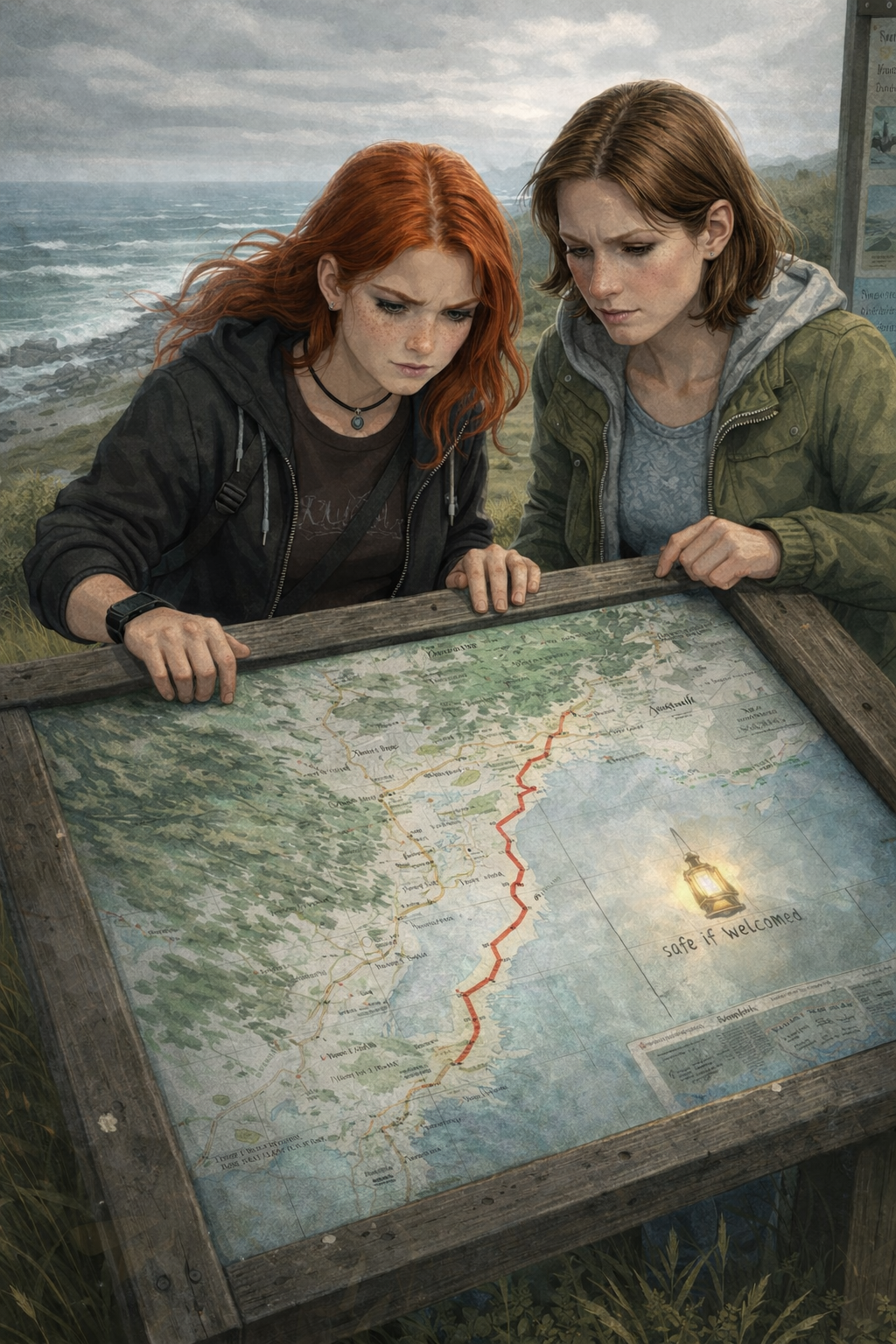
Except one of the laminated maps had been drawn on.
Not with vandal-scribble. With a thin red line, neat as if it belonged there.
The line began at a point marked YOU ARE HERE and slipped off the printed road entirely, curving through blank green space toward a tiny symbol Ivy did not recognise. It looked like a lantern.
She frowned. “Mum?”
Mum came over, cup warming her hands. “What is it?”
“There.” Ivy pointed.
Mum followed her finger. “A lantern?”
“So you can see it too.”
Mum gave her a look. “That’s a strong opening line.”
Ivy leaned closer. Beneath the little lantern, in writing so faint it might have been old or might have just been damp, were the words:
**safe if welcomed**
[](https://bookstack.thecartwrights.nz/uploads/images/gallery/2026-04/scaled-1680-/sPkimage.png)
She felt a little prickling rise on the back of her neck.
“That wasn’t there before,” Mum said quietly.
“You remember this exact random roadside map?”
“No. But I’d remember that.”
Dad straightened by the car. “Everything all right?”
Mum looked at the signboard, then at him. For a second Ivy thought she might tell him.
Instead she said, “Fine. Someone’s drawn on the map.”
Dad came over, squinted, and shrugged. “Kids with pens.”
Ivy almost said, **Then why does it look older than the sign?** But she didn’t. Dad was good at practical things. That also meant he was extremely talented at not seeing weird ones when the weird ones were inconvenient.
Mum touched the edge of the signboard. “Maybe.”
When they got back in the car, Ivy looked at her. Mum had that same tiny crease between her eyebrows again.
She had seen it too. Good. That was either reassuring or worse.
Past Waipara, the weather changed.
Not in a dramatic movie way. No thunder cracking the sky open. No green clouds of doom. It just shifted oddly, as if invisible curtains were being pulled along the road.
One minute the car windscreen was dotted with mist. The next, the road ahead was bright and dry for a stretch maybe fifty metres long, sunlight pouring over it while the paddocks on either side stayed under dull grey cloud. Then the brightness was gone again.
Dad noticed that one. “That’s weird.”
“Hot patch?” Amber offered.
“In winter?” Ivy said.
“It’s autumn,” Mum said automatically.
“It feels like winter.”
Oakley pressed his face to the window. “The road is doing camouflage.”
Nobody answered that, which probably meant everyone was thinking about it.
The radio fizzed.
Dad slapped the dash. “Not now.”
Static whispered in and out. Music returned. Then, beneath the music and too brief to catch properly, a voice murmured something that sounded almost like words.
Mum turned the volume down. “Did anyone hear that?”
“Hear what?” Dad said.
Ivy had. She was almost sure she had.
Not the words. Just the tone. Like someone speaking from another room.
Amber looked up from her drawing. “It said **keep left**.”
Oakley nodded solemnly. “The car knows the rules.”
Dad gave a short laugh that did not sound very amused. “Let’s all agree not to take directions from haunted electronics.”
They reached the holiday park later than planned, which was also normal. A queue of caravans had built up near the entrance, everybody inching in while gulls wheeled overhead and the wind blew wrappers along the fence. The sign out front read **Kōwhai Coast Holiday Park** in cheerful painted letters, with a little cartoon sun wearing sunglasses.
Ordinary. Entirely ordinary.
Good.
The office was warm and smelled like photocopy paper and instant coffee. A tired teenager handed Dad a laminated site map and a key to the amenities block even though the toilets clearly did not require keys. Mum paid. Oakley tried to take a free brochure about crayfish tours. Amber found a bowl of complimentary lollies and was told she could have one. She took exactly one and looked as if this was a personal attack.
Back outside, Dad unfolded the site map on the bonnet.
“We’re on sixteen,” he said. “Easy.”
It was not easy.
Backing a caravan into place in front of your own family was apparently a specialised sport designed to test marriages. Mum stood at the side doing hand signals. Dad looked in the mirrors and said, “I can’t see what that means.” Mum said, “It means left.” Dad said, “My left or your left?” Mum said, “The caravan’s left.” Dad said, “That is not a real answer.”
Ivy and Amber stayed out of the way on purpose, which was one of Ivy’s finer talents.
Oakley ran circles around the picnic table making engine noises until Ivy caught him by the hood and parked him on a camp chair with a packet of raisins.
Eventually the van was in. The stabilisers were down. The awning was half-out. The power was connected after Dad tried the wrong socket first. Dinner became pies heated in the caravan oven because everyone was too tired to attempt anything pretending to be healthy.
Rain tapped the roof while they ate.
It should have been cozy. In some ways it was. Amber tucked her feet up beneath her. Oakley fell asleep mid-sentence with pie flakes on his hoodie. Dad looked exhausted in the way only dads at the end of towing days could look. Mum laughed quietly when Amber accidentally got gravy on her own nose.
But Ivy could not stop thinking about the red line on the roadside map. Or the bright patch of road. Or the compass, which Dad had set on the little shelf by the window and forgotten.
Its lid was open again.
She stared at it while Mum brushed Oakley’s hair back from his forehead.
The needle was moving.
Not spinning wildly. Turning slowly, like a hand deciding which door to knock on.
It pointed through the caravan wall.
Toward the empty grass on the far side of their site.
“I’m just going to the bathroom,” Ivy said.
Mum nodded. “Take your torch.”
“I don’t need—”
“Take your torch.”
Ivy took her torch.
Outside, the rain had thinned to mist. The holiday park was all little sounds and glows — distant taps clinking in the amenities block, a TV murmuring in someone else’s van, wet gravel underfoot, the warm yellow squares of caravan windows. The air smelled like damp grass and sea salt and somebody’s sausages from earlier.
She crossed past the picnic table and stood at the edge of their site.
Beyond it was a narrow stretch of grass, then another row of caravans.
No.
Not another row.
Just one.
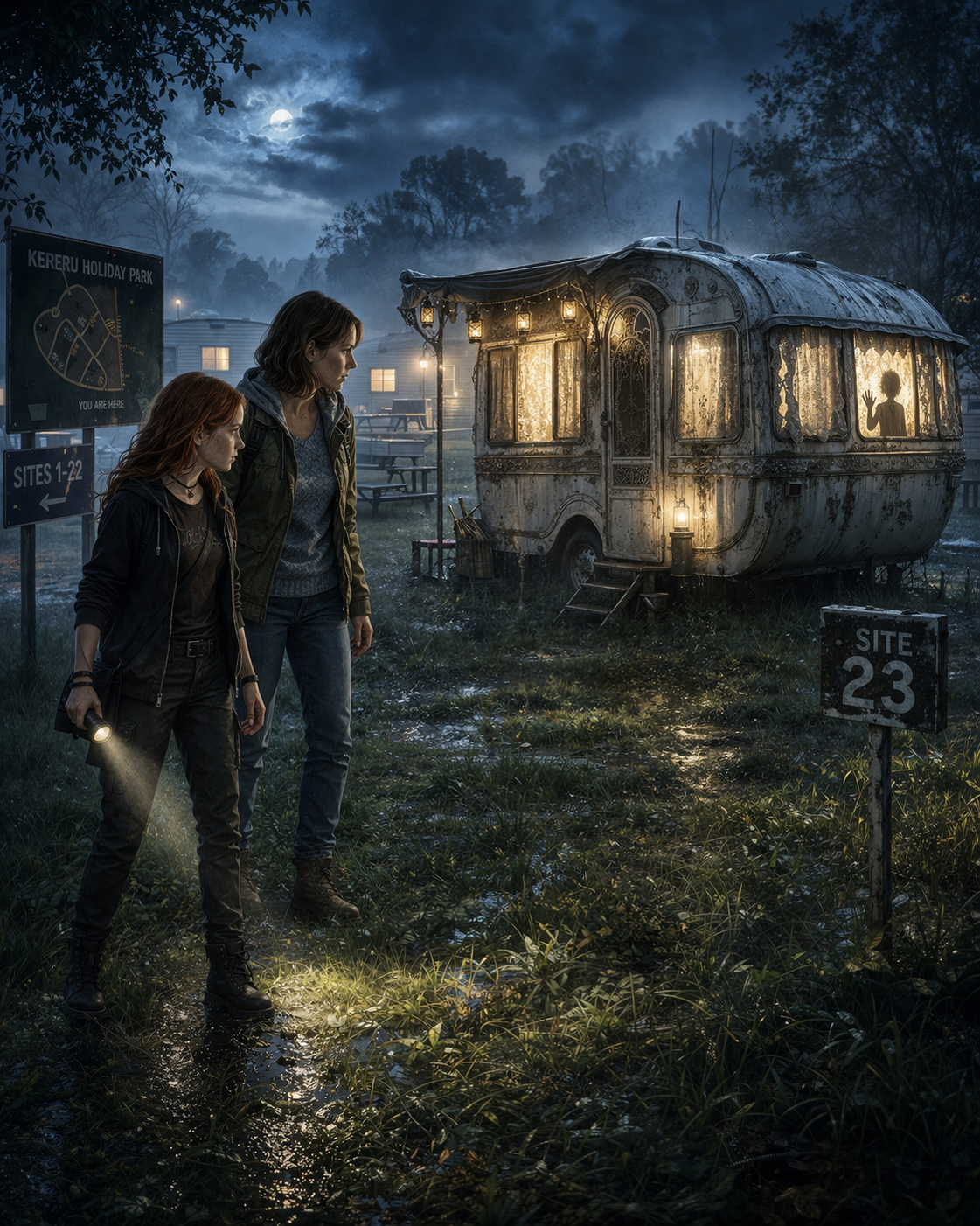
One caravan sat out on the dark grass where there had not been a site when they arrived.
Ivy stopped breathing for a second.
It was old-fashioned, smaller than theirs, with rounded corners and cream paint that looked almost silver under the mist. Soft light glowed behind lace curtains. A string of tiny lantern-shaped bulbs hung along its awning, though there was no power pole anywhere near it.
She turned back sharply and looked at the holiday park map in her hand. Dad had shoved it at her earlier when he was hunting for levelling blocks.
Sixteen. Seventeen. Eighteen.
There should have been a path across the grass.
No site.
She looked up again.
The caravan was still there.
A shape moved behind one of the curtains.
A child-sized shape.
Ivy’s fingers tightened on the torch.
A hand lifted slowly on the other side of the glass.
Waving.
The torch nearly slipped from her hand.
“Ivy?” Mum called softly from behind her. “You okay?”
Ivy did not turn around.
She kept staring at the impossible caravan lit in the mist, at the tiny lantern bulbs, at the small shadow in the window.
Then, very quietly, because suddenly she did not want whatever was in there to hear her unless it had to, she said:
“Mum… our map is missing a site.”
[](https://bookstack.thecartwrights.nz/uploads/images/gallery/2026-04/kzAimage.png)
# Chapter 2 - Site 23
“Mum… our map is missing a site.”
For one strange second, Ivy thought Mum might do the normal adult thing and say she was tired, or imagining it, or that the holiday park had probably just printed the map wrong.
Instead Mum stepped up beside her, looked from the paper in Ivy’s hand to the strip of damp grass beyond their caravan, and said, very quietly, “Yes. It is.”
That was worse.
Because if Mum said it like that, with her voice gone flat and careful, then it meant the thing out there was not just late-night torchlight messing with shadows. It meant Mum could see it too.
The caravan sat beyond the edge of their site where the map showed empty space and a narrow path to the camp kitchen. It was old-fashioned in a way that made Ivy’s skin prickle. Not old like a rusty wreck in someone’s paddock. Old like it had rolled out of a different year and parked itself politely in the dark.
Its rounded roof shone dimly under a yellow porch lamp. The paint looked cream once, maybe, with green stripes gone dull and patchy. One lace curtain had been pulled aside.
The child-shaped figure behind it lifted a hand and waved.
Ivy’s grip tightened on the torch. In her other hand, the Lantern Compass gave a small metallic twitch.
Mum noticed.
“Did you bring that with you?” she whispered.
“It kind of brought me,” Ivy whispered back.
That earned the tiniest, most worried almost-laugh from Mum. “Of course it did.”
The beach was somewhere beyond the dunes, breathing in and out. The holiday park had gone muffled around them. A few sites away somebody’s radio still played, but the sound seemed thin, far off, as if it had been pushed behind glass.
The child in the caravan was still waiting.
“Should we go over there?” Ivy asked.
Mum did not answer right away. She tucked the holiday park map under one arm and stared toward the extra caravan like she was trying to decide whether it belonged in the world at all.
“No,” she said at last. Then, before Ivy could protest: “Not by ourselves.”
Ivy exhaled through her teeth. “Mum—”
“I know.” Mum’s voice stayed quiet, but firmer now. “I know what you’re about to say, and the answer is still no. We wake Dad. Then we decide whether tonight’s gone completely weird or just mostly weird.”
“That feels like splitting hairs.”
“It is. But I’d still like him awake for it.”
The figure at the curtain lowered its hand. For a second Ivy had the horrible feeling it might vanish if they looked away.
Mum seemed to think the same thing, because she said, “Keep your eyes on it,” and began backing toward their caravan.
Ivy did.
The lamp outside the strange caravan flickered once. The curtain moved, just a little, as if somebody inside had shifted their weight.
The compass needle spun, stopped, and pointed dead at the missing site.
“Cool,” Ivy muttered. “That’s normal. Super normal. Love that.”
“Language,” said Mum automatically from the steps.
Ivy glanced back at her. “That wasn’t language.”
“It was tone.”
Even in the dark, with an impossible caravan sitting on grass that should have been empty, Mum could still be Mum. Somehow that helped.
A lot less helped was the fact that when they climbed into the Coachman, Dad was asleep hard enough to qualify as a geological feature.
Mum crossed the caravan in two quick steps and put a hand on his shoulder. “Dad. Wake up.”
He made a noise into the pillow.
“Justin.”
That did it. Dad opened one eye, took in Mum’s face, then Ivy hovering in the aisle in socks and a hoodie with the torch still clutched like a weapon.
“What’s on fire?”
“Nothing,” said Mum.
Dad shut his eye again. “Then it can wait till morning.”
“There’s an extra caravan outside,” Ivy said.
Dad opened both eyes.
From the bunk opposite, Amber pushed herself up on her elbows so fast her hair stuck out in every direction. “There’s a what?”
“No,” Mum said.
“Yes,” said Ivy.
Amber’s face lit up in instant, dangerous delight. “Can I see it?”
“No,” said Mum again.
Oakley sat bolt upright in his little bed as if some hidden launch siren had gone off. “Is it a space caravan?”
Dad dragged a hand over his face. “I need more information and probably tea.”
“You can have both later,” said Mum. “Up. Shoes on.”
It turned out there was no such thing as quietly getting a whole family out of a caravan at night.
Amber could not find one gumboot. Oakley insisted he needed his rocket torch, which was somehow under Dad’s pillow. Dad tried to put on Mum’s hoodie by mistake. Ivy stood by the door vibrating with impatience while the compass clicked softly against her palm like a trapped beetle.
By the time they spilled outside, the campground air had gone colder.
Ivy’s stomach dropped.
For one frightened instant she thought the caravan had disappeared.
Then Dad stepped down beside her, stopped dead, and said, “Oh.”
There it was.
Still sitting on the impossible patch of grass.
Still lit.
Still wrong.
Amber let out the kind of breathy little sound she made in museums and aquariums and anywhere the world turned unexpectedly beautiful or creepy or both. “That,” she whispered, “is absolutely not supposed to be there.”
“Correct,” said Ivy, with more satisfaction than was probably healthy.
Dad folded his arms. That was his practical-thinking posture. “Maybe someone came in late and parked off-map.”
Mum held up the brochure. “On the path?”
Dad looked at the map, then at the caravan again. “Maybe the path’s in the wrong place.”
“It is not the path that is wrong,” said Mum.
Oakley squinted into the dark. “That caravan looks like old toast.”
Nobody had anything useful to do with that.
The curtain twitched again.
Amber grabbed Ivy’s sleeve. “Someone’s in it.”
“I know,” Ivy said.
“Do they know we’re in us?”
“That is not how sentences work,” Ivy said.
“It is at night.”
Dad took one slow step forward. “Stay here.”
Ivy and Amber both made noises of protest at exactly the same time.
Dad looked back at them. “Fine. Rephrase. Stay behind me.”
Mum did not argue. That was how Ivy knew she was actually worried.
They crossed the damp grass together. Ivy felt each blade soak through her socks. The compass pulled harder the closer they got, almost warm now, which felt rude from an object that was definitely made of brass and bad decisions.
The strange caravan was smaller than theirs but somehow looked bigger inside the dark around it, as if night bent a little to fit it. Its windows were narrow and curved. A cracked enamel kettle sat on the step beside a pair of child-sized gumboots. A brass number plate had been screwed beside the door.
23.
Ivy stopped so suddenly Amber bumped into her.
“There,” Ivy said sharply. “There is a number.”
Dad leaned in with his torch. The beam shook just enough for Ivy to notice. “Site Twenty-Three,” he read.
Amber looked from the plate to the brochure map in Mum’s hand. “But there isn’t a Twenty-Three.”
Mum’s fingers tightened on the paper.
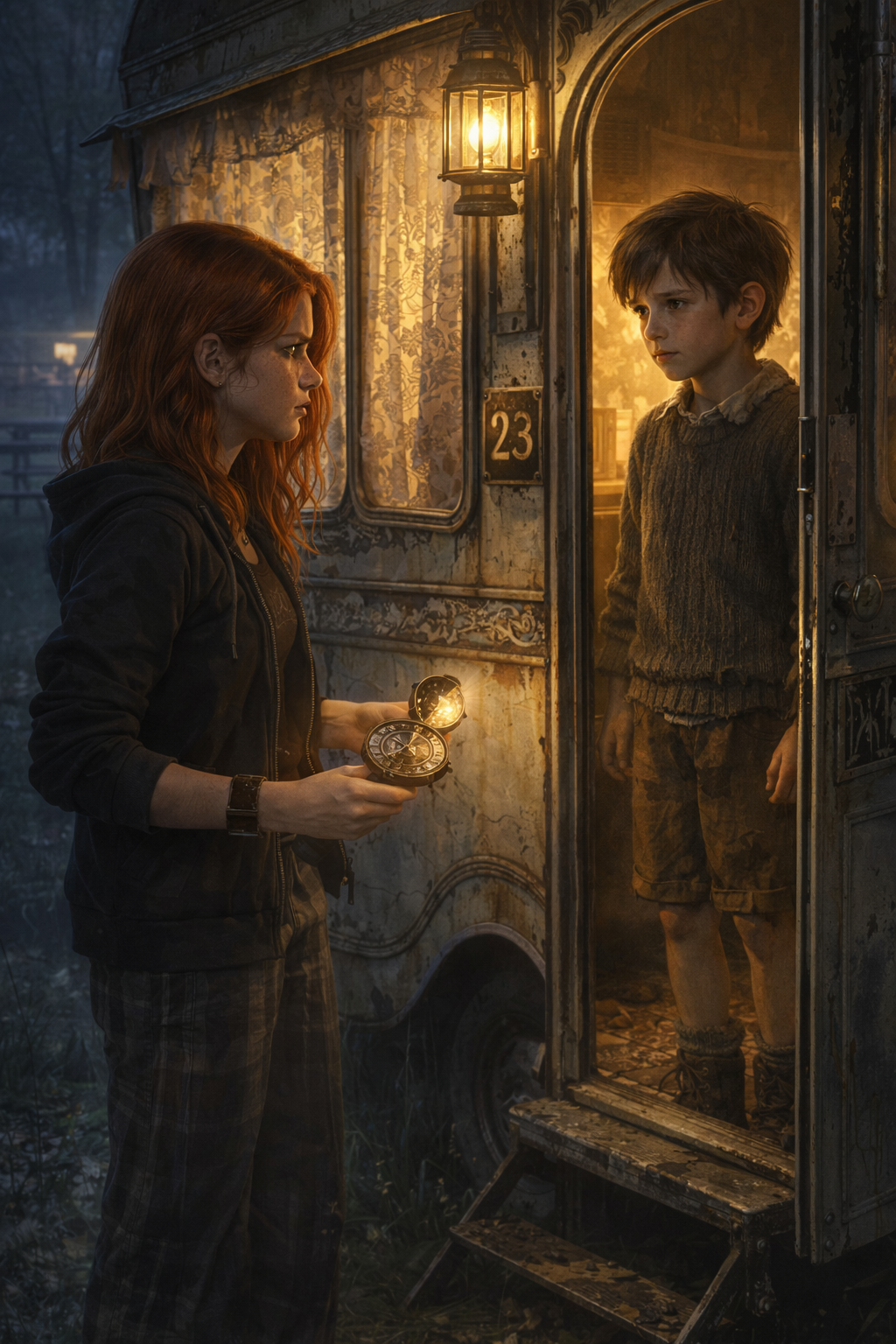
The door of the caravan opened inward with a small, careful creak.
The child who had waved at them stood just inside.
He looked about Ivy’s age, maybe a bit younger. Eleven. Twelve. Hard to tell. He had dark hair that flopped over his forehead and a jersey with a frayed collar, the sort of thing somebody’s grandad might wear in an old photo. His face was pale in the lantern light, not ghost-pale, just as if he had not spent enough time in ordinary daylight lately.
He looked at all of them, but his eyes stopped on the compass in Ivy’s hand.
“You brought it,” he said.
Nobody answered.
[](https://bookstack.thecartwrights.nz/uploads/images/gallery/2026-04/14Zimage.png)
His voice was normal. That was almost the worst part.
Dad cleared his throat. “Are you here with your parents?”
The boy blinked, as if the question had come from a very long way away.
“Not exactly,” he said.
Amber took half a step forward before Mum gently caught her shoulder.
“What’s your name?” Amber asked.
The boy’s mouth moved like he was trying one on. Then he looked at the number plate beside the door.
“I’m in Twenty-Three,” he said.
“That’s not a name,” said Ivy.
“It is if people keep forgetting the rest.”
A little wind moved through the campground.
It did not feel like beach wind. Beach wind rushed and shoved and smelled of salt. This was a thin, cold slip of air, carrying a dusty smell like old cupboards and damp paper. The lamp above the caravan door fluttered.
The boy turned his head sharply toward the far end of the park.
“Did you hear that?” he asked.
“Hear what?” Dad said.
Ivy had heard nothing. That did not stop the hair on her arms standing up anyway.
Oakley peered around Dad’s legs. “The bad road,” he announced.
Everyone looked at him.
Oakley pointed toward the dark beyond the amenities block. “It’s chewing.”
Dad glanced at Mum. Mum glanced at Ivy. Amber went very still.
Then the compass jerked so hard it nearly jumped out of Ivy’s hand.
Something moved at the edge of the holiday park.
At first Ivy thought it was just shadow, a long patch of shadow sliding where shadow should not slide, because the moonlight was coming from the wrong direction for that. Then it passed over the white post of a nearby site marker, and the number on the post vanished.
Not got covered.
Vanished.
The post was still there. The reflective sticker was still there.
But the number was gone.
Ivy’s stomach dropped into her socks.
The thing kept moving. Low. Long. Too smooth. Like darkness had learned to crawl.
The boy in Twenty-Three flinched backwards. “You need to go.”
Dad stepped in front of the kids. “Excuse me?”
“Go back to your caravan,” said the boy, louder now, scared now. “Shut the windows. Lock the door. If it knocks, don’t answer.”
Amber stared at him. “What is it?”
The boy’s gaze flicked to the creeping patch of wrongness and away again. “Hungry.”
The lamp above the door flashed brighter. For half a second Ivy saw more of the inside of the caravan behind him.
A narrow table.
A shelf of old tins.
A map pinned to the wall with red lines running across it like cracks.
Then the light dipped.
The moving shadow reached the edge of Site 22 and the little solar fairy lights someone had strung along their awning blinked out, one by one, like invisible fingers pinching them dead.
Dad swore under his breath.
Mum did not waste another second. “Back. Now.”
Ivy did not want to move. She wanted answers, and a better look, and maybe to shake the entire universe by the shoulders until it explained itself properly. But Mum’s voice had gone into the tone that meant argument was a hobby for later.
They began retreating.
The boy stepped down onto his little metal stair and held something out toward Ivy.
She hesitated.
“Take it,” he said.
[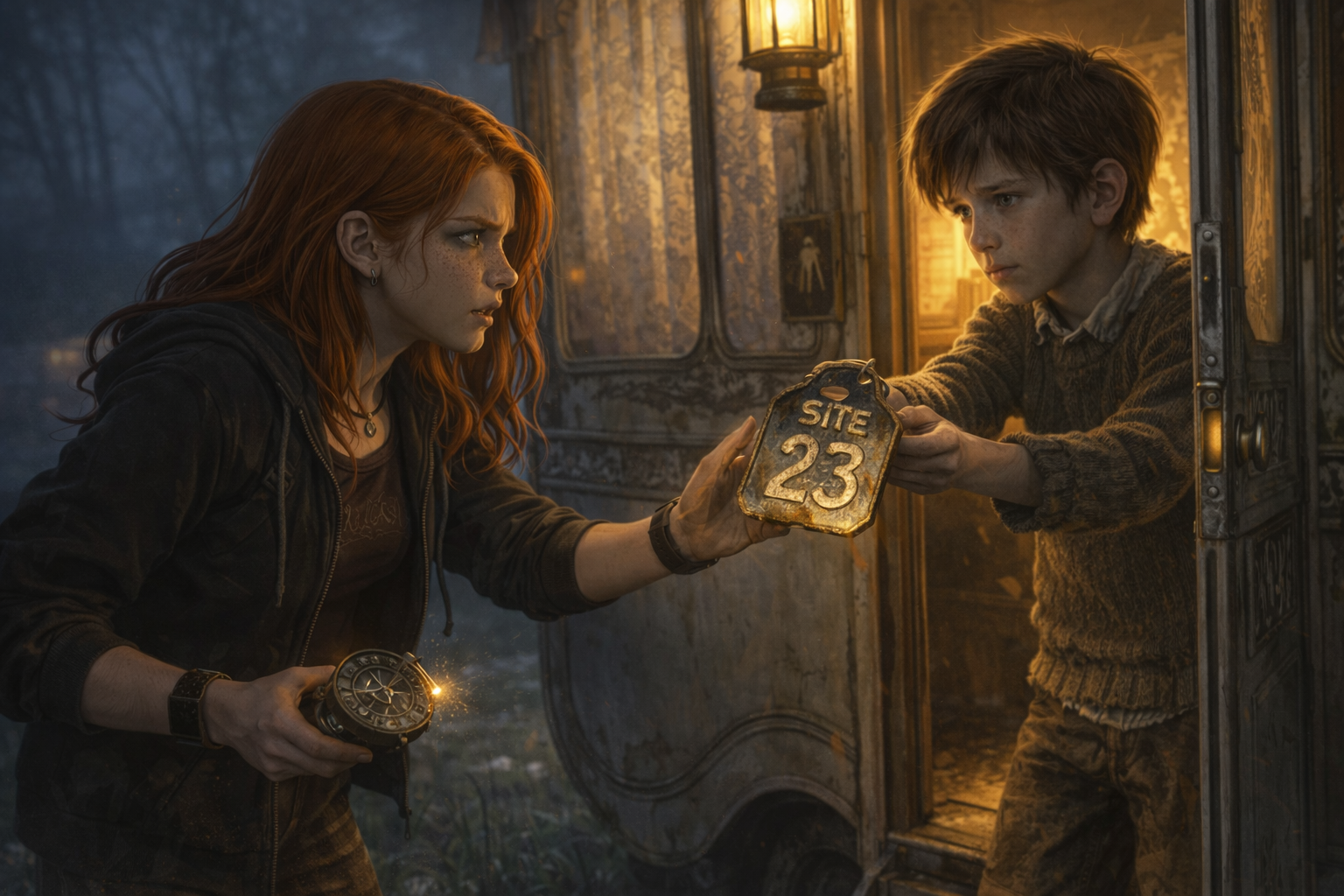](https://bookstack.thecartwrights.nz/uploads/images/gallery/2026-04/v5Kimage.png)
The shadow thing slid closer. The grass beneath it looked colourless.
“Ivy,” Mum snapped.
Ivy lunged, snatched the object from his hand, and jumped back.
It was cold and square and heavier than it looked.
The boy met her eyes. “Keep it where the map can see it.”
That made almost no sense.
Then Oakley, who had absolutely no respect for tension, waved cheerfully at the boy and called, “Bye, Toast Caravan!”
To Ivy’s astonishment, the boy smiled.
“Bye,” he said.
The lamp went out.
Darkness folded over Site 23.
Not all at once. More like a curtain dropping in slow motion. One blink there was an old caravan, a boy on the step, and a brass number plate shining faintly. The next there was only a shape. Then less than a shape.
[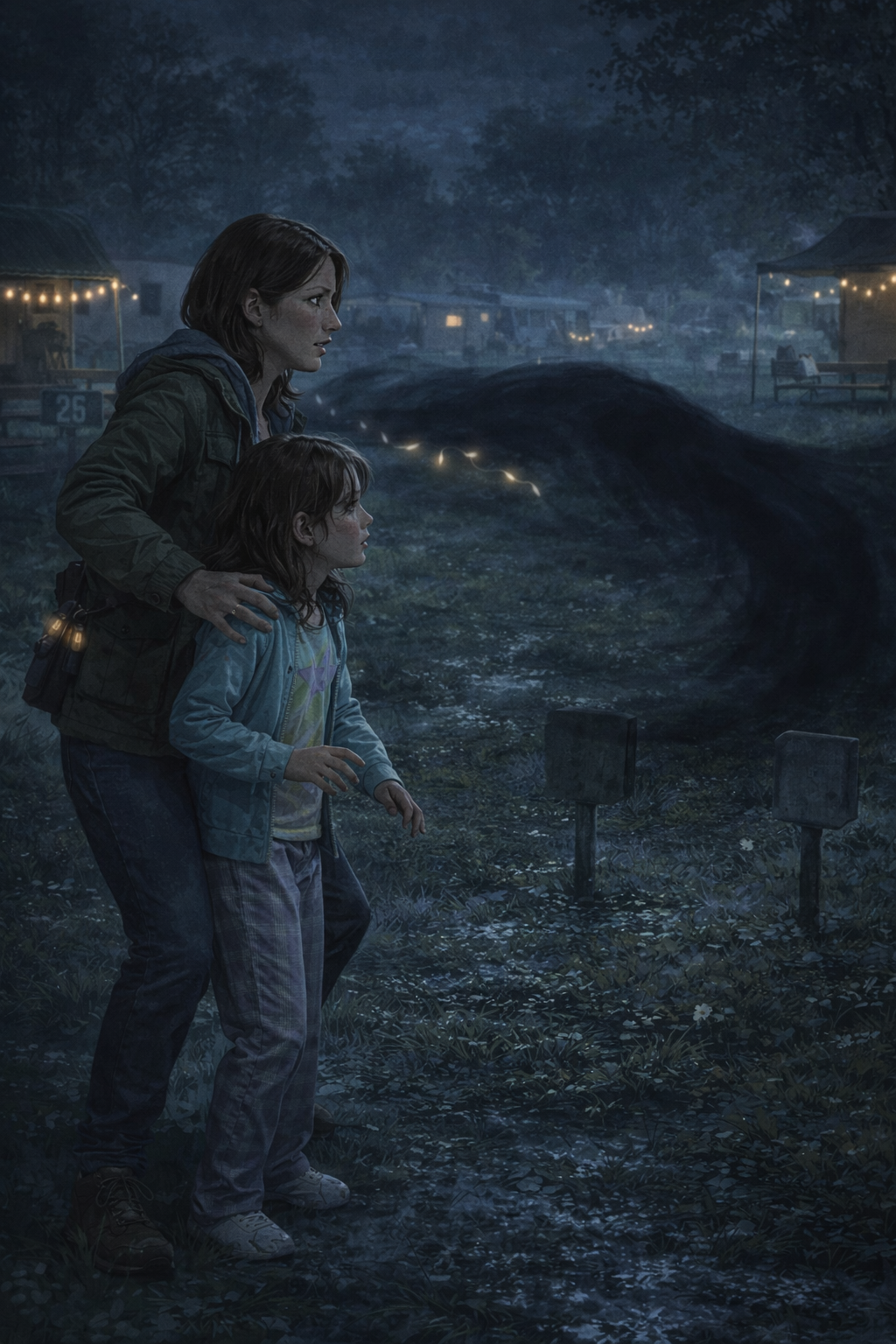](https://bookstack.thecartwrights.nz/uploads/images/gallery/2026-04/velimage.png)
Then nothing but wet grass and night.
Dad’s torch beam hit the place where it had been and found empty ground.
Amber made a sound halfway between a gasp and a yelp.
Dad strode forward across the last few metres of grass and swept the torch everywhere. No caravan. No boy. No stair. No number plate. Nothing except a flattened rectangle in the damp, as if something heavy had been parked there not long ago.
And beyond it, sliding away between the sites, the long black wrongness withdrew into the dark.
The numbers on Site 22 and Site 24 stayed blank.
Ivy realised she was breathing too fast.
Mum’s hand landed on the back of her neck, warm and steady. “Inside,” Mum said.
This time nobody argued.
---
The inside of their caravan felt too bright after that, even though Dad had only turned on the little lights above the dinette.
Nobody sat where they were supposed to. Dad stood by the curtained window looking out through the narrow gap. Mum had Oakley on her lap because he had suddenly gone clingy in the way he only did when something genuinely strange had punched through his usual chaos. Amber curled sideways on one bench with her knees tucked up, staring at the square object in Ivy’s hands.
It turned out to be an old site tag.
Not plastic. Enamelled metal, chipped at the corners, with a hole through the top where it must once have hung on a hook or a key ring. On one side, in faded black letters:
23
On the other side, barely visible under grime, was a tiny lantern engraved inside a circle.
The same lantern as the compass.
Nobody said that for a few seconds.
Then Dad said, “Right.”
He said it the way he did when reality had become personally offensive.
“Right,” he repeated. “So. Let’s review. There was definitely a caravan.”
“Yes,” said Ivy.
“Yes,” said Amber.
“Yes,” said Mum.
Oakley nodded solemnly. “Toast one.”
Dad looked at him. “Correct. Thank you.”
He turned back to Mum. “And we all saw a kid.”
“Yes.”
“And then the whole thing vanished.”
“Yes.”
Dad put both hands on the table and leaned on them. “I hate this holiday already.”
That would have been funny if Ivy’s heart was not still trying to leave through her throat.
Amber lifted her head. “He was scared.”
Dad glanced at her. “He might also be dangerous.”
Amber frowned. “He told us to go inside.”
“That doesn’t make him safe.”
“It makes him not the worst one out there.”
Nobody had a decent reply to that.
Mum looked at Ivy. “What did he hand you exactly?”
Ivy slid the site tag across the table. The compass lying beside it clicked once and pointed at it like an overeager snitch.
Dad saw that and went still. “That thing’s doing it again.”
“It has been doing it again,” said Ivy.
Dad rubbed at his forehead. “I know.”
Mum picked up the site tag and turned it under the light. “Lantern symbol,” she said softly.
Amber looked between the tag and the compass. “So the same people made them?”
“Or the same something,” said Ivy.
Dad gave her a look.
“What? We are past normal object rules.”
Mum set the tag down carefully. “He said keep it where the map can see it.”
“That is an absolutely unhelpful sentence,” Dad said.
“It is if you hate mystery,” said Amber.
“I do hate mystery,” Dad said. “Mystery is just a problem wearing a dramatic hat.”
Even Ivy, wound tight as she was, snorted at that.
Mum took the holiday park brochure from the counter and unfolded it on the table. The paper showed the neat printed map of the grounds: rows of sites, amenities block, camp kitchen, playground, path to the dunes.
No Site 23.
Ivy set the old tag on the blank space where the impossible caravan had stood.
Nothing happened.
“Maybe it needs darkness,” Amber said.
“Or honesty,” said Ivy, before she could stop herself.
Everyone looked at her.
She shrugged, suddenly hot-faced. “The compass said ‘For the Honest Road.’ The map in the car said ‘safe if welcomed.’ Maybe this stuff has weird rules.”
Dad did not laugh or tell her not to be ridiculous.
That frightened her more than if he had.
Mum let out a slow breath. “I think Ivy’s right.”
Dad stared at her. “Belinda.”
“I’m not saying I like it,” said Mum. “I’m saying it fits too many things already.”
Oakley, half-dozing against her, murmured, “Don’t let it lick the windows.”
Dad closed his eyes for a second. “Fantastic.”
Amber looked at the curtains. “Do you think it will knock?”
Nobody answered.
Because yes was the obvious answer, and no would have been a lie.
Dad pushed himself upright. “Right. New plan. Nobody opens anything tonight. Nobody goes outside. If anyone needs the toilet, congratulations, they can suddenly wait till morning.”
Oakley sat up. “I need the toilet.”
“No, you do not,” Dad said.
Oakley considered this. “Okay.”
Mum stood and checked the latch, then the windows, then the door again, as if practical actions could build a wall against whatever moved in the dark outside. Maybe they could. Maybe that was the point of practical actions. Maybe doing ordinary things in the face of impossible ones was how you kept from coming unstuck.
Ivy liked that thought. She did not entirely believe it.
The rest of the night went badly.
Not loudly badly. Quietly badly.
Every sound mattered too much.
Wind in the pōhutukawa branches sounded like whispering. Somebody zipping a tent three sites over sounded like a warning. The little fridge kicking back on nearly made Amber squeak.
Ivy stayed awake in her bunk with the curtain open a crack and the compass under her pillow, because apparently she had decided sleep was for people whose campgrounds obeyed maths.
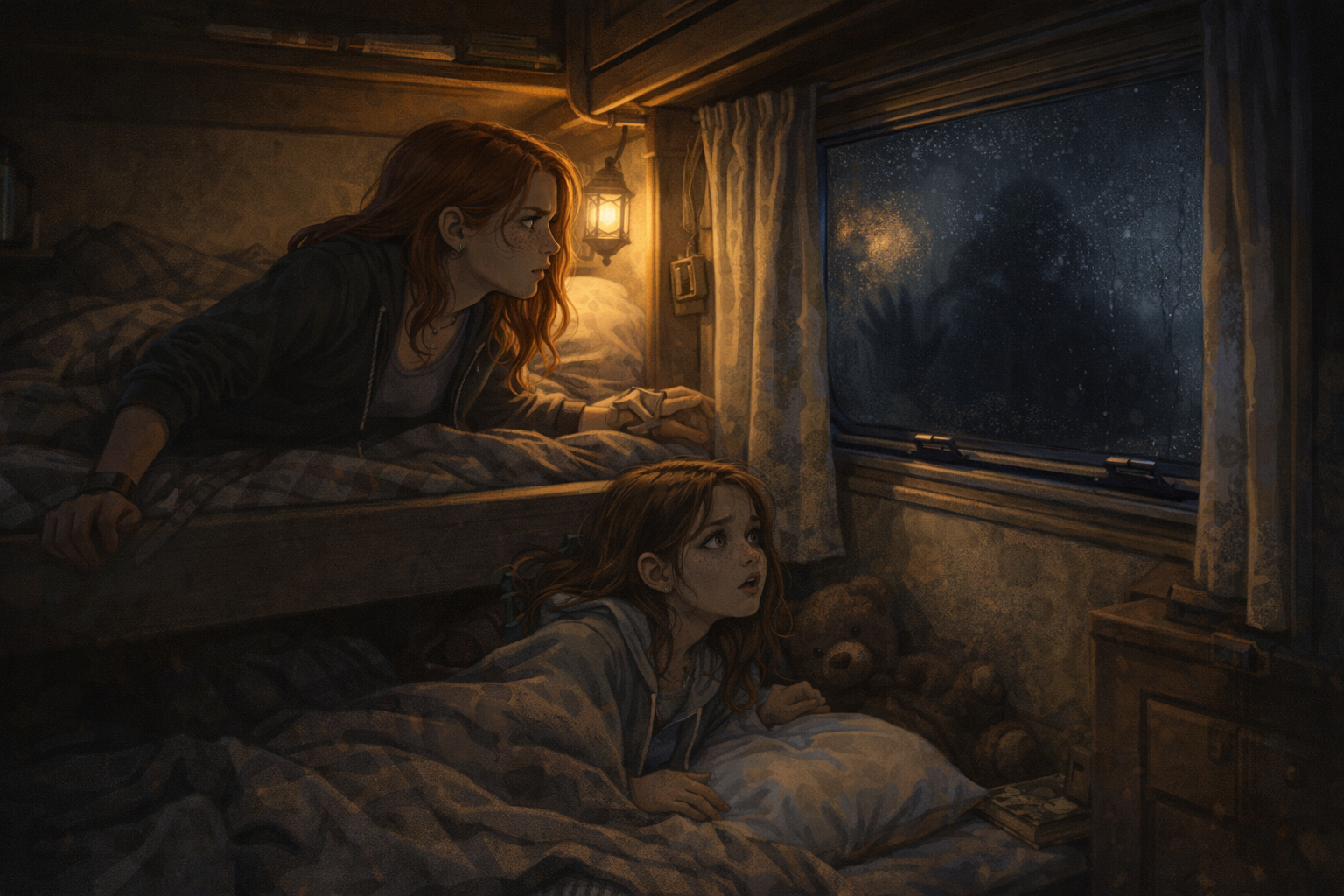
At 12:17, something tapped the caravan window.
Just once.
Not a branch. Not rain. Not a bug.
Tap.
Ivy stopped breathing.
From the bunk below, Amber whispered, “I heard that.”
Dad’s voice came from the front of the caravan, low and awake. “Nobody move.”
Silence.
[](https://bookstack.thecartwrights.nz/uploads/images/gallery/2026-04/hyhimage.png)
Then, very softly, from outside near the door:
Ivy.
It was Mum’s voice.
Exactly Mum’s voice.
Amber made a tiny broken sound.
Mum, who was very much inside the caravan by the dinette, said in a voice that was definitely hers, “Do not answer that.”
The outside voice waited.
Then it said, in Dad’s voice, “Ivy, open up, mate.”
Dad swore so quietly it was almost respectful.
Oakley, from somewhere under a blanket fortress, announced, “That’s not our Dad.”
The handle did not turn.
Nothing scratched.
Nothing banged.
It only stood there for what felt like a whole damp century, and then the air changed, like pressure easing before a storm passes, and the campground noises came back all at once: surf, distant laughter, a toilet block door slamming, somebody coughing.
No one slept much after that.
Morning arrived anyway.
It was a bright, ordinary sort of morning, which felt personally insulting.
Sunlight turned the caravan windows golden. Gull cries came from the beach. Somewhere a kid yelled because somebody had stolen their cereal bowl. Dad went outside first in track pants and a face like he had been sanded overnight.
The others followed in a clump.
The place where Site 23 had stood was empty.
Completely.
No old caravan. No porch lamp. No boy.
Just a patch of damp grass more flattened than the rest, with faint wheel ruts pressing into the earth and stopping where the path ought to have been.
Site 22 had its number back.
So did Site 24.
As if the night had tidied itself up and decided to lie.
Dad crouched by the wheel marks. “Okay,” he said. “That is still not nothing.”
Amber hugged herself. “Do you think he’s gone?”
Ivy looked at the flattened patch and felt a weird little ache in her chest she did not want. “I think he was never here properly.”
Oakley pointed at the ground near the edge of the site. “He forgot his toast smell.”
Mum looked at him, then at the faint square of flattened grass, and for some reason that nearly undid Ivy more than the knocking had. Because Mum looked sad.
Not terrified.
Not confused.
Sad, like this mystery had a human cost already and they had only just arrived.
Dad straightened up. “I’m going to the office.”
“With that?” Mum asked, nodding to the site tag in Ivy’s hand.
Dad hesitated.
Ivy held it tighter.
Mum looked at her. “You found it. You bring it.”
That was how, ten minutes later, Ivy ended up marching across Kōwhai Coast Holiday Park beside Dad and Mum, carrying a chipped metal tag for a site that officially did not exist, while Amber and Oakley trailed behind eating emergency breakfast biscuits straight from the packet because nobody had the emotional range for proper cereal.
The office smelled of sunscreen, old brochures, and burnt coffee.
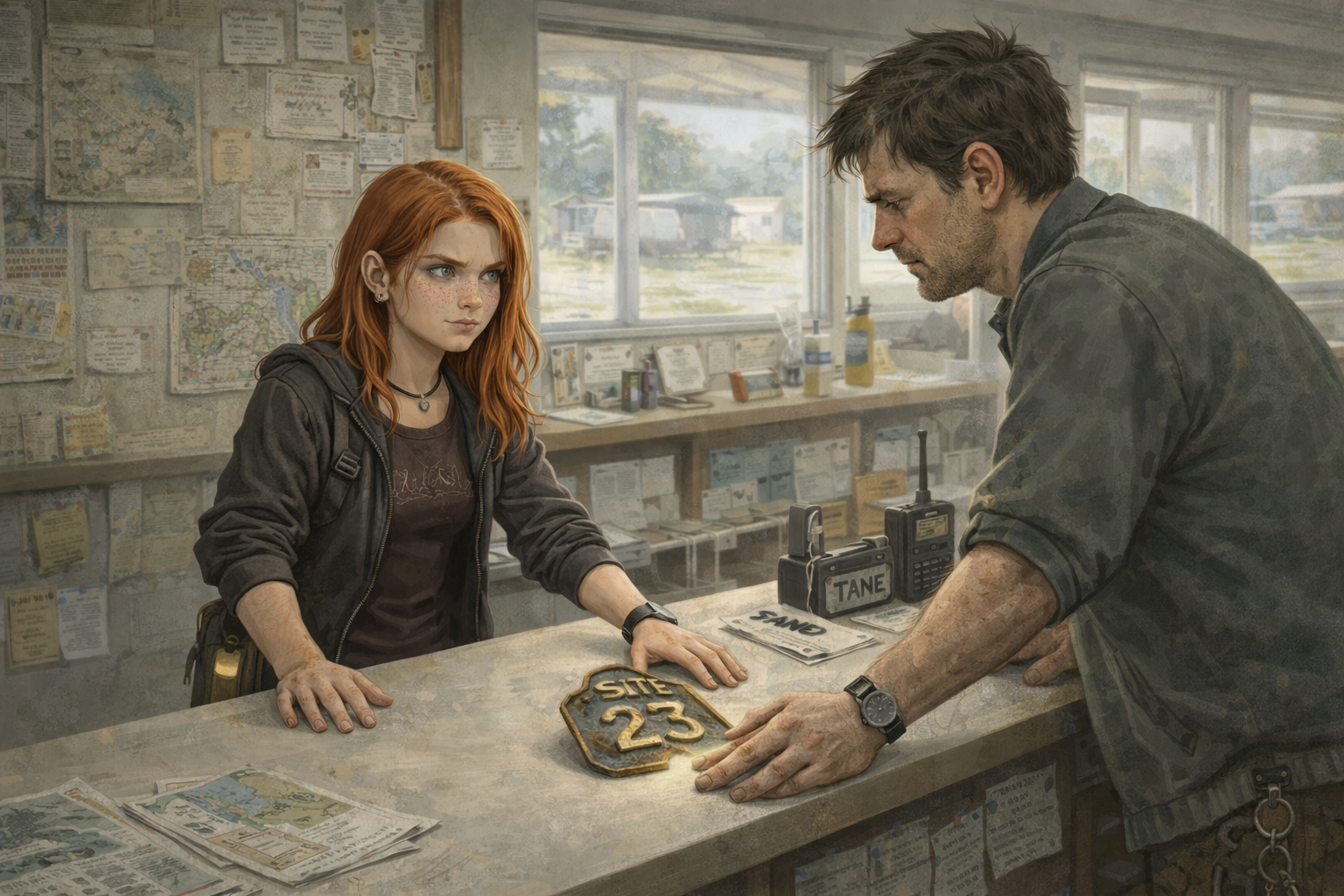
Behind the counter stood a man in a faded campground polo, a rain jacket tied around his waist even though the sky was blue. He had the kind of face that seemed permanently arranged for disappointment.
“Tane Rook,” his name badge said.
He looked up as they came in. “Morning.”
Dad gave him the sort of nod adult men used when they were trying not to sound like they’d been awake all night being psychologically attacked by a caravan.
“Morning,” Dad said. “We’ve got a question about the site map.”
Tane already looked tired of it. “If you want to move closer to the playground, you should’ve booked earlier.”
“It’s not that,” said Mum.
Ivy put the old tag on the counter.
[](https://bookstack.thecartwrights.nz/uploads/images/gallery/2026-04/BEbimage.png)
Tane looked down.
And all the boredom fell off his face.
He did not gasp. He did not stumble back. That would have been too dramatic for him. He just went still in a way that felt worse.
“Where,” he said carefully, “did you get that?”
Ivy heard Dad breathe in beside her.
“From Site 23,” Ivy said.
Tane’s eyes lifted to hers.
For a second, he looked exactly like someone who had hoped never to hear those words again.
“There is no Site 23,” he said.
Dad’s jaw tightened. “Funny story. There was last night.”
Tane looked past them through the office window toward the campground. The bright morning showed families hanging towels, kids on scooters, a man in jandals carrying half a bag of ice. Normal, normal, normal.
Then Tane looked back at the tag.
His thumb hovered over it but did not touch.
“When did it appear?” he asked.
Mum answered before Dad could. “After dark.”
“Was there a caravan?”
“Yes.”
Tane swallowed.
“Was there a boy?” Amber asked quietly.
Tane’s expression changed again. Not much. Just enough.
He knew.
Ivy felt it like a click in her bones.
Dad saw it too. “You need to tell us what’s going on.”
Tane laughed once, without humour. “If I knew that, I’d be sleeping better.”
Mum leaned one hand on the counter. “Try us.”
Tane studied their faces one by one. Dad angry and tired. Mum steady. Ivy probably looking like she would bite through drywall for an answer. Amber wide-eyed. Oakley licking biscuit crumbs off his thumb like this was all perfectly standard campground admin.
Finally Tane said, “Pack up early today.”
Dad stared at him. “That’s your helpful advice?”
“It’s the helpful bit you’re getting first.”
He slid open a drawer, took out an old folded local road map, and tapped one point on it with a blunt finger.
A little building icon by the highway.
No name.
Just a square.
“If your map starts drawing lines again,” he said, not looking at Dad now but at Ivy, “and if one of those lines leads here, do not ignore it.”
Amber leaned in. “What is it?”
Tane folded the map once and pushed it across the counter.
“A dairy,” he said.
He looked at the site tag one more time, face grey around the edges now.
“Also,” he added, “if Twenty-Three appears again—”
He stopped.
The office seemed to hold its breath.
Ivy said, “What?”
Tane met her eyes.
“Don’t let it leave with your name.”
# Chapter 3 - The Dairy with No Brand Name
The office door banged shut behind them.
Morning had done a rude and ordinary thing to the world. The mist had burned off. The sky over the holiday park was a clean pale blue. Someone nearby was frying bacon. A tui made two sharp metallic notes from a pōhutukawa tree near the camp kitchen. Wet grass sparkled in the sun, and if Ivy had not been carrying an old enamel tag in one hand and a warning in the back of her throat, the whole place might have looked normal enough to apologize for itself.
It did not.
Dad stood on the gravel outside the office with the folded road map in one hand and the expression he usually wore when the internet went down and three people insisted it was definitely not the router.
“So,” he said. “That was awful.”
“That is not the main takeaway,” Mum said.
“It is one of them.”
Amber hovered close to Ivy, not saying much, watching the map. Oakley was crouched beside a line of ants with the deep seriousness of a scientist who had discovered tiny idiots on parade.
“They are doing a launch queue,” he announced.
“Great,” Dad said. “Good. Nice for them.”
Ivy barely heard him. The enamel tag felt colder now that they were out in the light. It had warmed in her hand last night. It had felt alive then. Now it felt old, chipped, real. A bit of worn metal. Except real things did not get handed to you by boys who lived in places the campground map had forgotten.
Mum glanced down at Ivy’s hand. “You all right?”
No, Ivy thought.
“Fine,” Ivy said, which was such a stupid lie that even the tag seemed unimpressed.
Mum noticed. Of course she noticed. But she only said, “Let’s get out of the doorway.”
They crossed the gravel lane back toward the family’s caravan. Daylight made everything worse in a different way. The place where Site 23 had stood was only flattened grass and two faint wheel ruts now, shallow enough that someone else might have missed them. Ivy did not miss them. Neither did Amber. Oakley pointed at them without even looking up properly.
“Toast Caravan parked there,” he said.
Dad muttered, “I’m never calling it that, mate.”
“You already are,” said Ivy.
Dad looked at her. “I am not.”
“You literally just did.”
He opened his mouth, shut it again, and gave a small nod that said fine, perhaps reality had humiliated him enough for one morning.
At the caravan, Mum sent Amber to grab the cereal box, Dad to boil the jug, and Ivy to sit down for five minutes “without staring directly into the abyss.”
“That is not what I’m doing,” Ivy said.
“That is exactly what your face is doing.”
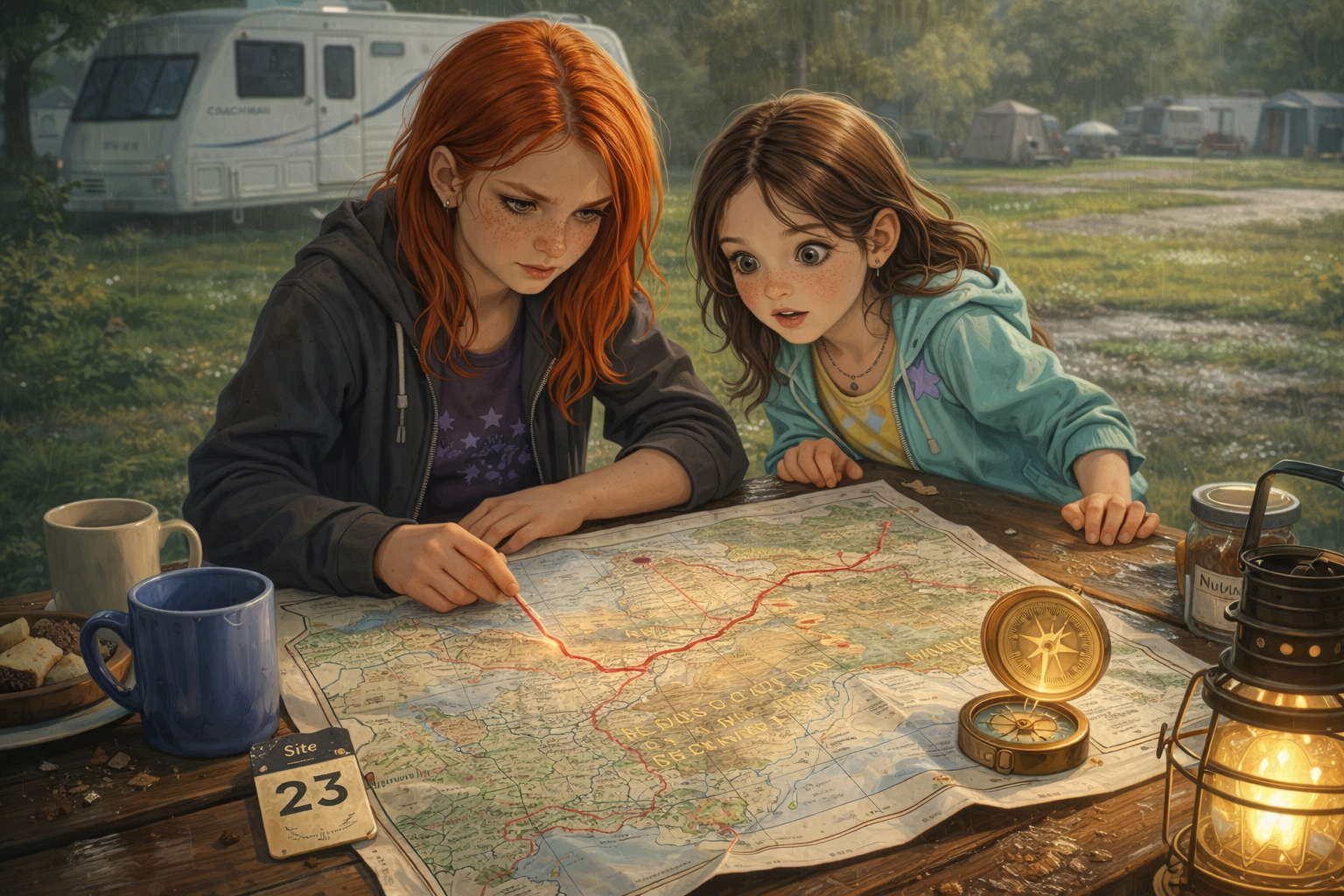
The family picnic table was still damp at one end. Mum wiped it with an old tea towel and laid the road map flat. It was a local map, thin and faded from too many folds, with roads marked in ordinary council colours and a square pencilled in by the highway. No name. No note. Just a box.
A dairy.
Dad set the jug on to boil inside the caravan and leaned out through the open door. “We are not driving straight to a haunted dairy on an empty stomach.”
“It might not be haunted,” Amber said.
Dad looked at her.
Amber reconsidered. “It might be only a little haunted.”
“Brilliant,” Dad said. “That makes me feel much better.”
Oakley climbed onto the picnic bench with his cereal bowl and said, “If it’s a space dairy they will have moon milk.”
Nobody answered him because nobody in the family was brave enough to ask what moon milk might be.
Ivy sat opposite the map, the tag still in her palm. Tane Rook’s words kept replaying with a horrible neatness.
**If Twenty-Three appears again, don’t let it leave with your name.**
She hated that sentence. It did not explain anything properly. It just sat in her head and made everything worse.
Mum came out of the caravan carrying the Lantern Compass in one hand and four mugs in the other, because apparently she had decided madness would not stop tea. “This was on the shelf,” she said, setting the compass carefully on the table. “Did you put it there?”
“No,” Ivy said.
Amber shook her head.
Dad came down the step with the kettle and stopped when he saw it. “Please tell me the weird old object is not now moving around the caravan by itself.”
“It was on the shelf,” Mum repeated.
“That is not actually better.”
Oakley brightened. “Mission artifact woke up.”
“Of course it did,” Dad said.
The compass lid was open.
Nobody had opened it.
Its needle trembled once, then settled. Not north. Not even close. It pointed across the paper map.
Straight at the blank square.
Nobody moved for a second.
Then Amber whispered, “Put the tag down.”
Ivy looked at her. Amber was staring at the map with the same expression she used when drawing something difficult and beautiful. Focused. Certain.
[](https://bookstack.thecartwrights.nz/uploads/images/gallery/2026-04/tLmimage.png)
“Why?” Dad asked.
“Because he said the map had to see it.”
Mum nodded once. “Try it.”
Ivy did not want to.
That was the problem. The wanting and not wanting had got mixed up. Part of her was frightened enough to throw the tag into the nearest rubbish bin and pretend none of this had happened. The other part wanted answers so badly her hands hurt.
She placed the Site 23 tag on the map.
Nothing happened.
Dad let out a breath. “Right. Good. Excellent. We can all enjoy being extremely tense for normal stationery reasons.”
Then the pencil-marked square darkened.
Not with ink. Not exactly. It was more like something underneath the paper had remembered it was meant to show through. A thin red line pushed out from the square and crept along the printed road, then turned where no road existed, sliding across the map in a slow, deliberate stroke.
Amber made a small, shocked noise.
Oakley slapped both hands on the table. “It’s drawing!”
“Hands off,” Dad said automatically, although his voice had gone quiet.
The line stopped three centimetres from the tag.
Then words began to appear beside the square in faint grey letters, as though someone was breathing them onto cold glass.
**WELCOME, TRAVELLERS**
Everybody went still.
Underneath, another line shimmered into view.
**OPEN UNTIL THE BELL**
Dad stared. “Nope.”
“That is definitely words,” said Ivy.
“Thank you, Ivy. I had not ruled out a deeply literate fungus.”
Mum touched the edge of the map but not the writing. “It said welcome.”
Ivy looked up. “Safe if welcomed.”
Mum’s eyes flicked to hers. She had remembered too.
Amber leaned closer. “What bell?”
“Bell cow?” Oakley suggested.
“No,” Ivy said.
“School bell?”
“No.”
“Doorbell?”
Dad folded his arms. “My current professional opinion is that magical directions should stop being written by escape rooms.”
Mum almost smiled. Almost. Then her expression shifted. “We should call Erin.”
Dad did not answer straight away.
Which was answer enough.
Mum looked at him. “Justin.”
“I know.”
“You were not going to.”
“I was absolutely going to.”
“You were going to think about it for three hours and then announce it as a new idea.”
Dad looked offended in a very tired sort of way. “That is not fair.”
“It is extremely fair.”
Amber, sensing parental truth in the wild, kept very still.
Dad rubbed a hand over his face. “I don’t want to tell her half of it and make her worry.”
“You also don’t want to tell her all of it,” Mum said.
He gave a tiny shrug. Caught.
Ivy watched them and realized something unpleasant: adults did not look like people who knew what to do when the world went wrong. They looked exactly like people trying not to frighten their children while being frightened themselves.
Mum held out her hand. “Phone.”
Dad passed it over.
They put the call on speaker. Meow Meow answered first, which was impressive since he was a cat, but everyone could hear him howling somewhere near the phone before Erin picked up.
“If that is another accidental video call from Oakley’s forehead,” Erin said, “I’m hanging up. I have standards.”
“It’s us,” Mum said.
“Ah. The away team. How’s paradise?”
Nobody spoke.
On the other end of the line, there was a short silence. Then Erin said, much more sharply, “What happened?”
Dad sat down. “You know that thing where I say I don’t want everyone to panic?”
Erin snorted. “Yes. Your least useful hobby.”
“We found the next level of weird.”
“That narrows it down beautifully.”
So they told her.
Not every detail at once. Nobody seemed able to. It came out in pieces. The missing site. The old caravan. The boy. The warning not to open the door. The thing outside. Tane. The dairy. While they talked, Erin stopped interrupting. Even Meow Meow went quiet.
At last Mum said, “And there’s something else.”
Ivy already knew what that meant.
Mum looked at her. “Show her the tag.”
Dad angled the phone camera down. Ivy set the enamel marker on the table beside the compass.
For one second, Erin did not speak.
Then she said, very softly, “Turn it over.”
A chill ran through Ivy’s shoulders.
She turned it over.
The tiny lantern engraved on the back caught the light.
Erin shut her eyes. Only for a moment. When she opened them again, her face had changed. She still looked like Auntie Erin, still sharp and clever and not remotely built for nonsense, but the joke-light in her expression had gone out.
“Right,” she said. “Don’t lose that.”
Dad gave a hollow laugh. “Fantastic. That’s exactly the kind of sentence I was hoping for.”
“Justin.”
He stopped.
Erin leaned closer to her phone, and her voice went flatter, more careful. “Listen to me. Until I understand more, nobody gives their full name to anyone strange. Not if they ask politely. Not if they look harmless. Not if they seem to already know it.”
Nobody at the table moved.
Oakley spooned cereal into his mouth and said, “Bad manners road.”
“Yes,” Erin said at once. “Exactly that.”
Dad frowned. “Erin. How do you know that?”
She looked away for half a second, toward something off-screen. A wall. A window. The part of the house where the truth was apparently stored in labelled boxes she had not felt like opening.
“I know enough to hate it,” she said.
“That is not an answer,” Ivy said before she could stop herself.
Erin looked straight through the phone and somehow managed to look directly at Ivy anyway. “No. It isn’t.”
Ivy flushed, then hated that she had flushed.
Erin’s voice gentled. “I know. I know. I’m not doing the mysterious grown-up rubbish on purpose. I’m trying to not get ahead of what I can prove.”
That sounded so much like Dad in one of his practical moods that Ivy almost laughed. Almost.
Mum said, “The map changed.”
Erin’s eyes sharpened again. “Show me.”
Dad angled the phone. The red line was still there, thin and certain, joining the blank square to a point somewhere off the normal road grid.
Erin studied it. “And it only did that when the tag touched the paper?”
“Yes,” said Ivy.
“Good.”
Dad blinked. “That does not feel good.”
“It means the map can recognize markers,” Erin said. “That’s better than random.” She frowned. “Do you still have the old road map from yesterday? The one that changed at the servo?”
“No,” Mum said. “This is Tane’s.”
“Pity.”
The word landed oddly. Not because of what it meant. Because of how normal it sounded coming from someone looking at a magical map.
Ivy heard it too.
“You know this stuff,” she said.
Erin exhaled through her nose. “I know **around** this stuff.”
“Which is annoying,” Dad said.
“Yes.”
“Are you going to elaborate?”
“Eventually.”
“That’s a no, then.”
“It’s a shut up and listen, actually.” Erin pointed at them through the screen. “If that dairy says welcome, you do not walk in acting rude, clever, or in a hurry. You answer when spoken to. You do not pocket anything that isn’t clearly for you. You pay for what you take. In full.”
Dad stared. “Are we going to a dairy or entering a treaty negotiation?”
“Both, by the sound of it.”
Amber spoke for the first time in a while. “What if the boy was trying to help us get there?”
Erin looked at her for a long moment. “Then be kind back,” she said. “But be careful. Places that lose names don’t always lose them all at once.”
Nobody had a good reply to that.
Meow Meow let out one abrupt yowl off-screen.
Erin twisted around. “What is your problem now?”
There was a clatter, then Erin muttered something at the cat that was probably not printable in a children’s novel but was definitely affectionate at its core.
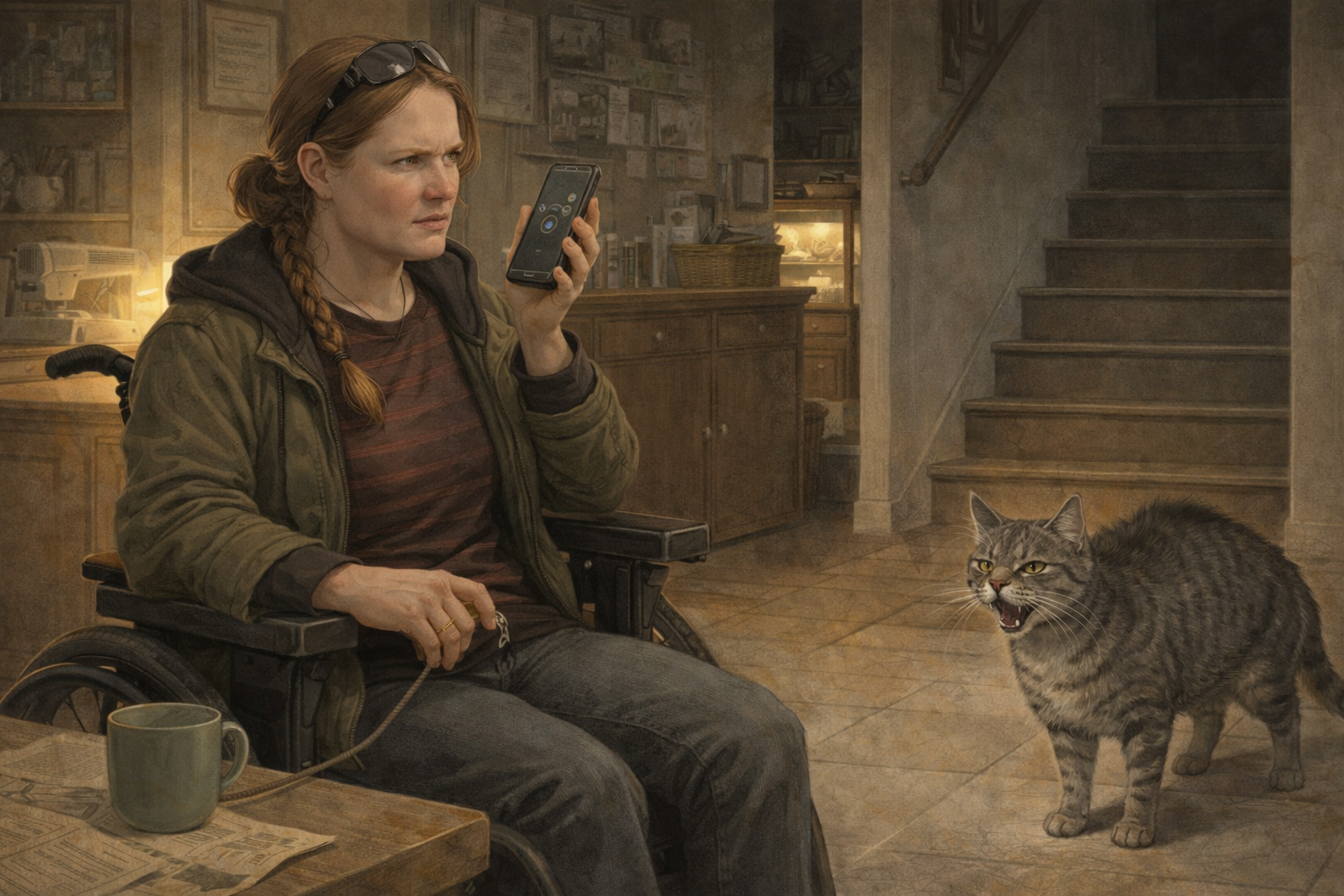
When she turned back, the edge had returned to her mouth. “He’s staring at the stairs.”
Mum went still. “Why?”
Erin looked over her shoulder again. “No idea.”
The whole family listened.
From the phone speaker came the quiet, ordinary house-noises of Woodend. A distant fridge hum. A floorboard. Then Meow Meow hissed so hard it fuzzed the audio.
[](https://bookstack.thecartwrights.nz/uploads/images/gallery/2026-04/7q7image.png)
Dad sat up straight. “Erin?”
“I know.” She wheeled back a little. “I’m hanging up because I would rather not broadcast the inside of the house to whatever weird thing has decided today is already underachieving.”
“Should we call—” Mum began.
“No. Not yet.” Erin’s voice became calm in a way that made Ivy more worried, not less. “Go to the dairy. Keep the tag with the map. And Ivy?”
Ivy swallowed. “What?”
“Do not answer to anything that gets your name almost right.”
The line cut.
Nobody said anything for three whole seconds.
Then Oakley asked, “Can cats do karate?”
Dad stood. “Right. We are going to the dairy immediately.”
“That is what you took from that?” Ivy said.
“That and several other deeply concerning things, yes.”
Mum was already folding the map with enormous care. The red line remained. The word **WELCOME** remained too, though fainter now, as if it disliked being creased.
Ivy picked up the tag.
This time, when her fingers closed around it, it did not feel cold.
It felt expectant.
---
The road out of Kōwhai Coast Holiday Park looked insultingly normal.
Dad drove. Mum sat in the passenger seat with the folded map on her knees and the compass in the cup holder. Ivy and Amber were in the back, with Oakley in his car seat making spacecraft sounds into a muesli bar.
School holiday traffic moved in lazy clumps along the coast. A white ute passed them in the other direction. Someone had towels flapping on a caravan clothesline at the holiday park exit. The world kept doing its ordinary little chores, and Ivy wanted to shake it.
“How far?” Dad asked.
Mum checked the map. “Not far.”
“That’s not a distance.”
“It’s a mood.”
Dad sighed. “Belinda.”
She tilted the paper. “Fifteen minutes, maybe.”
“Maybe?”
“The line doesn’t fully match the road.”
“No sentence in this car should contain those words.”
Amber pressed her face closer to the window. “What if it disappears when we get there?”
“Then we turn around,” Dad said.
“What if turning around is the trick?” Ivy said.
Dad looked at her in the mirror.
“That,” he said, “was a horrible contribution. Thank you.”
Oakley raised one hand. “If bad road comes, we go whoosh.”
“I admire your strategic clarity,” Mum said.
The highway curved inland. Dry paddocks opened on one side. On the other, a line of dark trees held onto the last of the morning shade. There were mailboxes, fence posts, a faded sign for strawberries, another for firewood, and then—just long enough to make Ivy sit bolt upright—a hand-painted board half hidden in flax.
NO EXIT FOR THE UNINVITED
She twisted to look back.
It was gone.
“I saw that,” she said.
“Saw what?” Amber asked.
Dad glanced in the mirror again. “What?”
“A sign.”
Mum turned. “What did it say?”
Ivy hesitated. Not because she had forgotten. Because saying it out loud made it more real.
“‘No exit for the uninvited.’”
No one spoke.
Then Dad said, with the tone of a man filing a complaint against reality, “That feels unnecessary.”
Mum’s gaze shifted to the map in her hands. “Safe if welcomed,” she said quietly.
Amber hugged her own elbows. “So welcome matters twice now.”
“Three times,” Ivy said. “The map. Erin. The sign.”
Dad tightened his hands on the wheel.
Up ahead, at a bend in the road where a cluster of macrocarpas should have hidden nothing more interesting than a farm gate, a small building came into view.
It looked exactly like a dairy.
That was the first bad thing about it.
The second bad thing was the sign.
Every dairy in New Zealand was called something. Coastside Dairy. Four Square. Bay View Foodmarket. Sunny’s. Something. Even the sad little half-abandoned ones still had a faded name clinging on above the door.
This one had a painted board over the awning.
The board was blank.
Not weather-blank. Not peeled. Not broken. It had been painted carefully in cream, framed in green, and left empty on purpose.
Dad slowed the RAV4.
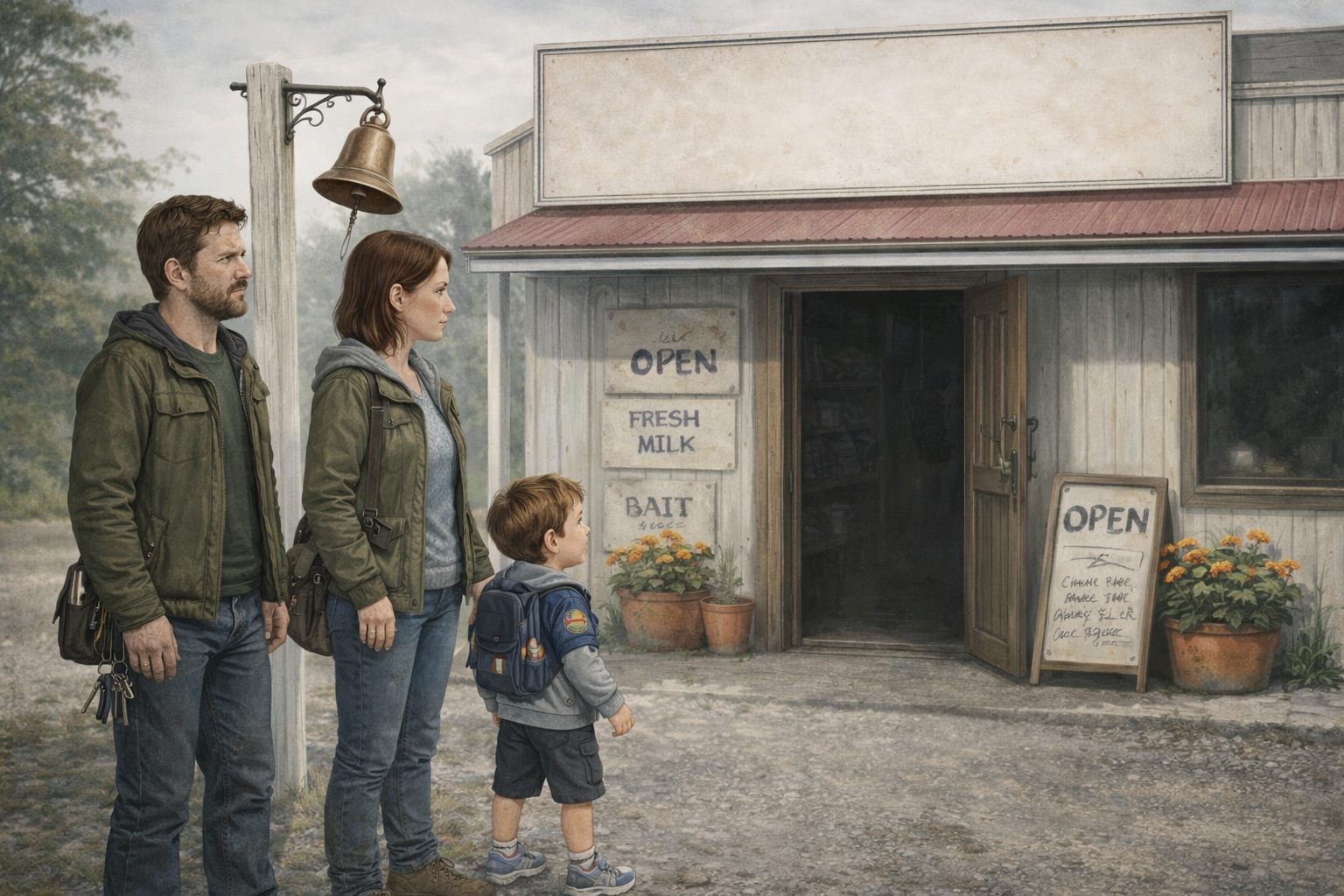
To one side of the building stood an old bell mounted on a wooden post.
It moved once in the wind.
Not enough to ring.
Amber whispered, “Open until the bell.”
Ivy felt the tag press into her palm, warm as a held coin.
Dad pulled into the gravel beside a rusted ice-cream sign that advertised no brand anyone in the family recognised.
Nobody got out.
For a moment they all just sat there, listening to the engine tick down.
The dairy looked ordinary. Small front window. Handwritten signs for milk, bread, bait, and hot chips. A freezer humming by the wall. A rack of cheap buckets outside. Two potted marigolds flanking the step.
And every part of it felt as though it were waiting for them to behave correctly.
Oakley unbuckled one shoe and announced, “I need a pie.”
Dad closed his eyes. “Of course you do.”
Mum kept looking at the bell post. “We answer when spoken to. We pay for what we take. We do not pocket anything.”
“And we don’t give our names,” Ivy said.
Amber looked at the blank sign above the door. “What if it asks?”
Nobody answered that.
At last Dad reached for the door handle.
“All right,” he said. “Let’s go and buy the most stressful snacks in New Zealand.”
The bell by the post rang.
Just once.
And the dairy door, though nobody had touched it, slowly opened inward.
[](https://bookstack.thecartwrights.nz/uploads/images/gallery/2026-04/HXkimage.png)
---
Nobody moved.
Then Dad said, very quietly, “Right. That’s not ideal.”
Oakley grinned. “Magic shop.”
“It is not a magic shop,” Dad said.
The blank sign over the awning caught the light and said absolutely nothing.
Mum opened her door first. “Come on. If we’re doing this, we do it properly.”
Dad got out with the expression of a man who would have preferred to wrestle a printer. Ivy slid from the back seat clutching the warm enamel tag in one hand. Amber came round to stand close enough that their shoulders almost touched. Oakley launched himself out after everyone else and immediately asked if hot chips counted as breakfast if the day was “already spooky.”
The gravel crunched under their shoes. The bell on the post gave a tiny shiver in the wind but did not ring again.
The closer they got, the stranger the dairy felt. It still looked ordinary in all the important ways. Wire stand of cheap buckets. Handwritten notices for bait and milk. Smudged window with taped-up opening hours that somehow only said:
**OPEN UNTIL THE BELL**
No times. No days. No brand. No owner’s name.
Dad paused at the step. “I hate that sign.”
“It hates you too,” said Ivy.
“Good. Mutual.”
Mum reached the doorway first.
Inside, a woman behind the counter looked up from a newspaper.
“Welcome,” she said, in a voice so calm and flat it sounded older than the building. Then she added, “If invited.”
The sentence went through Ivy like a draught.
Mum answered before anyone else could ruin it. “We think so.”
The woman studied them for a second. Her gaze moved over Dad, Mum, the children, the brass compass in Mum’s hand, and finally stopped on Ivy’s fist closed round the Site 23 tag.
“That’ll do,” she said.
They went in.
The air inside smelled of hot pastry, detergent, damp cardboard, and something sharper underneath, like rain on old metal. A pie warmer hummed near the counter. Two fridges clicked softly along one wall. There were shelves of bread, tinned spaghetti, biscuits, batteries, chewing gum, and enough lollies to ruin a small village.
And yet none of it was quite right.
Half the labels on the shelves were blank.
Not missing. Blank.
Crisp packets with red and yellow stripes but no logos. Bottles of fizzy drink with bright colours and no brand names. A freezer full of ice creams with wrappers that showed only pictures: vanilla swirl, chocolate shell, strawberry bar. One rack held postcards of places Ivy was almost sure she had never seen and somehow recognised anyway.
Dad noticed it too. “That,” he said, very softly, “is unsettling.”
The woman folded her newspaper with enormous neatness and set it beside the till. She was small and wiry, maybe in her sixties, with brown skin, silver-streaked hair twisted into a knot, a green cardigan buttoned all the way up, and eyes that missed nothing. A little brass bell charm hung from one ear.
“People say that,” she said. “Mostly the ones who expected a chain store.”
Dad gave her the polite smile he used when reality had become rude. “Do you have a name for the place?”
“Yes.”
There was a beat.
“That was me asking what it is,” Dad said.
“I know.”
Amber made a noise that might have been a laugh if she had not still been busy being nervous.
The woman looked at Mum instead. “What do you need?”
There were about eight possible answers to that, most of them not suitable for speaking in public. Mum went with, “Some information.”
The woman’s eyes slid to the compass again. “That’s rarely free.”
Dad folded his arms. “We’re happy to buy things.”
“Good,” said the woman. “That is how dairies work.”
Oakley had already wandered three steps toward the pie warmer. Mum caught the back of his hoodie without looking.
“Mo,” said the woman, tapping her own chest once. “That’s enough name for people buying milk.”
“Mum,” said Oakley promptly, because Oakley collected social facts the way other people collected shells.
Mo inclined her head as if the introduction had met whatever standard she kept for this sort of thing. “Lovely.”
Dad started, “I’m—”
Mum put a hand on his arm so quickly it was almost funny.
He stopped.
Mo’s mouth twitched.
Ivy felt the tag grow warmer in her hand.
Mo looked straight at her. “You’re carrying the troublesome bit.”
Ivy opened her fingers.
The enamelled 23 gleamed against her palm.
Mo’s face did not change much. That somehow made it worse.
“Ah,” she said. “You found a loose berth.”
Dad frowned. “A what?”
“A place that’s come unfastened.”
Dad’s expression said that sentence had not improved anything.
Amber moved closer to Ivy. “Is the boy there part of it?”
Mo’s eyes flicked to her, sharper now. “There was a boy?”
“Yes,” Amber said. “He was scared.”
Something unreadable shifted across Mo’s face. Not surprise. Not quite. More the look of someone checking whether an old wound had really reopened.
“He gave her the tag,” said Amber, before anyone could decide she was too young to be useful. “He said to keep it where the map can see it.”
Mo looked from the tag to the compass and then to Mum, as if Mum was the one most likely to tell the truth in a room full of frightened people.
“Did it redraw?”
Mum held up the folded map from the holiday park. “Yes.”
Mo nodded once, unsurprised. “Put it on the counter.”
Dad glanced at the door. “Before we do that, are we in danger here?”
Mo gave him a cool look. “That depends how good your manners are.”
“That is not an answer.”
“It is exactly an answer. You’ve just been having the wrong sort.”
Dad inhaled slowly through his nose.
Mum set the map on the counter. The paper looked flimsy and ordinary under the shop lights. Ivy placed the tag on it. Mum laid the open compass beside it.
The red line appeared almost at once, seeping back through the folds in the paper. It crept toward the inland coast road and then further west, toward a dark patch by the sea.
Mo rested both hands on the glass counter and leaned in. “Mm.”
Dad waited. “That sound had too many meanings.”
“It usually does.” Mo tapped the paper just above the line. “This is not your final stop.”
That was not comforting.
“What is it?” Ivy asked.
Mo ignored Dad’s sigh and answered her. “A warning before a warning. A place where the road’s been brushing against the shoreline too hard.”
Amber looked down at the map. “The beach.”
Mo glanced at her. “Black sand?”
Amber nodded.
“Then yes.”
Ivy’s stomach turned over. “The footprints.”
[](https://bookstack.thecartwrights.nz/uploads/images/gallery/2026-04/JkNimage.png)
Everybody looked at her.
She blinked. “I just—I don’t know. It felt like footprints.”
Mo’s gaze stayed on her a moment longer than was comfortable. “You’re the one it’s started noticing,” she said.
That was somehow more frightening than if she had said **You’re imagining it.**
Dad stepped closer. “Started noticing her how?”
Mo straightened. “You’ve got a loose marker, a compass for the honest road, and a child in your family has already been handed a place that doesn’t want to disappear. What do you think?”
Dad opened his mouth, shut it again, and then chose honesty over dignity. “I think I hate every word in that sentence.”
“Reasonable,” said Mo.
Oakley pointed at the pie warmer. “I think pie.”
“Also reasonable,” said Mo.
The pressure in the room eased a fraction. Only a fraction, but Ivy took it.
Mo moved to the warmer and opened it. Steam rolled out with the smell of mince and cheese and overworked pastry. “What’s everyone having?”
Dad stared at her. “We’re doing snacks now?”
“You said you’d buy things.”
“That was before the map started threatening my children.”
Mo lifted one eyebrow. “If you came into my dairy for information and left without paying for anything, I’d think worse of you than the map does.”
Dad looked at Mum.
Mum, infuriatingly, was trying not to smile. “She did tell you how dairies work.”
He pressed a hand over his face. “Fine. Pies. Everyone pick a pie while we negotiate with the supernatural economy.”
Oakley gasped with happiness, as if nothing in the world had ever made more sense.
While Mum helped him choose one that would not instantly paint the car in grease, Ivy drifted toward the postcard rack. The cards were arranged in neat rows. Most showed beaches, bush tracks, mountain roads, rainy campgrounds, ferries in fog. None had place names printed on them. A few had tiny lantern symbols worked into the corners.
One card in the second row made her stop.
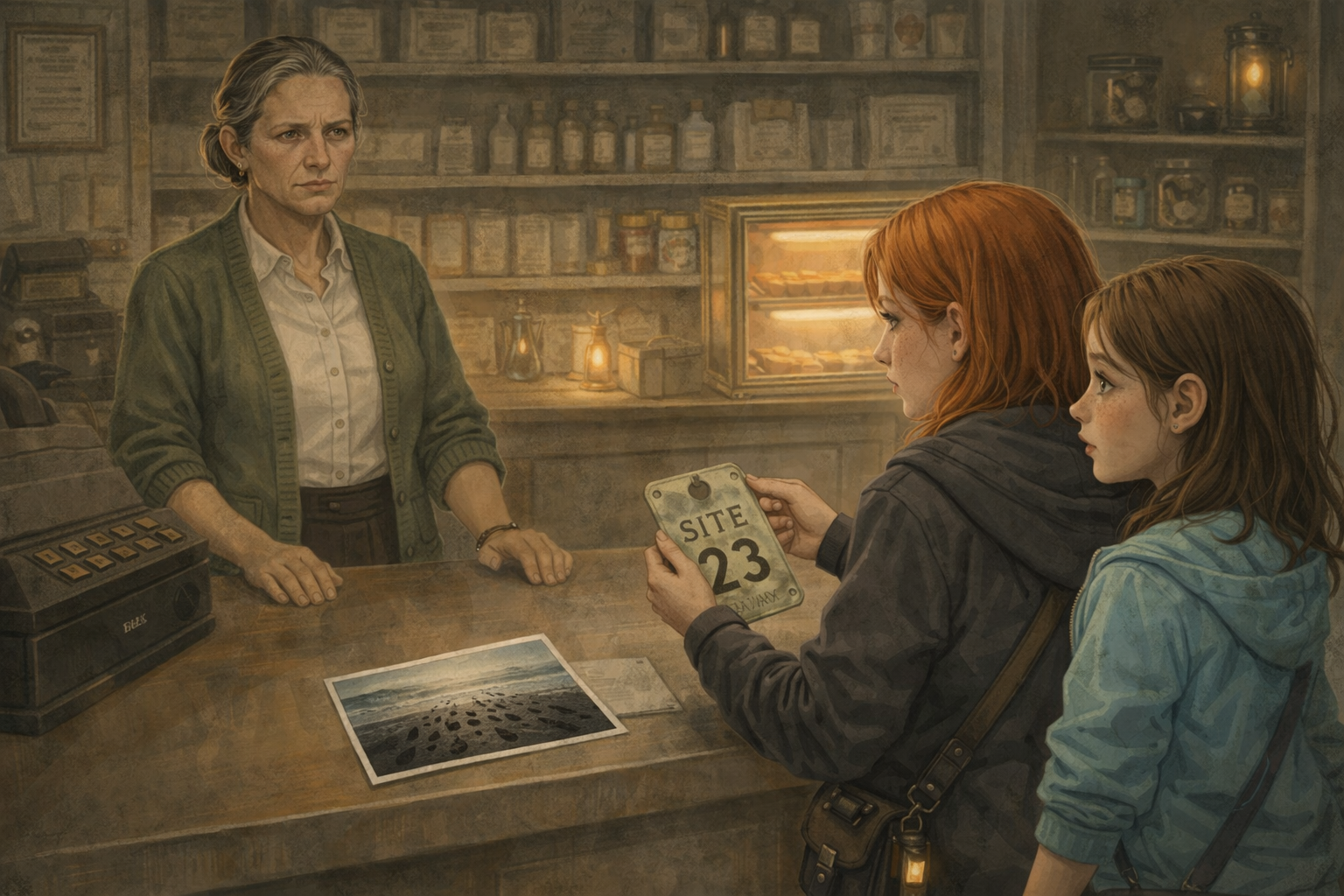
It showed a black-sand beach under a pale sky. Long lines of foam curled in. The sand was crossed by footprints.
Not one set.
Dozens.
They came out of the water and walked inland.
Ivy reached for it.
Mo’s voice cracked across the shop without getting any louder. “If you take it, you buy it.”
Ivy froze. “I was just looking.”
“Then look with your eyes.”
Dad let out a helpless noise somewhere between a laugh and surrender.
Mum took the card from the rack and turned it over. The back was blank except for a faint lantern stamp near one corner. “How much?”
Mo studied the postcard, then Ivy. “That one’s paid.”
Dad turned so quickly he nearly hit the lolly stand. “By who?”
Mo slid a paper bag across the counter and began loading pies into it. “By someone who still remembers enough to warn ahead.”
Amber’s face changed. “The boy.”
Mo did not say yes.
She did not say no either.
Ivy took the postcard from Mum. The card felt cool and dry and older than it looked. On the image side, the footprints seemed deeper now, as though the tide had just gone out.
Mo rang up the pies, milk, bread, a packet of plain chips, and a blue ice block Oakley had somehow smuggled into the pile through pure force of personality.
Then Oakley made his mistake.
He reached, not for the ice block, but for a small round marble sitting in a shallow tray beside the till. It was the size of a gobstopper and cloudy grey inside, with a bright pulse of white buried in the middle.
“What’s this?”
“Don’t—” Dad started.
Oakley’s fingers closed around it.
Thunder cracked.
Not outside.
Inside the marble.
A tiny bright fork flashed in its cloudy centre.
Every label on the nearest shelf vanished.
The writing did not fade. It simply stopped existing. Soup tins turned to blank metal cylinders. Biscuit packets became colour without words. The pie warmer’s temperature dial lost its numbers.
The bell charm in Mo’s ear rang once.
Nobody moved.
Oakley, to his credit, looked more fascinated than frightened. “Storm sweet.”
Mo held out her hand. “Back in the tray, darling.”
Oakley gave it to her.
The moment the marble touched the tray, the labels came back.
Dad swore under his breath in the deeply parental way that meant the word was too mild to matter.
Mo set the marble down very carefully. “Weather costs extra.”
Mum pulled Oakley closer. “Hands to yourself.”
“But it fizzed.”
“Yes,” said Mum. “Because this day did not already have enough problems.”
Mo slid the blue ice block into the paper bag without blinking. “At least he gave it back. Some grown adults do worse.”
Dad pushed a card across the counter so fast it almost squealed on the glass. “Please charge us before my son accidentally purchases a thunderstorm.”
Mo did.
The machine printed a receipt far longer than seemed necessary for pies, bread, chips, and one impossible morning. Mo tore it off and handed it to Mum.
The receipt said:
**THANK YOU FOR PAYING IN FULL**
Underneath, in smaller letters that appeared as Ivy watched:
**DO NOT FOLLOW THE FIRST FOOTPRINTS**
Amber saw it too. “Mum.”
Mum went very still.
Dad leaned over her shoulder. “Oh, come on.”
Mo capped her pen and tucked it behind her ear as though none of this required commentary. “Good. It held.”
Dad looked at her. “Held?”
“The warning. Ink’s been unreliable lately.”
Ivy put the postcard beside the receipt on the counter. “What are the first footprints?”
Mo’s expression thinned. “The wrong invitation.”
That did not help nearly enough.
Amber asked the better question. “How do we tell?”
Mo was quiet for a moment. Then she answered carefully, and that was somehow worse than if she had refused.
“The first ones will look eager.”
Ivy frowned. “Footprints look eager?”
“On a bad enough day, yes.”
Dad muttered, “I miss normal nouns.”
Mo ignored him. She looked at Ivy again. “You listen. Good. So listen now. The roads are damaged, which means some places are trying too hard to be found and some are trying too hard to keep what notices them. Twenty-Three is a place that’s lost part of its marker. That makes it hungry for remembering.”
Amber’s hand found the sleeve of Ivy’s hoodie and held on.
Mo continued, “A loose place will borrow from whoever sees it. A glance. A feeling. A route. A bit of a dream. If it gets worse, a name.”
Dad’s face hardened. “And the tag?”
“Anchor,” said Mo. “Or what’s left of one. Keep it with the map until you reach the shore point. After that, do not show it after sunset unless you want something noticing back.”
Ivy closed her fingers round the tag so hard the edges bit into her skin. “Can we help him?”
That made Mo pause.
The shop seemed to go quieter around the question. Even the freezer hum felt farther away.
“If he gave it to you,” she said at last, “he’s still trying to be helped.”
Amber’s eyes filled at once, though she didn’t cry. Not quite.
Dad nodded slowly, taking that in whether he wanted to or not.
Mum folded the receipt and tucked it into the map. “What’s at the beach?”
Mo lifted the postcard and tapped the line of footprints with one short nail. “Evidence the road’s started washing through.”
“Meaning?” said Dad.
“Meaning it shouldn’t be there.”
“I gathered that.”
Mo gave him a look. “Then gather faster. Go near dusk, not dark. Stay where the sand is firm. If the sea gives you back steps that nobody took, don’t match them.” She handed the postcard to Ivy. “And if you hear anything calling from behind the dunes, let your mother answer first.”
Dad stiffened. “Why specifically Belinda?”
Mo’s gaze slid to Mum again. “Because she notices when something sounds almost right.”
Mum did not argue.
That bothered Ivy more than she wanted to admit.
Dad tried one last angle. “Who exactly are you in all this?”
Mo put the paper bag on the counter between them. “Shopkeeper.”
“That’s not enough.”
“It has been for years.”
“And the blank sign?”
For the first time, Mo looked toward the door. Toward the bell post beyond it.
“Things with names are easier to count,” she said. “Things that are counted are easier to hunt. Brand names are for places that want to be found by everybody. This place does not.”
It was such a simple sentence that it landed harder than any of the stranger ones.
Ivy thought of Site 23. A place with a number. A place being erased. A place trying not to be forgotten and maybe taking the wrong things to stay real.
“How many places are like this?” she asked.
Mo met her eyes. “Fewer every year.”
The bell outside rang.
Once.
Every light in the dairy flickered.
Mo’s head snapped toward the window.
“Right,” she said. “Time to go.”
Dad did not argue. That was when Ivy knew the fear had properly got into him. Dad loved arguing with suspicious instructions. It was one of his main hobbies.
He grabbed the paper bag. Mum folded the map and receipt together. Ivy tucked the postcard under her arm and shoved the tag into the front pocket of her hoodie, though she hated hiding it. Amber stayed close. Oakley waved at the pie warmer and said, “Bye, hot food.”
At the door, Mo spoke without raising her voice.
“Don’t use your full names on the beach.”
They all turned.
Her face had gone very still.
“And if the first footprints lead inland,” she said, “leave before the tide changes its mind.”
Then she looked straight at Ivy.
“Noticing goes both ways.”
The second bell rang.
This time, the sound was sharper.
Outside, the day had changed.
Not entirely. The sky was still pale. The gravel was still gravel. The marigolds still sat in their pots by the step.
But the shadows around the dairy had lengthened wrong, stretched thin toward the road as if something tall and unseen had just passed between the sun and the world.
Dad got everyone into the RAV4 in record time.
Doors slammed.
Seatbelts snapped.
The engine started on the second try, which would have annoyed Dad on any normal day and barely registered on this one.
Nobody spoke until they were back on the road.
Then Oakley said, from the back, “I liked shop lady.”
Dad gripped the wheel. “That is because you nearly bought lightning.”
“It liked me.”
“Not helping.”
Mum opened the receipt again on her knees. The extra words had faded, but not completely.
**DO NOT FOLLOW THE FIRST FOOTPRINTS**
Amber leaned in to look. “So we’re definitely going.”
Dad made a noise of pure exhausted disbelief. “Are we?”
Mum looked up from the paper. “Yes.”
He glanced at her. “You said that very fast.”
“She’s right,” said Ivy.
Dad checked the mirror. “Of course you think so.”
“She gave us a warning, a place, and a rule. That’s more than we had this morning.”
“That is not the uplifting summary you think it is.”
Amber took the postcard from Ivy and turned it over.
Something had appeared on the blank back.
Not printed. Written.
A line in thin grey script, as if someone had used a pencil sharpened with too much patience.
**COUNT ONLY THE ONES THAT RETURN**
Amber inhaled sharply.
Mum took the card. Dad looked over at the next straight stretch and swore softly again.
“Belinda.”
“I see it.”
“I hate this postcard.”
Oakley leaned sideways in his seat and squinted at it upside down. “Beach rules.”
No one corrected him.
The highway bent south again. Far ahead, beyond the paddocks and the road signs and the normal little world still trying its best, the line of the coast showed dark against the afternoon light.
Mum folded the postcard into the map with the receipt.
Ivy pressed a hand over the pocket where the Site 23 tag sat warm against her hoodie and looked back once through the rear window.
The dairy was already gone.
Not vanished.
Just hidden again behind the trees, the bend, the ordinary road and its ordinary lies. But for one second she thought she saw the blank sign through the leaves, white and waiting, with the bell post beside it and a small dark shape standing near the edge of the gravel.
A boy.
Not waving.
Just watching to see if they understood.
Then the road turned, and he was gone.
Dad cleared his throat. “Right,” he said. “No full names. No eager footprints. No beach heroics. We look, we learn, we leave. Are we all clear?”
“I wasn’t planning heroics,” said Ivy.
Mum and Dad both looked at her.
Ivy sighed. “Fine. Minimal heroics.”
Amber smiled despite herself.
Oakley pumped one fist. “Beach mission.”
The sea wind found the car a few minutes later, carrying salt and the promise of weather.
And tucked between the map and the receipt on Mum’s lap, the postcard of the black-sand beach gave a tiny dry shiver, as though the paper already knew the tide was coming in.
[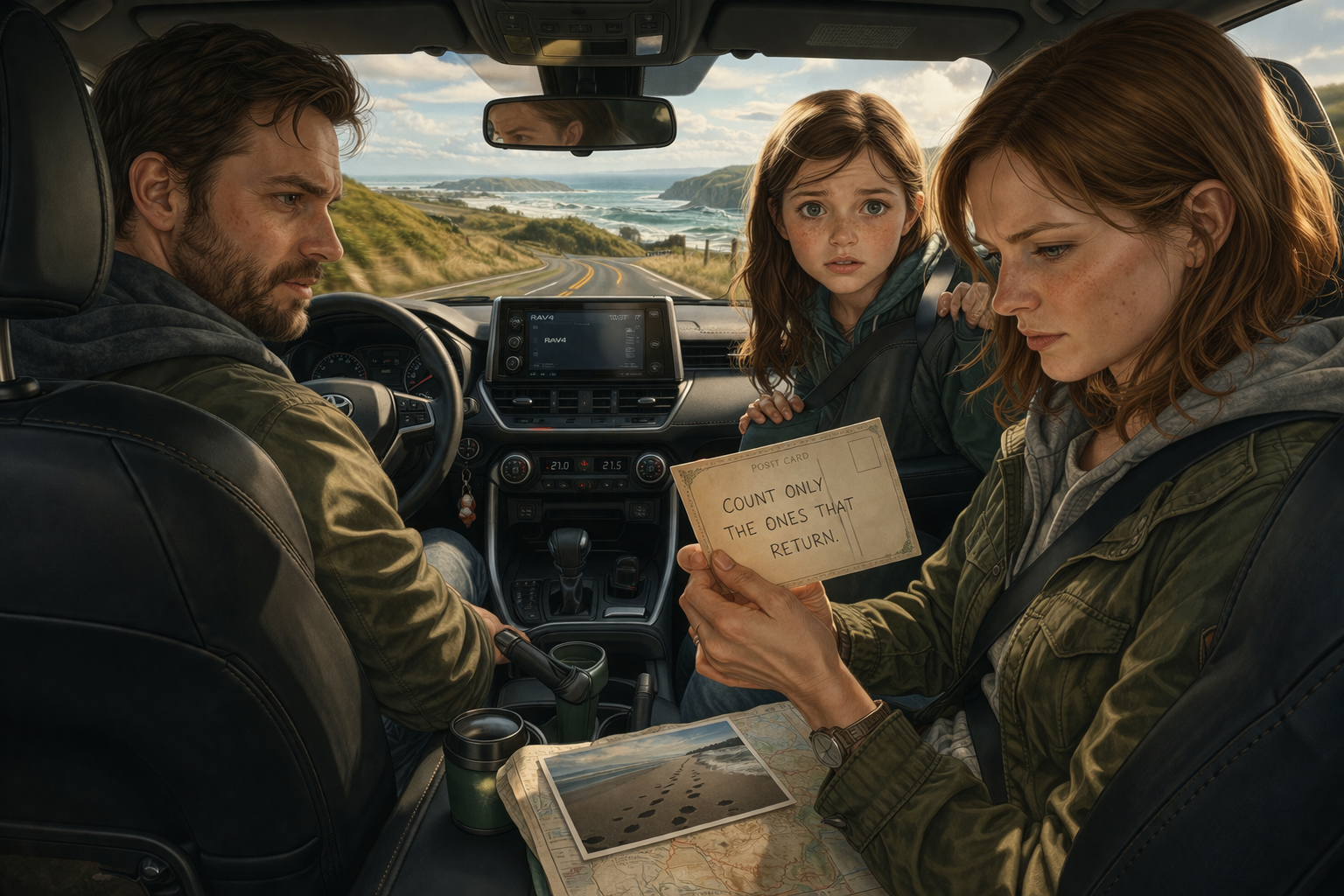](https://bookstack.thecartwrights.nz/uploads/images/gallery/2026-04/rFZimage.png)
# Chapter 4 - The Wrong Footprints
By the time they reached the coast, the day had thinned into that strange late-afternoon light that made everything look both sharper and more tired.
The sea appeared first in flashes between scrub and dune grass. Then the road curved, the view opened, and there it was in full: a long black-sand beach under a pale sky, the Tasman rolling in with big white edges and a steady, breathy roar. A faded DOC sign leaned beside the gravel pull-over. Someone had once painted over the rust. The rust had won.
Dad parked the RAV4 facing out.
“That,” he said, gripping the steering wheel for one beat longer than necessary, “is because I enjoy efficient exits and definitely not because a nameless dairy woman told us not to do anything stupid near demon footprints.”
“She didn’t say demon,” Amber said.
“She didn’t need to.”
Oakley was already half out of his car seat straps. “Is this the walking sea?”
“No,” said Ivy, reaching over to stop him launching himself into the footwell, “this is the staying-in-the-car-until-an-adult-opens-your-door sea.”
“That’s not a sea.”
“It is now.”
Mum had Tane’s map open on her lap. The old paper had gone soft from being folded and unfolded too often in one day. The black-sand beach postcard sat tucked inside it, and the strange receipt was folded around the Site 23 tag so the enamel square stayed pressed against the page where the red route line had last shown itself.
The Lantern Compass lay open beside Mum’s hand.
Its needle was not pointing inland.
It was not pointing north either.
It kept twitching toward the beach, then slightly left along the tide line, then back again, as if the shore ahead was not one place but several trying to sit on top of each other.
Mum looked up through the windscreen.
“Firm sand,” she said quietly. “That was one of Mo’s rules.”
Dad exhaled through his nose. “Right. Firm sand. No following the first footprints. No names. No matching anything. If somebody starts inviting us into a cursed side quest, we decline politely and leave.”
“We’re already in the side quest,” Ivy muttered.
Dad looked in the rear-view mirror. “I’m aware.”
Amber leaned forward between the seats, eyes wide on the sea. “Do you think the boy paid for the postcard?”
Nobody answered straight away.
That had become a problem lately. Half the things they said now landed too hard.
Mum closed one hand over the map and looked back at them all in turn.
“Shoes on. Stay together. Nobody runs. Oakley, that includes your soul.”
“My soul is speedy.”
“I know.”
That got a laugh out of Dad despite himself, and for a second the car felt ordinary again. Wind. Chips in the door pocket. Damp towels piled in the back. Holiday mess. Family noise.
Then the Compass needle jumped so sharply it clicked against the glass.
Nobody laughed after that.
---
The carpark was mostly empty.
One campervan sat at the far end with its curtains drawn. A surf lifesaving tower stood silent and boarded up for the season. The wind pushed salt over everything. Black sand hissed across the concrete in dry little streams.
Ivy climbed out first and pulled her hoodie tighter. The air was colder than she’d expected. Not South Island mountain cold. Coast cold. Wet, blunt, full of movement.
Oakley pointed at the sea with both hands. “It’s huge.”
“Yes,” said Dad. “Thank you, NASA.”
Amber spun once in the wind and caught herself. “It feels wrong.”
It did.
That was the irritating thing. The beach was beautiful. Huge and clean and dramatic in exactly the way beaches on postcards always wanted to be. The surf rolled in hard. Gulls rode the air. Far off, black rocks stuck out of the water like broken teeth.
But the place felt watched.
Not by a person standing somewhere.
By the beach itself.
Mum locked the car and kept the map tucked under one arm. The receipt was still folded around the Site 23 tag. Ivy noticed she was holding the whole bundle very carefully, as though it might decide to make a run for it.
Dad crouched in front of Oakley and zipped his little jacket all the way up.
“Rule check,” he said.
Oakley put up one finger. “No exploding.”
“Good starting point.”
“Stay wif the big people.”
“Yes.”
“No stealing a sea.”
Dad nodded. “That one was not on my list, but I support the energy.”
Amber smiled faintly. Ivy didn’t. Her eyes had gone back to the shoreline.
[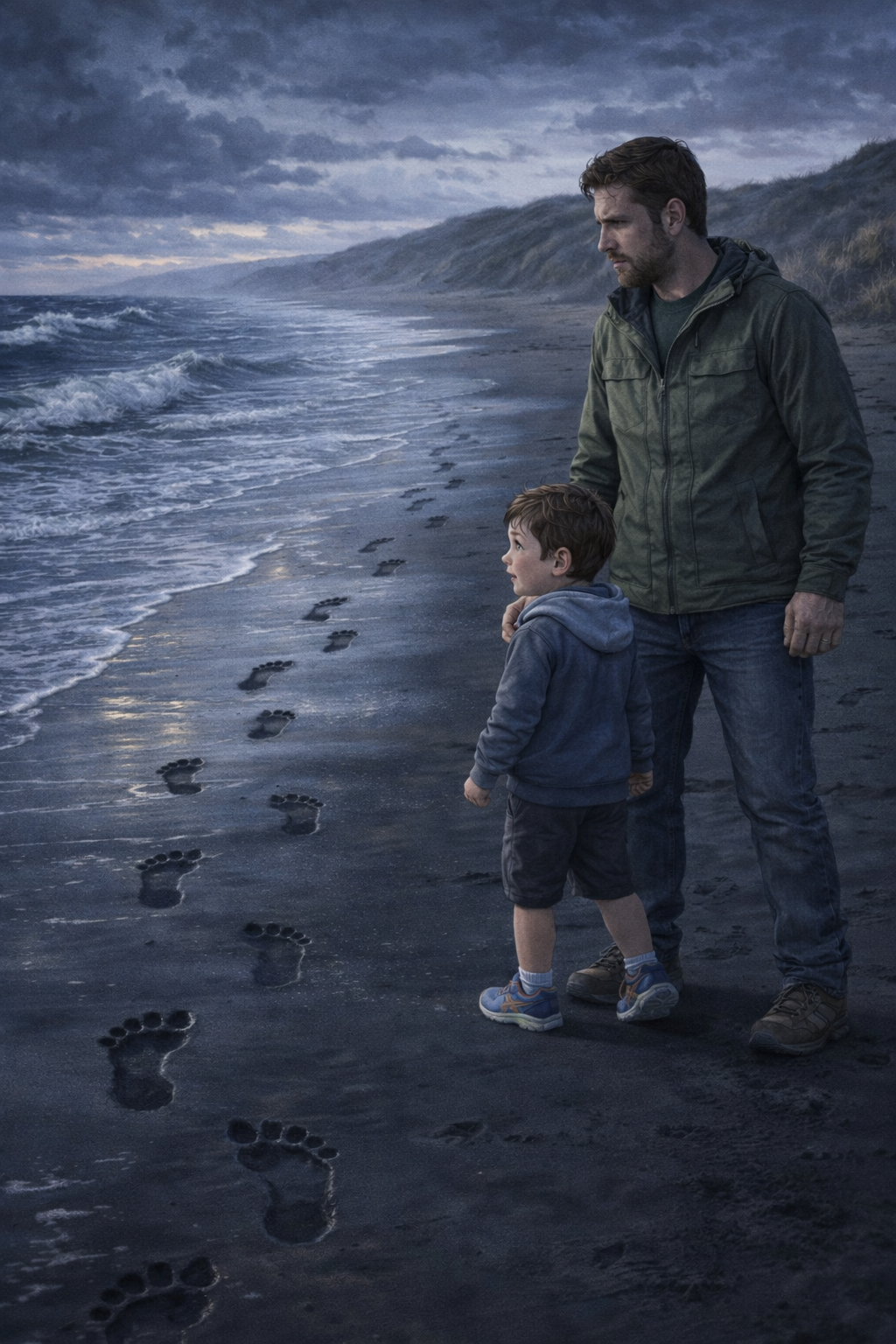](https://bookstack.thecartwrights.nz/uploads/images/gallery/2026-04/lBZimage.png)
There was something there.
Not a person. Not exactly movement.
Just a patch near the edge of the tide where the wet sand seemed darker than the rest. Too dark. Too neat. As if the beach had rubbed one bit of itself hard with a thumb.
Mum followed her gaze.
“Stay behind me until we know what we’re looking at.”
“That’s going to be difficult,” Ivy said. “Since what we’re looking at appears to be the whole beach.”
“Behind me anyway.”
They walked down the path through low scrub and onto the sand.
The first step onto it felt wrong at once.
Not because the beach was soft. It wasn’t. The upper dry sand shifted, but below that lay a firmer, damp strip packed flat by the tide. Mo had said stay there. Firm sand. The strip ran along the beach in a dark shining curve.
The wrongness came from the sound.
Footsteps should have made footstep sounds.
Instead the sand took each one with a soft, swallowed hush, as though it were listening before it let them go.
Dad heard it too. “Nope,” he said under his breath. “Absolutely not a fan of that.”
Oakley grinned up at him. “Beach is eating noise.”
“Lovely. Hate it.”
The wind shoved at them from the sea. Ivy pushed hair out of her mouth and looked left, then right. Their footprints trailed behind them in a neat family line. Mum’s. Dad’s. Amber’s. Ivy’s. Oakley’s smaller ones stamping in bursts whenever he forgot to walk properly.
Ordinary.
Then Amber caught Ivy’s sleeve.
“There.”
Just ahead of them, close to the edge of the foam, a fresh footprint appeared.
Not because someone stepped there.
Because the sand dipped on its own.
A bare human footprint. Clear heel. Five toes. Smallish. Pointing inland.
Nobody moved.
A second footprint appeared ahead of it.
Then a third.
Then a fourth.
A line of prints formed out of nothing, one after another, coming away from the sea and heading diagonally up the beach toward the dunes.
Oakley made a very small, impressed noise. “The sea is doing walking.”
Dad’s hand landed instantly on his shoulder. “Nobody follows that.”
“I know,” Oakley said, equally offended and delighted.
The footprints kept coming.
Each one arrived with a tiny, awful softness, as though an invisible foot were pressing down and lifting away. The line climbed the beach. Straight toward the marram grass.
Ivy pulled the receipt from Mum’s folded map and opened it with cold fingers.
The black text was still there.
THANK YOU FOR PAYING IN FULL.
DO NOT FOLLOW THE FIRST FOOTPRINTS.
“Those are the first ones,” Amber whispered.
“That’s the trap, then,” said Dad.
“Or the invitation,” Mum said.
That was worse somehow.
The footprints stopped just short of the dunes.
There were maybe twelve of them. Maybe thirteen. Ivy didn’t trust herself enough to count. They looked too neat. Too deliberate. They did not look like prints someone had made by walking. They looked like the idea of footprints. The beach showing its working.
Nothing stood at the top of them.
No person. No creature. No damp child staring out of the wind.
Just dune grass moving in hard gusts.
[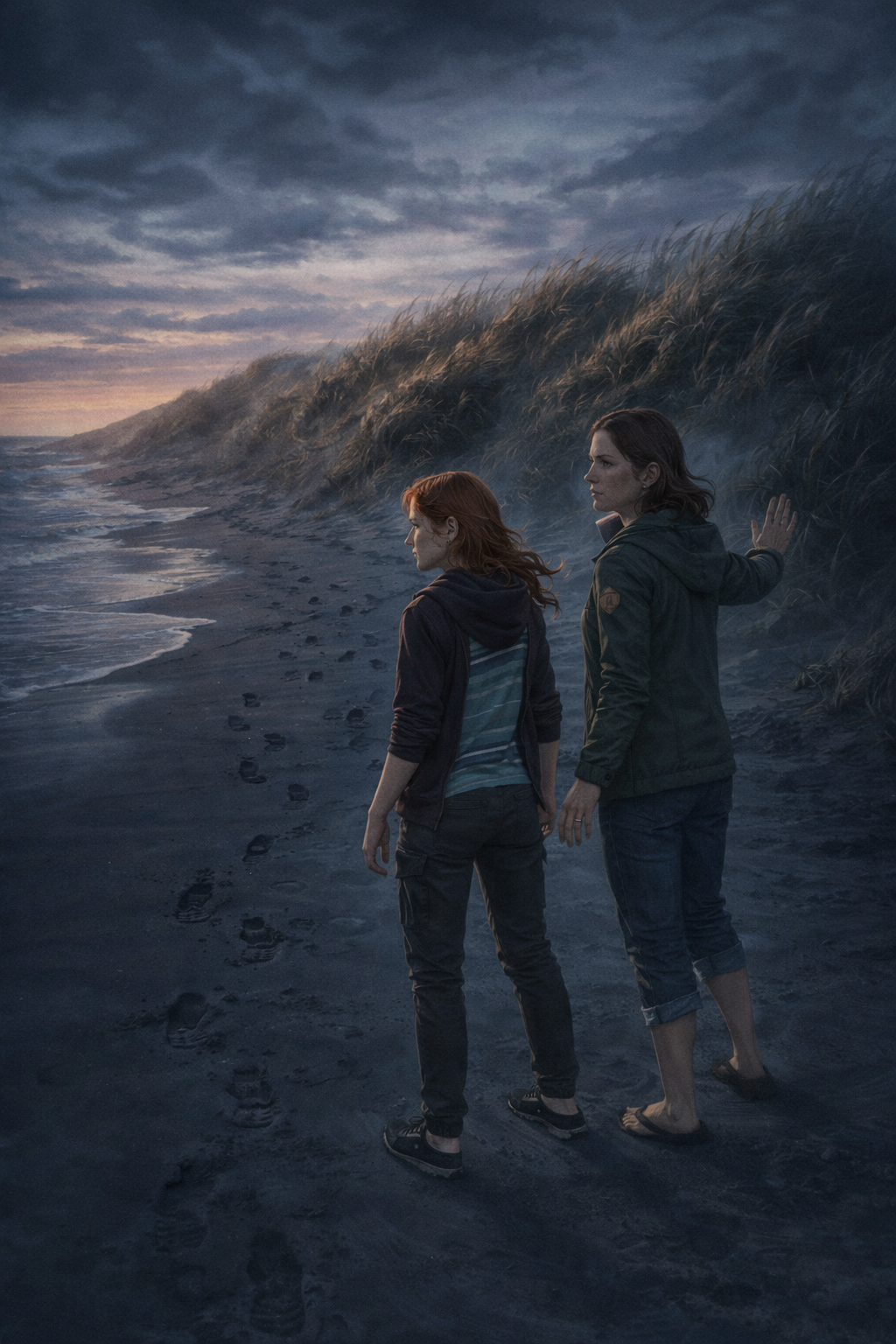](https://bookstack.thecartwrights.nz/uploads/images/gallery/2026-04/UQUimage.png)
Then, from somewhere behind the dunes, a voice called, “I-vie?”
Every hair on Ivy’s arms lifted.
Dad’s head snapped round. Amber grabbed Mum’s sleeve. Oakley went very still.
It had not been loud.
It had not sounded monstrous.
That was the problem.
It had sounded close. Familiar enough to make Ivy’s chest jump before the rest of her caught up.
Wrong enough that she knew, one beat later, it wasn’t right.
I-vie.
Almost.
Almost.
Mum stepped forward before Dad could.
“No,” she said, calm and clear into the wind.
The dune grass shivered.
The voice did not answer.
Dad stared at her. “That was it?”
“It wasn’t asking a question,” Mum said.
The Compass clicked in her hand.
Ivy had not even seen her take it from the map.
The needle was pulling left now, along the shoreline.
“Bel—” Dad stopped himself, jaw tightening. “Mum.”
Another footprint appeared.
Not on the inland line.
On the wet firm strip near the water.
Then another.
These pointed the other way.
Out to sea.
Amber sucked in a breath. “Return.”
Everyone looked down at the postcard in her hand.
[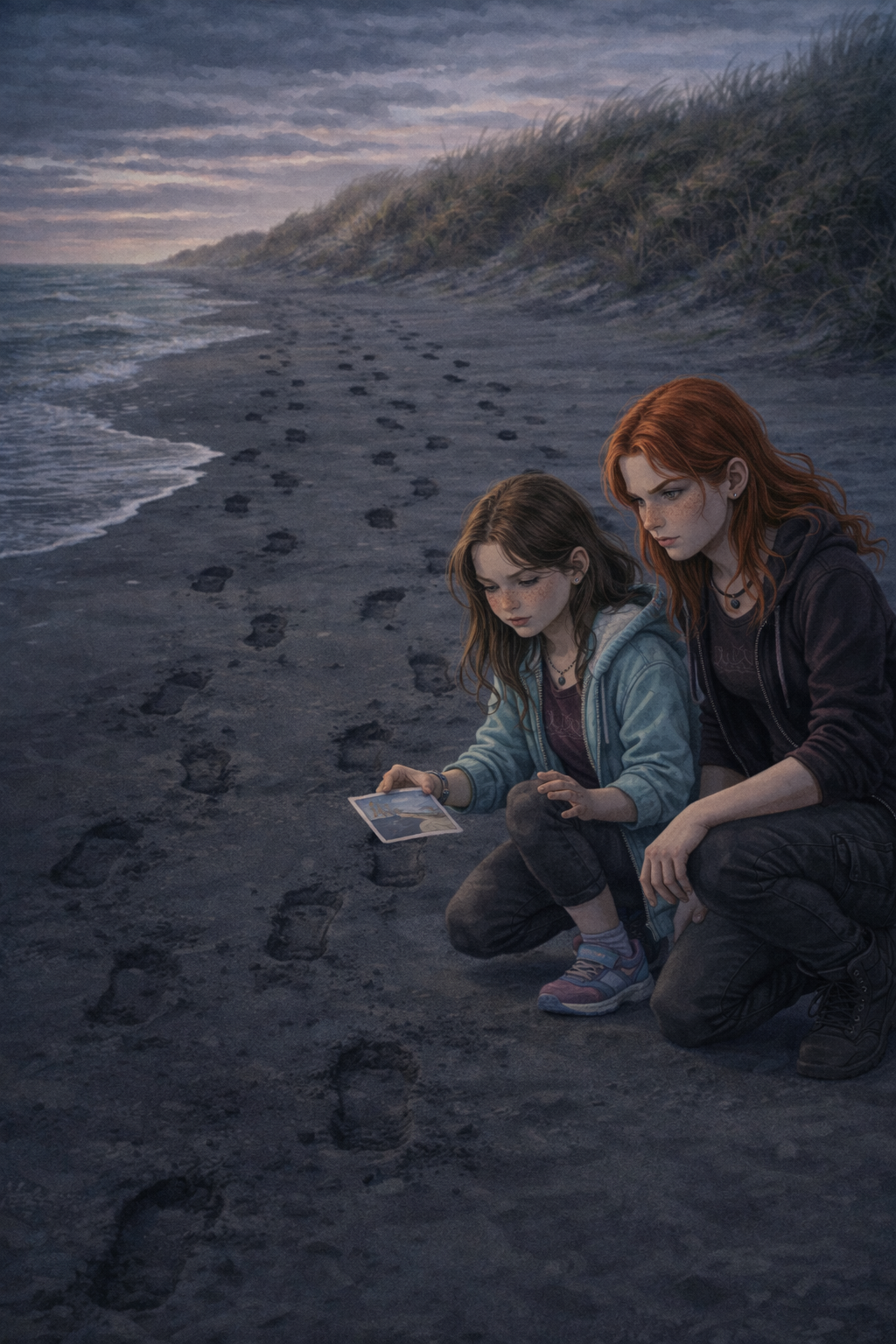](https://bookstack.thecartwrights.nz/uploads/images/gallery/2026-04/hrTimage.png)
At some point she had taken it from the map without anyone noticing. Her thumb covered the lantern stamp in the corner. The image on the front—black sand, low surf, too many footprints—looked less like a picture now and more like a warning label.
“Count only the ones that return,” Amber said. “Not each footprint. The tracks. Count the tracks.”
A second line appeared from the dunes, heading back down toward the water.
Then a third.
Then a fourth.
Each one was separate. Whole little paths of bare footprints, as if invisible people were coming back across the beach one after another.
Dad stared. “That is not okay.”
“No,” Mum said. “But it is useful.”
They began counting.
Not the first line. Not the eager one coming inland. The returning lines.
One.
Two.
Three.
The tide hissed up and withdrew. The wind flattened the dune grass in waves.
Four.
Five.
Six.
Oakley whispered the numbers after them with grave rocket-launch concentration.
Seven.
Eight.
Nine.
More tracks appeared. Some small. Some adult-sized. Some narrow, some broad. All of them came back from the dune line to the water and ended where the foam reached in and touched them away.
Amber counted with her finger pressed to the postcard.
Dad counted under his breath.
Ivy counted because not counting felt impossible.
Ten.
Eleven.
Twelve.
The voice came again.
“Emmber?”
Not quite Amber.
Not quite any normal way anybody ever said Amber.
The second syllable dragged too long, sweet in a way that felt sticky.
Mum did not even turn.
“We hear you,” she said. “We are staying on the firm sand.”
The wind hit them hard enough to sting Ivy’s face.
For a second the air smelled wrong. Not sea salt. Not wet kelp. Something stale and shut in. Dust. Old curtains. Caravan air that had not moved in years.
Site 23.
Ivy knew it before she had a proper thought.
Thirteen.
Fourteen.
Fifteen.
The returning tracks kept forming.
Dad had moved closer now, one arm half out as if he could physically stop the whole family from making a bad decision with sheer parental authority. Knowing Dad, he probably believed he could.
Sixteen.
Seventeen.
The inward line near the dunes deepened.
The very first footprints.
The wrong ones.
They had not faded. They had sunk darker instead, waiting.
“Why are they still there?” Ivy asked.
Nobody answered.
Because everyone knew.
They were waiting for somebody to complete them.
Eighteen.
Nineteen.
Twenty.
The sea boomed against the shore. Gulls had stopped calling. Even the wind seemed to pull its punches.
Twenty-one.
Twenty-two.
Then nothing.
No twenty-third returning track.
The beach held itself.
Ivy looked from the water to the dunes to the wrong footprints leading inland. They were smaller than she’d first realized. Child-sized. Not tiny. Not Oakley. Closer to—
“No,” she said out loud.
Mum turned to her at once. “What?”
Ivy pointed with a shaking finger. “Those are his.”
Nobody asked whose.
They all knew.
The boy from Site 23.
The line from the sea to the dunes waited in dark little steps. Child-sized. Stopping exactly where the marram grass began.
Only twenty-two had returned.
Something had come in.
Something had not gone back.
The Site 23 tag, still wrapped in the receipt inside the fold of the map, grew suddenly hot through the paper.
Ivy jerked. Mum saw it, opened the fold, and the chipped enamel square nearly fell out.
The lantern symbol on the back had gone bright.
Not glowing. Not silly magic-movie shining. Just sharper. Wet-looking. Alive in a way metal should never be.
Dad saw Ivy’s face and went pale around the edges.
“No,” he said at once, following the direction of her thoughts with horrifying accuracy. “Absolutely not. You are not stepping into anything.”
“I wasn’t—”
“You were.”
“I was thinking.”
“With your feet.”
“That is incredibly rude.”
“It is also correct.”
Another voice called from behind the dunes.
This time it said, “Ivy.”
Perfectly.
Exactly.
For half a second it was the most dangerous thing she had ever heard.
Not because it sounded scary.
Because it sounded right.
The sort of right that reached inside your ribs and tugged.
Mum’s voice cut across it like a snapped rope.
“No.”
Not loud.
Final.
The beach seemed to flinch.
Mum stepped onto the firmest strip of wet sand and lifted her chin toward the dunes.
“She is not answering you,” she said. “We came as travellers. We were welcomed. We paid in full. You do not get her name.”
The wind dropped.
Just for a breath.
Just enough for Ivy to hear the sea sucking back over stones farther down the beach. Just enough for Oakley to whisper, “Mum told the beach off.”
Nobody corrected him.
The wrong footprints shuddered.
Not moved. Shuddered.
A tremor ran through the whole line, heel to toe, toe to heel, as if something beneath the sand had clenched.
The Compass needle snapped seaward.
Amber stared at the tag in Mum’s hand. “It needs its marker.”
Dad looked at her. “What?”
“The tag,” Amber said, faster now, words tripping over each other. “Mo said it was an anchor. And the boy said to keep it where the map can see it, and the map keeps showing us broken places, and if Site 23 is loose, maybe this is another bit of it washing through and it can’t go back because—”
“Because it doesn’t have what belongs to it,” Ivy finished.
Oakley pointed at the dark inland line. “Toast Boy lost his number.”
The silence after that was so complete it felt staged.
Dad closed his eyes for one second.
“I hate,” he said to the air, “how often the four-year-old is contributing useful operational data.”
“Same,” said Ivy.
Mum looked from the tag to the last wrong footprint nearest the dunes. Then at Ivy.
The question in her face was careful.
Not permission exactly.
Trust.
Ivy swallowed.
She wanted to say she was fine.
She was not fine.
Her hands were shaking. Her knees felt hollow. The call of her own name still rang in her head, too perfect, too clean. She could still feel the pull of that empty next step waiting for her foot.
But the boy in Site 23 had warned them.
He had given her the tag.
He had looked scared.
And somebody had paid for the postcard.
“I can do it,” she said.
Dad made a sound that had no words in it at all.
Mum stepped closer to Ivy, close enough that their shoulders almost touched.
“On my count,” Mum said quietly. “You do not step beyond the firm sand. You do not put your foot in the print. You place the tag and come straight back. If anything says your name, you ignore it. If anything says anything else, you ignore that too. Understood?”
Ivy nodded.
Dad looked like a man discovering several new and terrible things about parenthood at once.
“I hate this chapter of our holiday,” he said.
“Noted,” said Mum.
Amber thrust the postcard at Ivy. “Take this too.”
“Why?”
“I don’t know,” Amber said honestly. “It just feels rude not to.”
That made no sense at all.
It also felt right.
Ivy took the postcard in one hand and the Site 23 tag in the other.
The enamel was hot.
The beach had gone quieter than beaches were meant to be.
No gulls.
No nonsense chatter from the carpark.
No children somewhere farther down yelling in the surf.
Just the sea. Just the wind. Just the family breathing.
She walked.
One step.
Two.
Firm sand under her shoes.
She stopped at the edge of the wrong line.
The footprint nearest her was small. Deep. Waiting.
Not for anyone.
For her.
The truth of that hit so hard she nearly dropped the tag.
From behind the dunes came the faintest whisper.
Not her name.
A child’s voice.
Thin. Frayed. Almost swallowed by the wind.
Please.
Ivy looked up.
For the quickest, strangest second she saw him.
Not standing there in full. Not properly. A pale slice of face between grass stems. Dark hair. The shape of somebody trying very hard to stay real.
Then the dune grass snapped back and there was nothing.
She crouched and pressed the enamel tag into the last wrong footprint.
[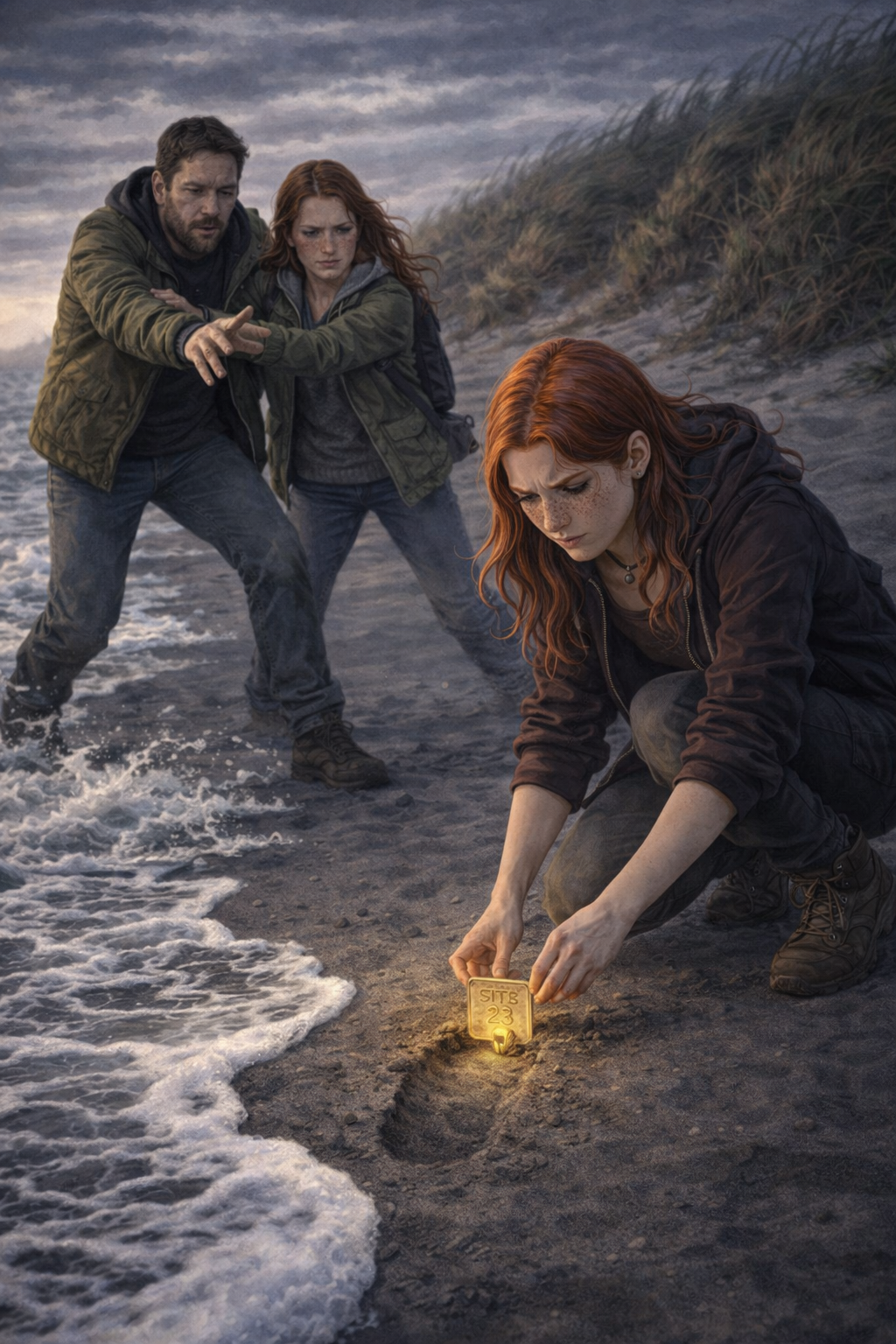](https://bookstack.thecartwrights.nz/uploads/images/gallery/2026-04/VSrimage.png)
The lantern symbol touched black sand.
The Compass screamed.
Not with sound.
With movement.
The needle spun so fast the brass case vibrated in Mum’s grip.
The postcard in Ivy’s other hand went icy.
The sea rushed forward in a single hard white-edged wave.
Dad lunged.
Mum threw one arm across his chest so fast it almost looked rehearsed.
“Wait.”
The wave stopped inches from Ivy’s shoes.
Stopped.
Hung there, water trembling, foam hissing in place.
Then it slid backward.
And as it went, a new line of footprints appeared.
Not coming inland.
Returning.
Small. Bare. Child-sized.
One after another, they pressed into the wet black sand beside Ivy and walked down toward the sea.
Ivy did not move.
Could not.
The prints were not eager. Not hungry. Not inviting.
They were tired.
That was the worst and saddest thing about them.
They looked relieved.
Amber made a sound halfway between a gasp and a sob.
Oakley whispered, “He found his way back.”
The line reached the water.
A final footprint formed at the edge of the foam.
Then the sea took it.
All at once, sound came back.
The wind hit full force. Gulls cried farther down the coast. The surf crashed properly again. Dad was suddenly moving, hauling Ivy backward by the shoulders with exactly enough force to be safe and exactly enough panic to say everything else.
“You do not,” he said, voice unsteady, “ever do that again without first letting me have several complaints.”
“I didn’t even go in the print,” Ivy said, breathless.
“I know.”
“That was the good version.”
“I am aware.”
Mum was staring at the dunes.
The marram grass had stopped moving.
Not because the wind had dropped.
Because whatever had been behind it was gone.
The first inward line of footprints had changed.
They no longer looked dark and eager.
They looked ordinary.
Almost.
Only there were too many of them now, and the spacing was wrong at the top, where the last few prints blurred and dragged, as if something had been pulled sideways out of one path and into another.
Track damage, Ivy thought.
The road washing through.
Not just a ghost thing. Not just a haunted beach.
A broken route.
Mum knelt and picked something out of the sand where the wave had paused.
Not the tag. Ivy still had that clenched in one fist.
This was a thin, dark strip of something that looked at first like driftwood. Then Mum turned it over.
It was not wood.
It was old painted metal, worn almost black by salt and sand.
A narrow marker plate, curved at one end.
On it, beneath scratches and rust, was a tiny lantern.
And below the lantern, stamped so faintly Ivy almost missed it, were three shallow lines:
PINES
Dad looked over her shoulder. “Please tell me that says something helpful and not, for example, YOU ARE ALL DOOMED.”
“It says Pines,” Mum said.
“Which is not helpful.”
“It is more helpful than doomed.”
“Low bar.”
Amber took the postcard back from Ivy.
“There’s more on it.”
The back, beneath COUNT ONLY THE ONES THAT RETURN, now held another line in cramped grey writing that looked water-soaked and old even though it had not been there thirty seconds ago.
WHEN THE BELL DOES NOT RING, TAKE THE HIDDEN TRACK.
Nobody spoke.
Dad turned slowly toward the carpark and the scrub beyond it.
Past the gravel pull-over, on the far side of the road, a line of dark pines stood against the paling sky.
Ivy had not really looked at them before.
Now she saw the gap.
A narrow space between two trunks where there should not have been any path at all.
The Compass needle pointed straight at it.
Oakley broke the silence first.
“Beach gave us directions.”
Dad put both hands on his hips and looked at the sea, then the pines, then the heavens in general.
“Fantastic,” he said. “A beach with admin.”
Mum laughed once, tired and real.
That helped more than it should have.
Ivy looked down at the Site 23 tag still in her hand.
The enamel had cooled. Black sand clung around the edges. The number 23 looked darker than before, as though the sea had rubbed it awake.
For one second, in the brassy scratched little face of the tag, she thought she saw a reflection that wasn’t hers.
A boy in a caravan doorway.
One hand lifted.
Not waving this time.
Pointing inland.
She blinked, and it was only chipped enamel again.
Dad was already herding them back toward the path.
“No more solving cursed tide equations in the dark,” he said. “We go back to the caravan, we eat something with actual nutritional ambition, and then we decide whether the hidden track can wait until morning.”
“The postcard literally just told us to take the hidden track,” Ivy said.
“Yes,” said Dad. “And I, in turn, am telling the postcard to calm down.”
Mum folded the marker plate into the map with the receipt and the postcard. Very carefully. The sort of careful that meant she had already decided this was not over tonight.
Amber kept looking back at the water.
“Do you think he got free?”
Mum did not answer too quickly.
“No,” she said at last. “But I think we helped something go back where it belonged.”
That was not the same thing.
It was also, somehow, enough for now.
They climbed the path off the beach with the wind at their backs and the sea still roaring behind them. At the top, Ivy looked once over her shoulder.
The beach lay empty.
No wrong footprints.
No waiting line from the sea.
No figure in the dunes.
Only black sand, white surf, and the last smear of daylight over the water.
Ordinary.
[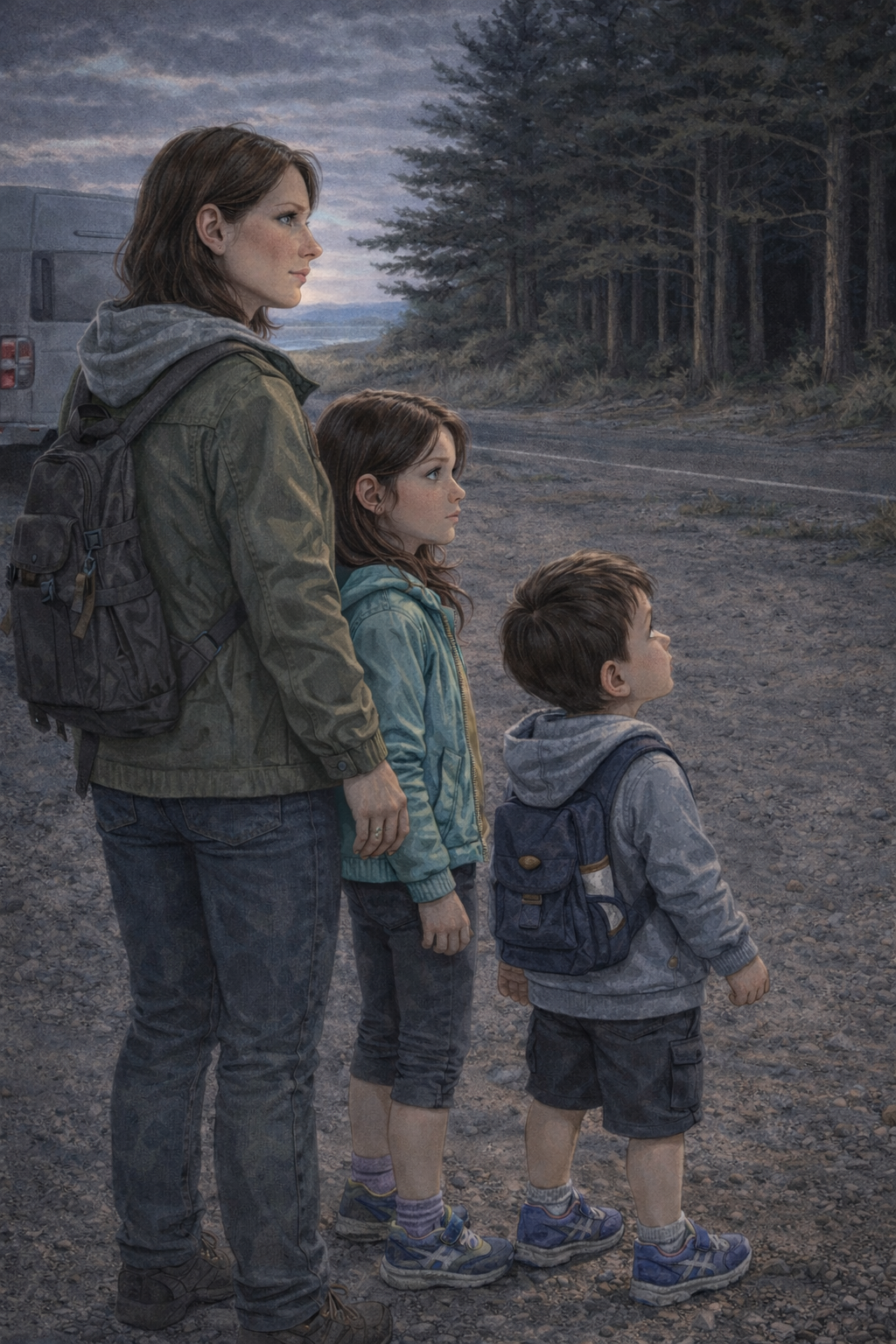](https://bookstack.thecartwrights.nz/uploads/images/gallery/2026-04/nHlimage.png)
Which would have been much more convincing if the Compass had not kept pulling toward the pines hard enough to make Mum’s wrist ache.
As they crossed the gravel to the car, a sound drifted after them from the road beyond the scrub.
Not loud.
Not close.
A bell.
One single clear note.
Then silence.
Dad stopped dead.
Mum and Ivy looked at each other.
Amber tightened her grip on the postcard.
Oakley, with the delighted dread of a child who suspects bedtime has just lost a fight, whispered:
“Oh good.
“It didn’t ring.”
# Chapter 5 - The Hidden Track
Nobody said anything for a full ten seconds after they got back to the car.
The beach was still there. The dunes were still there. The tide was still dragging its black edge in and out with a sound like someone slowly tearing cloth.
But the wrongness had changed shape.
It was no longer standing in front of them, obvious and hungry and trying to sound like family. It had gone quieter than that. Quieter was worse.
Dad opened the back door before Mum had even finished bundling the map, receipt, postcard, and marker plate together. “In. Everyone. Shoes off if they’re full of sand. Nobody wander.”
Oakley, who had enough wet black grit on him to qualify as a minor geological event, climbed into his seat with grave mission importance. “Toast Boy got his walking back.”
Amber paused halfway in, hugging herself against the cold. “Part of it,” she said softly. “Not all of it.”
Ivy didn’t move at first.
She was still looking at the place near the dunes where she had put the Site 23 tag down and the sea had answered.
Her heartbeat had settled, but not properly. Every now and then it still gave one hard bang, as if it had remembered the exact way her name had sounded coming out of the grass. Not almost right. Right. Perfectly right. That was the bit that kept scraping over the inside of her mind.
Mum touched her shoulder, not gently enough to be comforting and not roughly either. Just enough to bring her back into her own skin.
“In the car, love.”
That worked better than anything softer would have.
Ivy climbed in and pulled the door shut. The slam sounded ordinary. She was more grateful for that than she wanted to admit.
Dad got into the driver’s seat and started the engine. The RAV4 shuddered once, familiar and solid and blessedly mechanical. Warm air pushed out through the vents. Caravan lights glowed in the mirrors behind them, yellow and homely and almost ridiculous after what had just happened. It looked impossible that something with cushions and cereal boxes and a drawer full of mismatched forks could still exist in the same world as that beach.
Dad gripped the wheel and looked at Mum. “We’re leaving.”
Mum had the clue bundle spread over her knees. The old local map. The folded receipt. The postcard with its impossible instructions. The black metal **PINES** plate. The Site 23 tag in Ivy’s hand. The Lantern Compass sat on top of the lot, still open, its needle quivering like it had had too much coffee.
“We might be,” she said.
“Might be?”
Mum didn’t answer straight away. The Compass needle jerked hard enough to tick against the glass. Not toward the road home. Not toward the beach.
Inland.
Across the road, the pine trees stood in a long black line against the last of the evening light. From the car they looked ordinary enough. A plantation edge. Dark trunks, wind-tossed tops, a strip of scrub and shadow underneath.
Then something gave a single, thin metallic note.
Not a ring.
More the sound of a bell trying to remember how.
Everyone in the car went still.
Oakley’s eyes widened. “Mission noise.”
Dad swore under his breath and turned his head toward the trees.
There it was again.
Not from deep in the pines this time. Closer. From somewhere just across the road, half-hidden under wind and branches and the fading hiss of the sea.
Mum turned over the postcard.
The writing on the back had not changed.
**WHEN THE BELL DOES NOT RING, TAKE THE HIDDEN TRACK**
Nobody spoke for a beat.
Then Dad said, “That is a bell. That is literally a bell.”
“It’s not ringing properly,” Amber said.
“That is not a sentence I can use in court.”
Mum let out a short breath that might have been a laugh on a better day. “It said when the bell does not ring. Not when there is no bell.”
Dad stared out at the trees. “Belinda.”
“I know.”
“No. I mean really know. We are not towing a caravan into haunted forestry because some enchanted stationery has become annoyingly poetic.”
The Compass snapped harder toward the pines.
Ivy felt the Site 23 tag warm in her palm.
Not hot the way it had been on the beach. More alert. Like it knew where it was.
She looked at the dark line of trunks and, before she could stop herself, said, “He’s still in it.”
Dad looked back at her in the mirror.
She wished, immediately, that she had phrased it differently. Less dramatic. Less obviously true.
Amber saved her. “Something is,” she said. “And that helped, but it didn’t finish.”
Oakley nodded solemnly. “We did one foot.”
Dad made a helpless noise and looked at Mum again. “I hate that I know exactly what he means.”
Mum had already un-clicked her seat-belt.
“Belinda.”
“We are not driving blindly in. We are getting out, looking from the roadside, and deciding with our actual eyes instead of inside a panic.”
“That,” Dad said, “is the first sensible sentence anybody has said in a while.”
He killed the engine but left the lights on. The headlamps washed across the road and touched the first rank of pines. Gravel gleamed. Wet air pushed at the car. Behind them, the caravan rocked once in the coastal wind and settled.
Mum tucked the clue bundle under one arm, then looked back over the seats. “Nobody splits up. Nobody answers anything strange. And if I say back in the car, you move first and argue later.”
“Even if the argument is really good?” Ivy asked.
“Especially then.”
That got the tiniest twitch out of Dad’s mouth.
Good. If he could still do sarcasm, the universe had not completely fallen apart.
They crossed the road together.
Up close, the edge of the pines was less like a forest and more like a badly kept secret. Gorse and low scrub had grown thick along most of the frontage, but not all of it. About twenty metres along from the pull-over, there was a narrow gap in the dark growth. Not wide enough to notice from a passing car. Not wide enough to count as an entrance.
Until the wind moved.
The branches shifted. Something dull and metal-coloured glinted once in Dad’s headlights.
“There,” Mum said.
Dad went first, because of course he did, boots grinding over the gravel verge. Ivy followed before he could tell her not to. Amber stayed close to Mum. Oakley held Mum’s free hand and dragged his feet just enough to leave ugly little half-moons in the damp grit.
What they found was not a gate exactly.
It was the remains of one.
Two old timber posts leaned inward at the edge of the gap. Once they might have held a sign between them. Now one was split and furred with moss, and the other carried a rusted chain that had long ago lost interest in doing its job. Hanging from a bent iron hook above them was a small bronze bell, greened and weather-stained.
Its clapper was still inside.
But the bell’s mouth had a fine crack running up one side, and the clapper itself had been wrapped tight with a strip of darkened cloth wound around it and knotted hard. The wind pushed the bell. The clapper moved. It struck metal with a dead little tap.
The same sound they had heard from the car.
Not a ring.
A failed one.
Mum looked up at it, and something in her face settled into place. “That’s it.”
Dad frowned. “Someone tied it shut.”
“Silenced it,” Amber whispered.
Ivy was already staring at the post beneath it.
There was an empty rectangular bracket bolted to the timber, eaten with rust but still intact.
Exactly the shape of the **PINES** plate.
Mum saw it at the same time she did.
For half a second neither of them moved.
Then Dad said, very flatly, “No.”
Mum looked at him. “No what?”
“No inserting mysterious beach-metal into cursed roadside fittings at dusk, Belinda.”
“It fits.”
“That is not helping your case in the slightest.”
The Compass jolted in Mum’s arm so sharply it nearly slid off the map bundle.
Oakley pointed at the empty bracket. “That’s where the name goes.”
And because the universe had apparently decided to outsource all its best lines to a four-year-old, nobody could argue with him properly.
Dad raked a hand over his face. “Fine. Fine. Quick. Then if the trees start chanting, we’re gone.”
Mum handed the map bundle to Amber and the Compass to Ivy. She stepped to the post, brushed grit out of the bracket with her thumb, and slid the **PINES** plate into place.
It clicked.
Not loudly. Not magically.
Just the neat, certain click of something returning to where it belonged.
For one breath nothing happened.
[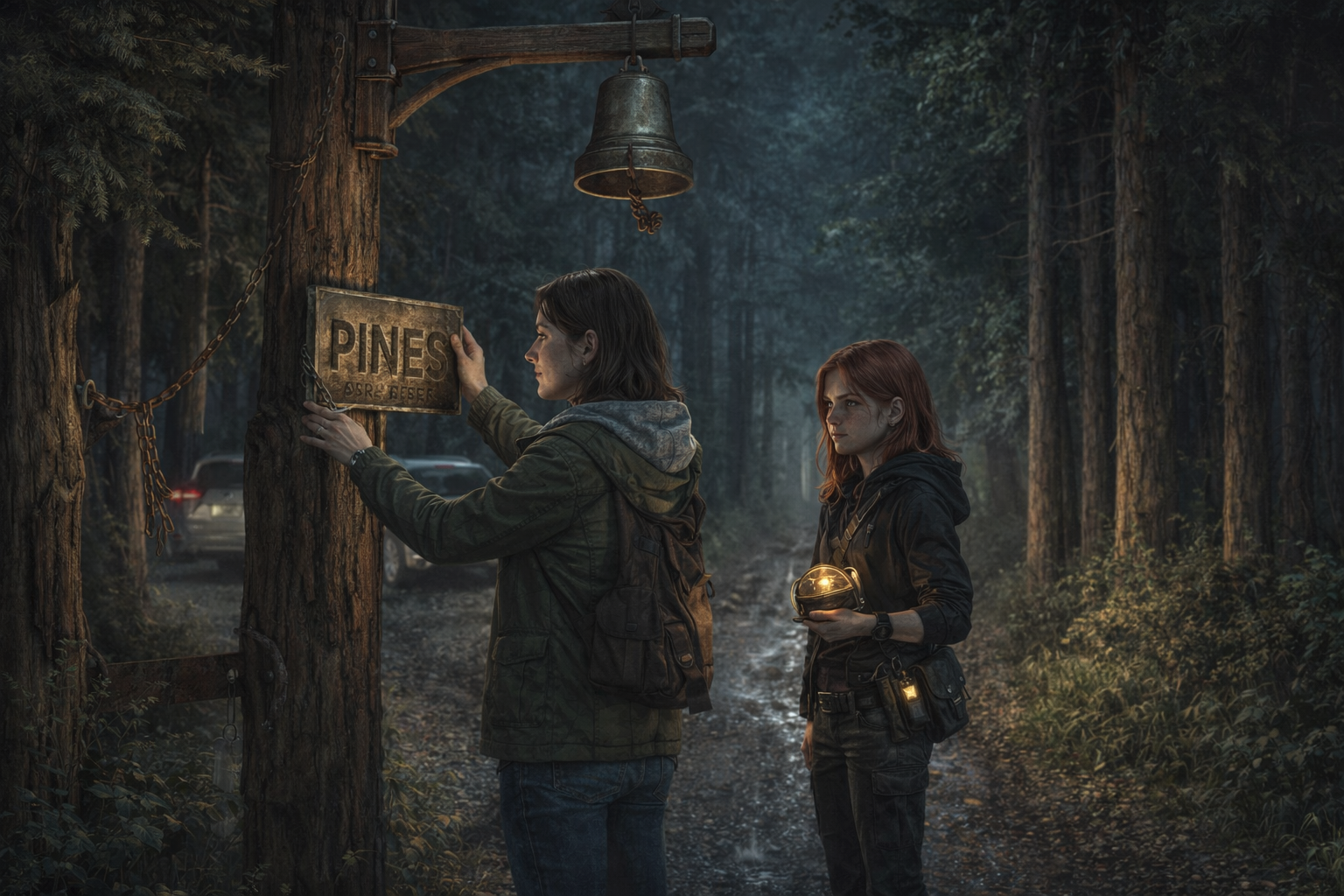](https://bookstack.thecartwrights.nz/uploads/images/gallery/2026-04/lqRimage.png)
Then the chain hanging uselessly between the posts gave a small jerk and dropped, as if it had only been pretending to hold anything back. Pine branches shifted. The darkness beyond the gap seemed to pull itself into straighter lines. What Ivy had taken for nothing but shadow deepened, lengthened, and became recognizable.
Gravel.
Tyre ruts.
A narrow track running between the trees.
Hidden, but real.
Amber made a tiny sound.
Dad didn’t say anything at all. Which, for Dad, was practically a speech.
In Ivy’s hands, the Compass needle steadied.
It pointed straight up the track.
Mum took the map from Amber and flipped it open against the post. Red lines bled slowly across the paper, threading inland from the road they knew onto a spur that had not existed a minute earlier. Near the new line, in small grey writing that darkened as they watched, appeared three words.
**OPEN WHILE SILENT**
Nobody said anything.
Because what was there to say, really.
That was awful.
That was helpful.
That was definitely worse than a normal map.
Dad was the first to recover. “Absolutely not on foot.”
Mum looked at him. “I wasn’t suggesting it.”
“We are not leaving the caravan on the roadside and taking the children into magical pine nonsense in the dark.”
“I still wasn’t suggesting it.”
His eyes went to the track, then to the RAV4, then back again, and Ivy could practically hear the gears grinding in his brain as he measured width, turning circle, tree clearance, grade, and the many ways this could ruin his week.
“It is too narrow,” he said.
As if the track had heard him, branches along the entrance shifted once more. Not much. Just enough to show there was room. Enough for the RAV4. Enough, infuriatingly, for the caravan too.
Dad stared at it.
“You have got to be kidding.”
Mum reached out and laid two fingers briefly against his sleeve. “If it’s open now, I don’t think it stays open because we’re feeling sensible.”
That landed. Ivy could tell by the way his jaw tightened.
The bell gave another dead tap overhead.
Not a ring.
Dad muttered something about filing a complaint with reality, turned on his heel, and headed back for the car.
Five minutes later they were moving.
[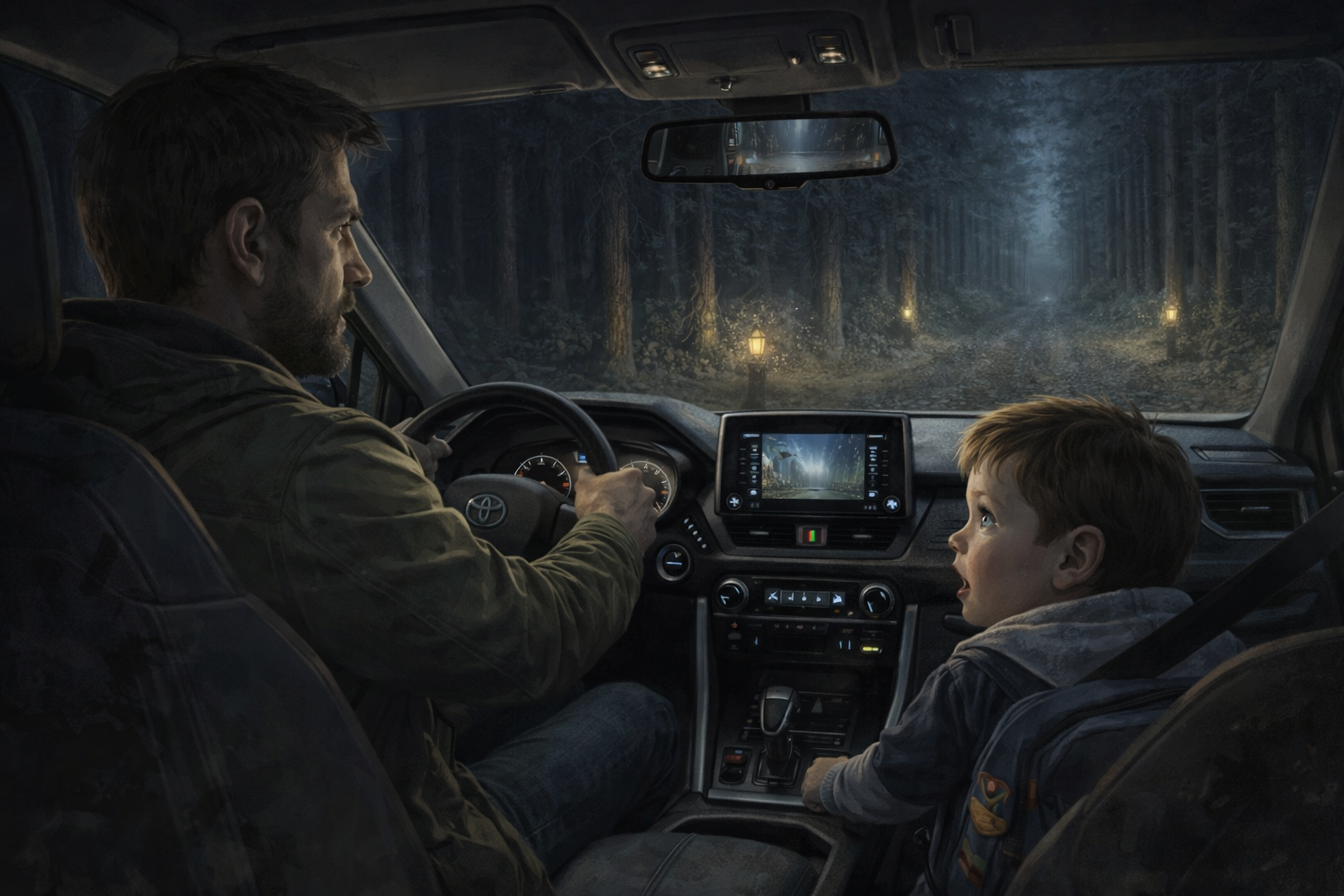](https://bookstack.thecartwrights.nz/uploads/images/gallery/2026-04/PtIimage.png)
Slowly. Very slowly. Dad had both hands locked on the steering wheel, shoulders up around his ears, concentration so fierce it was almost visible. The RAV4 nosed off the ordinary roadside and onto the hidden track. The caravan followed with a low creak and a soft rattle of cups from somewhere in its cupboards.
The moment they passed between the posts, the sound of the sea vanished.
Not faded.
Vanished.
It was so sudden Ivy actually turned in her seat to check if the beach had somehow gone.
All she could see through the back window was the pale blur of the road entrance and then darkness folding over it like water closing.
“Cool,” Oakley breathed.
“No,” Dad said at once. “Not cool. Deeply concerning.”
The track bent left and ran under the pines.
At first it looked like plantation forest, just as it had from the road. Straight trunks. Needles underfoot. Regular rows.
Then the rows stopped behaving.
Trees that should have lined up no longer did. Some were too wide. Some leaned at wrong ages. Ferns began appearing where there should not have been ferns, and low mist threaded between the roots even though the air had been clear five seconds earlier. The headlights kept finding things that did not belong in a simple forestry access road: a white-painted marker stone half-buried in moss, a lantern symbol cut into timber, a weathered post with its number scraped away until only the pale shape of it remained.
Dad noticed that last one too.
“Of course,” he said grimly. “Erasing infrastructure. Apparently that’s this week’s theme.”
Mum, watching ahead, said, “Keep left.”
“There are no lane markings.”
“I know. Keep left anyway.”
The Compass, balanced in Ivy’s lap now, gave a small obedient twitch to the same side.
Amber leaned between the front seats. “It feels longer.”
Because it did.
The track should have opened into some small reserve by now. Or looped. Or ended in a gate. Instead it kept going, curving softly through trees that had no business being this old this close to the road.
Oakley pressed his forehead to the window. “The outside got bigger.”
No one told him he was wrong.
A single wet footprint appeared in the headlights on the gravel ahead.
Child-sized.
Dad braked so fast everyone lurched.
The footprint sat there for the length of one breath, filling slowly with a sheen of dark water, then faded back into dry stone.
Amber made a small, broken sound.
Ivy gripped the Site 23 tag until the edge bit into her hand.
Dad put the car back into gear.
No one suggested turning around. Not because they were brave. Because the footprint had made it worse somehow. Worse in a direction that meant leaving would not feel like leaving at all.
The track finally widened without warning and gave them a clearing.
Dad stopped in the middle of it and let the engine idle while all of them stared.
It was not a campground.
Not exactly.
It was some cousin of one. Some strange old overlap between picnic reserve, roadside stop, and something more formal than either. There was a loop of gravel around a broad central space lined with pine needles and low ferns. A shelter stood to one side, timber-framed and open-fronted, with long tables underneath and old hooks in the beams where lanterns might once have hung. Opposite it stood a noticeboard beneath a shingled roof, its glass clouded and cracked. Beyond that, deeper between the trees, rose a second archway painted long ago in colours that had mostly weathered off.
Mostly.
Even in the dim light, Ivy could see traces of red and gold on it.
And beyond that archway, far back between the trunks, there were points of colour so faint she thought at first they were an afterimage. Then one moved.
A tiny bulb of green.
Then yellow.
Then gone.
Amber saw them too. “I don’t like that.”
Which was how Ivy knew Amber really didn’t like it, because usually she would have said something far more charitable, such as that it looked sad or lonely or possibly misunderstood.
Dad killed the engine.
The sudden quiet had layers in it. Pine hush. Cooling metal. The faint tick of the caravan hitch. Something else beneath all of that, farther in: not music exactly, but the idea of music waiting for permission.
Mum spoke first. “We stay close.”
Dad turned in his seat. “Five minutes.”
“Ten,” said Ivy, before she could help it.
“Five.”
“Eight.”
Dad gave her a look.
“Five,” Mum said. “And if anything here starts acting too interested, we leave.”
They got out.
The air inside the clearing was colder than the beach had been, but dry. Pine needles cushioned their steps. Somewhere high above, branches moved against one another with a whispering sound like paper rubbed together in the dark.
Dad did a fast circuit of the vehicle and caravan, checking the hitch, the tyres, the ground under the wheels. Practicality: the man’s chosen religion. Ivy could see why he was doing it. If the place decided to get clever, at least they would know whether the caravan was physically stuck or merely spiritually inconvenient.
Mum headed for the noticeboard with the map bundle under one arm.
Ivy went with her.
Amber drifted toward the shelter, drawn by something Ivy could not yet see. Oakley followed Dad for six steps, got distracted by a pine cone the size of his head, and squatted beside it like he had just discovered alien technology.
The noticeboard’s glass was cracked in a spiderweb across one corner, but one side hung open. Inside, most of the paper notices had rotted into beige curls. One old map remained pinned behind the grime. Its colours were mostly gone. Its labels were worse. Whole words had been eaten out of it, leaving blanks and broken stubs of lettering.
But the shape was clear enough.
Loops. Bays. A central shelter. A bell marker near the entrance.
And, deeper in, past the second arch, a larger area marked only by a faded cluster of circles and tiny flags.
The paint there had been scratched so hard the wood showed through beneath.
Mum touched the map lightly. “Don’t.”
Ivy froze. “I wasn’t—”
“I know. Just don’t.”
The Lantern Compass had gone warm again. Its needle did not point toward the faded flags. It pointed to the right-hand side of the board, where a narrow timber box was bolted below the map.
The box door hung open.
Inside lay a roll of cloth.
Not paper. Cloth.
Faded cream once, now gone the colour of old tea. Someone had embroidered on it in dark thread: pines, bell-shapes, lantern marks, crossing lines. A route chart, maybe. Or a record. The stitches were tiny and careful, though several rows had been ripped loose as if clawed.
[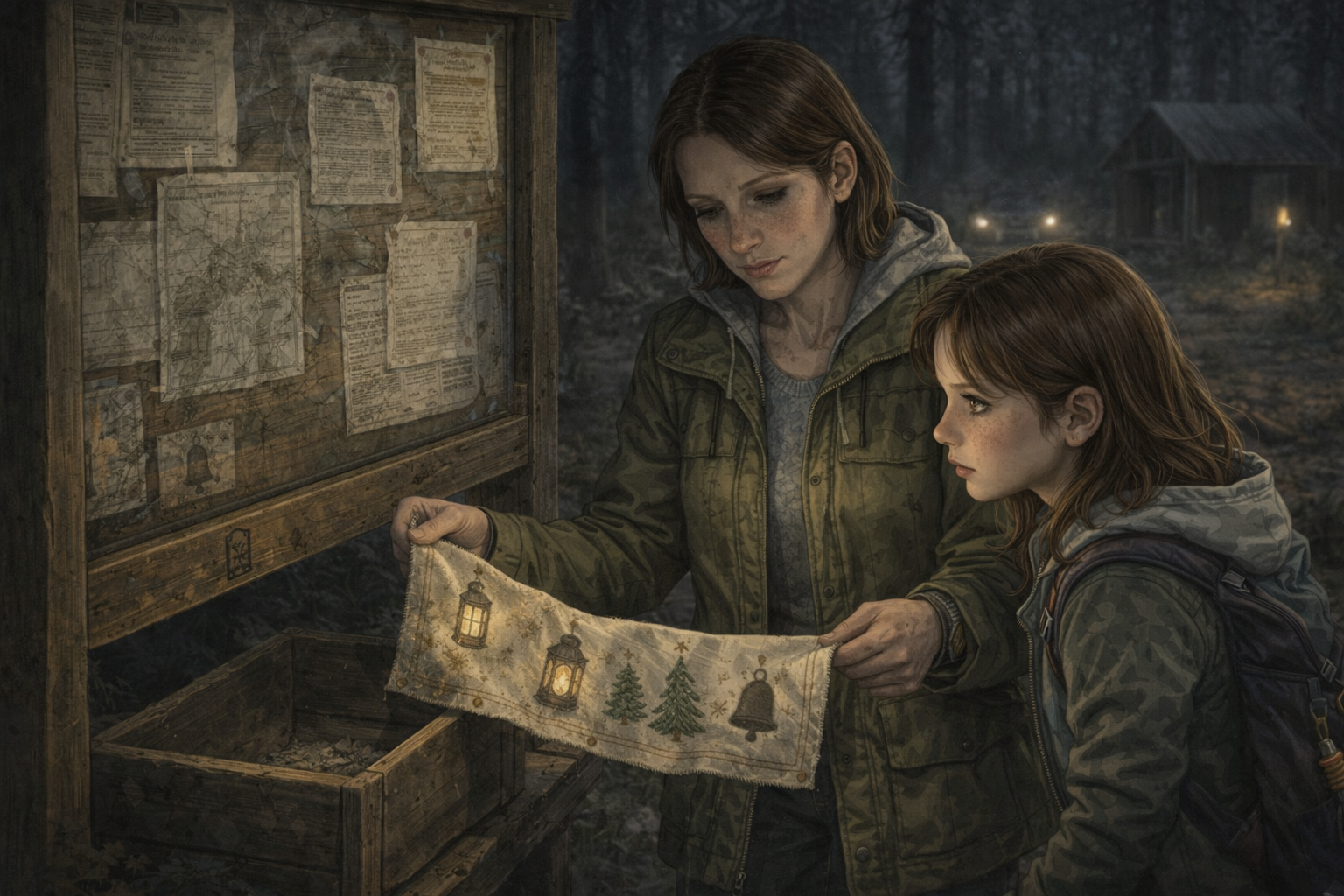](https://bookstack.thecartwrights.nz/uploads/images/gallery/2026-04/LXGimage.png)
Mum drew in a sharp breath.
That was the first moment Ivy felt it: not fear exactly. Recognition, second-hand. The kind that jumps from one person into another before it has a name.
“This,” Mum said quietly, “is Erin territory.”
Ivy looked at her. “You think she knows that pattern?”
“I think your auntie has at least six boxes of old family sewing things and the annoying habit of going quiet exactly when she knows something useful.”
That was so accurate it briefly improved the situation.
Mum reached for the cloth.
The noticeboard to their left gave a soft scraping sound.
Letters were disappearing.
Not quickly. Not with a dramatic flourish. They were just… thinning. The painted remains of some old rule-board or welcome sign were fading as they watched, as if something invisible had started licking them away.
Ivy stepped back hard enough to hit the post behind her.
“Dad,” Mum called, not loudly but with enough steel in it to change the air.
He was there almost immediately. “What?”
She pointed.
He watched two more letters vanish.
“Oh, good,” he said. “Excellent. The road malware is here.”
Amber, from the shelter, said, “I found something.”
Her voice made all three of them turn.
She was standing under the timber shelter beside one of the long tables. At her feet, in the soft mat of needles and dust, ran a trail of small damp prints.
[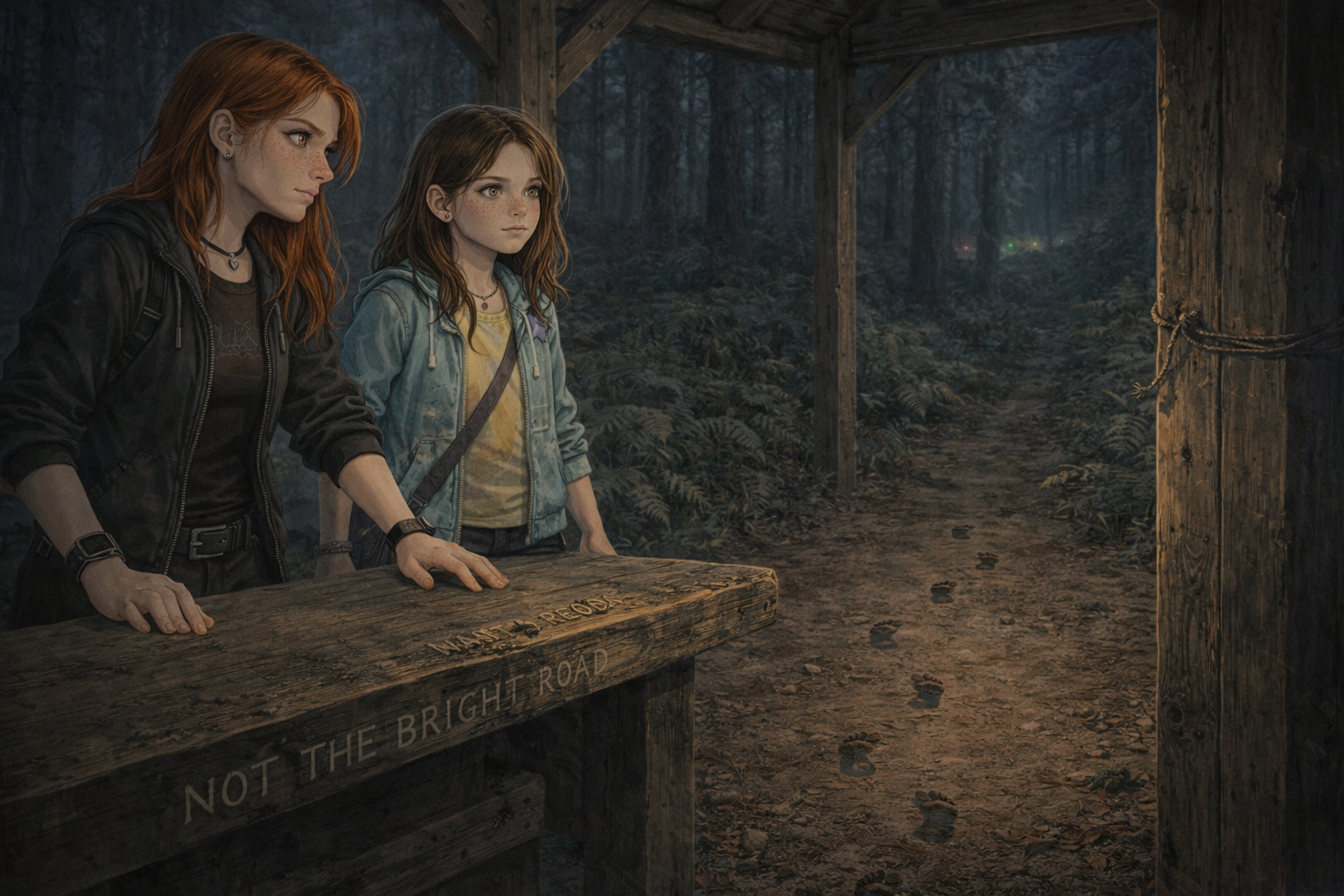](https://bookstack.thecartwrights.nz/uploads/images/gallery/2026-04/rvLimage.png)
Not many. Four. Maybe five.
Child-sized.
They came out from under the table, crossed the shelter floor, and stopped at one of the back posts.
Just stopped.
As if whoever had made them had leaned there, watching, and then ceased to be a problem of feet.
Oakley looked up from his pine cone with complete satisfaction. “Toast Boy was waiting.”
Dad opened his mouth, shut it, then tried again. “Marvelous.”
Amber was staring at the post.
Something had been tied around it, once. A length of faded red-brown thread, now mostly snapped. One end still clung to the wood.
Mum moved closer. The thread was not plain. Tiny stitches in dull gold ran along it in repeating shapes—lanterns, knots, bells.
It matched the cloth in the noticeboard box.
“Don’t touch that one yet,” she said, more to herself than anyone else.
A new sound floated through the trees beyond the second arch.
Three bright notes.
Not from the cracked bell at the entrance. These were lighter. Almost playful.
Then a thin shiver of bulbs came alive far back between the trunks. Red, gold, green, blue. Too distant to show what they belonged to. Close enough to feel them watching.
Ivy’s skin tightened.
The obvious path was the one straight ahead, past the faded arch and toward those lights.
The Lantern Compass swung sharply away from it.
It pointed instead toward the side of the shelter, where a much narrower track slipped off into the dark, nearly hidden by fern and shadow.
Honest road, Ivy thought suddenly.
Not bright road.
Something moved at the edge of that side track.
A figure. Small. Still.
Boy-shaped.
Her breath caught. She knew that height. That waiting way of standing.
The face never came fully clear. It was all wrong for that. Pine shadow across it. Distance. The impression of pale eyes or maybe just reflected light.
But the hand lifted.
Not waving this time.
Pointing.
Away from the distant bulbs.
Toward the narrow dark path and the silent threads tied around the post.
Then the shape was gone.
“Ivy?” Mum said sharply.
She hadn’t realized she had stepped forward.
“He was here.”
Dad was already looking where she looked, but there was nothing there now except trees and the side track disappearing into them.
Amber had gone pale in that strange, open way she got when she was frightened and trying not to damage anyone else’s fear by adding to it. “Did he look wrong?”
Ivy swallowed. “No.”
That's what was weird
No. He hadn’t looked wrong.
Not like the voice on the beach. Not hungry. Not almost-right.
Just tired.
The lights beyond the second arch brightened another fraction.
A strip of old bunting, invisible a moment ago, stirred into view between the trunks. Far off, something spun once and flashed gold.
Dad saw that and made his decision with visible relief. “Nope. Finished. Whatever Disneyland from hell is doing back there, we are not doing it tonight.”
The bright lights gave a soft chiming laugh of music, as if offended.
The noticeboard scraped again.
More letters vanished.
Mum moved fast then. She did not take the whole embroidered cloth. She studied the roll, found a section already torn loose at one edge, and eased only that free—a narrow strip no longer than her forearm, patterned with pine boughs, a bell, three crossed lines, and a lantern stitched at the corner.
The instant it came free, the cracked bell at the entrance gave a dead strike from somewhere back through the trees.
One note.
Failed again.
Not ringing.
The distant coloured bulbs shivered brighter.
Dad took that personally. “In the car. Now.”
Nobody argued.
Oakley abandoned the pine cone with deep sorrow. Amber grabbed the clue bundle from Mum before it could spill. Ivy backed away from the shelter without taking her eyes off the side track, half hoping the boy would appear again and half terrified that something else would.
Nothing did.
But as she turned, she noticed one more thing.
Carved into the side of the shelter table, nearly hidden by age and resin, were four words scratched by something sharp and impatient:
**NOT THE BRIGHT ROAD**
She almost said it out loud.
Then Dad called her name—her real one, ordinary and annoyed and alive—and that was enough to snap the moment cleanly in half.
They piled back into the RAV4. Doors slammed. Dad started the engine. Gravel crunched under the tyres as he reversed with more skill than any human should reasonably possess while towing a caravan in a place that definitely did not want to appear on insurance paperwork.
The bright lights ahead gave one last teasing shimmer through the trunks.
For a second—one horrible, magnetic second—Ivy could see the shape of something beyond them.
A striped tent roof.
A wheel rimmed with bulbs.
A line of hanging flags moving though there was no wind.
Then the Compass in her lap knocked hard against her wrist, dragging her attention sideways toward the dark side track instead, and the view broke up into trees again.
Dad got them turned.
The track back out felt shorter.
Of course it did.
Places like this were rude on purpose.
The marker posts flashed by in the headlights: lantern, scrape, blank number, moss. At the entrance the cracked bell hung over the gap exactly as before, cloth wrapped hard around its clapper. As the RAV4 passed beneath, it knocked once against its own broken mouth.
Dead. Muffled. Wrong.
The hidden track stayed open just long enough to let them through.
The moment the caravan cleared the posts, the sea came back.
Surf. Wind. Road noise. The ordinary world slammed over them all at once so hard Amber actually gasped.
Dad pulled straight into the gravel pull-over and stopped. Nobody moved for a second.
Then Oakley said, with immense satisfaction, “We escaped the tree trap.”
Dad leaned forward until his forehead touched the steering wheel.
“Correct,” he said into it. “That is, somehow, exactly what we did.”
Mum was already unfolding the torn embroidered strip in the glow from the dashboard. The thread looked older out here. Stranger too. Not because it was magically glowing or doing anything dramatic. Because it was handwork. Real handwork. Tiny stitches laid down by somebody patient enough to believe thread could hold a road in place.
Amber leaned over it. “There’s writing.”
So there was.
Not embroidered. Ink, faded almost to nothing along one edge. Just enough remained to make out a few words.
**…KEEP IT SILENT…**
Below that, smaller and shakier:
**…NOT THE BRIGHT ROAD…**
And underneath, in a hand that looked different again, one sentence so faint Mum had to tilt the cloth twice before it resolved.
**ASK THE ONE WHO MENDS**
Silence filled the car.
[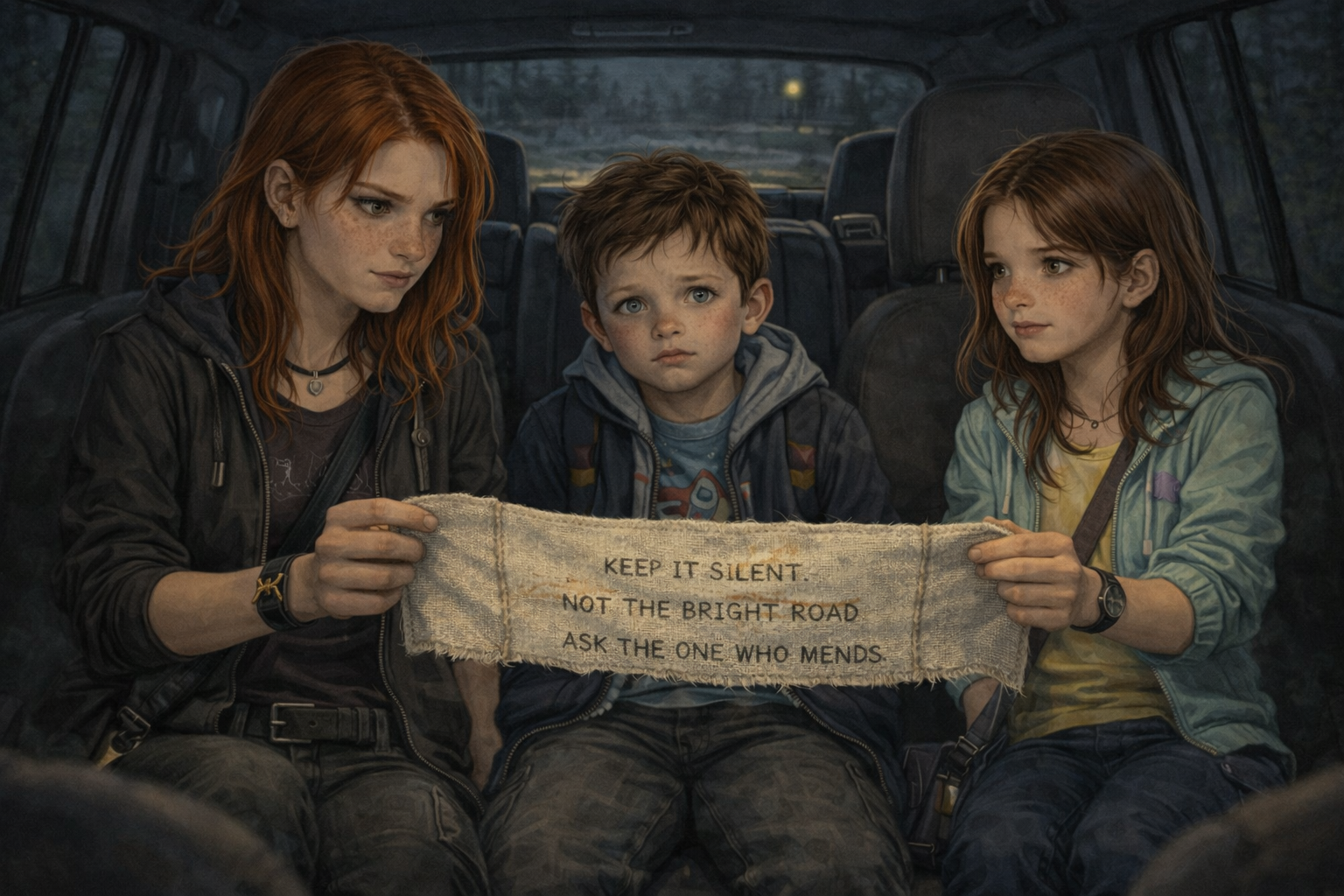](https://bookstack.thecartwrights.nz/uploads/images/gallery/2026-04/QxGimage.png)
Then Dad lifted his head off the steering wheel and stared at Mum.
Mum stared back.
Neither of them said Auntie Erin’s name.
They didn’t need to.
Ivy looked down at the Site 23 tag in her hand, then at the embroidered strip, then out toward the line of pines across the road.
From here the gap was gone.
There was no entrance. No posts. No cracked bell. Just a dark stand of trees moving in the wind above a shabby verge.
If not for the sand still drying on their shoes and the strip of stitched cloth in Mum’s hands, the whole thing could have passed for mass hallucination.
Except for one thing.
Far back between the trunks, where there should have been only dark, a single green light blinked on.
Off.
On again.
Gone.
Dad saw it too.
His voice came out tired and flat and entirely certain. “Right. New family rule. Nobody goes back in there tonight.”
Nobody argued.
Even Ivy.
Especially Ivy.
Because she could still see the small figure at the edge of the side track in her head, hand lifted, pointing away from the bright lights and into the dark.
Not the bright road.
The honest road.
The one somebody had tied shut on purpose.
And somewhere far behind the ordinary sound of the surf, just barely there and not there, she thought she heard the shape of music waiting for a bell to ring properly at last.
# Chapter 6 - The One Who Mends
The stitched strip looked less impressive once it was inside the car.
Out in the pine clearing it had felt important enough to change the air. Back at the roadside pull-over it was just a torn piece of old cloth in Mum’s hands, lit by dashboard glow and the occasional sweep of passing headlights. A frayed edge. Faded thread. A smell of damp leaves and old dust.
[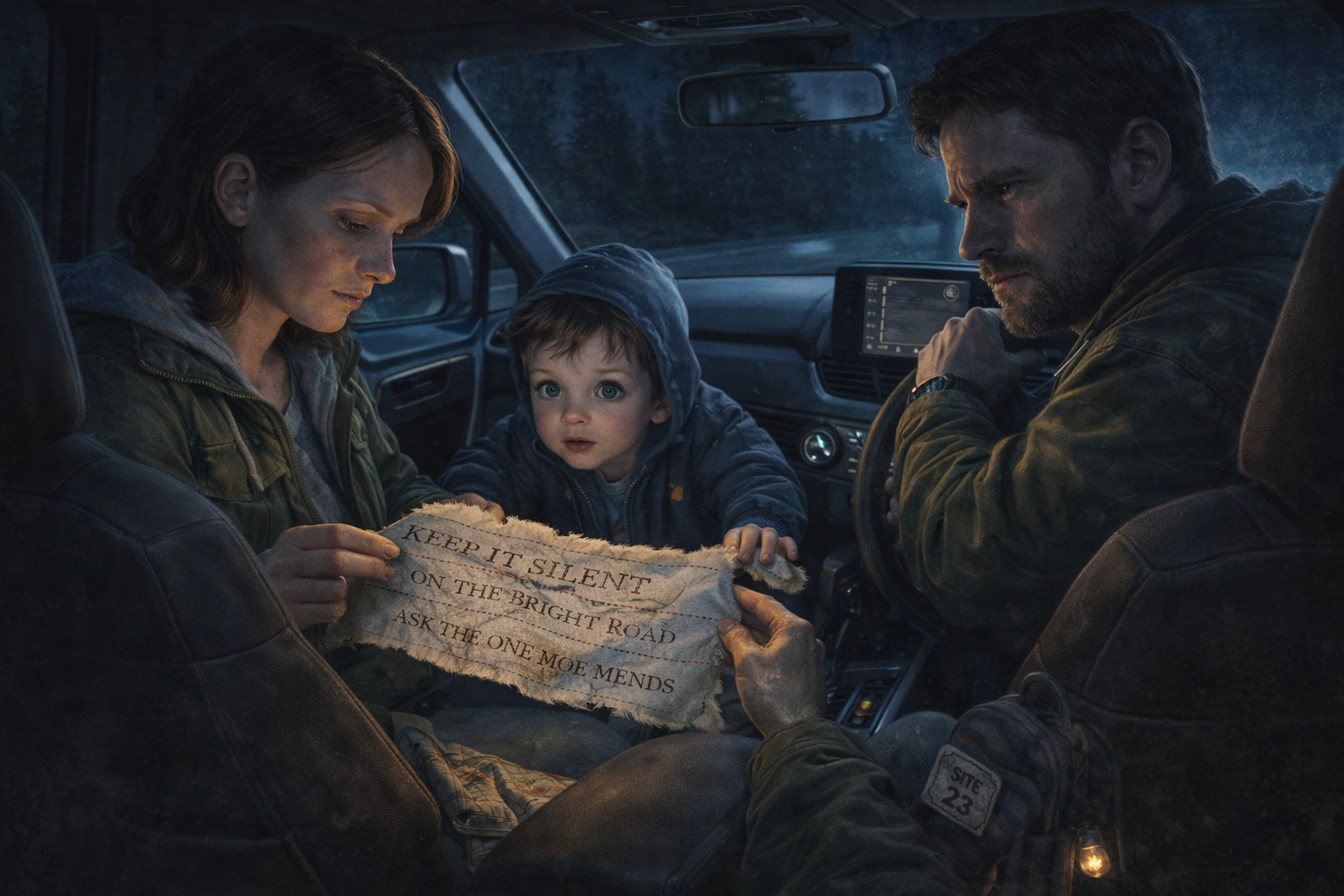](https://bookstack.thecartwrights.nz/uploads/images/gallery/2026-04/jlYimage.png)
And yet Dad kept glancing at it as if it might lunge.
“No one,” he said for what was probably the fourth time, “is going back in there tonight.”
He had both hands on the steering wheel even though the RAV4 was parked. That was never a great sign.
Nobody argued straight away. The surf down below kept rolling in and out, but after the silence inside the pines it sounded wrong too—too loud, too ordinary, too determined to pretend everything had not just happened.
Mum smoothed the cloth against her knee. The stitched lantern caught the dashboard light. So did the words.
KEEP IT SILENT.
NOT THE BRIGHT ROAD.
ASK THE ONE WHO MENDS.
Amber leaned between the front seats. “It still feels warm.”
“It’s cloth,” Dad said.
“It’s weird cloth,” Ivy muttered from the back.
“That is not better.”
Oakley was half sideways in his seat, pyjama socks on, hoodie twisted up under one arm, staring hard at the strip with the intense concentration he usually reserved for space documentaries and the possibility of biscuits. “Toast Boy knew.”
Dad closed his eyes for one long second. “We are not calling him Toast Boy.”
“He lives in Toast Caravan.”
“He lived in Site Twenty-Three,” Ivy said automatically.
Oakley shrugged. “Toast.”
Amber would normally have argued for accuracy on behalf of the mysterious missing boy, but she was too busy watching the cloth. “He did know,” she said quietly. “He pointed you away from the lights.”
Ivy didn’t answer. She kept looking out the window toward the black shape of the pines across the road, where the gap had vanished again. Ordinary trees. Ordinary dark. Nothing to prove they had just towed a caravan into a hidden road and back out again except the fact that the strip existed and all of them looked slightly wrecked.
Mum folded the cloth carefully, not hiding the words, just making it smaller. “We need Erin.”
Dad gave a short humorless laugh. “You think?”
“She’ll know what kind of stitch this is.”
“She’ll know what kind of anything this is,” Ivy said.
That made Dad look at her in the rear-view mirror. She was pale under the car’s dim light, and trying hard not to look it. Her red hair had gone wild in the sea wind. There was sand still on one sleeve. She had the Site 23 tag looped tight around her fingers, almost hidden in her fist.
Dad’s voice softened a fraction. “You all right?”
“Yep.”
It was a terrible lie. Not because she was falling apart. Ivy never did anything as helpful as falling apart cleanly. It was because the answer came too fast, like she had thrown it up as a barrier and hoped no one would inspect it closely.
Mum did inspect it closely. Of course she did. But she only said, “Let’s get off this road first.”
That got everyone moving again. Dad started the engine. Gravel crackled under the tyres. Nobody looked left as they pulled out, but the pines sat there anyway, patient and black and uninterested in being caught looking magical.
They drove in silence for nearly ten minutes.
Then the phone buzzed.
Dad hit speaker. “Please tell me you’re still awake.”
“Justin,” said Auntie Erin dryly, “you rang me an hour ago to tell me your holiday had developed secret campgrounds, predatory etiquette, and a morally suspicious dairy. Obviously I am not asleep.”
Some tension leaked out of the car at that.
Even Dad almost smiled. “Fair.”
Her voice changed slightly. Sharper now. “What happened?”
Mum gave the short version first because she was good at short versions when everyone else was full of too much. The beach. The pines. The bell that did not ring properly. The hidden track. The clearing. The bright road they had not taken. The cloth.
When she said the last line—“It says ask the one who mends”—there was a pause so clear that even Oakley noticed it.
“Aha,” he said to no one. “Mission clue.”
“Can you send me a photo?” Erin asked.
“We’re driving.”
“Then don’t. I’m very fond of all of you remaining un-crashed. Stop somewhere with decent light and send me front and back.”
“There is no back,” Ivy said. “Just threads.”
“There’s always a back,” said Erin.
Mum looked at the cloth again. “That sounds ominous.”
“That is because sewing is mostly structured optimism in the face of fraying disaster.”
Amber made a small approving sound. To her, that counted as a terrific sentence.
Dad turned inland at the next junction, following a sign for a holiday park in a town small enough to have one dairy, one fish-and-chip shop, and a playground that probably looked cheerful in daylight. Right now it was all sodium streetlights and closed windows and damp footpaths.
“Erin,” Mum said, “what is it?”
Another pause. Not uncertainty this time. Memory.
“I know that lantern stitch,” Erin said. “Or something very close to it. I haven’t seen it in years, but I know it. Send me the photo the second you stop.”
Dad’s hands tightened again on the wheel. “From where?”
“I’d rather not do this while you’re still driving.”
“That bad?”
“That old.”
No one said much after that.
The holiday park turned out to be exactly the kind Dad wanted after a night like this: ordinary to the point of insult. A fluorescent office. A sleepy manager in a puffer jacket. A row of static caravans. A washing line clacking in the breeze. Two bored teenagers wandering back from the ablutions block with packets of chips. Nothing missing. Nothing hidden. No extra sites appearing in the dark. Dad visibly approved of all of it.
He reversed them into place with grim, professional concentration.
By the time the struts were down and the caravan door was shut, the children had gone rubbery with tiredness. Not sleepy, exactly. More stretched thin.
Mum got the kettle on. Dad checked the lock twice, then pretended he had only ever meant to check it once. Amber took off one shoe and forgot to do the other. Oakley lay face-down on the seat for ten dramatic seconds, then popped back up and demanded a biscuit because near-death was hard work.
Ivy stood at the window over the little table and stared out at the harmless gravel lane between caravans as if daring it to turn weird.
Mum took the photo.
Then she took another.
Then, remembering Erin, she turned the strip over.
The back was all knots, crossed threads, and a ragged run where something had been pulled loose. Messier than the front. Less meaningful at first glance.
And then less meaningless the longer you looked.
“Justin,” Mum said.
Dad came over, tea towel still in one hand.
“What?”
She held up the phone. The back of the cloth wasn’t random. There was a second pattern there, half hidden in the crossings of thread: lines angling away from the stitched lantern. Tiny marks at intervals. One thicker knot where the bell on the front would have been. It was not pretty, but it was deliberate.
“See?” she said.
Dad squinted. “I see sewing’s revenge.”
“That’s a map,” Ivy said at once.
Mum sent both photos.
The reply from Erin came before the phone had properly settled on the table.
**Video. Now.**
Dad looked at the message. “That is not ideal wording.”
Mum already had the call open.
Erin answered from downstairs at home, framed by lamplight, shelves, and approximately a million baskets of craft materials. Meow Meow was on the back of the sofa behind her, turned toward the stairs instead of toward the room. His fur looked wrong. Not puffed in a cartoon way. Tight. Alert.
Erin didn’t waste time.
“Show me the front again.”
Mum held it up. Erin leaned closer to her screen. Her face had gone very still.
“Right,” she said softly. “Well. That is deeply inconvenient.”
Dad folded his arms. “We’re all enjoying the clarity.”
“It’s a route-strip.”
The kids looked at each other.
“A what?” Amber asked.
Erin pointed somewhere offscreen, probably at one of her own thoughts. “Not decorative embroidery. Not a sampler. Not just instructions. A route-strip. The old roads used thread as well as signs, because thread survives in different ways. Metal gets buried. Paint gets scratched off. Bells get cracked. Cloth can be hidden inside hems and quilts and cushion covers and nobody notices until they need to.”
Mum’s eyes flicked up. “You know this like you already knew it.”
“I know it like Granny owned things I was told not to touch.”
That landed.
Even Dad lost some of his impatience. “Granny?”
“Yes, Granny.” Erin reached down beside her chair and hauled up a flat tin so old the painted roses on the lid had almost disappeared. “When I was about Amber’s age I found this under her spare-bed linen. She told me it was mending supplies. It was not mending supplies in the normal sense unless your normal sewing projects include hidden symbols and enough rules to ruin a child’s afternoon.”
She opened the tin. Inside were folded cloths, paper packets, cards wound with thread, and one small brass thimble with a lantern stamped into its side.
Nobody in the caravan spoke.
Oakley climbed up onto the seat for a better look and breathed, “Treasure sewing.”
“Yes,” Erin said. “Sadly.”
She set the tin on her lap and dug until she found a folded square of cream fabric. When she opened it, a stitched lantern appeared in one corner, then a pine bough, then a line of small crossing marks that looked decorative until they didn’t.
It was not identical to the family’s strip.
It was close enough to make Mum go cold.
“Granny had that?” she asked.
Erin nodded once. “And she had stories. Never the full thing at once. Just bits. Warnings, mostly. The sort adults say while pretending they’re only being quaint.”
Dad had gone very still in the way he did when something serious hit before he was ready to react to it. “Why didn’t you tell me?”
Erin gave him a look. “Because for years it sounded insane, Justin. Also because every time I tried to bring up one of Granny’s weird road sayings you acted as if all folklore existed purely to annoy you personally.”
“That is not fair.”
“It is a bit fair.”
It was, unfortunately, a bit fair.
Amber leaned toward the screen. “What did she say?”
Erin ran a thumb over the old square in her lap. “That some roads stay honest because somebody keeps mending them. Markers. cloths. promises. names. That if the mending stops, the roads go hungry.”
No one in the caravan moved.
The silence that followed was not empty. It was full of the pines. Full of Site 23. Full of numbers being scraped away and letters vanishing from signs while the family watched.
Dad was the first to speak. “You could have led with that.”
“I am leading with it now.”
“You recognize the phrase?”
“I recognize the idea.” Erin looked at the strip again. “Ask the one who mends isn’t telling you to fix it yourselves. It means you’ve hit damage beyond ordinary traveler rules. It means the road is fraying.”
Oakley lifted a hand. “Bad road chewing.”
Erin pointed at the screen. “Exactly that, yes. Disturbingly.”
Ivy had barely blinked this whole time. “So who’s the one who mends?”
Erin didn’t answer immediately.
That was answer enough to make everyone in the caravan sit up straighter.
Mum saw it first. “You do know.”
“I know one name,” Erin said. “Or a title. Maybe both.”
Dad’s laugh was short and exhausted. “Marvelous. Naturally there’s a title.”
Erin ignored him. “Granny used to say that when a marker went missing or a cloth came back torn, you didn’t follow the bright road, you didn’t ring what wanted ringing, and you went looking for the Mender.”
[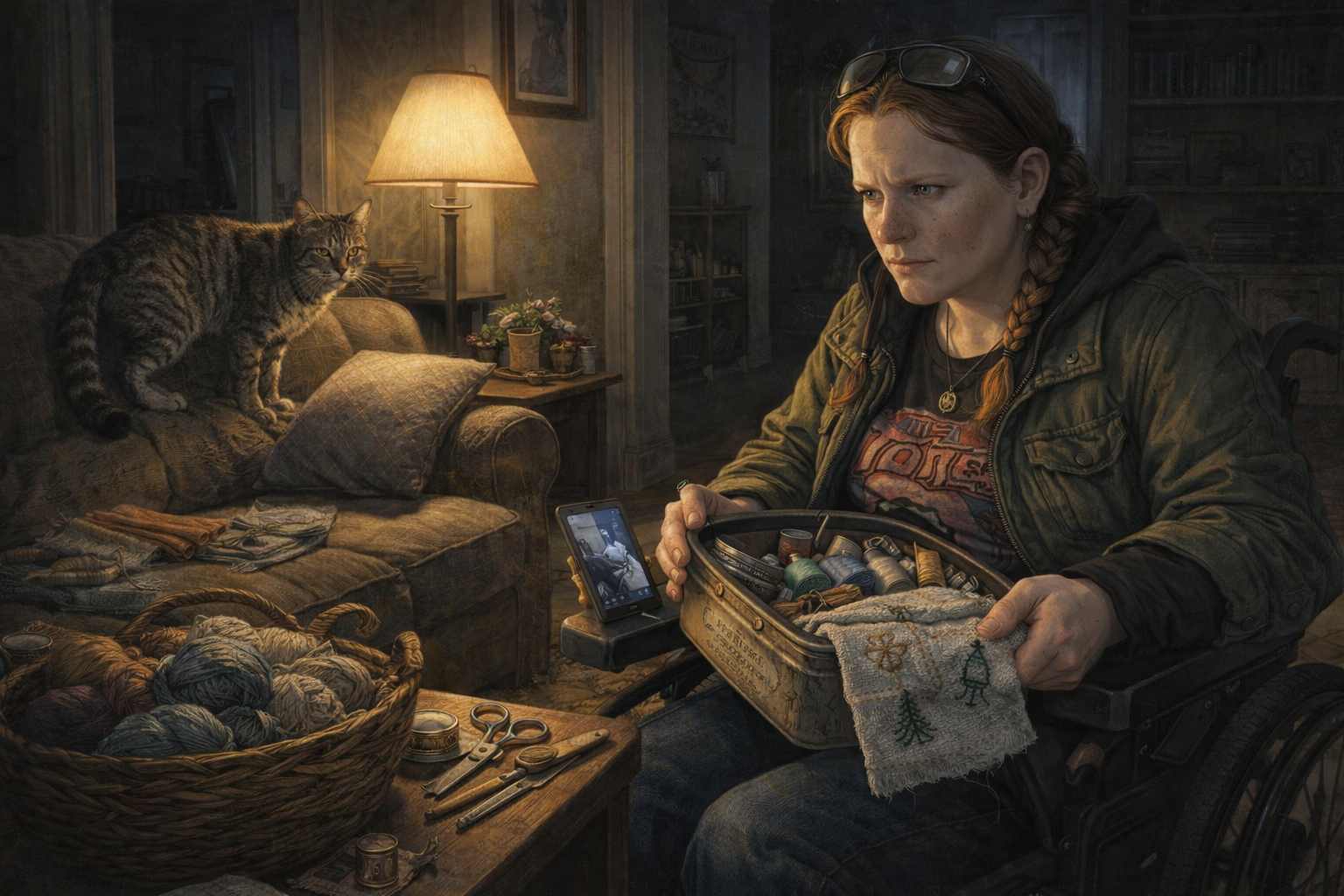](https://bookstack.thecartwrights.nz/uploads/images/gallery/2026-04/g4Kimage.png)
Amber whispered the word as if testing it.
“The Mender?” Ivy said.
Erin nodded. “Sometimes just that. Sometimes…” She hesitated. “Sometimes Ben Jammin.”
Oakley sat bolt upright. “That is a real name?”
“Almost certainly not his first one,” Erin said. “But yes.”
Dad stared at the screen. “Ben Jammin.”
“I did not invent it.”
“It sounds invented.”
“It sounds deeply invented,” Erin agreed. “That does not appear to have stopped it being useful.”
There was a beat in which everyone in the caravan tried, and failed, to picture an ancient magical road-mender called Ben Jammin without it sounding ridiculous.
Amber got there first. “Was he a person?”
Erin tipped one hand. “That depends how strict you’re being.”
“Oh, good,” Dad muttered.
Mum was still fixed on the old square in Erin’s lap. “What else did Granny say?”
“That menders don’t usually come when roads are neat. Only when something’s gone wrong enough to ask properly.” Erin reached back into the tin and found a second object: a narrow paper envelope brittle with age. “And that if you ever find thread-maps in pine country, keep away from lights that look too pleased with themselves.”
Ivy let out a breath that was almost a laugh. “Okay. That tracks.”
“Can you read the back of your strip to me?” Erin asked. “Not the words. The crossings.”
Mum moved the phone closer. Ivy came around beside her at once. Amber crowded in on the other side. Dad hovered despite every instinct telling him not to get physically involved in thread analysis. Oakley somehow appeared underneath everyone’s elbows.
For a minute the caravan became very quiet except for kettle ticks and the muffled noise of someone laughing somewhere outside near the camp kitchen.
“Rotate it left,” Erin said.
Mum did.
“No, your other left.”
Dad said, “This is why magic systems fail audits.”
“Shush.”
Mum turned it again.
Erin leaned closer, then reached offscreen for a pencil. “Right. Those aren’t decorative crossings. They’re joins. The front gives the rule. The back gives the approach.”
“Approach to what?” Ivy said.
“The mender, I think.”
Meow Meow moved on the sofa behind her.
Not a normal move. He got to his feet all at once, spine low, ears flat, eyes fixed on the dark of the stairwell door beyond the room.
Erin half-turned. “Oh, don’t start.”
He made a sound then—low, rusty, furious.
Everyone in the caravan froze.
Dad said, “Erin.”
“I know.”
Something clicked softly from the hall.
Not loud. Not dramatic. Just a tiny hard sound, like one object touching another.
Meow Meow launched off the sofa.
The screen jolted as Erin grabbed her chair wheels and shoved backward, turning faster than looked possible in the small room. The phone image swung wild—bookshelf, lamp, wall, then the doorway to the hall.
Nothing stood there.
Nothing anyone could point at and say there.
But hanging on the inside hall peg was a length of old cream cloth the family had not been shown before, and one stitched corner was unravelling by itself.
Thread slid loose in the air.
Amber made a frightened sound.
Erin reached the peg and snatched the cloth down. “No, you don’t.”
The unravelling stopped.
Meow Meow remained fixed on the doorway, tail blown double.
Nobody in the caravan spoke until Erin wheeled back into frame with the cloth in her lap and a face that had lost any remaining interest in pretending this was manageable.
“Well,” Dad said at last. “That’s appalling.”
“Yes,” Erin said. “Thanks.”
“What was that?”
“I don’t know.”
“You absolutely know a category.”
Erin looked at the cloth she had rescued. “I know it likes edges. Names. numbers. joined things. Same as the rest of this mess.”
Mum’s voice stayed very calm, which was never good. “Is home safe?”
Erin met her eyes through the screen. “At the moment? Safe enough. But whatever’s chewing through the roads isn’t staying politely out there anymore.”
That dropped into the caravan harder than anything else.
Home had always sat at the edge of the mystery. A hiss near the stairs. Meow Meow going mad during a phone call. Strange enough to be worrying. Distant enough to be survived.
Not anymore.
Ivy was the first to recover. “What cloth is that?”
Erin looked down. Her expression changed again. Not softer. Older.
“It was Granny’s,” she said. “I forgot I had it.”
It was a longer piece than the square from the tin, yellowed with age and folded so many times the creases had nearly become seams. Erin opened it carefully. The front showed stitched bells in a line, then pines, then a tiny lantern worked in metallic thread so worn it was nearly brown.
Across the bottom, in neat small lettering, were words half hidden by age.
BRIGHT ROADS RING FOR ANYONE.
HONEST ONES WAIT TO BE ASKED.
Dad actually sat down.
“Right,” he said faintly. “Right. Great.”
Ivy’s eyes had gone bright in the way they did when fear and answer-hunger collided. “That’s about the pines.”
“It’s about more than the pines,” Erin said. “But yes. And look here.”
She turned the old cloth over.
On the back, among the crossings and knots, was one extra symbol stitched in green-black thread near the edge.
Not a lantern.
Not a bell.
A little shape with a curved neck and a round body.
Amber frowned. “Is that—”
“A guitar?” Mum said.
Erin nodded.
Oakley slapped both hands onto the table. “Banjo wizard!”
That broke the tension just enough for everyone to breathe.
Dad rubbed both hands over his face. “Please do not let ‘banjo wizard’ become the official term.”
“No promises,” said Ivy.
For the first time in ten minutes, Erin almost smiled. “Granny said if the road ever gives you thread and tells you to ask the one who mends, you look for the green-string mark. It means he’s nearby. Or was.”
“Nearby where?” Mum asked.
“That part,” Erin said, “I think you’re going to hate.”
She reached for the family’s screenshots on her device, enlarged the back of their torn strip, and compared it to the old bell cloth in her lap. Her pencil moved fast over a scrap of paper just out of frame.
“Those join marks on your strip? They’re not only an approach. They’re a warning path. They turn away from the bright road and loop round behind it.” She glanced up. “Justin. Get Tane’s map.”
Dad gave her a look. “You enjoy issuing orders more every hour.”
“Yes. Map.”
He got it.
Mum laid it flat on the table. The black-sand postcard. The dairy receipt. The torn strip. The Site 23 tag. The Lantern Compass. All of it ended up there together, a little travelling pile of evidence and bad decisions.
“Put the tag near the top edge,” Erin said.
Ivy did.
“Now the strip. Back side up. Rotate until the thick knot sits over the red bend in the line.”
Mum and Ivy did that together, their heads nearly touching.
For half a second nothing happened.
Then the Compass needle twitched.
Amber sucked in a breath.
A fine line, no thicker than thread, appeared on the map beneath the torn strip. It did not glow. It darkened, like damp coming through paper. It curved away from the route they already knew and bent around an unmarked patch of green.
New words came up slowly enough to read.
NO BELLS.
NO BARGAINS.
MENDER OFF THE FAIR ROAD.
“Fair road,” Ivy said.
“The carnival,” Amber whispered.
Even Dad did not argue that this time.
[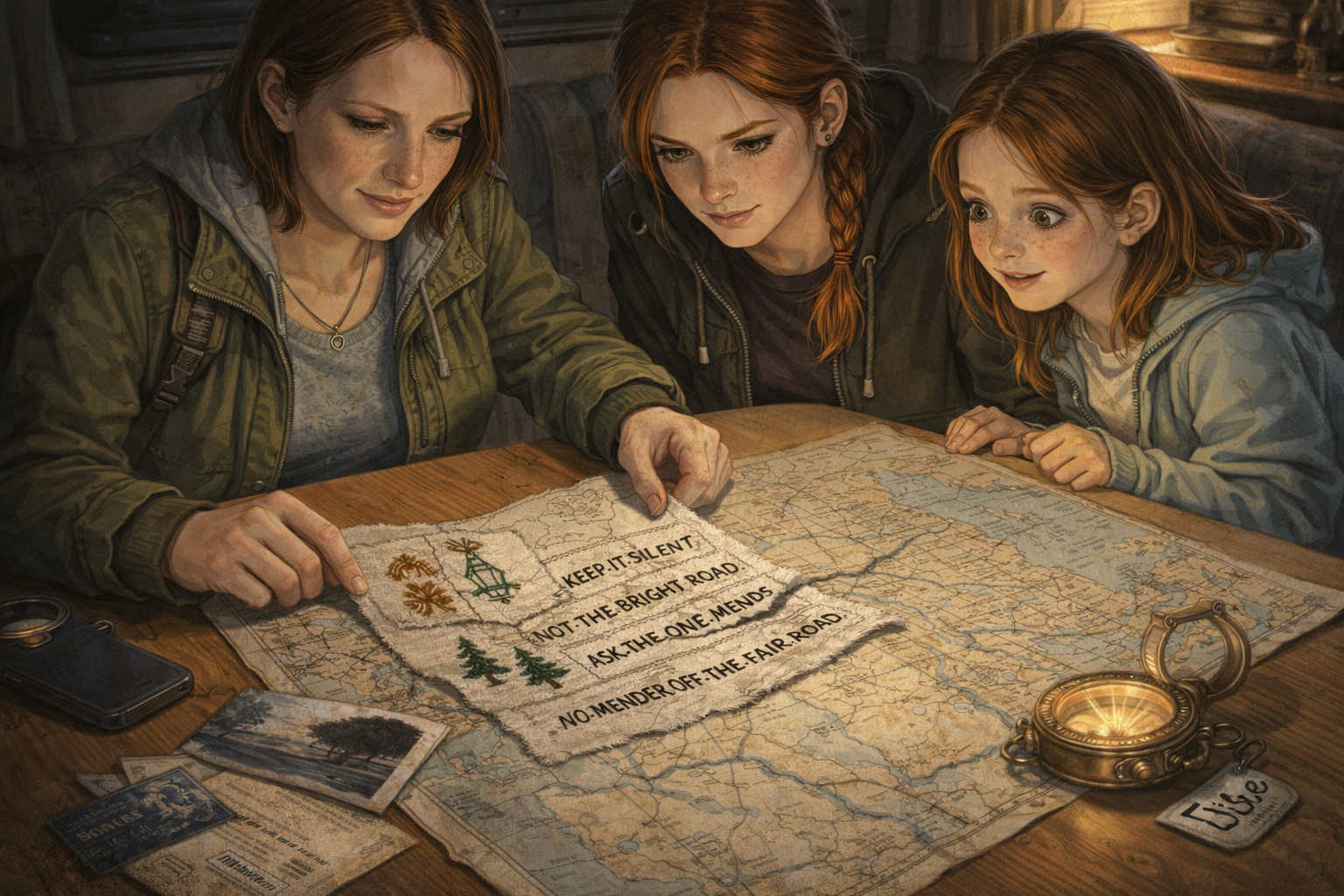](https://bookstack.thecartwrights.nz/uploads/images/gallery/2026-04/Bj8image.png)
The line on the map ran past the place they had entered the pines and skirted whatever bright route waited deeper in, but did not touch it. At the end of the line, near no printed road at all, a tiny green-black symbol appeared.
The same little guitar.
Oakley made a noise of triumph so loud Mum had to shush him on instinct.
Ivy looked from the map to Erin. “So there is a way around it.”
“Yes,” Erin said. “Assuming the map is telling the truth, which I feel weird saying aloud.”
Dad pointed at the words. “Fair road?”
“Bright road. False welcome. Spectacle. Bargains.” Erin’s mouth tightened. “Whatever is in those pines wants to be chosen. That cloth is telling you not to choose it.”
Mum traced the little dark line without touching the paper. “And the mender’s path goes around the back.”
“Looks like it.”
“Do we go tonight?” Ivy said.
Dad answered before anyone else could. “Absolutely not.”
Ivy’s head snapped round. “Dad—”
“No. You are not going into a hidden road system in the middle of the night looking for a magical guitarist whose name sounds like a tax dodge.”
“Ben Jammin,” Oakley corrected helpfully.
“Thank you, Oakley. Somehow worse.”
Mum did not tell him he was wrong. She just kept looking at the map, thinking.
“Tomorrow,” she said at last.
Dad looked at her. “Belinda—”
“Tomorrow,” she repeated. “In daylight. With sleep. With actual food in everybody. With Erin on call. We don’t blunder back in tired.”
Amber nodded hard. Ivy looked furious for nearly three seconds, then not furious at all. Just exhausted.
“That’s still not normal,” Dad said.
“No,” Mum said. “But it’s right.”
The fight went out of him. He sat back.
“All right.”
On the screen, Erin let out a breath she had probably been holding since the words appeared. “Good. Because I’d quite like to spend the next few hours checking whether Granny left anything else useful hidden in the soft furnishings.”
“Comforting sentence,” Dad said.
“Thank you.”
Mum looked at the old bell cloth in Erin’s lap. “You said Granny told stories. Did she ever say why our family would have any of this?”
That changed the room again.
Erin’s fingers stilled on the fabric.
Meow Meow had returned to the back of the sofa, but he was still facing the hall. Watching.
“Not properly,” Erin said. “Not in one clean answer. Just... bits. That some families used to carry markers without knowing. That some got noticed easier than others. That roads remember who repaired them and who abandoned them.”
Dad’s face had gone unreadable.
“Did she mean us?” Ivy asked.
Erin looked at her for a long second, then at Dad, then back at the strip on the caravan table.
“I think,” she said carefully, “the roads know this family better than we do.”
No one had a good reply to that.
Outside, someone somewhere shut a car door. A dog barked twice. The ordinary holiday park kept being offensively normal, which helped less than it should have.
Eventually Erin said, “Get some sleep.”
Dad laughed without humour. “Marvelous plan.”
“I mean it.”
Mum nodded. “We will.”
“Lock everything,” Erin added.
Dad stared at her. “Already done.”
“Do it in your heart too.”
“That is not a sentence I can work with.”
“It’s the best you’re getting.”
Oakley yawned so hard it nearly folded him in half.
Amber rested her chin on Mum’s shoulder, still staring at the tiny guitar mark on the map. Ivy kept one hand over the Site 23 tag as if she had forgotten it was there.
“Erin?” Mum said.
“Yes?”
“Don’t sit up alone all night.”
Erin gave a tiny shrug. “I have a cat with anger issues and several sharp crochet hooks. I’ll cope.”
Meow Meow blinked once, slow and murderous, toward the hall.
The call ended.
For a while the family stayed around the table in the caravan’s warm little pool of light. Nobody rushed bedtime. Nobody said they were frightened. That would have been too tidy.
Dad made tea he did not really want. Mum tucked the route-strip back inside the map with hands that were steady by effort. Amber finally took off her second shoe. Oakley fell asleep sitting up for almost a full minute before waking himself and asking whether banjo wizards liked rockets.
“Probably,” Mum said, because it was late and that was close enough.
[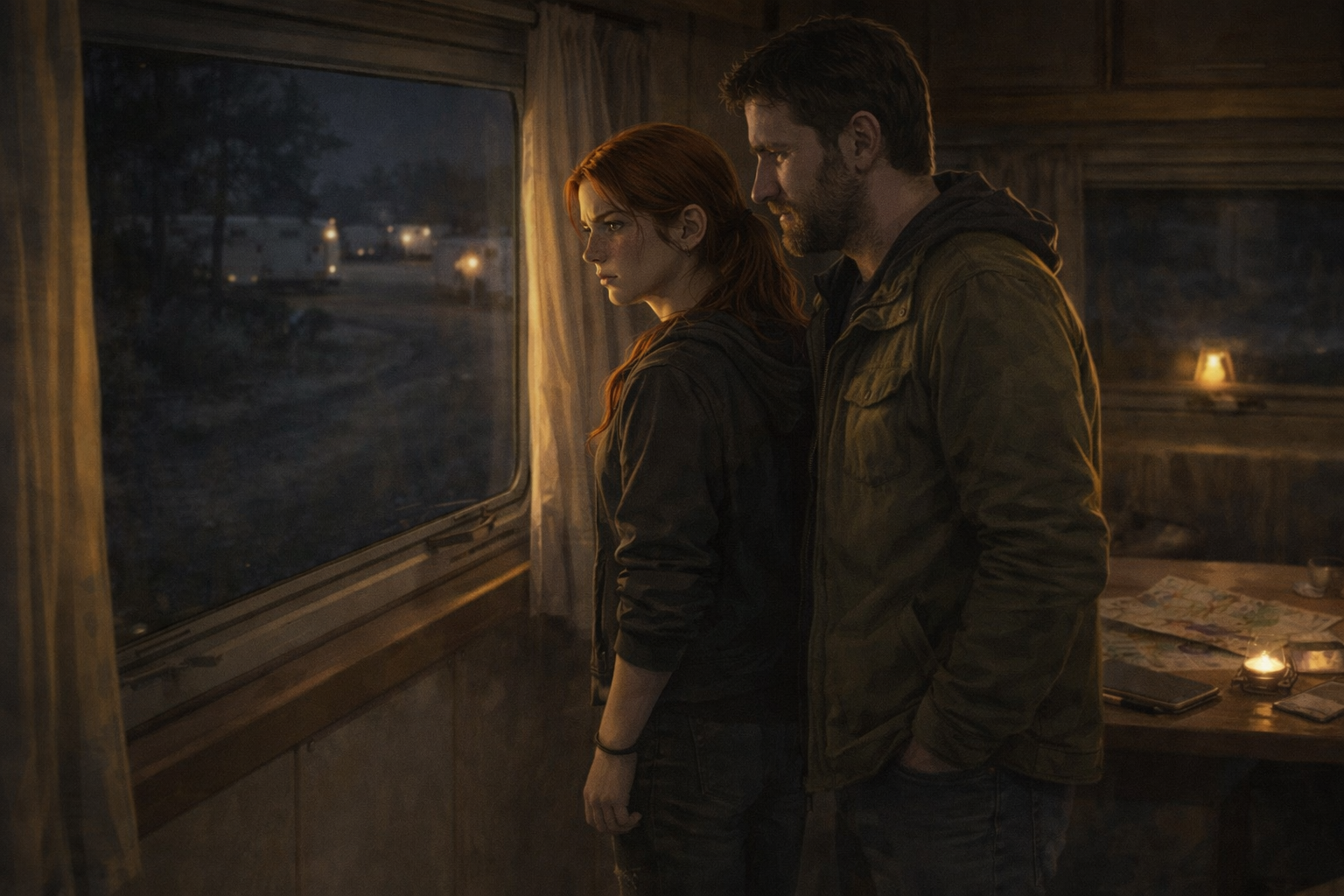](https://bookstack.thecartwrights.nz/uploads/images/gallery/2026-04/nNOimage.png)
Ivy stood by the curtained window again.
Dad came over and stopped beside her, not crowding, not making a big speech out of it.
“You did good tonight,” he said.
She kept looking out. “I nearly went.”
“I know.”
“He said not the bright road.”
Dad glanced at her. “The boy?”
She nodded.
He was quiet a moment. “Then we’re going to do this properly.”
That made her look at him at last.
He did not look convinced. He looked terrified in a practical, irritated, Dad-shaped way. But he also looked committed, which was better.
Across the little table, the Lantern Compass gave one small click inside its casing.
Everyone turned.
The needle, which had been still since the call ended, swung a fraction across the map and settled not on the bright-road line, not on the mender’s mark, but just beyond them both toward the dark patch of green where the fair road curled through the pines.
Then, faint as breath, from somewhere no road map had any business reaching, came the sound of a single plucked string.
Not through the window.
Not from outside the caravan.
Through the table.
Oakley’s eyes went huge.
Amber grabbed Mum’s sleeve.
Dad said one clear, astonished word under his breath.
And Ivy, staring at the little green-black guitar symbol darkening on the map, thought with a rush of fear and relief that felt almost the same:
He had heard them.
Then the string note faded, and the caravan was only a caravan again, parked in a harmless holiday park under a flat ordinary sky.
For now.
[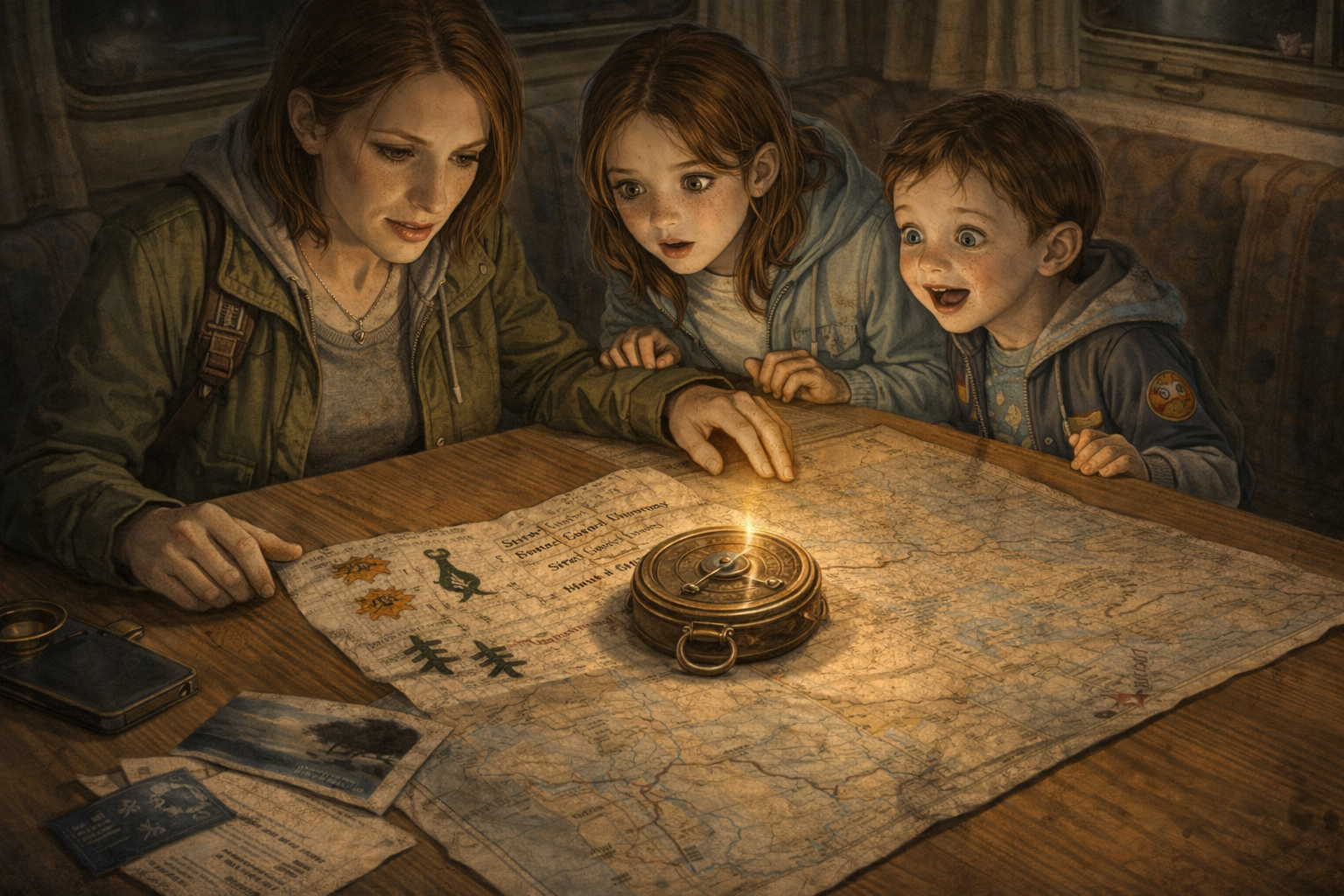](https://bookstack.thecartwrights.nz/uploads/images/gallery/2026-04/sslimage.png)
# Chapter 7 - The Carnival in the Pines
Morning made a decent attempt at normal.
It put steam above the campground sinks. It put a damp shine on the picnic tables. It sent a tūī somewhere up in the trees to declare itself with complete confidence, as though nothing in the wider world had spent the last two days rearranging roads, borrowing names, and tapping on caravan windows in borrowed voices.
Inside the caravan, normal was losing.
[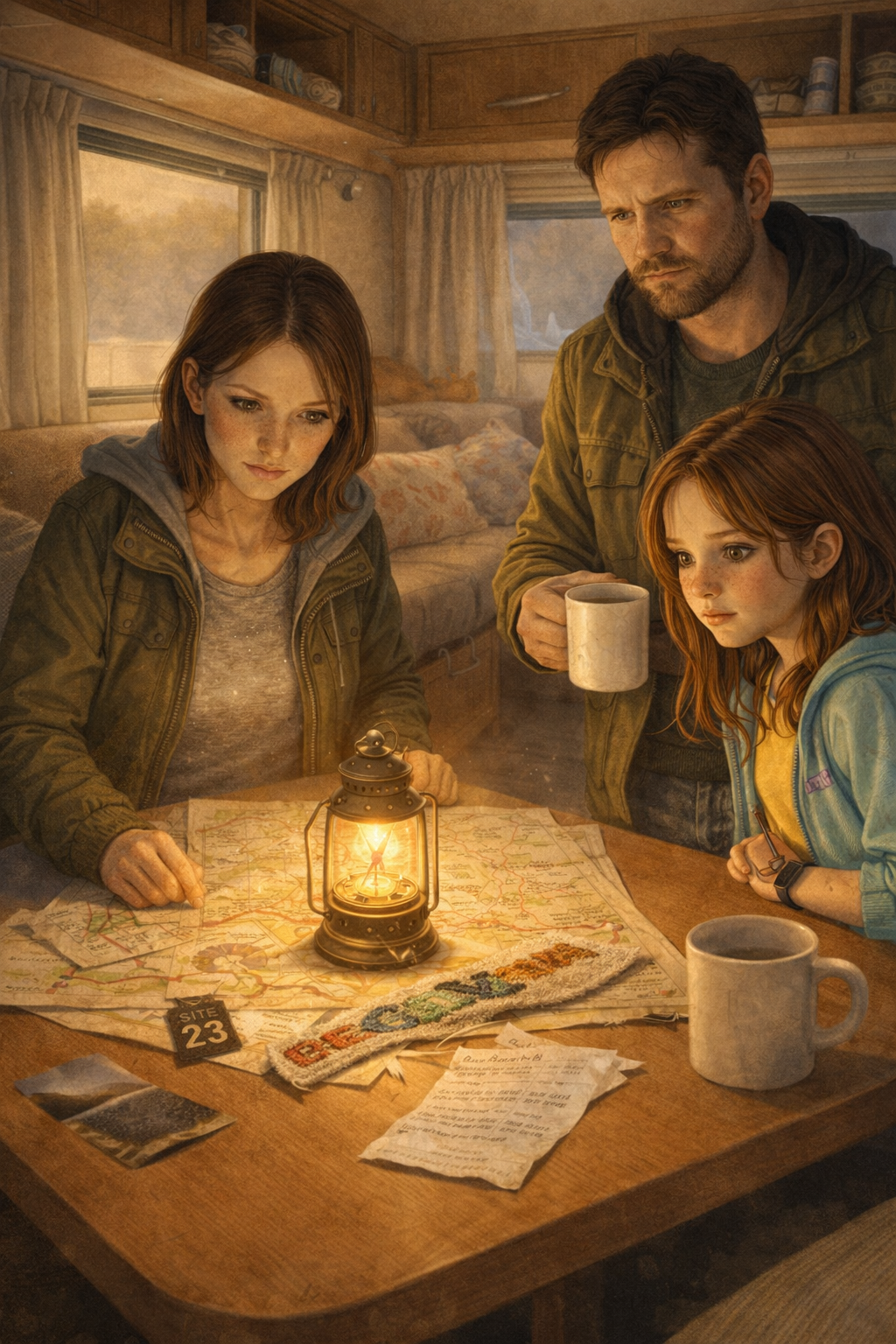](https://bookstack.thecartwrights.nz/uploads/images/gallery/2026-04/Xy7image.png)
Dad stood over the little table with a mug of tea gone cold in one hand and the map spread open under the other. The route-strip lay across it like a narrow old scar. The Site 23 tag sat where Ivy had put it. The Lantern Compass rested at the top of the page, still and watchful.
“It is daylight,” Dad said. “That does not make it sensible. It makes it less stupid.”
Oakley, who had been lying upside down on the seat with one sock half off, nodded solemnly. “That is still good.”
“That is not what I said.”
“It is what I heard.”
Mum hid a smile behind her coffee and adjusted the route-strip by a fraction. The dark bypass line on Tane’s old map did not glow exactly. It was worse than that. It seemed to sit there with the confidence of something that had always been present and had only been waiting for them to stop being dense.
Off the fair road.
No bells. No bargains.
The little green-black guitar symbol waited farther in.
Amber leaned over the table, braid falling across her shoulder. “It still feels different from the bright road.”
Ivy glanced up from the window where she’d been watching campers move about in shorts and hoodies and jandals, carrying toast, wrestling chilly children into fleeces, arguing mildly about gas bottles. None of them knew there was a wrong carnival sitting in the pines not very far away. The unfairness of that itched at her.
“How,” she asked, “does a road feel bright in a bad way?”
Amber frowned, searching. “Like when someone is being nice too hard.”
That shut the caravan up for a second.
Dad set his mug down. “Excellent. Terrible. Useful.”
Mum slid the postcard and receipt into the map bundle. “We go in careful. We do not split unless we absolutely have to. We do not touch anything unless we know what it is. And if anything starts sounding like a deal—”
“We say no,” Oakley said at once.
“We say nothing,” Ivy corrected.
“We definitely do not accept a free sample,” Dad said.
Oakley looked offended. “What if it is a sample of chips?”
Dad gave him a level stare. “Then that is how they get you.”
That, finally, got a laugh out of everyone, even Ivy.
The Compass clicked.
It was not a dramatic sound. Just a neat little metallic tick under the morning clatter of plates and cutlery and distant campground life. But all five of them heard it.
The needle twitched toward the folded route-strip.
Then, faintly, from nowhere obvious at all, came the sound of one guitar string being plucked.
Not outside. Not on the radio. More like the table itself had remembered a note.
Amber’s eyes widened.
Dad closed his for one long second, reopened them, and said, “Right. Fine. Hate that. Still going.”
Mum reached for her phone before anyone could say anything clever and unhelpful.
Auntie Erin answered on the second ring, hair tied up messily, glasses on, expression already sharp enough to cut through nonsense.
“Well,” she said. “You all look moderately haunted.”
“That’s the nicest anyone’s looked at us all week,” Dad said.
Behind her, the downstairs hall at Woodend looked ordinary in the unsettling way ordinary things sometimes do after they’ve stopped being trustworthy. Meow Meow sat on the arm of a chair like a furious furry gargoyle, staring toward the stairs.
“He’s been glaring at the hallway since six,” Erin said, following Mum’s eyes. “I checked the cloth cupboard. Nothing else has started unravelling, but I found another of Granny’s thread cards.”
She held it up. Cream card. Old green thread. Tiny lantern stamped in one corner.
On the back, in Granny’s neat hand, were four words.
**ASK. NEVER PAY TWICE.**
Mum exhaled slowly. “That feels useful.”
“It also feels like the sort of advice you only write down after an absolute disaster,” Ivy muttered.
“Correct,” said Erin. “Also, before you all rush nobly into the haunted tree nonsense, I found a second note folded into the mending tin.” She glanced down and read it out. “**If the fair is first to welcome you, it is not waiting for you. It is hungry before it is glad.**”
Oakley sat up straight. “Bad party.”
“Very bad party,” Erin said.
Dad pointed at the screen. “Thank you. That helps exactly as little as I feared.”
“That’s what family is for.”
Meow Meow suddenly puffed up, all his fur going twice the size. He hissed at the hallway hard enough to make Amber flinch.
Erin turned her chair. For a split second the camera caught the downstairs wallpaper near the corner by the stairs, and Ivy saw it too: one seam in the paper lifting very slightly from the wall, as though a fingernail were teasing at the join from the wrong side.
Then Erin was moving, fast and calm at once. She reached for Granny’s old tin, pulled out the lantern-marked thimble and a reel of cream thread, and set the phone down facing the ceiling while she worked.
“Erin?” Mum said.
“Still here.” The phone view juddered, then settled. Erin had stitched nothing, exactly, but she had looped the cream thread across the corner bracket of a shelf and around the old newel post at the base of the stairs, making a taut little line that looked absurdly domestic and weirdly right. “There. It hates joins, so it can dislike mine instead.”
[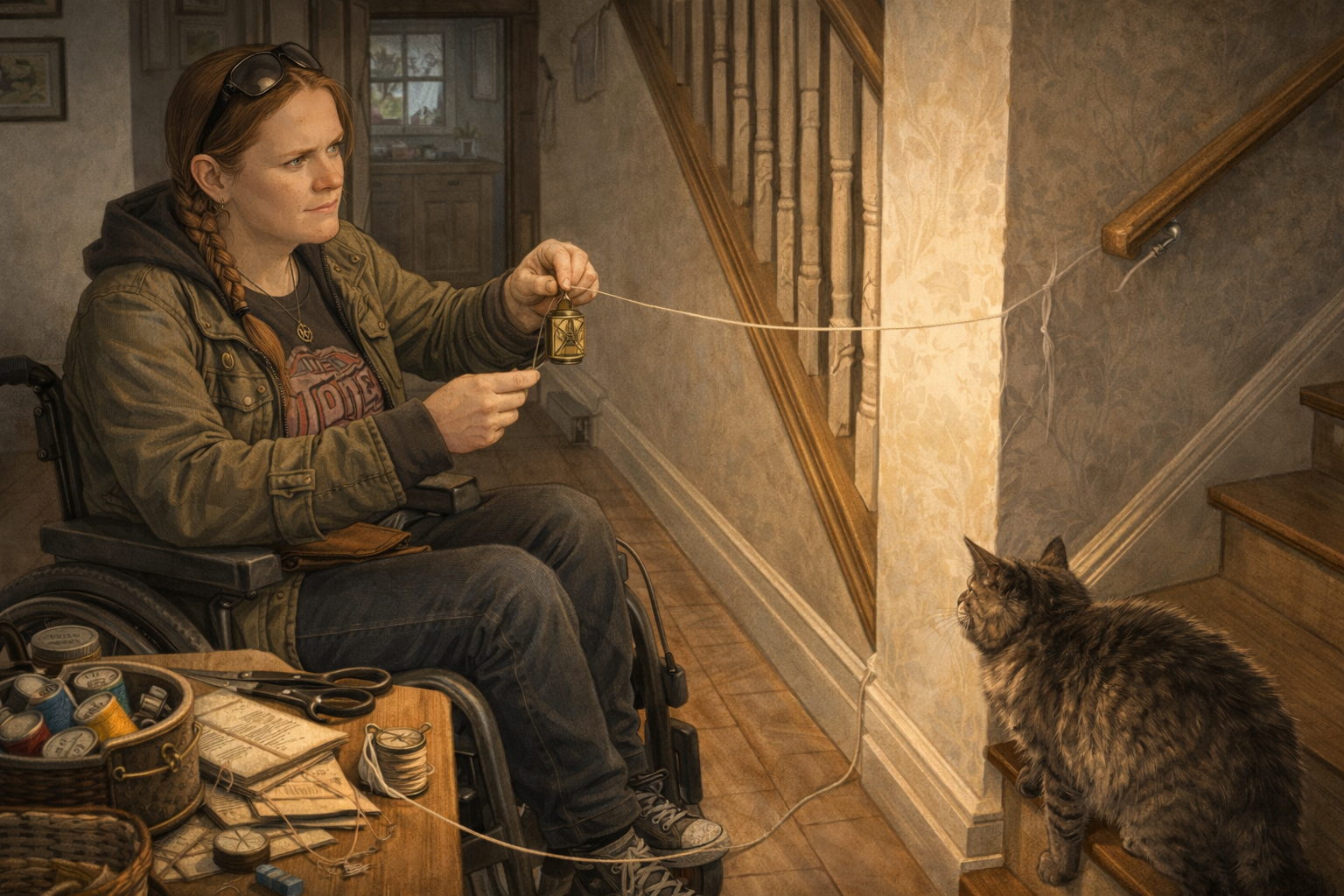](https://bookstack.thecartwrights.nz/uploads/images/gallery/2026-04/XzYimage.png)
Meow Meow stopped hissing.
Not relaxed. Just stopped.
Erin wheeled back into view. “That bought me something. Don’t know how much.”
Dad’s expression flattened into the one he got when reality had annoyed him beyond words. “Great. Excellent. The house is now being defended by textile engineering.”
Erin lifted one eyebrow. “And yet it’s working.”
Nobody had much to say to that.
When the call ended, Dad disconnected the caravan from the RAV4 with the air of a man making an insultingly sensible decision under magical protest.
“The caravan stays here,” he said. “We’re not towing the entire family house into a bargain carnival.”
Oakley put both hands to his head. “But the caravan is mission base.”
“The caravan is staying unkidnapped,” Dad said.
That was harder to argue with.
By the time they drove back to the pine threshold, the sun had climbed properly. In ordinary daylight the roadside looked almost embarrassing. Gravel pull-over. Grass verge. Pine line. The restored **PINES** plate fixed between the old posts as though it had never been missing.
But the cracked bronze bell still hung there with its clapper bound in dark cloth, and the air on the far side of the posts had the wrong depth to it.
Mum checked the map bundle one last time. Route-strip. Tag. Postcard. Receipt. Compass.
Ivy had the unpleasant feeling they were less carrying the objects now than escorting them.
Dad eased the RAV4 through the posts and down the hidden track.
The sea sound cut off again.
Not faded. Not receded. Removed.
Oakley whispered, because even he seemed to feel the silence land, “That is rude.”
“Yes,” Mum said quietly. “It is.”
The clearing they’d found the night before looked worse in daylight, which was impressively annoying. The shelter stood where it had, old timber damp and greying, but the noticeboard had lost more of itself. Whole painted words were gone now, leaving blank boards with only ghost-shadows where letters had once been. Under the shelter roof, the box that had held the route-cloth sat slightly open.
[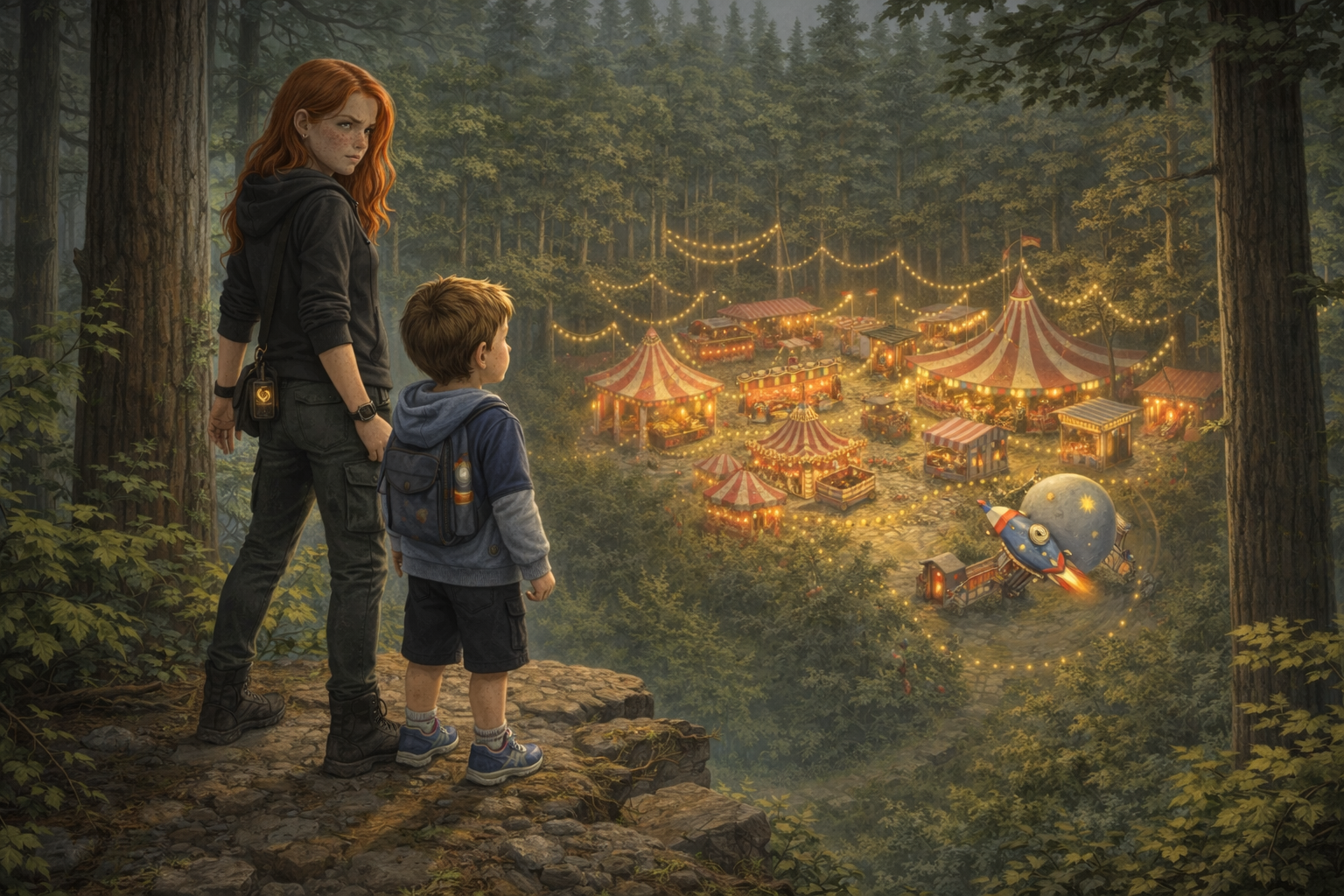](https://bookstack.thecartwrights.nz/uploads/images/gallery/2026-04/KMbimage.png)
And beyond the deeper archway in the trees, where the wrong road waited, colour flickered.
Not much. A glimpse. Red bunting where no bunting had been. Gold paint catching light. The edge of a striped awning between trunks.
Then came the smell.
Hot sugar.
Fried batter.
Toffee apples.
Ivy’s stomach made a stupid, traitorous little leap before common sense shoved it down again.
“Oh, absolutely not,” Dad said.
That was when the music reached them.
Not guitar. Not the clean single-note twang from the map-table. This was calliope-bright and cheerful in a way that made Ivy’s shoulders crawl. Something tinny and dancing and too eager to be liked.
Amber folded her arms over herself. “I hate it.”
“It sounds happy,” Oakley said, and then, after a beat, “in a bad way.”
Mum looked toward the deeper arch, not moving any closer. “We follow the bypass.”
The Compass agreed at once, needle dragging left of the bright sound, toward a darker run of trees and a track so slight Ivy would have missed it if she hadn’t been looking for what the obvious path was hiding.
There, on a low post half swallowed by moss, was the little green-black guitar mark.
Dad saw it too. “Good. Excellent. One clear thing.”
The bypass began narrow enough that they left the car in the clearing and went on foot. Needles softened the ground. Ferns brushed their legs. The bright music stayed to their right, sometimes close, sometimes far away in a way that didn’t obey distance.
The bypass should have felt quieter.
Instead it felt interrupted.
Bits of carnival kept turning up where no carnival should have fit.
A string of tiny brass bells hung from one branch ahead, polished and innocent. Mum stopped the whole group with one hand before Oakley could touch them.
“Not those.”
A stall appeared between the pines ten meters later and was gone when Dad blinked. Ivy had still seen it clearly enough: striped roof, shelves of prizes, rows of little glass jars each holding something that moved like trapped smoke.
Then Amber caught Dad’s sleeve.
On the left, just off the path, a painted sign leaned against a stump:
**FOUND THINGS RETURNED HERE**
Below it hung a neat bunch of tags. Luggage tags. Key tags. One old enamel site tag with the number scratched off.
Ivy’s chest went tight.
“Keep moving,” Mum said, and her voice was calm enough that everybody obeyed it.
The path bent.
The music swelled.
And suddenly the trees opened.
The carnival lay below them in a hollow between pines, bright as a lie. Strings of bulbs looped from tree to tree. Painted wagons stood in rings. A small carousel turned without any visible engine, horses going round with their mouths open in cheerful carved surprise. Stalls spilled with ribbons, tin toys, sweets, stuffed prizes, glass tokens, ridiculous wonders.
Children ran between the lights.
At least, from a distance they looked like children.
A woman in a red coat rang a hand-bell at the entrance and called, “Welcome, travelers!”
[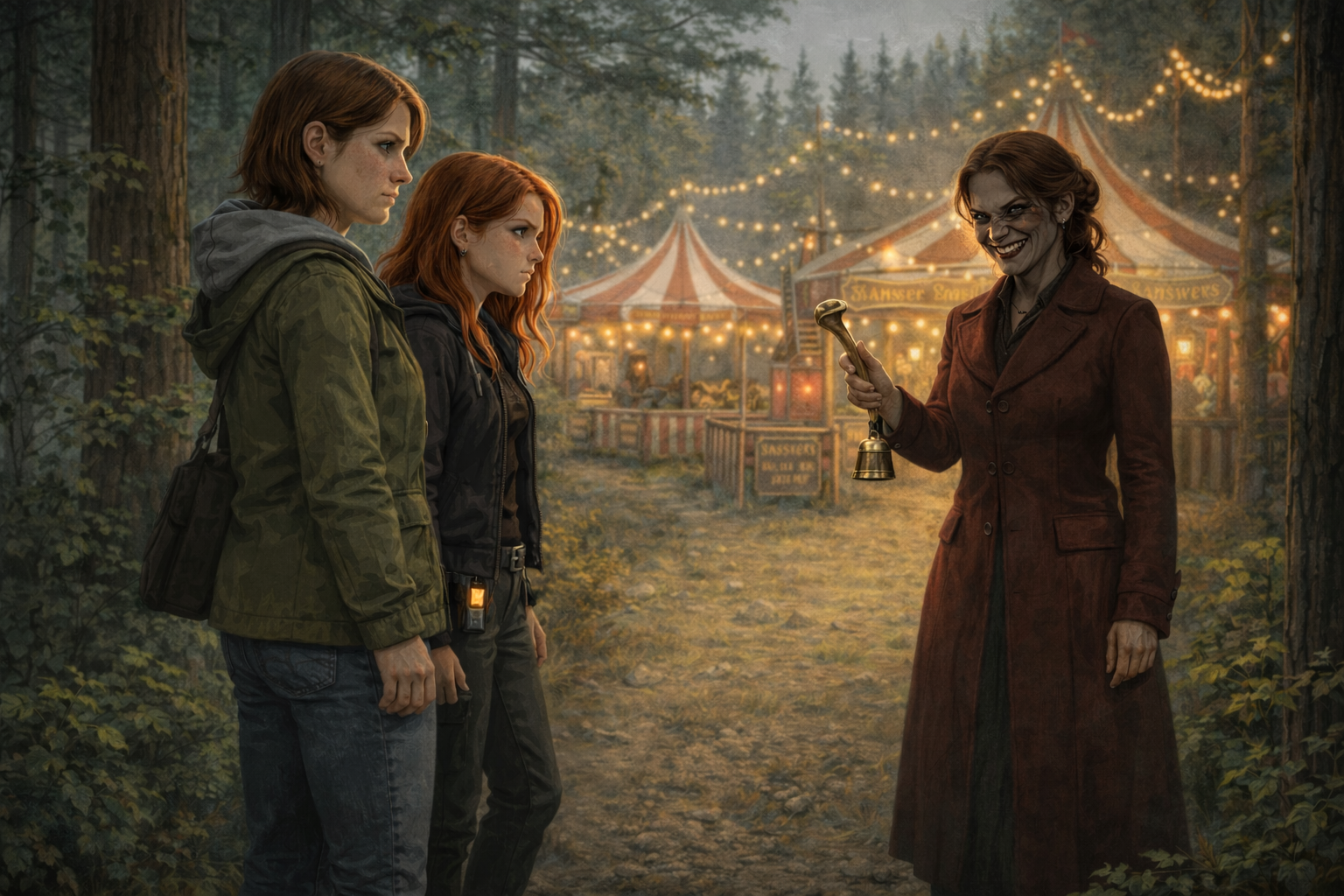](https://bookstack.thecartwrights.nz/uploads/images/gallery/2026-04/Fwximage.png)
Every muscle in Mum’s shoulders hardened.
“Don’t answer,” she said.
No one did.
The woman smiled anyway. Her face was almost right. Pleasant. Warm. Human. Only the smile lasted one second too long, as if it had been shown a description of friendliness and was trying to do it from memory.
“Everyone welcome,” she called. “First ride free.”
“No,” Dad said, not loudly, but with enough flat contempt to make Oakley stare at him in admiration.
The woman’s smile widened, just a touch.
“Perhaps not a ride,” she said. “Perhaps a little help.”
The stalls nearest them seemed to shift.
One now held maps. Stacks and stacks of them. Perfect maps. Marked routes. Clear legends. Safe roads in tidy ink.
Another displayed little framed signs: **NO MORE WRONG TURNS**, **NAMES KEPT SAFE**, **HOLIDAY FIXED BY TEATIME**.
To Ivy’s right a taller board unfolded itself with impossible politeness.
**ANSWERS FOR THE ELDEST CHILD**
Her pulse jumped hard enough to hurt.
She could feel the trap in it and still feel the pull.
What did the adults know? Why had Granny hidden things? Who was the boy in Site 23? What was his real name? Why her?
The painted board shimmered again.
**ONE QUESTION HONESTLY ANSWERED**
No charge, obviously. Nothing honest was ever written in that sort of gold.
Beside her Amber had gone still too. Ivy followed her gaze and found a different stall lit in softer colours. Sketchbooks that drew by themselves. Little creatures made of ribbon and moss. Shelves of books with blank spines that somehow still looked familiar. An old woman behind the counter smiled with heartbreaking kindness.
“Come and see,” she called gently. “Only looking. No need to decide.”
Oakley made a strangled noise of pure longing.
Straight ahead, beyond two striped tents, a tiny rocket ride went in patient circles around a painted moon.
“Oh, that is criminal,” Dad said.
The hand-bell rang again.
Ivy felt it in her teeth.
Then, from somewhere off to the dark side of the hollow, came a different sound.
One low guitar note.
The carnival lights twitched.
Only for an instant. But in that instant Ivy saw under things. The painted horses on the carousel had too many teeth. The bunting was stitched together from ticket strips and scraps of old route-cloth. One of the smiling children running past had no face at all until the light steadied and gave it one again.
Amber made a small horrified sound.
The woman with the bell turned her head toward the dark trees, smile slipping.
Dad moved closer to the kids. “That,” he said, “is the most reassuring thing that’s happened all day.”
Another guitar note. Higher this time. Funny, almost lazy.
The bell-woman’s expression sharpened. “This path is closed.”
A voice answered from the trees beyond the hollow.
“Mm,” it said. “Only if you’re standing in it.”
Then a large figure stepped out between the pines and sat down on a stump as though he had been planning to do that all morning.
Ben Jammin looked, at first glance, like the sort of thing Dad should have objected to on principle. Big. Broad. Hair to his shoulders. Massive beard. Patched clothes. Boots that had seen weather and possibly history. In his hands lay the strangest guitar Ivy had ever seen: driftwood body, scavenged metal plate, bent pegs, strings that looked individually unrelated.
Then he looked up.
And the whole threat of him went to pieces on contact with his expression.
Kind eyes. Bashful little half-smile. The air of a man who might apologize to furniture if he bumped into it.
“Oh,” Amber whispered, relief rushing into the word before she could stop it.
Ben Jammin gave them a small wave with the hand not holding the guitar. “Morning.”
No one said anything for a second.
Then Oakley breathed, full of awe, “Banjo wizard.”
Ben Jammin’s eyes crinkled. “Close enough.”
The bell-woman lifted her hand-bell and rang it hard.
It made no sound.
Ben Jammin plucked two strings in answer, and the silence around the bell landed with a satisfying little thud, like a door closing in the right face.
“Now,” he said mildly, “that’s just awkward for everybody.”
The carnival changed shape.
Not completely. Enough.
The stalls nearest him lost some of their glow. Paint peeled at the edges. The smell of sugar soured. One prize shelf became a row of bottle tops and bones and somebody’s old bus card before glamour slid back over it.
Dad let out a breath that might once have hoped to become a laugh. “You’re Ben Jammin.”
Ben scratched his beard with his shoulder, because both hands were occupied. “I am when I’m behaving.”
Mum, unlike the rest of them, did not look relieved exactly. Interested, yes. Careful, definitely. But also like someone recognizing a pattern finally stepping into view.
“You’re the Mender.”
He tilted his head. “Sometimes.”
The bell-woman took one step toward them. “They entered by welcome.”
“No,” Mum said at once. “We didn’t.”
The woman’s smile thinned. “They looked.”
“That’s not the same thing,” Mum said.
Ben Jammin’s glance flicked to Mum with obvious approval. “Good catch.”
The carnival music tried to rise again, brighter, pushier.
Ben laid one broad hand over the odd guitar body and damped the strings. “You lot do love making yourselves the first thing people see.”
“Because they choose joy,” the bell-woman said.
“No,” said Ivy, before fear could stop her. “You choose first.”
The whole hollow seemed to listen.
The woman’s face altered by a grain. Not monstrous. Worse. Offended.
Ben gave Ivy a tiny nod, almost hidden in his beard. “Also a good catch.”
Then he looked back at the family properly. “You’ll want the side way through. This one’ll sell you what you’re already frightened of losing, then charge in pieces too small to notice until later.”
Oakley looked betrayed by the rocket ride. “That is bad business.”
“It is,” Ben agreed. “Very flashy though.”
Dad moved first, practical even now. “What do we need to do?”
“Not much talking to them.” Ben glanced at the handbell woman. “And one or two honest bits in the correct places.”
He nodded toward the map bundle in Mum’s hands, then toward a post near the hollow edge where a run of ticket-bunting had been tied across the darker track, blocking it like cheerful webbing.
Ivy saw the join at once. Not rope. Not wire. Stitched cloth. Old cloth beneath the bright scraps.
A route seam.
Amber saw it a heartbeat later. “That’s not decoration.”
“No,” said Ben. “It’s a wound dressed up for company.”
Something in the carnival laughed. Too many voices. Not enough people.
“Lovely,” Dad muttered.
Ben pointed with his chin toward a low marker stone half hidden in pine needles near the blocked side path. The top of it had been scraped nearly blank, but there was a shallow oval in the centre.
“Tag there,” he said to Ivy.
She did not need telling twice. The Site 23 enamel tag felt warm in her palm as she crossed to the stone. The carnival noticed. She could feel that too. Feel attention turning.
From the answer-stall behind her came a voice she knew at once and hated for existing.
“Just ask,” it said in almost-Granny’s voice. “You deserve to know.”
Ivy shoved the tag into the oval slot in the stone.
It fit with a neat, final click.
Light did not burst out. No dramatic nonsense. Instead the darker side path simply became more itself. Edges sharpened. Ground steadied. The blocked seam in the bunting gave a strained little pull.
“Amber,” Ben said.
She looked up.
“Front of the route-strip.”
Amber blinked. “Why me?”
“Because you know which bit means what.”
That was true and annoying and she knew it. Amber took the torn embroidered strip from Mum, studied it only a second, then crossed to the bunting seam and laid the strip against the old cloth hidden under the bright scraps.
[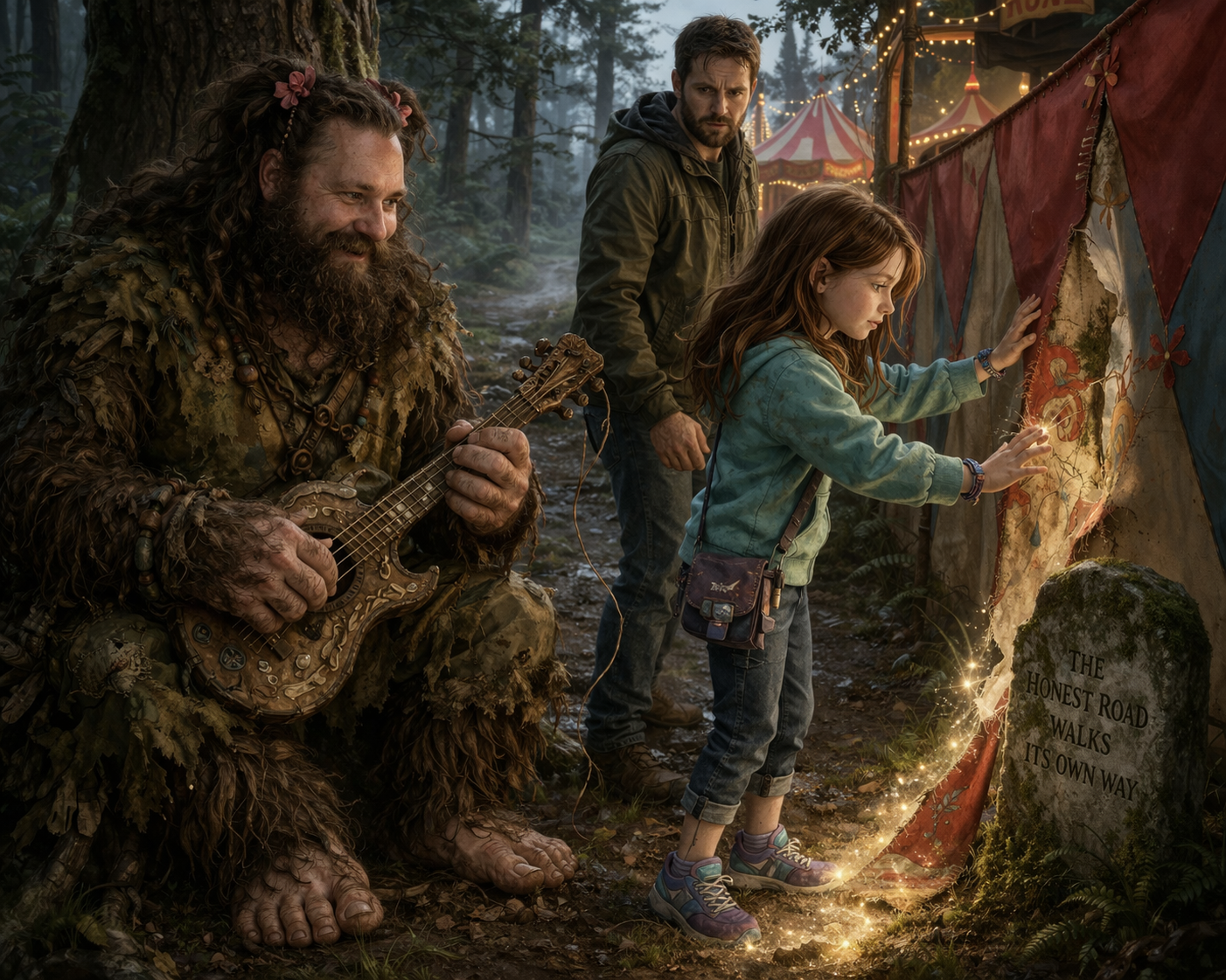](https://bookstack.thecartwrights.nz/uploads/images/gallery/2026-04/H0Oimage.png)
Pine. Lantern. Crossing lines.
The pattern matched.
The carnival lights shuddered harder this time. A few bulbs popped.
The bell-woman came toward them for real now, fast enough that Dad stepped in without thinking. Mum caught Oakley back by the hood. Ivy turned, ready to do something stupid and probably ineffective.
Ben Jammin struck one full chord.
The sound rolled through the hollow like a hand put flat against a tearing thing.
Every bell in sight went dead.
Every painted grin lost some of its certainty.
The woman stopped dead at the edge of the darker track as though she had hit glass.
Ben winced very slightly. One of his guitar strings snapped with a tiny bright twang and curled loose.
“Right,” he murmured. “That was the expensive version.”
Dad stared. “You all right?”
“Ask me after lunch.”
He nodded to Mum now. “Ask properly.”
She understood at once. Of course she did.
Mum stepped to the edge of the darker path, one hand on the map bundle, the other still braced near Oakley.
“We’re asking for the honest road,” she said clearly. “Passage only. No bargains. No welcome from the fair.”
The pines answered.
Not with words. With movement. With a breath of colder air down the side path. With the smell of damp earth replacing sugar and grease. With the little green-black guitar mark appearing again, this time on the next post in.
Ben smiled. “There we are.”
Behind them the carnival had gone very still.
Not beaten. Just watching.
At the far side of the hollow, between the striped tents, Ivy saw a small figure standing half in shadow. Child-sized. Thin. Still.
The boy from Site 23.
He lifted one hand.
Not a wave. A warning.
Then he pointed deeper into the carnival, where something taller had begun to move behind the lights.
Something with a grin catching where there should have been no light at all.
Ivy’s breath stopped.
The figure vanished before she could make sense of it.
“Go on,” Ben said quietly, and the lightness had gone out of his voice. “Side way’s open, but it won’t stay polite if we waste it.”
Nobody argued.
They moved into the darker path together, the family bunching close without needing to discuss it. Dad first, because of course he was. Mum beside him. Oakley between them this time whether he liked it or not. Amber with the route-strip still in her hand. Ivy last for one second only, because she looked back.
The carnival had already begun smiling again.
But badly now.
Hungrily.
The bell-woman stood at the edge of the hollow with her soundless bell in one hand and watched them leave as though memorising the shape of each of them.
Ben Jammin rose from the stump with a grunt, slung the odd guitar carefully over his shoulder, and followed them into the bypass.
Up close he was even larger and somehow even less alarming.
“Sorry about the theatrics,” he said. “They do insist.”
Dad let out a breath through his nose. “You arrived sitting on a stump with a haunted guitar beside an evil carnival.”
Ben considered that. “Fair.”
Oakley looked up at him with complete devotion. “You are real.”
“Only on weekdays,” Ben said.
That earned a small startled laugh from Amber and, to Ivy’s disgust, one from herself.
The path narrowed again under darker branches. The carnival sound fell behind them, muffled now, as though the trees were choosing not to repeat it.
[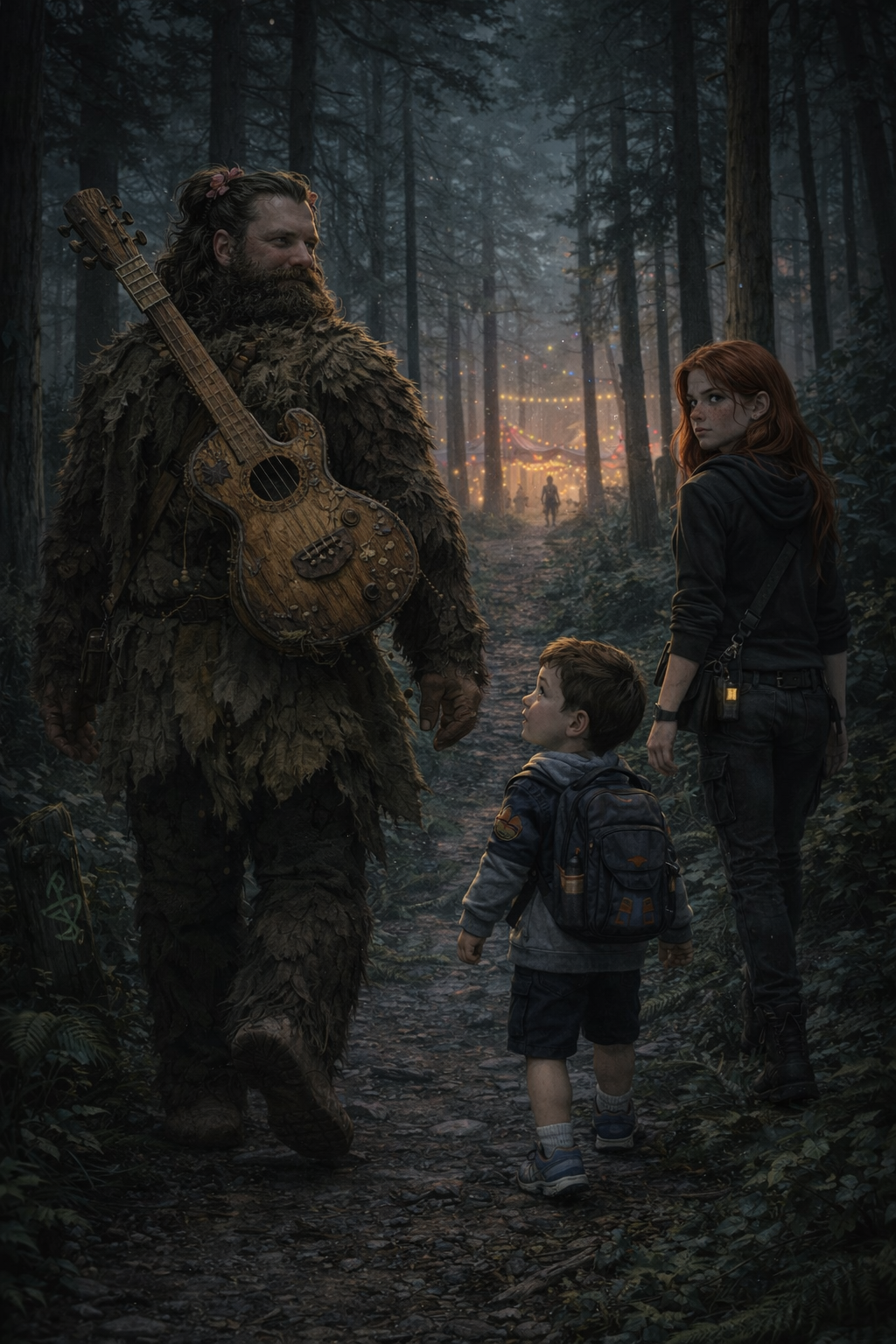](https://bookstack.thecartwrights.nz/uploads/images/gallery/2026-04/ZUmimage.png)
Ben walked a little hunched, perhaps from habit, perhaps so he didn’t loom more than necessary. After a while he glanced at the snapped string curling from his guitar and sighed.
“Annoying,” he said.
Mum looked at him sidelong. “Can you mend that?”
“Yes,” he said. “Question is whether I should do that before or after I tell you lot why Twenty-Three is still trying to come home.”
No one spoke.
Even Oakley went quiet.
Ben Jammin’s expression softened at whatever he saw on their faces. “Mm,” he said gently. “Thought so. Best keep moving, then.”
Ahead, the honest road bent out of sight under the pines.
And somewhere beyond the turn, something knocked once—far off, wooden and hollow, as if a closed door in the dark had just heard their names and wasn’t sure yet what to do with them.
# Chapter 8 - Signs That Eat Themselves
The honest side way did not look impressive.
That was the first thing Ivy noticed once the carnival lights had fallen properly behind them and the last of the bright music had thinned into something mean and far away. The track ahead was only a narrow run of damp earth under pines, dark with old needles, stitched with moss, and lined here and there with marker stones so weathered. No glowing tents. No painted arrows. No cheerful promises. Just bush hush, filtered daylight, and the feeling that the path was waiting to see whether they meant what they’d said back there.
Oakley held Dad’s hand with one fist and his rocket hoodie with the other.
Ben Jammin walked a few paces ahead, broad shoulders nearly brushing the fern tips, his odd homemade guitar slung carefully so the broken string would not catch. Up close, the snapped wire looked worse than it had in the hollow. One bright curl had sprung loose from the peg and lay against the timber body like a bit of angry fishing line.
Amber kept glancing at it.
Mum noticed. “You all right there?”
Amber nodded, then shook her head, which was more honest. “Did that hurt?”
Ben looked back over one huge shoulder. His beard shifted when he smiled. “Bit.”
They kept moving.
The side way gave no sign of impatience, but the stillness under the pines had a deliberate quality to it. Ivy had the unpleasant feeling that if they all stopped and planted themselves in the middle of the path like tourists at a scenic lookout, the road might simply change its mind about them.
The Lantern Compass rested in Mum’s hand, quiet now except for the occasional tiny twitch that nudged its needle forward. The Site 23 tag sat in Ivy’s pocket, Every now and then she put her fingers around it, just to make sure it was still there.
Behind them, somewhere beyond too many trees, a bell rang once.
Not loud. Not near. Just enough to prove the fair road had not packed up and gone home in a huff.
Oakley leaned hard into Dad’s leg. “Bad party’s still there.”
“Yep,” said Dad.
“Can it come here?”
Ben hummed under his breath before answering. “Not cleanly.”
“That is also not a proper answer,” said Ivy.
Ben’s eyes flicked to her, amused and a little sorry at the same time. “No. That one’s the proper answer. Proper answers are just often rude to the nerves.”
Dad adjusted his grip on Oakley’s hand. “Try us anyway.”
Ben nodded once. “This road’s quieter than the fair. Quieter means slower. Slower means truer. But the bright road doesn’t like being refused. It’ll keep leaning where the joins are weak. Not all the way in, if the side way holds. Just enough to bother.”
“Bother,” Dad repeated. “That’s one word for it.”
“It is,” said Ben.
They passed a marker stone half-buried in pine needles. Ivy looked down as she went by and saw three neat grooves cut into the rock, then a fourth that stopped halfway through as if the stone-cutter had been interrupted and never come back.
Mum slowed. “Ben.”
“I know.”
He crouched with surprising grace for someone his size and pressed two fingers to the broken groove. For a second nothing happened. Then the Compass needle in Mum’s hand gave a small worried twitch.
“Fresh?” Mum asked.
Ben stood again. “Fresh enough.”
Dad’s shoulders tightened. “Fresh enough for what?”
“For something hungry to have passed this way after the fair dressed its little wound up for company,” Ben said. He glanced ahead into the trees, then back at the family. “We should talk while we walk.”
[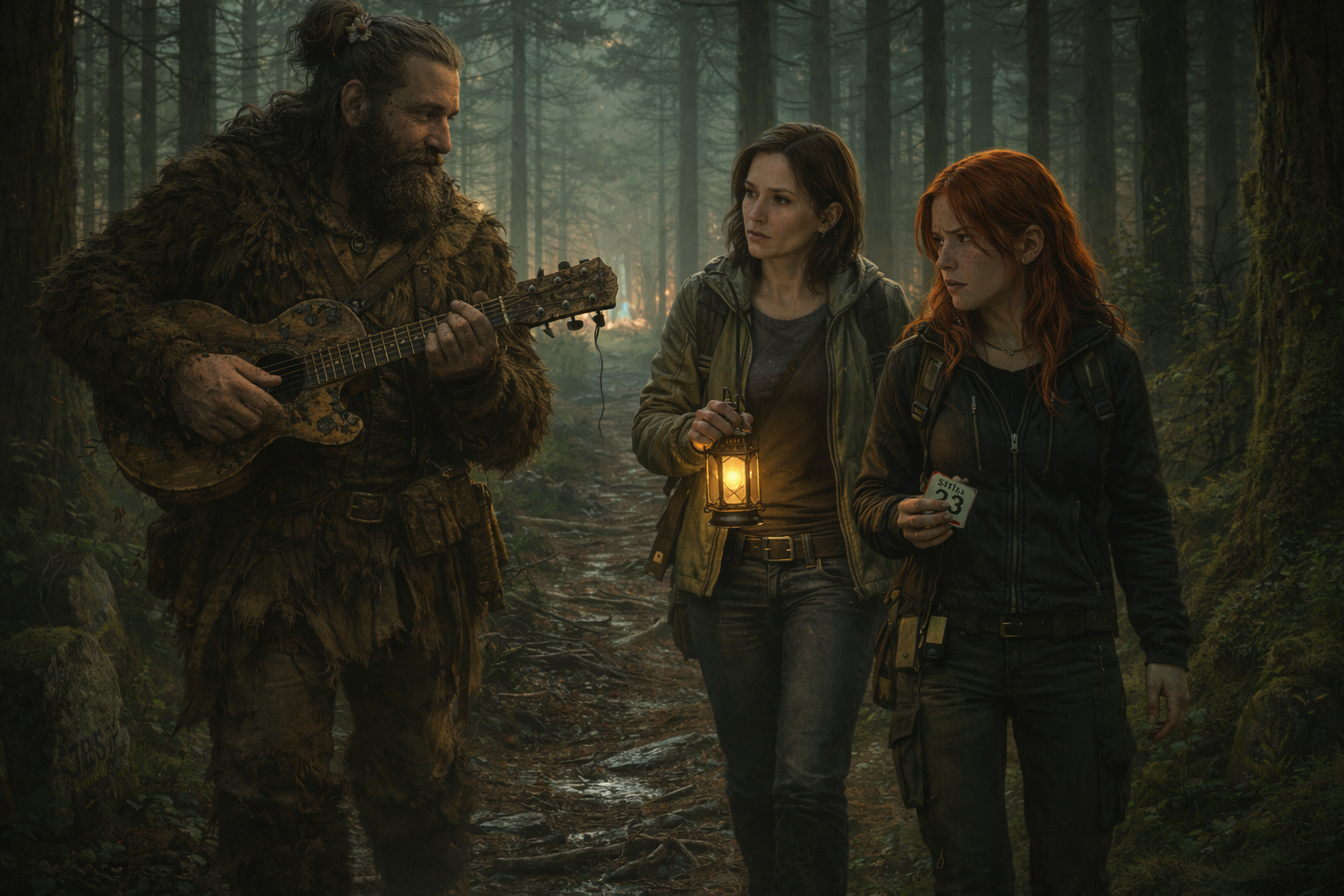](https://bookstack.thecartwrights.nz/uploads/images/gallery/2026-04/Zblimage.png)
Ivy had been waiting for that sentence since the hollow.
“About Twenty-Three,” she said at once.
Ben did not sigh, which made him instantly more likeable than most adults. “About Twenty-Three.”
He set off again, slower this time so they could keep level with him.
For a while all Ivy could hear was the soft drag of shoes on pine litter, Oakley’s occasional sniff, and somewhere above them a tui giving one startled note and thinking better of a second.
Then Ben said, “Site Twenty-Three wasn’t just a campsite.”
Nobody answered. Even Oakley seemed to understand this one needed room.
“It wore a campsite shape,” Ben went on. “That’s the sort of thing the Lantern Roads do near everyday places. They lean. They borrow. A hidden berth might cast a campground shadow, or a back road might sit under a farm lane, or a waiting-place might tuck itself under the manners of a dairy that knows enough not to put its name on the sign.”
Mum’s fingers tightened around the Compass. “A berth.”
“A counted place,” said Ben. “A safe stopping-point. Somewhere travellers could come in, be marked present, and go out whole. Not grand. Not fancy. Just honest. Berths mattered because the roads are old and not always kind to the lost. A berth says: you are here, you are known, and the road owes you a fair return.”
Amber frowned. “Like a promise.”
“Exactly that.”
Ivy was already two thoughts ahead. “And Twenty-Three broke.”
Ben’s head dipped once. “Yes.”
“How?”
He took longer with that answer.
“Bit by bit at first,” he said. “That’s how the bad things like it. A marker rubbed thin. A number plate gone missing. Someone fails to come back by the same rule they came in under. Then something hungry finds the weak edge and starts chewing where no one’s mending proper.”
Dad let out a breath through his nose. “Track Eaters.”
“Some of it.” Ben’s voice had gone flatter. “Some of it not mindless enough to call just hunger.”
Ivy thought of the taller grinning shape beyond the carnival lights and felt her stomach go cold again.
“So the boy’s from there,” she said.
Ben looked at her properly now, and there was no easy humour in his face. “Yes.”
“Who is he?”
“That’s where it gets ugly round the edges.”
“Try me.”
“I know you would,” Ben said. “That’s half the trouble.”
They walked another ten paces. Twenty, maybe. Long enough that even Ivy nearly snapped at him to spit it out.
Then he said, “When a berth breaks badly, the road doesn’t always lose everything at once. Numbers can hang on after names go. Shapes can hang on after time ought to have done with them. A place remembers what stood there last and longest. Or what mattered most when the break came.”
Amber’s expression had gone thin and hurt. “You mean the boy is a memory?”
“Not only.” Ben shook his head. “More than a memory. Less than a life lived tidy from one day to the next. He’s bound up in the break. Twenty-Three keeps trying to count him home, and failing.”
Oakley looked up, solemn as a tiny judge. “He got left behind.”
Ben’s eyes softened. “Yes.”
Nobody said anything after that.
The pines seemed to close a little tighter around the track.
Dad was the one who forced the next question out. “Are we talking about a ghost?”
Ben scratched at his beard with one thick finger. “Not in the sheet-rattling story way. Not exactly. Roads don’t make tidy ghosts. They make leftovers. Echoes. Waiting-shapes. Pieces held too long because a promise was interrupted.”
Ivy hated how sad that sounded.
She hated more that it matched the boy’s face in the caravan doorway, that bleak fixed way he’d looked at the Compass and said **You brought it** as if they had shown up carrying the only working handle on a locked door.
“So when you said Twenty-Three is trying to come home…” Mum began.
“I meant the berth,” said Ben. “And the boy. Hard to separate them now. The place wants back into the road where it belongs. The child-shape tied to it wants the count finished. One proper return might help the other.”
“Return to where?” asked Amber.
Ben’s answer came quiet. “That’s the question that’s been hurting everything else.”
Ivy pulled the enamel tag out of her pocket. The chipped number sat dull in the shade, but the lantern mark on the reverse caught a smear of green light through the trees.
“This,” she said.
Ben nodded. “Anchor piece. Official enough that the road still listens when it sees it. That’s why the fair wanted it hidden, or scratched blank, or hung up with all the other stolen bits and bobs to make the damage look decorative.”
Dad’s mouth hardened. “And the boy gave it to Ivy.”
“He would,” said Ben.
“Why?”
“Because she looked like someone who’d pocket the right thing even while being a bit cross about it.”
For one terrible second Ivy thought he was joking, and then she realized he wasn’t joking at all.
Mum gave Ivy the briefest sideways look. “He’s not wrong.”
“Traitor,” Ivy muttered.
That, finally, eased some of the tightness in the air.
Only some.
Ahead, the side way bent left around a stand of older pines. The ground there changed. Less moss. More bare roots. The smell shifted too, damp and metallic beneath the resin, as if rainwater had sat too long in rusted tin.
Ben slowed to a stop and lifted one hand.
Everyone obeyed instantly.
At first Ivy thought the path just widened into a rougher patch of trees. Then she saw the signs.
There were five of them.
One stood crooked on a leaning post, another lay fallen in the ferns, another was nailed directly into the trunk of a pine long since grown around its edges. They should have looked harmless enough: old track markers, route boards, bits of painted timber no one had bothered to replace.
Instead they were wrong in a way that made her scalp prickle.
The nearest sign had once been lettered in white. The first two words still showed: **COUNT IN**.
The rest of the message was missing.
Not worn off. Missing.
The painted space where more letters should have been looked nibbled. Ivy had never seen absence look bitten before, but that was exactly what it was. Little crescent chunks of nothing had taken clean mouthfuls out of the words and left the wood behind.
Amber whispered, “Oh.”
Another sign further back read **RETU** and then nothing.
The nailed one on the tree had three lines of text, but the lower two were sliding. Ivy stared, and one pale letter actually loosened under her gaze, curled inward at its own edge, and disappeared into the blank grain as if the board had swallowed it.
Oakley made a noise halfway between a gasp and a deeply offended squeak. “It ate the word.”
“Yep,” said Dad, very quietly.
The bell rang again. Closer this time.
Ben un-slung his guitar and held it against his chest, not playing, just listening through the timber. “Don’t read aloud anything you can’t finish.”
Mum’s head turned. “Because?”
“Because half a sign is half a rule, and half a rule’s just bait in tidy clothes.”
That would have sounded ridiculous in any other week of Ivy’s life. In this one it made immediate, awful sense.
She looked again.
There were arrows on two of the boards. One pointed ahead. One pointed right, straight into a darker run between the pines. The paint on both arrows was peeling, but not evenly. The right-hand arrow was brightening as she watched, as if some hidden hand were polishing it from the inside.
Beneath it, new letters were appearing.
Not on the wood. In the air just above it.
**THIS WAY**
Then: **IVY THIS WAY**
Mum stepped in front of her before Ivy could suck in a breath.
[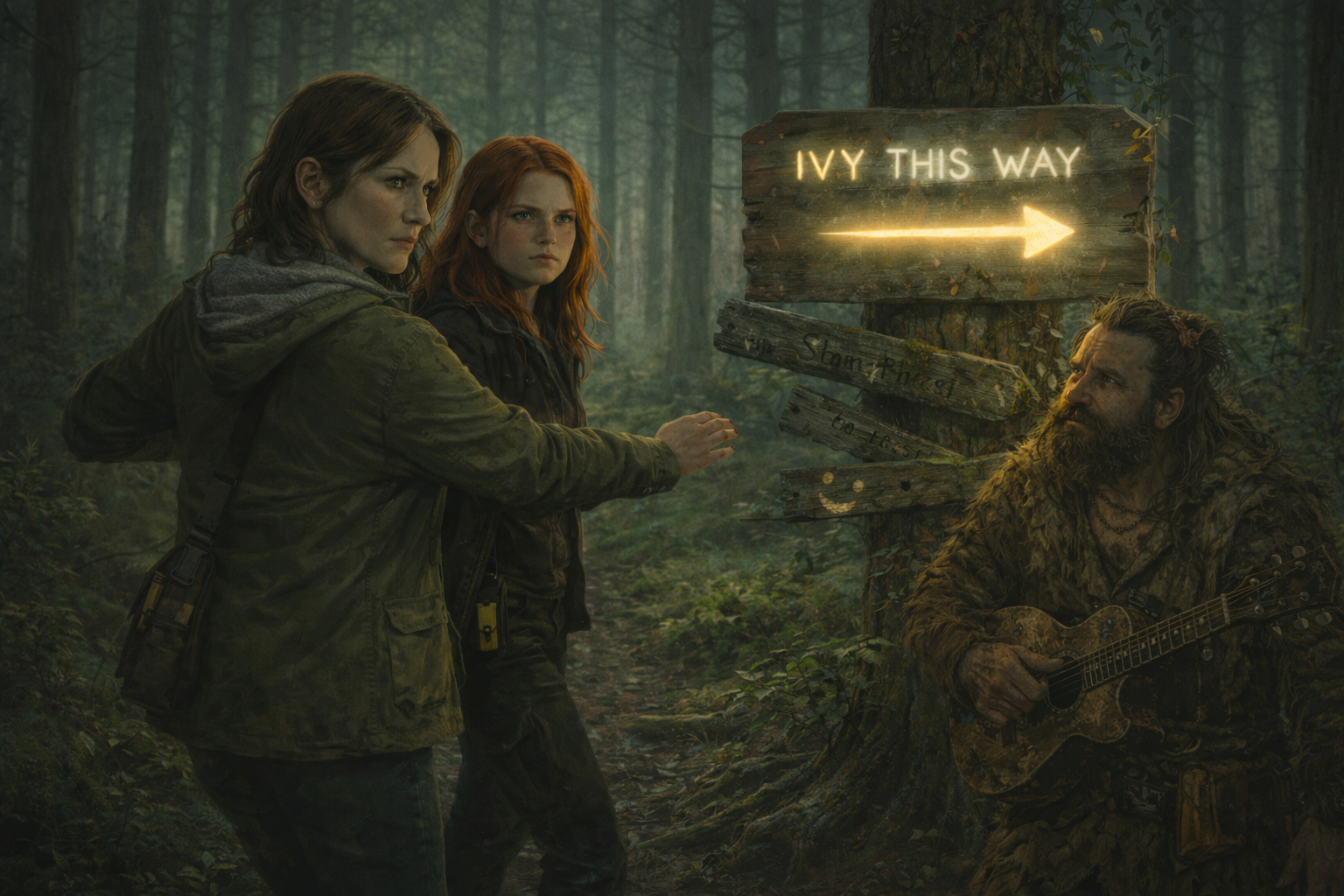](https://bookstack.thecartwrights.nz/uploads/images/gallery/2026-04/LCJimage.png)
“No,” Mum said, not loudly, but the word landed like a shut gate.
The letters shivered and thinned. The board underneath them smiled in fresh paint.
Not a real smile. Just a curve. Just two white hooks and a line.
Ben’s hand came down on the guitar strings in a single blunt muting press.
The little painted smile vanished.
“Fair’s leaning through,” he said. “Told you it’d bother.”
Dad looked from the signs to the trees to the signs again, the way he did when a computer error had produced such ridiculous nonsense he was briefly considering whether the machine might just be offended on principle. “Can we go round this?”
“We are round it,” said Ben. “This is the better way.”
“Marvelous.”
The fallen sign in the ferns jerked.
Not much. Just a dry tick of movement. But enough to make Amber flinch back into Mum’s side.
Ivy crouched before anyone could stop her. The sign lay face-up in the needles. Most of its lettering had gone, but one word remained in the lower corner, faint and hand-painted in red instead of white.
**HOME**
Her throat tightened.
“Ben.”
He looked down. The humour had gone right out of him now.
“That’s why Twenty-Three keeps surfacing near places folk stay,” he said. “Berths are for returns. If a return goes bad enough, the road starts throwing its homesickness about.”
Ivy straightened with a jolt as movement flashed to the right.
A child-shaped figure stood between two trunks, pale in the green dusk under the branches.
The boy from Site 23.
He looked thinner than before. Not thinner in body, exactly. Thinner in certainty. The edges of him kept fuzzing, as if the trees could not quite decide where he ended. He did not look at Ivy this time. He looked past her, toward the nailed sign on the tree.
Then he shook his head once.
The nailed sign split down the middle with a crack like dry ice.
Out of the split came a spill of blackness, low to the ground and moving too smoothly over roots.
Track Eater.
Ivy had never seen one properly. Nobody had. That was half the point. But now she saw enough: a length of wrong dark, jointed in places nothing built to live in daylight ought to be jointed, head or tail impossible to pick, body made more of missing than matter. It slid over the bark and the white lettering dimmed under it, sucked inward, vanishing bite by bite.
Amber cried out.
Dad shoved the kids back in one movement, Oakley scooped off the ground and tucked under one arm like a furious small parcel. Mum grabbed Ivy by the shoulder. Ben stepped forward and hit one string with the side of his thumb.
The note that came out was ugly and flat, but the Track Eater recoiled as if the sound had struck it broadside.
“Don’t run,” Ben said.
This was not the sort of instruction Ivy enjoyed hearing while the forest attempted to unwrite itself around her.
“It’s eating the signs,” she snapped.
“Yes.”
“That seems bad.”
“It is.” He hit another note, sharper this time. “Worse if it eats the count.”
Dad’s voice came clipped and hard. “Translate.”
Ben did not turn. “Signs first. Numbers next. Then direction. Then who went in and who came out. If it gets a clean chew through the count, this patch of road starts forgetting what travellers look like in the correct amount.”
There was a tiny pause.
Then Oakley, tucked under Dad’s arm, said, “That’s stupid.”
“Very,” said Ben.
[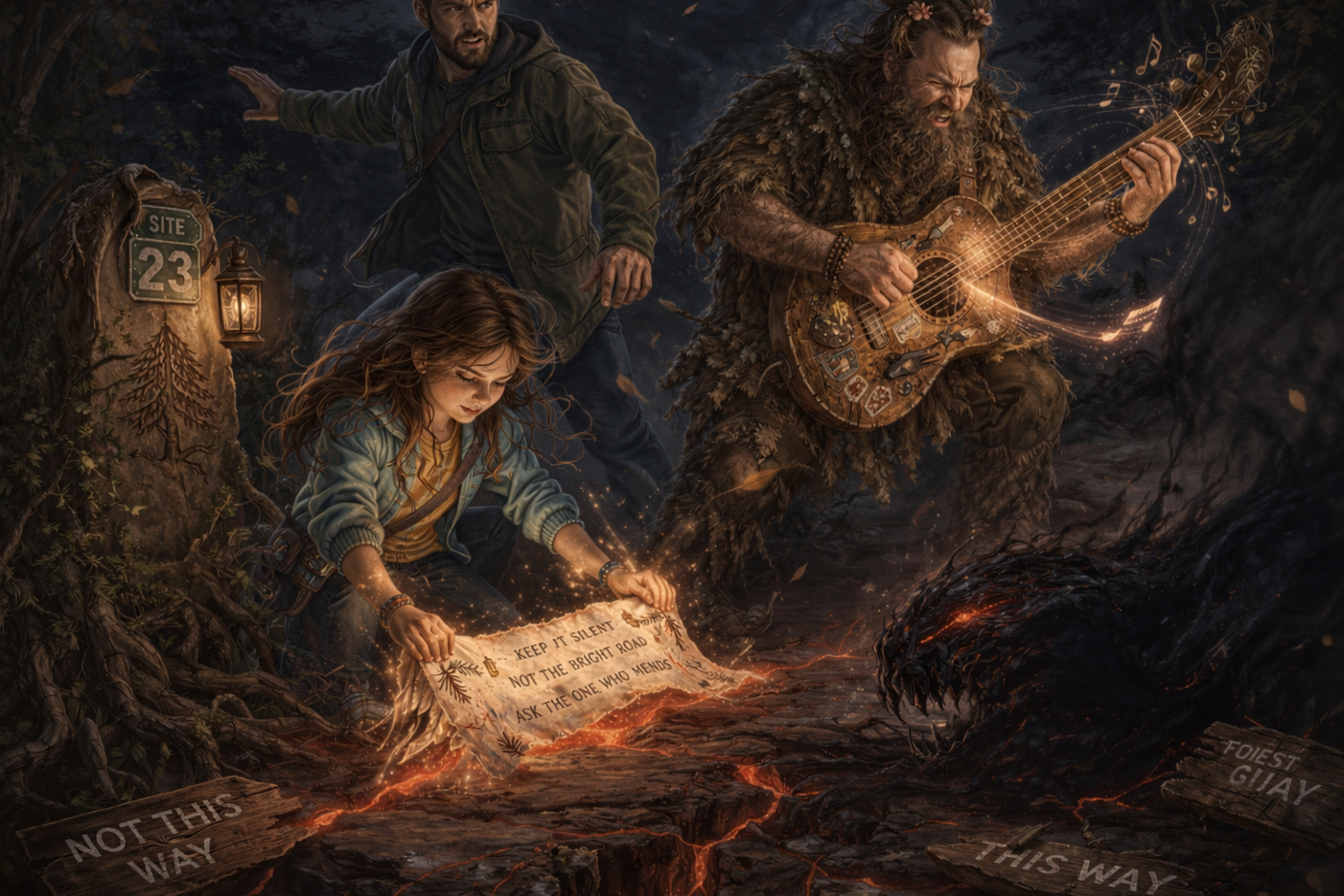](https://bookstack.thecartwrights.nz/uploads/images/gallery/2026-04/cTSimage.png)
The Track Eater slid off the broken sign and went for the leaning post marked **COUNT IN**.
The white letters dimpled under it.
Mum was already moving.
“Tell us what to do.”
Ben pointed with his chin. “Marker stone there. Other side of the root flare. Ivy, tag. Amber, the route-strip if your mum’s got it. Justin, keep everyone on the same bit of ground. Belinda, count us aloud. Full and steady. Don’t let the count break.”
That was it. No grand speech. No dramatic nonsense. Just jobs.
Which, weirdly, helped.
Mum had the route-strip out almost before Amber reached for it. Dad set Oakley down, kept one hand welded to the back of his hoodie, and physically herded them toward the half-hidden stone Ben had indicated. It stuck up only a little above the needles, square-cut and old, with a groove in its face exactly the size of the Site 23 tag.
Of course it did.
“Count with me,” Mum said, voice level in the way that meant she was doing battle under the surface and would prefer not to discuss it. “Dad. Me. Ivy. Amber. Oakley. Ben.”
“Hairy wizard too,” Oakley said at once.
“Yes,” said Mum. “Hairy wizard too.”
Ben’s mouth twitched despite everything.
The Track Eater hit the leaning sign.
The word **COUNT** lost its O.
Mum did not look at it. “Dad. Me. Ivy. Amber. Oakley. Ben.”
Ivy jammed the tag into the stone.
For one foul second it refused to go in.
The black thing was already turning toward them, the missing place in it opening and closing as it moved, and Ivy had the absurd thought that if she messed this up now she would personally throttle history.
Then Amber grabbed her wrist.
“Turn it,” Amber said. “Lantern side.”
Ivy twisted.
The tag dropped home with a hard enamel click.
The stone flared underneath the moss, not bright, just definite. A red line ran out from it along a crack in the ground, then another, tracing old hidden edges.
“Route-strip,” Ben said.
Amber pressed the torn embroidered strip over the glowing seam on the stone face.
The thread in it caught.
Not with fire. With tension. The strip pulled taut between her fingers, every stitch suddenly alive, as if something on the other side had taken hold and was pulling back.
The Track Eater lunged.
Ben struck the guitar with all four good strings.
The chord that came out was rough, nearly broken, but it shook the air hard enough to spray pine needles off the roots. The Track Eater folded sideways, its shape stuttering. For one instant Ivy saw something under the blackness: not skin, not fur, not anything normal. Just a whole mess of erased numbers, crawling over each other like ants.
She wished very much she had not.
“Count!” Ben barked.
Mum’s voice sharpened. “Dad. Me. Ivy. Amber. Oakley. Ben.”
Dad picked it up with her, louder. “Dad. Mum. Ivy. Amber. Oakley. Ben.”
Oakley yelled, “And me!”
“You are in the count,” said Dad.
The nailed sign on the tree spasmed. Half-letters sprayed off it like white moths and vanished before they hit the ground. The fallen sign reading **HOME** began to blur at the edges.
The boy from Site 23 moved.
Not toward Ivy this time. Toward the sign.
He put both hands on the warped timber as if bracing a door.
The Track Eater jerked, distracted, and Ben hit another brutal chord.
Amber’s eyes were fixed on the route-strip. “It wants another word.”
“What word?” Ivy demanded.
Amber swallowed. “I don’t know.”
Ben looked at the stone, then at the blurring **HOME** sign, then at Mum. “Say what you asked before.”
Mum understood before anyone else.
“Passage only,” she said, clear as a bell that was actually on their side. “No bargains. No welcome from the fair. Return counted.”
The glowing line in the ground brightened.
The Track Eater writhed as if the last word had hooked it somewhere tender.
“Again,” said Ben.
“Passage only. No bargains. No welcome from the fair. Return counted.”
Dad’s hand tightened on Oakley’s shoulder. Ivy could feel the tag vibrating inside the stone now, the enamel ticking against old carved edges. Amber did not move. She held the strip steady with both hands, face pale and fierce.
Ben struck the strings once more and the broken one snapped fully loose, whipping free with a metallic ping.
The sound that followed was not music.
It was a road deciding.
Every sign in the clearing shuddered at once.
The white-painted missing bites in the boards sealed over, not repaired, exactly, but held. Just enough. The word **COUNT** came back whole. **RETURN** reassembled on the farther sign. The little painted smile on the false arrow blackened and flaked away.
The Track Eater convulsed, then streamed sideways off the post and into the roots, dragging a tail of missing letters behind it. The darkness slid deeper under the pines and was gone.
Silence dropped after it.
Not peaceful. Just stunned.
Somewhere behind the family, a bell tried to ring and came out dull.
Ben bent double, one hand braced on his knee, the other still gripping the guitar neck.
Dad moved on instinct. “You good?”
Ben raised a thumb without looking up, which was not convincing but was at least informative.
Oakley wriggled out from under Dad’s hand and toddled three steps closer before anyone could stop him. “You are a bit broken.”
Ben laughed once into the dirt. “Welp.”
Mum exhaled slowly. “Amber?”
“I’ve got it.” Amber’s voice shook, but her hands stayed rock-steady on the strip. “I think if I let go too soon it’ll wobble.”
“You’re probably right,” said Ben.
Ivy turned to the boy from Site 23.
He still had both hands on the **HOME** sign, though now his fingers were half-transparent in the wood. He looked at her at last.
[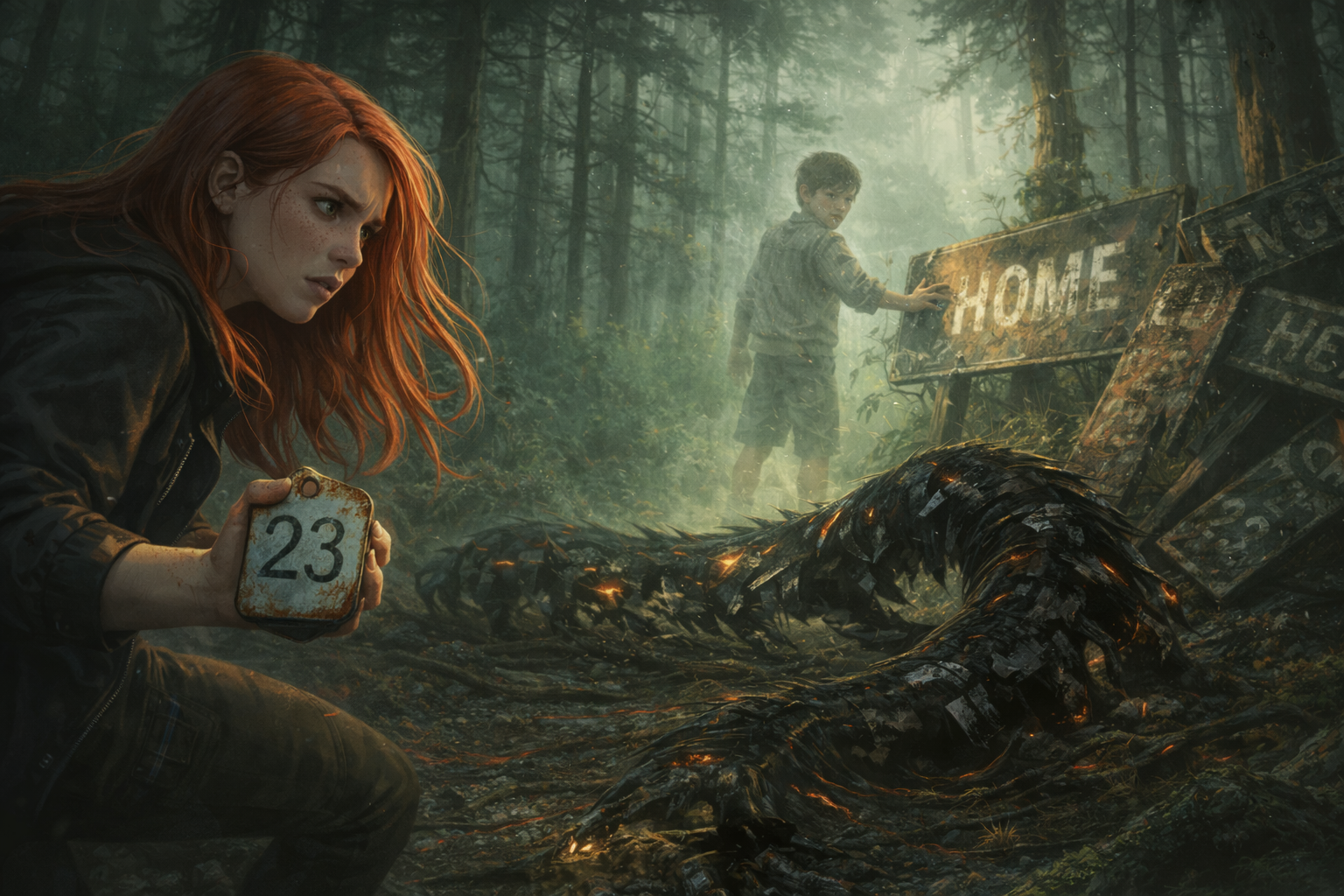](https://bookstack.thecartwrights.nz/uploads/images/gallery/2026-04/SmOimage.png)
His mouth moved.
No sound came out.
Then he lifted one hand and pointed past the signs, deeper along the honest side way.
Not toward the fair.
Forward.
And then he was gone.
Not vanished in a dramatic puff. Just thinned into the green light between the trunks until there was nobody there at all.
Ivy stared at the empty space for a second too long.
“Did he—” Amber began.
“Yes,” said Ivy, because she did not have a better answer.
Ben straightened slowly, wincing as he pulled the fully snapped string clear and wrapped it around his fist so Oakley would not immediately try to turn it into a space gadget.
“Right,” he said. “Now we keep going.”
Dad blinked at him. “After that?”
“Especially after that.” Ben nodded at the repaired signs. “That wasn’t a random bite. Something wanted this patch of route dumb and uncounted before you got to the next marker.”
“Why?” asked Mum.
Ben looked along the path the boy had indicated. “Because there’s something ahead it would rather you didn’t read.”
---
At Home, the cream thread across the hall seam had started to tremble.
Not violently. Not enough for anybody sane to call the police and say hello, my wallpaper is behaving like a liar. But enough that Auntie Erin stopped mid-wheel turn at the kitchen doorway and backed up for another look.
Meow Meow sat four feet away, tail wrapped hard around his paws, glaring at the wall with the cold concentration of a cat who had elected to be everyone’s worst little prophet.
“Don’t like it either, eh?” Erin muttered.
The thread had held all morning. She had checked it three times while making tea and once while pretending not to worry, which was less effective than she would have liked. Now the line sagged in the middle, then drew itself tight again with a tiny plucked motion, as if something on the far side had just tested it with one claw.
Erin rolled closer.
The wallpaper seam beside the stairs had opened by perhaps the width of a fingernail.
That should not have mattered.
Except the dark in it was wrong.
Not plaster dark. Not shadow dark. Pine-dark.
Forest-under-boughs dark.
Erin’s jaw tightened. “Oh, absolutely not.”
Meow Meow made a low complaining noise that sounded like a kettle beginning to boil.
“I know.”
She wheeled fast for the downstairs worktable, baskets and tins knocking softly as she went. Granny’s lantern-marked thimble still sat beside the mending tin. So did the older cloths, neatly stacked because Erin had decided the universe was quite chaotic enough without adding her craft pile to the list.
She reached for the cream thread, stopped, and chose a darker spool instead: deep red-brown, almost the colour of dried pōhutukawa bark.
“Let’s try less polite,” she said.
The cat approved this immediately and leapt onto the chair she wasn’t using.
Erin set the thimble on, threaded the needle, and rolled back to the hall. The seam pulsed once as she arrived. Not big. Just bold.
“Mm-hm.” She set the first stitch.
The second tugged strangely. The third hit resistance in empty air.
Not empty, she corrected herself. Somewhere else.
The hair rose on her arms.
She stitched anyway.
By the sixth pull Meow Meow had gone from simmering kettle to flattened gargoyle. Erin kept working, eyes narrowed, following the opening upward until the thread line crossed an old umbrella stand nobody had moved in years.
Something wedged behind it caught her eye.
A biscuit tin.
Old. Blue. Dent in one corner.
Erin frowned, shifted the umbrella stand with her footplate, and dragged the tin free using the hooked end of her scissors. Dust streaked her fingers. The lid had been shut with two thick rubber bands gone brittle with age.
“Now what were you doing under there?”
The seam in the wall gave a small nasty twitch.
“Rude. Wait your turn.”
She slipped the bands off and opened the tin.
Inside lay a stack of old holiday photos, two folded campground maps, and an enamel tag with the number **12** on it.
Erin went very still.
Under the tag sat a photo turned face down. On the back, in Granny’s handwriting, was a single sentence.
**Kev said never to mention Twenty-Three unless it came back first.**
For a moment Erin could only stare.
Then Meow Meow yowled.
The thread across the hall seam went tight as piano wire.
Erin snapped fully back into herself, shoved the photo and note onto her lap, and reached for her phone.
“Right,” she said. “That’s enough out of all of you.”
[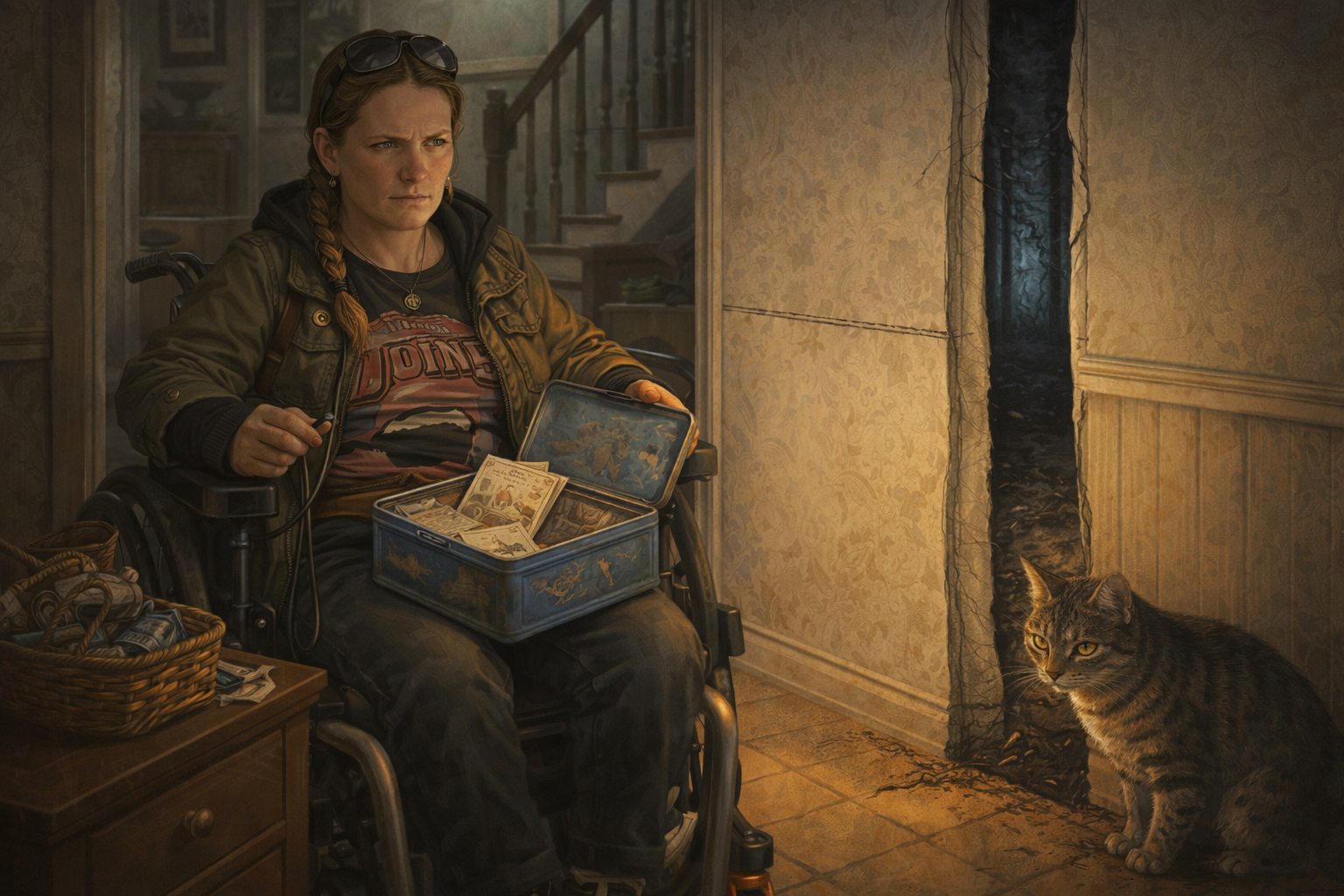](https://bookstack.thecartwrights.nz/uploads/images/gallery/2026-04/Oenimage.png)
---
The next marker was a shelter.
Or what was left of one.
It sat in a shallow dip beyond the sign clearing, little more than a slanted roof over two posts and a bench silvered by age. Ferns crowded the edges. Moss had climbed halfway up one post and taken the lower half of a painted lantern symbol with it. A noticeboard hung inside, its paper strips pinned under rusted tacks.
Every strip had been chewed blank except one.
Dad saw it first.
“Tell me that says what I think it says.”
Mum stepped in beside him. Ivy crowded the other side before anyone could claim an adult right to interpret.
The surviving strip had been written in pencil, not paint. The letters were rough and blocky, pressed hard enough to dent the card.
**K. M. checked east line. Count unstable. Don’t let the fair ring first.**
Ben went so quiet the whole shelter seemed to notice.
Ivy looked from the note to him. “You know those initials.”
Ben nodded once.
Dad’s face had changed in a way Ivy did not like. Not fear, exactly. Recognition wearing a fear-shaped coat.
“K. M.,” he said. “Kev Morgan.”
No one corrected him.
At that exact moment Mum’s phone buzzed.
Everyone jumped.
She got it out fast, eyes scanning the screen, and her expression sharpened into something beyond worry.
“It’s Erin.”
Dad swore softly. “Speaker.”
Mum answered and held the phone between them.
Erin’s voice came through clipped and clear. “Good news first. Home hasn’t opened into a forest. Bad news second. I’ve found a tin Granny hid behind the hall stand, and unless I’ve suddenly become very stupid, Gampa Kev knew about Twenty-Three.”
Silence.
Then Ivy looked at the penciled note on the board again.
Dad looked too.
Mum spoke carefully. “What did you find?”
“A note in Granny’s writing. Old photos. A route tag for another berth. And one line saying Kev told her never to mention Twenty-Three unless it came back first.”
Dad shut his eyes for a second.
Oakley tugged his sleeve. “Gampa did a secret?”
“Apparently,” Dad said.
Ben rested his big hand on the shelter post, staring at the penciled card as if it might explain itself if he gave it long enough. “He came here,” he said quietly. “Your Kev. Helped hold the east line when Twenty-Three started slipping.”
Mum’s gaze shifted to him. “You knew him?”
“Met him twice. Maybe three times. Long while back.” Ben’s mouth flattened under his beard. “Practical bloke. Drove like the road had personally annoyed him.”
Despite everything, Dad made a short helpless sound of agreement. “That tracks.”
Erin’s voice crackled faintly through the speaker. “I assume by your horrible collective silence that this is not new information to only me.”
Dad opened his eyes. “No.”
Ivy stared at the board, at the dented pencil marks, at the rule about the fair ringing first.
Questions were piling up so fast they were nearly physical now. What did Gampa Kev know? Why had he kept quiet? Had he seen the boy? Had he known Site 23 would come back? Had he left the Compass? Had he been trying to protect Dad, or just avoid telling the truth until it walked back into the family holiday and knocked on the caravan door?
[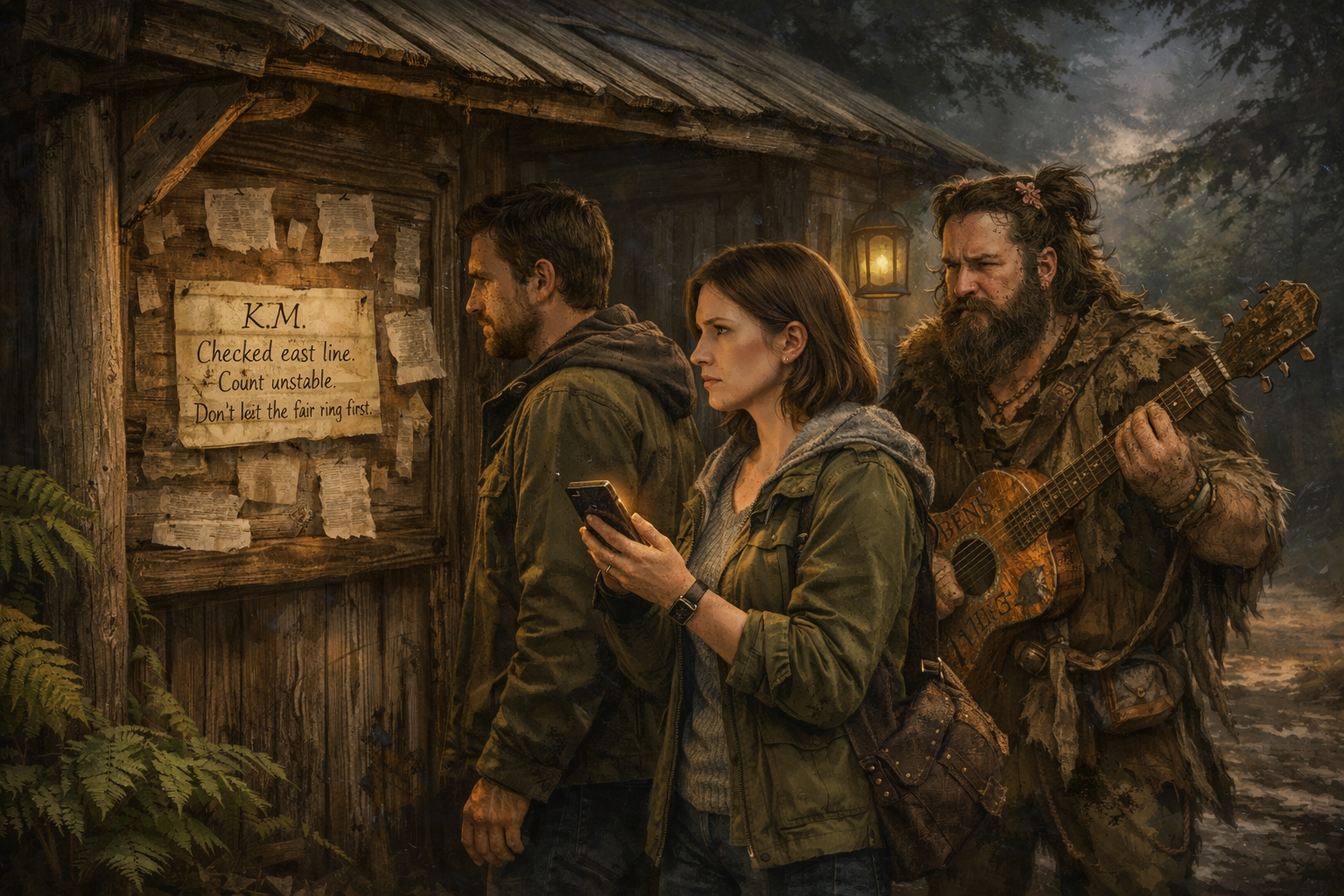](https://bookstack.thecartwrights.nz/uploads/images/gallery/2026-04/ITsimage.png)
The honest side way stretched on beyond the ruined shelter, dark and quiet and absolutely not finished with them.
Behind them, from very far off and still much too interested, came the thin dead sound of a bell trying again.
Ben lifted his head.
“We keep moving for now,” he said. “But when you get the chance—”
“We talk to Gampa Kev,” Mum finished.
Ben nodded.
Dad looked at the penciled initials one more time, then at his children, then at the road ahead.
“Right,” he said. “I am getting extremely tired of relatives knowing things in installments.”
Erin, still on speaker, said, “Join the club.”
And somewhere beyond the shelter, deeper on the honest road, something knocked again from inside the trees.
[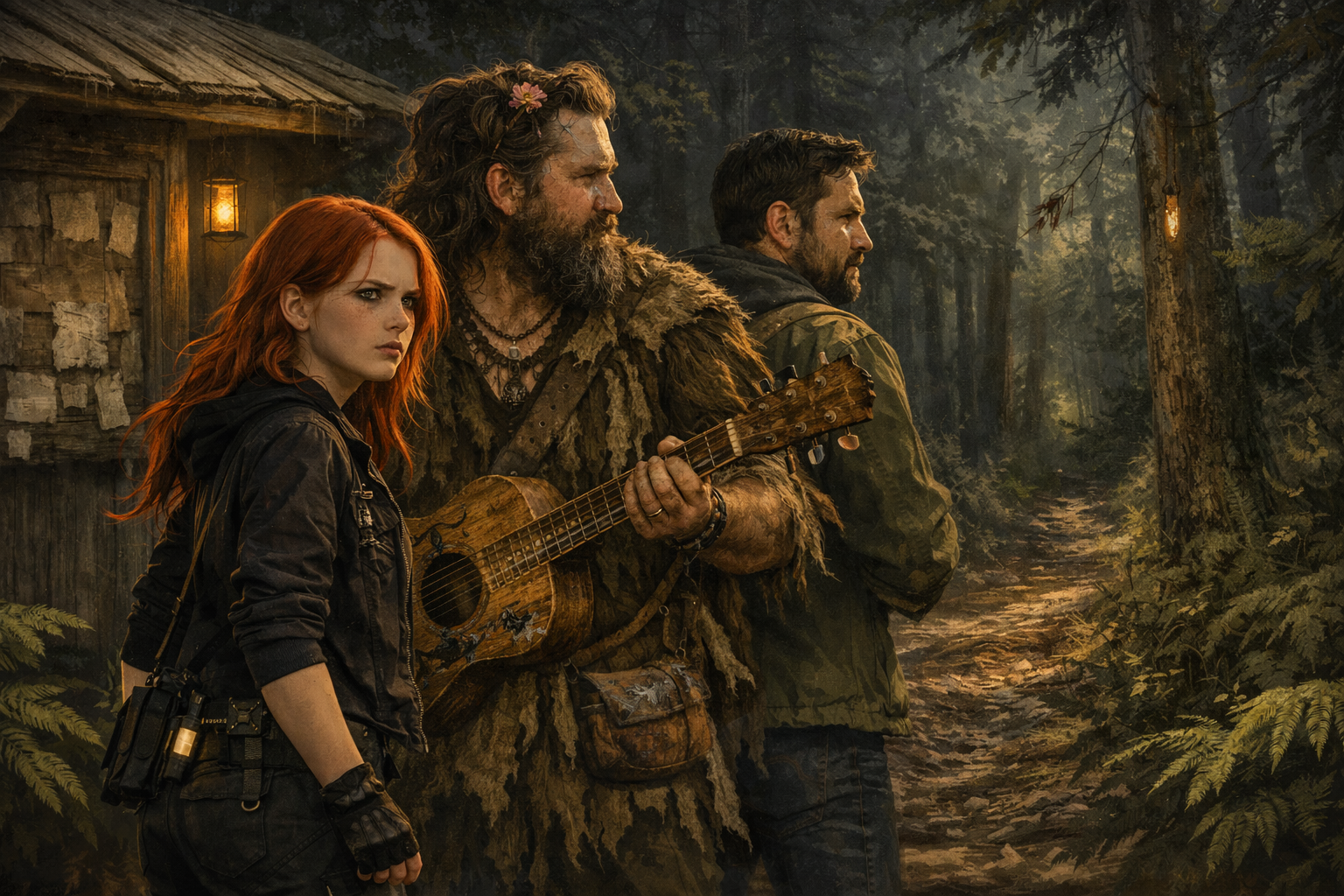](https://bookstack.thecartwrights.nz/uploads/images/gallery/2026-04/Hrkimage.png)
# Chapter 9 - What Gampa Kev Knew
Ben did not let them settle at the ruined shelter for long.
He gave the penciled note one more look, tucked two fingers under the sstrings in his guitar strings as if checking a missing tooth, and said, “We keep moving.”
Dad stared at him. “You have got to be joking.”
“I wish I was. Roads in this state don’t like a group standing still and thinking too loudly.”
“That is a ridiculous sentence,” Ivy muttered.
“It is,” said Ben, already heading down the darker of the two track-lines beyond the shelter. “Still true, though.”
So they went.
The honest side way had narrowed since the sign clearing. It no longer felt even faintly like a forgotten campground road. It felt older than that. The ground underfoot was dark with old needles and damp root-knuckles. Pine trunks rose in long straight columns, but every so often a slab of mossy stone pushed through the soil at the edge of the path, too neatly placed to be natural. The Lantern Compass kept twitching in Mum’s hand. Not wildly. Nervously. The Site 23 tag, hooked through Ivy’s fingers, had gone from warm to almost hot again.
Ben walked with the careful, loping stride of someone who knew exactly where all the weak places were. The missing string had changed the way his guitar sat against him. Every now and then it knocked softly against the wood of the instrument and made a small dead sound that somehow managed to be sad.
Oakley trotted beside Dad for half a minute, then sped ahead to Amber, then fell back again. “Is east line actually east?”
“Useful question,” said Mum.
“Thank you,” said Oakley.
Ben glanced over his shoulder. “Sometimes. Not always. Old road-names get ideas above themselves.”
“That,” Dad said, “is not useful at all.”
“It means the line was named from the counting-house, not from your compass.” Ben tipped his head toward the trees ahead. “East from there. Return side of a longer run.”
“Return side,” Ivy repeated.
Ben nodded once.
The words from the shelter note had lodged in all of them and would not come loose: **K. M. checked east line. Count unstable. Don’t let the fair ring first.**
Dad had gone quieter since Ben confirmed K. M. was Kev.
Not Gampa Kev as warmth, gumboots, and practical jokes. Not Gampa Kev as a man who could reverse a trailer into a space the size of a tea towel and then claim it had all been luck. Gampa Kev as someone who had apparently helped hold a broken road together and then somehow forgotten to mention it to the family for years.
That had done something to Dad’s face.
Ivy kept catching the look and then looking away again.
They came down through a dip where the ground turned wet and peaty. A fantail flicked through the trunks, too quick and grey to be anything but itself, and for a second the sight of something normal made the whole forest feel stranger.
Amber was the one who asked the next question.
“If Twenty-Three was a berth,” she said, careful around the word, “does that mean there were lots?”
Ben breathed out through his nose. “Enough.”
“How many is enough?” asked Ivy.
“Usually the worrying number.”
“That is also not a proper answer,” said Ivy.
Ben gave her an apologetic look, which was somehow worse than if he had grinned. “I know. I’m trying not to tell the truth in the stupidest possible order.”
Mum shifted the Compass into her other hand. “Then tell it in the least annoying one.”
Ben considered that with the seriousness it deserved.
“The east line,” he said, “used to be a homeward branch. Holiday roads, mostly. Bush entries, coast turnoffs, camps, tucked-away stops, places families could come through if they were invited properly and counted right. Twenty-Three sat too far out on the pine side. Twelve sat nearer the return.”
Ivy looked at him sharply. “Twelve.”
Ben nodded again, but before he could say more, Dad’s phone buzzed in his pocket.
All six of them stopped.
That was ridiculous in itself. They had not had proper signal since the first clearing. Dad had checked twice, once with bad language and once with worse optimism. Nothing. Now the phone vibrated again, hard enough to make the sound loud in the hush under the pines.
Dad yanked it out.
The screen glowed with one miserable bar and a name that made something inside Ivy sit up straight.
**Gampa Kev**
[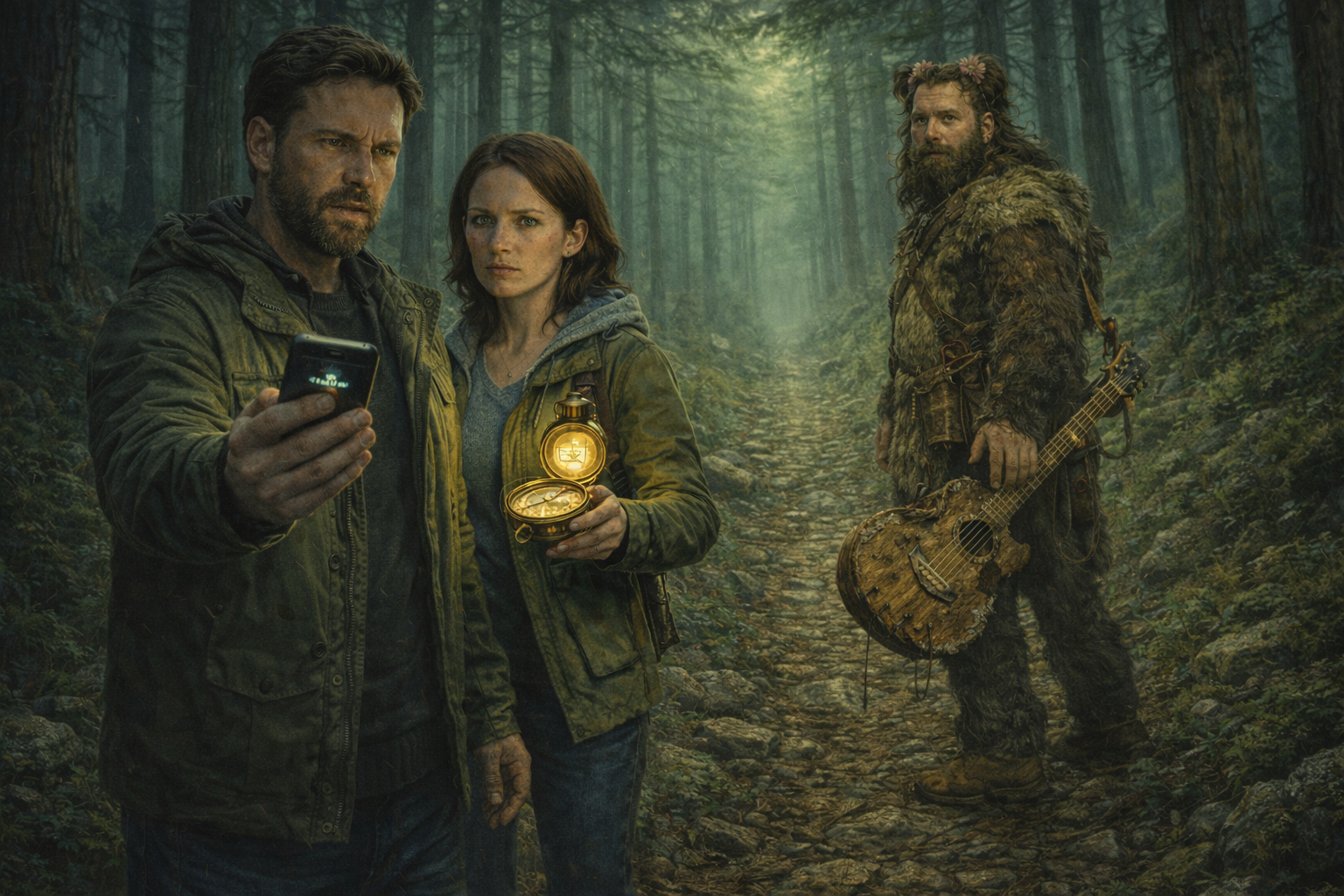](https://bookstack.thecartwrights.nz/uploads/images/gallery/2026-04/yaNimage.png)
Dad stared for a beat, then swiped.
“Kev?”
A crackle burst across the line, then Gampa Kev’s voice, thin and roughened by static. “Justin?”
There was no hello. No weather. No pretending.
Dad stopped walking altogether. “You knew.”
The line hissed. Somewhere behind the static, Ivy thought she heard another voice as well, sharper and nearer: Auntie Erin, probably, refusing to let Kev wriggle out of anything.
Kev’s answer came back slower. “You’re on it now, then.”
Dad let out a small, unbelieving laugh that had no humor in it. “That’s what you’ve got?”
Mum touched his arm. “Speaker.”
He stabbed the button and held the phone out between them all.
Kev sounded older that way. More tired. Less like a grandfather at a barbecue. More like someone answering a question he had been dodging for so long it had worn a groove through him.
“Don’t stand still if you can help it,” he said.
Ben made a brief, unhappy noise. “Told them that.”
There was a pause.
“Ben?”
“Afraid so.”
“Well,” Kev said faintly, “that’s a relief and not a relief.”
Dad’s head came up. “You two know each other?”
“Justin,” said Kev, and even through the crackle the warning in his tone was familiar, “you can have a proper yell at me in a minute. Use this one first.”
Dad looked as if he intended to do both at once.
Mum saved him from it. “What was the east line?”
Silence answered for a moment. Then the static shifted, and Auntie Erin’s voice cut in from farther back, razor-clean despite whatever phone arrangement she had managed.
“Tell them properly, Kev.”
“I am telling them properly.”
“You are circling it like a nervous sheep. They are literally in the road.”
Kev sighed.
“The east line was a counted family route,” he said at last. “Not grand. Not one of the old long-distance lines. More of a holiday branch. Safe crossings. Camp berths. Forest approaches. A way to get people through certain places without them wandering into the wrong welcome.”
Ivy tightened her grip on the Site 23 tag.
“Twenty-Three was one of those berths?” she asked.
“Yes.”
“And Twelve?”
A longer silence.
“Return side,” Kev said. “Closer in.”
The forest seemed to tilt around the words.
Dad had started walking again without quite deciding to. The others moved with him, drawn on by the path and the phone voice and the feeling that if they stopped the trees might start listening too hard.
“How close in?” Mum asked.
Kev did not answer that.
Instead he said, “Years ago, Twenty-Three started taking the count wrong.”
Ben’s face had gone still.
“The fair?” he asked quietly.
“Yes.”
The word seemed to make the light change. Not much. Just enough that the pines ahead looked briefly varnished.
Kev went on. “It wasn’t fully through then. Not the way it’s pressing now. More a lean. A wrong bell where there shouldn’t have been one. Brightness turning up in places that were meant to wait. Twenty-Three was out near that edge, and the edge got greedy.”
Oakley pressed close to Dad’s leg. “Bad road.”
“Yes,” Kev said, softer. “Bad road.”
Dad’s jaw was locked. “And you didn’t think any of this was worth mentioning?”
“I thought letting it sleep was worth more.”
“That worked brilliantly.”
Mum cut across before Dad could really get going. “What happened there?”
This time, when Kev answered, the tiredness in his voice sounded less like age and more like something older and heavier.
“A family came through. Not yours. Before you. Summer crowd. They had the right weather, the right ask, the right marker, and still it went bad because the fair rang first.”
Ben shut his eyes for half a second.
“The berth took them in,” Kev said. “But not back out clean.”
The path dipped again. A low stone curb appeared under the needles on one side, then vanished. Ivy would have missed it if she had not been looking at the ground as if it might begin explaining things any minute.
“What does that mean?” Amber asked.
“It means the road counted wrong,” said Kev. “It marked a welcome twice and a return once. It let brightness in where there should have been waiting. By the time we got there, words were slipping. Numbers were going. Names didn’t stay where they were supposed to.”
Ivy felt cold despite the heat in the tag.
“The boy,” she said.
Kev breathed in sharply on the other end.
“We never got his name to hold,” he said. “Not properly. People said it. The road wouldn’t keep it. That was when I knew the count had gone rotten all the way through.”
For a few steps nobody spoke.
Then Oakley, because he never respected a silence if it looked too important, said, “So he got left behind.”
Kev made a sound that might have been agreement or pain.
“Yes.”
Dad’s voice turned flat. “Did you shut it on him?”
That landed in the middle of them all.
Ben’s boots slowed.
Static scratched across the phone line. Somewhere behind Kev, Ivy heard Auntie Erin move, maybe wheeling across floorboards, maybe just shifting because the truth had hit her too.
“We stopped the line from taking anyone else,” Kev said.
“That is not the same answer,” Dad said.
“No,” said Kev. “It isn’t.”
The path widened without warning.
Not into a clearing. Not yet. Into a sort of lane, bordered on both sides by low stones and posts cut so squarely they had to be roadwork, not forest. At the far end of it stood two taller markers leaning inward like exhausted gateposts. One still held the rusted ghosts of enamel brackets. The other had a lantern shape worked into the face of the stone so faintly it only appeared when the light struck sideways.
The Compass twitched hard enough in Mum’s hand to make her hiss.
Ben looked from the markers to the trees beyond them and said, very quietly, “Don’t dawdle.”
The first bell note came through the pines.
Thin. Far off. Pretty.
Every single hair on Ivy’s arms tried to stand up.
Amber heard it too. She went pale.
“That’s behind us,” she whispered.
“No,” said Ben. “That’s both.”
He pushed ahead, and the family followed.
---
At **Home**, Auntie Erin had taken over the dining table downstairs with the efficiency of a general and the mood of someone who would happily fight the weather if it mouthed off.
The biscuit tin sat open beside her. Old photos, folded maps, two packets of brittle pins, a thread card, a dry pen that no longer worked, and the enamel tag marked **12** lay arranged in a careful spread across the table. Meow Meow occupied a chair with the rigid dignity of a witness refusing to cooperate.
The wall seam near the hall had worsened.
The first cream thread line Erin had stitched across it yesterday still held in places, but the centre had gone dark and damp, the wallpaper lifting there in a narrow mouth. Beyond it was not plaster or timber framing. Beyond it was distance. Pine-dark. A colour that made your eyes think of depth before shape.
Erin held the phone between shoulder and ear and kept one hand on the tag.
“You absolute idiot,” she told Kev without heat. “You hid a return key in a biscuit tin.”
“It was a very good biscuit tin.”
“That is not a defense.”
“It has been for thirty years.”
She glared at the wall.
The seam gave a small sound.
Not a rip. Not a creak.
A careful knock.
Meow Meow’s ears flattened so hard they nearly vanished.
Erin went still.
On the phone, Kev heard it too. “Erin?”
“It’s started knocking from the wrong side.”
His reply came back immediate and stripped of every comfortable old-man layer. “Don’t answer it.”
“I was deeply planning to avoid that, yes.”
She picked up the tag.
The enamel looked ordinary until it caught the light. Then the number **12** seemed to sit a fraction deeper than the chipped white surface should allow, as if the number were not painted on the metal but waiting under it.
“Kev,” she said, “what is Twelve?”
The silence that followed was worse than if he had shouted.
Then, low and defeated, he said, “The part we moved.”
Back in the pines, the lane ended at a round stone plinth half swallowed by roots.
Ivy knew at once that it mattered. Some part of her had already known before she reached it. The front of the plinth had an empty slot in it. Not large. About tag-sized. Above it, almost rubbed away completely, ran a line of carved lettering that had once been painted dark.
Most of it had gone.
One bit remained.
**RET—**
[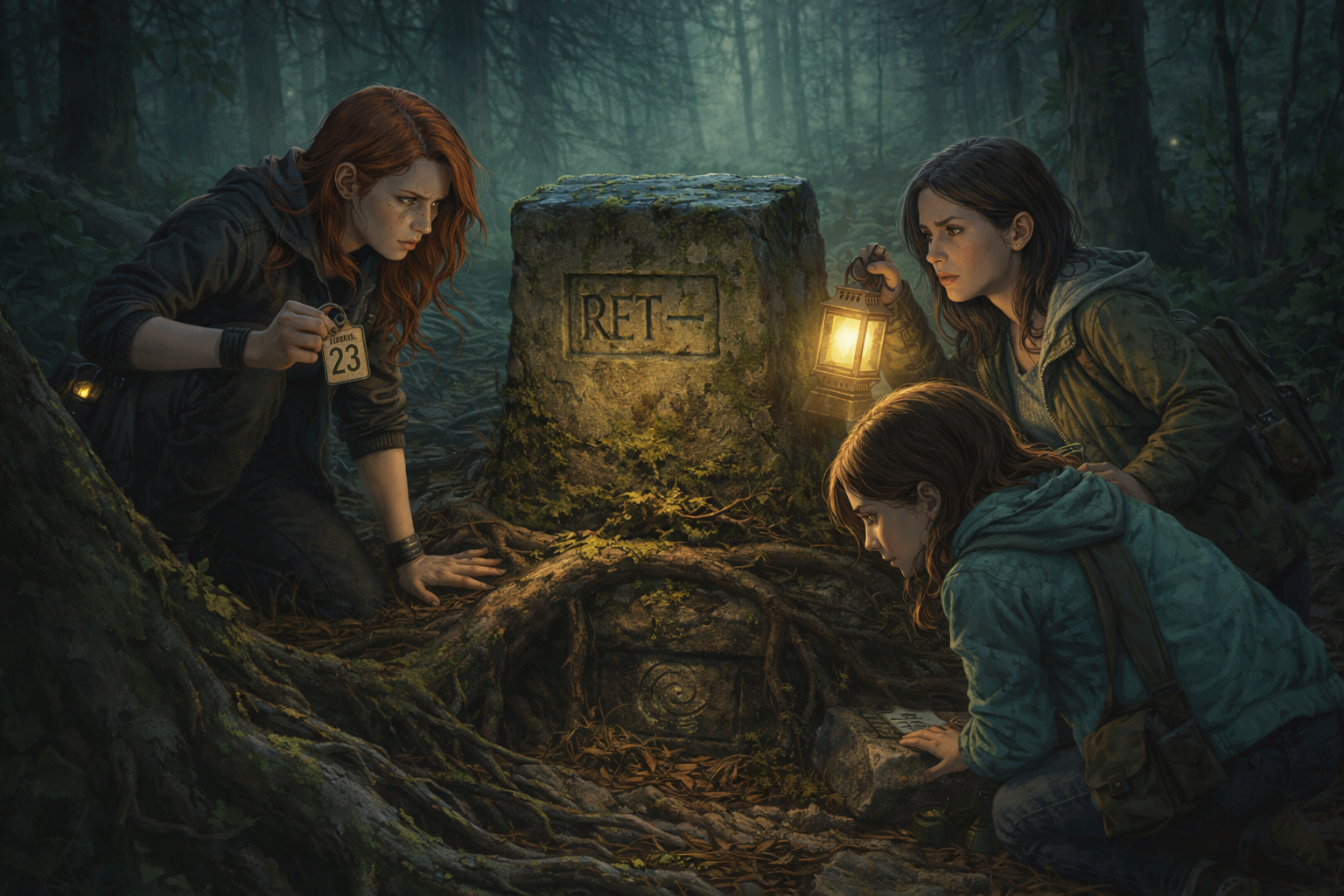](https://bookstack.thecartwrights.nz/uploads/images/gallery/2026-04/di1image.png)
Nothing after.
Half a word. Half a rule. Half a trap.
Ben put a flat hand out across Ivy’s path before she could go closer.
“Not aloud.”
“I know that.”
“I know you know it. I’m saying it anyway.”
Fair enough, Ivy thought, which was irritating.
Amber crouched on the other side of the plinth, squinting. “There’s another mark.”
Mum bent with the Compass. Dad held the phone lower so they could all see.
There, scratched under moss and dirt at the edge of the stone, was a little lantern symbol and beneath it the ghost of another number. Not written fully. Not preserved kindly. But there.
**12**
The air changed again.
The fair bell rang a second time, clearer now, and the forest seemed to brighten in all the wrong places. A strip of path off to the right took on a false neatness. The pine trunks beyond it looked less dark and more welcoming than they had any right to. Ivy could practically feel the lie in it.
Ben’s shoulders tightened.
“Kev,” Mum said, voice level despite everything, “what did you move?”
Erin answered before he could.
“The return,” she said.
Her voice had joined them properly now; Kev must have finally managed to patch the calls together, because suddenly she sounded close enough to be in the next room instead of downstairs at Home.
Nobody liked that.
Dad looked straight at the phone. “What return?”
Erin did not soften it. “The return berth. Or part of it. Kev’s finally stopped pretending.”
Mum’s head came up slowly.
Ben went very still beside the plinth.
Kev swore under his breath.
“It was collapsing,” he said. “The east line wasn’t going to hold if we left the return face in place. Too much could still use it. Too much could come through the wrong way. So your Granny pulled the faceplate and stitched the answering seam somewhere safer.”
The words took a second to arrange themselves into sense.
Then Dad did the last bit for everyone.
“Home,” he said.
Nobody on the phone answered.
They did not need to.
Ivy looked at the empty slot in the plinth. Then at the Site 23 tag in her hand. Then at the Lantern Compass. The whole road seemed to reassemble in her head, not as campsites and weird clues and monsters in trees, but as parts of a thing broken across distance.
Twenty-Three.
Twelve.
Welcome.
Return.
Home.
“The boy isn’t trying to get back to another berth,” she said.
Ben looked at her.
“He’s trying to get home,” Amber said, almost at the same moment.
Oakley, not to be left out of the horrifying revelations, pointed at the phone and announced, “Our house stole the door.”
“No,” said Erin grimly. “That is, somehow, close enough to be unhelpful.”
Mum’s eyes had gone sharp. “Bel—” Dad began automatically, then checked himself and started again. “Mum. If Twelve’s at Home—”
“Then the fair knows where the return goes,” she said.
The third bell note cut through the pines before anyone could answer.
This one did not sound far away at all.
The false path to the right brightened. Not with lantern light. With the sort of polished afternoon glow you got in holiday brochures and very bad ideas. There was even a suggestion of bunting ahead between the trunks.
Ben moved first.
He swung the guitar off his back, fingers finding a chord that now had a hollow in it where the missing string should have been. The sound that came out was thinner than before, rougher, but still enough to make the bright edge of the false path shudder.
[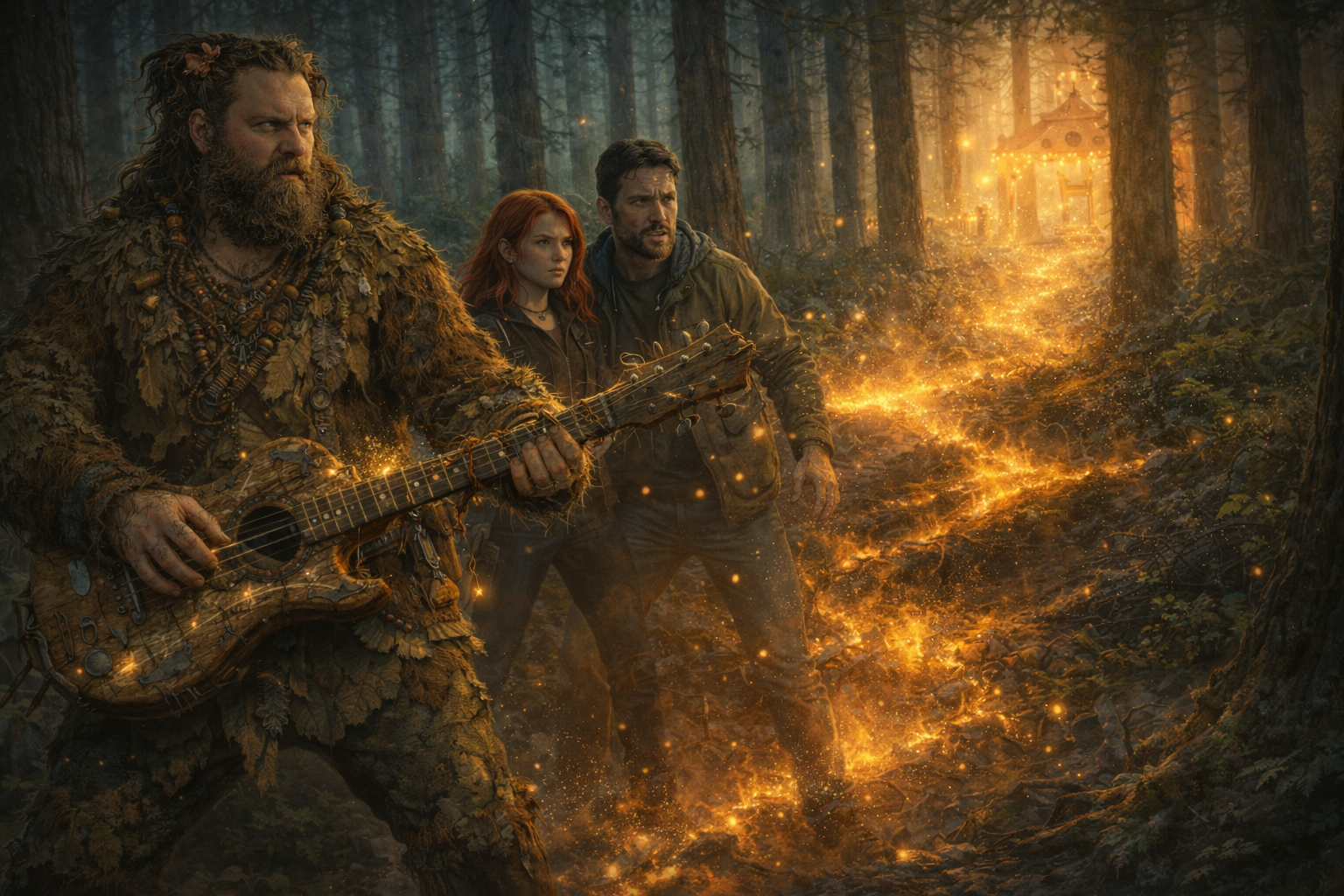](https://bookstack.thecartwrights.nz/uploads/images/gallery/2026-04/hyoimage.png)
“Do not look down that road,” he said.
Ivy, naturally, looked anyway.
Only for a second.
It was enough to see a little striped stall through the trees and something hanging above it that might have been a bell and might have been a child-sized enamel tag turning slowly in the light.
She jerked her gaze away so hard it hurt.
Dad had gone white with a kind of anger that was nearly fear.
“You put a road return in our house?”
“We hid the answering seam there,” Kev said. “Not the whole road. Erin, tell him properly.”
“I’m busy trying to stop the wallpaper from developing opinions,” Erin snapped.
As if offended by being discussed, the hall seam gave another knock.
Then another.
Then, from somewhere behind the wallpaper, a child’s voice said very softly, “Home?”
Nobody on the road breathed.
At Home, Meow Meow exploded off the chair in a streak of fur and malice and planted himself in front of the seam with his back up and every hair on his body trying to become a separate cat.
[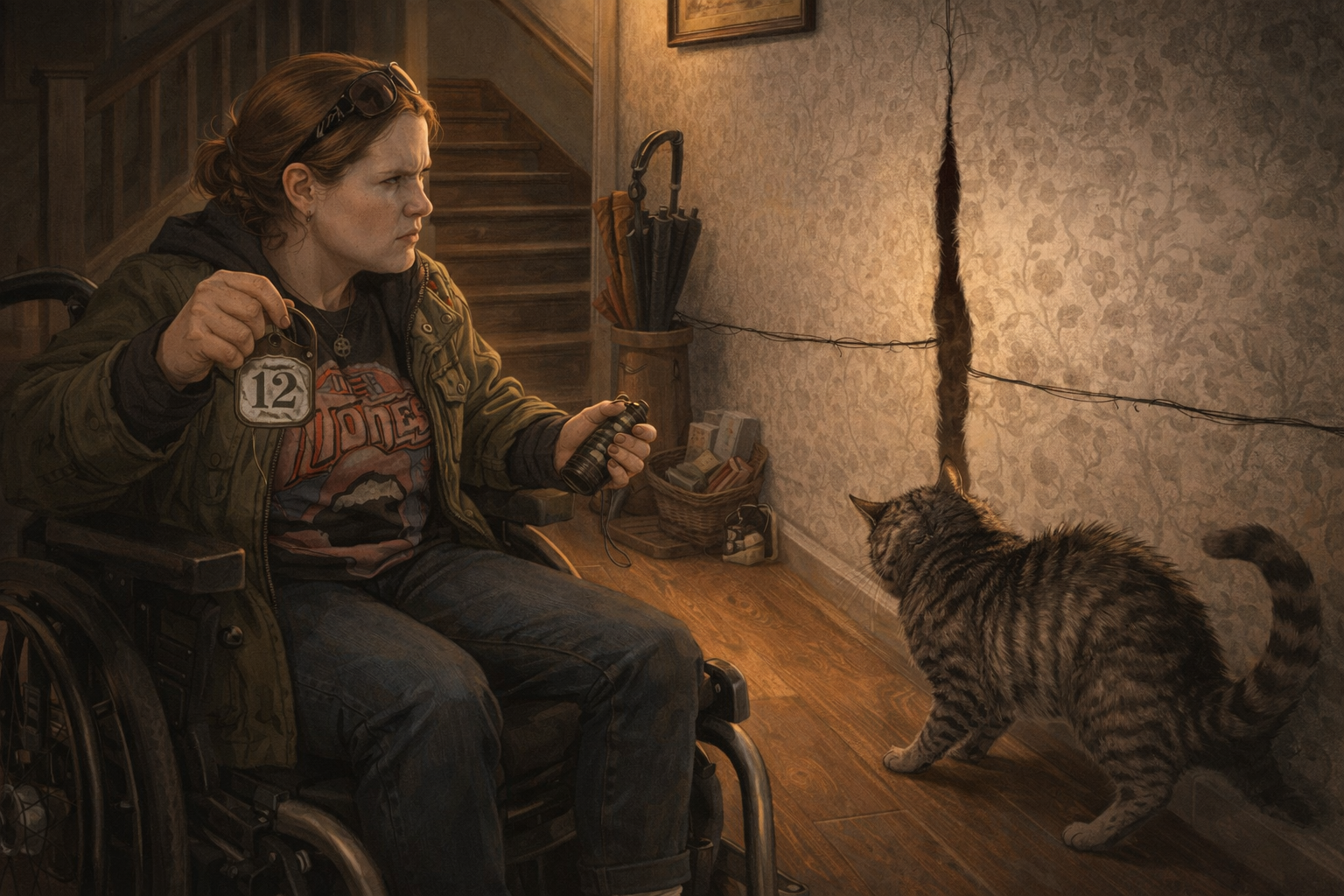](https://bookstack.thecartwrights.nz/uploads/images/gallery/2026-04/FGDimage.png)
Erin’s next breath came fast and furious.
“That,” she said, “was not the fair.”
Ben’s head turned at once toward the phone.
Mum’s grip tightened on the Compass.
Ivy felt the Site 23 tag go burning hot.
Kev spoke with sudden urgency. “Then it’s found Twelve.”
The plinth in front of them answered with a dull internal click.
Not from inside the empty slot.
From below it.
A line opened in the stone, no wider than a fingernail at first. Cold lantern-colored light breathed out through it. Not enough to show what lay beneath. Enough to prove there was still something alive in the old return mechanism, waiting for the missing face to answer.
Ben swore softly. It sounded almost cheerful, which was deeply unfair.
“The road’s heard it,” he said.
“The road heard what?” Dad demanded.
Ben looked up.
“Home calling back.”
That landed harder than the bells.
For one strange second everything linked: the boy bracing the **HOME** sign in the sign clearing, the return counted, the berth-tag in Erin’s hand, the knock from the wall, the empty slot here in the pines, the way the Compass had kept choosing not just the road but this family.
They were not just on the route.
They were part of the route.
Mum recovered first. “Erin. Keep Twelve with you. Do not slot it anywhere. Do not answer anything. Use the darker thread, not the cream.”
“Already doing it.”
“Kev,” Dad said, voice low and dangerous, “when we get back—”
“I know.”
“No, I don’t think you do.”
“Justin,” said Kev, and now he sounded more tired than old, “the fair will try your house before it tries honesty. Being angry with me can wait until you’re all on the right side of a door.”
The bell rang again.
Closer.
Ben hit another chord, and the false brightness to the right buckled, showing black tree-space underneath.
He looked at the family, all softness gone out of him for the first time since they had met him.
“We go back,” he said.
Dad blinked. “Back?”
“To the first clearing, the car, the campground, the drive. Fast as we can. The honest way if it holds, the hard way if it doesn’t. Twenty-Three has found where Twelve answers, and if the fair gets to Home before you do, this stops being a road problem and becomes a house problem.”
From the phone, Erin said dryly, “Bit late for that.”
Mum was already moving.
Not panicked. Not flustered. Just absolutely decided.
“Amber, with me. Ivy, keep that tag. Oakley, hand in Dad’s belt loop if you want carrying. Ben—”
“I know.”
They turned.
Dad took one step after them, then stopped just long enough to look down at the glowing slit in the stone plinth.
“What was the east line for?” he asked Kev one last time.
Kev’s answer came back through static and grief and thirty years of bad silence.
“To bring people home.”
Dad swallowed once, hard, and ran.
The others ran with him.
[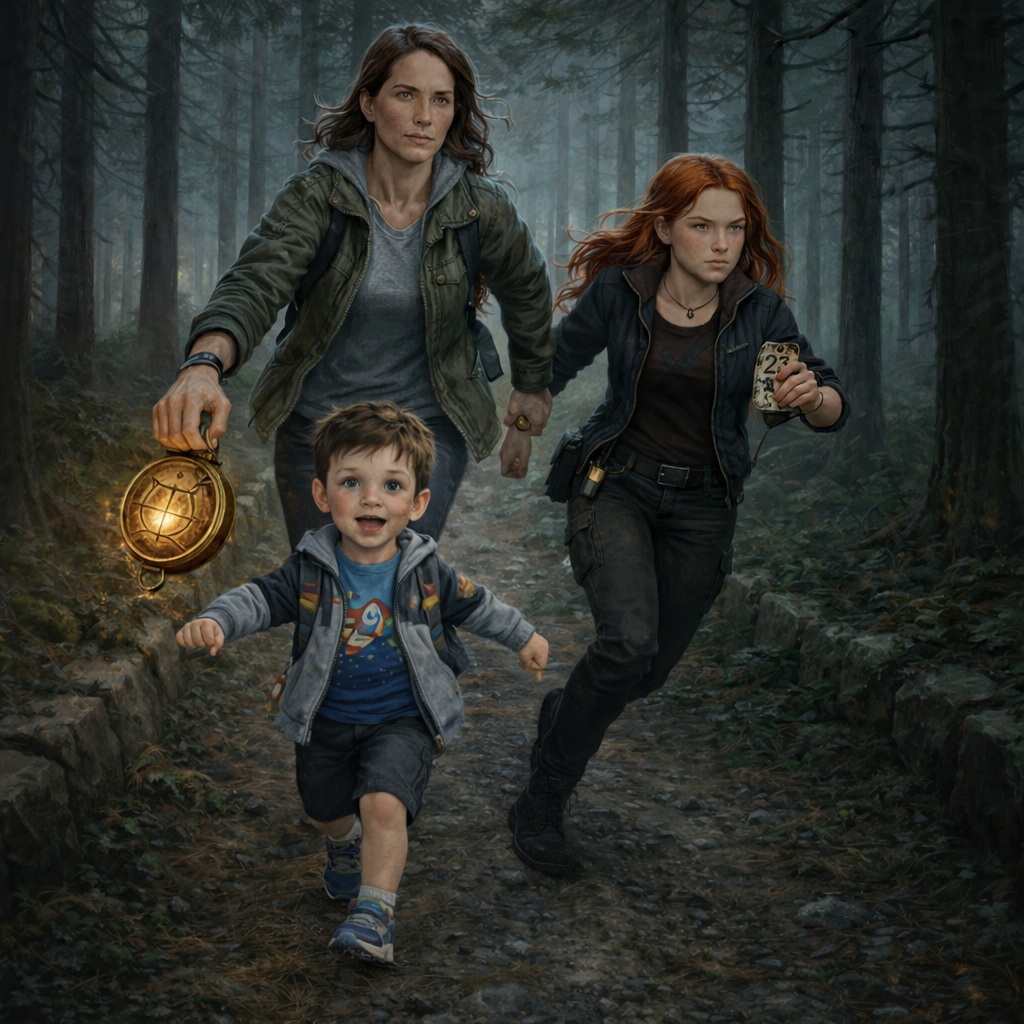](https://bookstack.thecartwrights.nz/uploads/images/gallery/2026-04/ykSimage.png)
Behind them, the empty return slot in the plinth gave another quiet click, as if a lock had finally remembered what key it was waiting for.
Mum’s hand closed around the Compass.
For the first time since the family had entered the pines, it did not point deeper in.
It swung hard toward Home.
# Chapter 10 - The Broken Waypoint
Ben Jammin did not raise his voice often, which made it worse when he did.
“Move,” he said, already turning down the honest side way. “Not in a minute. Now.”
The word snapped the family loose.
Mum shoved the Lantern Compass back into her grip before it could drag itself clean out of her hand. Dad jammed his phone harder to his ear as he pushed Oakley forward with the other hand. Ivy had the Site 23 tag clenched so tightly its corners bit into her palm. Amber bundled the torn route-strip against her chest to stop it flapping wild in the bell-thick air.
Behind them, somewhere beyond the darker pines, the fair road breathed out one thin ribbon of music.
It was not loud. That was the problem. It sounded patient.
The side way had already changed since they came in. The ground dipped and narrowed. Moss-sunk stone edging ran under the needles in a line too tidy for plantation bush. Half-lost marker posts leaned from the slope. The road did not look broken in the obvious sense. It looked strained. The sort of strained that came just before something gave way.
Dad’s phone crackled in and out against his ear. Gampa Kev was still there, voice warping around static and distance.
“Do not let that house answer twice,” Kev said.
Dad nearly tripped over a root and recovered without breaking stride. “You are very late to the useful part of this conversation.”
“I know.”
“That’s not an apology.”
“No,” Kev said, thin and dry through the interference. “It’s a diagnosis.”
A bell-note slid through the trees on the right. Not a full ring. More the idea of one, polished and bait-bright. The pines there looked cleaner. Too clean. The trunks stood straighter. The ground seemed to flatten invitingly between them.
Oakley pointed straight at it with all the certainty of a child identifying a cartoon villain.
“Not that one,” he announced. “That one’s pretending.”
“Correct,” said Ben, with grim approval. “Keep left.”
The Compass jerked so hard Mum’s wrist twisted. It pointed not toward the false brightness, not deeper into the line, but back and back and back — through trees, through distance, toward Home.
The needle quivered there as if it had found a tooth it could not stop worrying.
Mum swallowed whatever fear tried to climb up her throat and pushed the family onward. “Ivy, with me. Amber, stay close. Oakley, eyes on Dad.”
“I am on Dad,” said Oakley, because to him language was mostly a set of objects that should be picked up and shaken.
Dad caught him by the hood before he could prove it.
The road rose slightly. Ahead, the repaired sign clearing was only a darker shape between the trunks. Behind them, the fair road breathed again.
“Kev,” Dad said, clipped and furious, “why Home?”
The answer took a moment. Long enough to hear everyone’s steps, the hiss of needles under shoes, the faint metal complaint of Ben’s damaged guitar against his shoulder.
When Kev spoke again, his voice was quieter.
“Because houses hold,” he said. “A lived-in one best of all. Names every day. Meals. Arguments. Shoes at the door. Someone always coming back. Your Granny thought the seam would stay quiet if we tied it to a place that knew how to mean home properly.”
Dad made a sound that was not a laugh and had no happiness in it anywhere.
“So you hid a broken return in our house.”
“We hid the answer,” Kev said. “The break was already there.”
“That sentence can get in the sea.”
“Justin,” Mum said, and there was enough steel in it to keep him moving instead of stopping and having the argument properly in the middle of a magical road trying to eat them.
He kept going.
Ahead, the clearing opened all at once.
The marker stone where they had fought the count back into place stood dark and damp beside the track. The blurred HOME sign above it had steadied, but not fully. The edges of the letters trembled, thinning and thickening again, as though the road still had not decided whether it trusted the word.
Ivy saw him before anyone said anything.
The boy from Twenty-Three stood just beyond the stone, one hand against the post. He was clearer than he had been at the beach, clearer than in the pines. Not whole. Never whole. But clear enough that the grief of him landed fast and hard.
[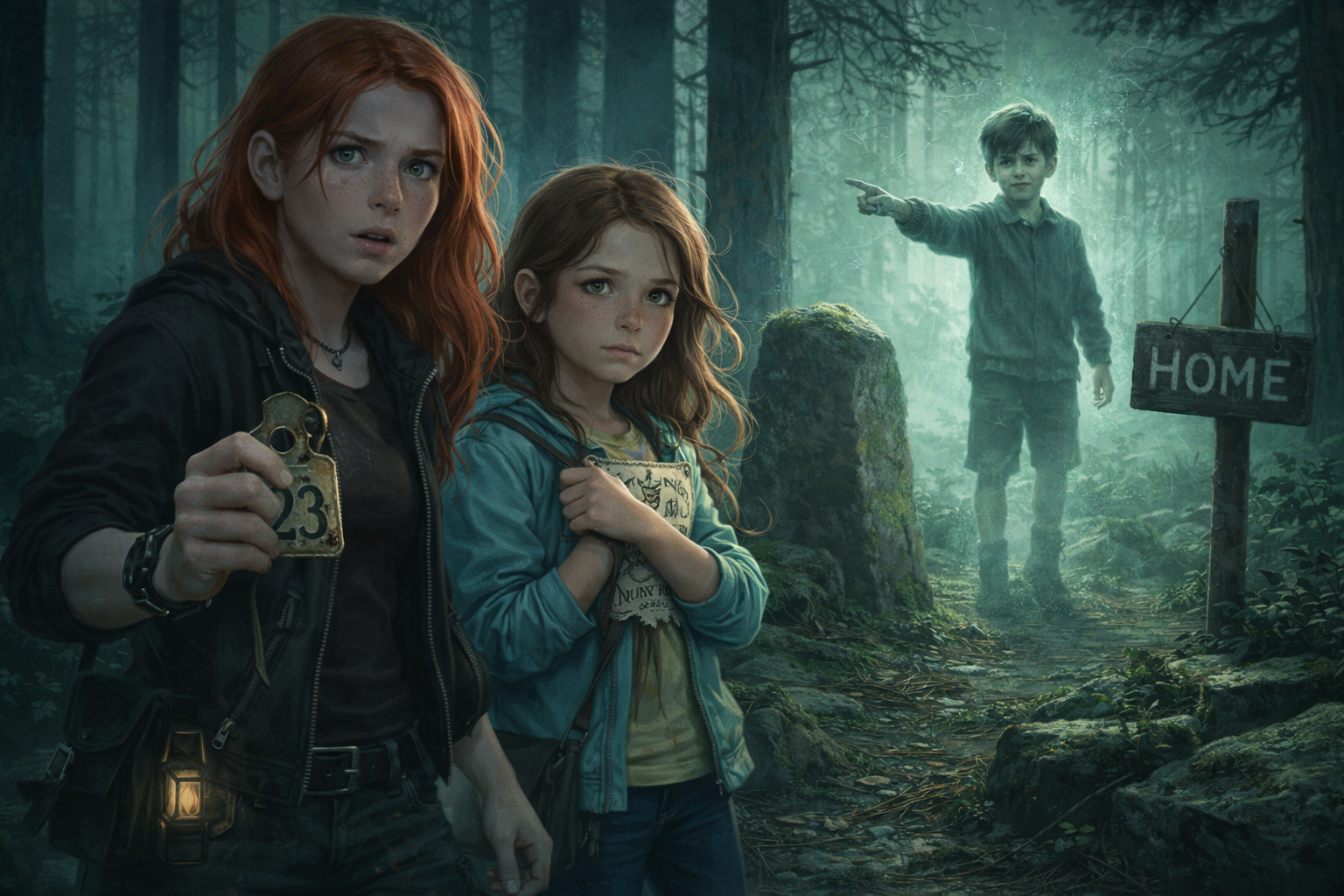](https://bookstack.thecartwrights.nz/uploads/images/gallery/2026-04/DM7image.png)
He looked at Ivy first. Then at the Compass. Then past them all, toward whatever distance Home had become inside the road.
He lifted his hand and pointed.
Not deeper in.
Back.
Then he was gone.
No flash. No drama. Only a thinning into the green light, as if the road had blinked and lost him again.
Amber stumbled to a stop. “He knows.”
Ben caught her shoulder gently and kept her moving. “He’s been trying to tell you that for a while, duck.”
“What happens if we don’t get there first?” Ivy asked.
Ben’s face tightened under the beard.
“The fair gets to define the return.”
Nobody liked that answer. It hung over the clearing with the damp and the pine smell and the distant almost-music.
Mum didn’t let the chapter of their lives called Panic begin properly. “Move.”
They moved.
---
At Home, Auntie Erin had pushed the dining chair out of the way with her footrests, dragged the little side table in with one hand, and turned the downstairs hall into something halfway between a sewing station and a siege engine.
The biscuit tin sat open beside Granny’s old maps. The lantern-marked thimble gleamed near the thread cards. Dark thread ran in a taut line from the wallpaper seam across the hall and back again, pinned, looped, and stitched into a pattern that looked improvised until you noticed how every crossing point sat exactly where the wall seemed most inclined to misbehave.
Meow Meow was planted in front of the seam, tail bushed to criminal proportions.
[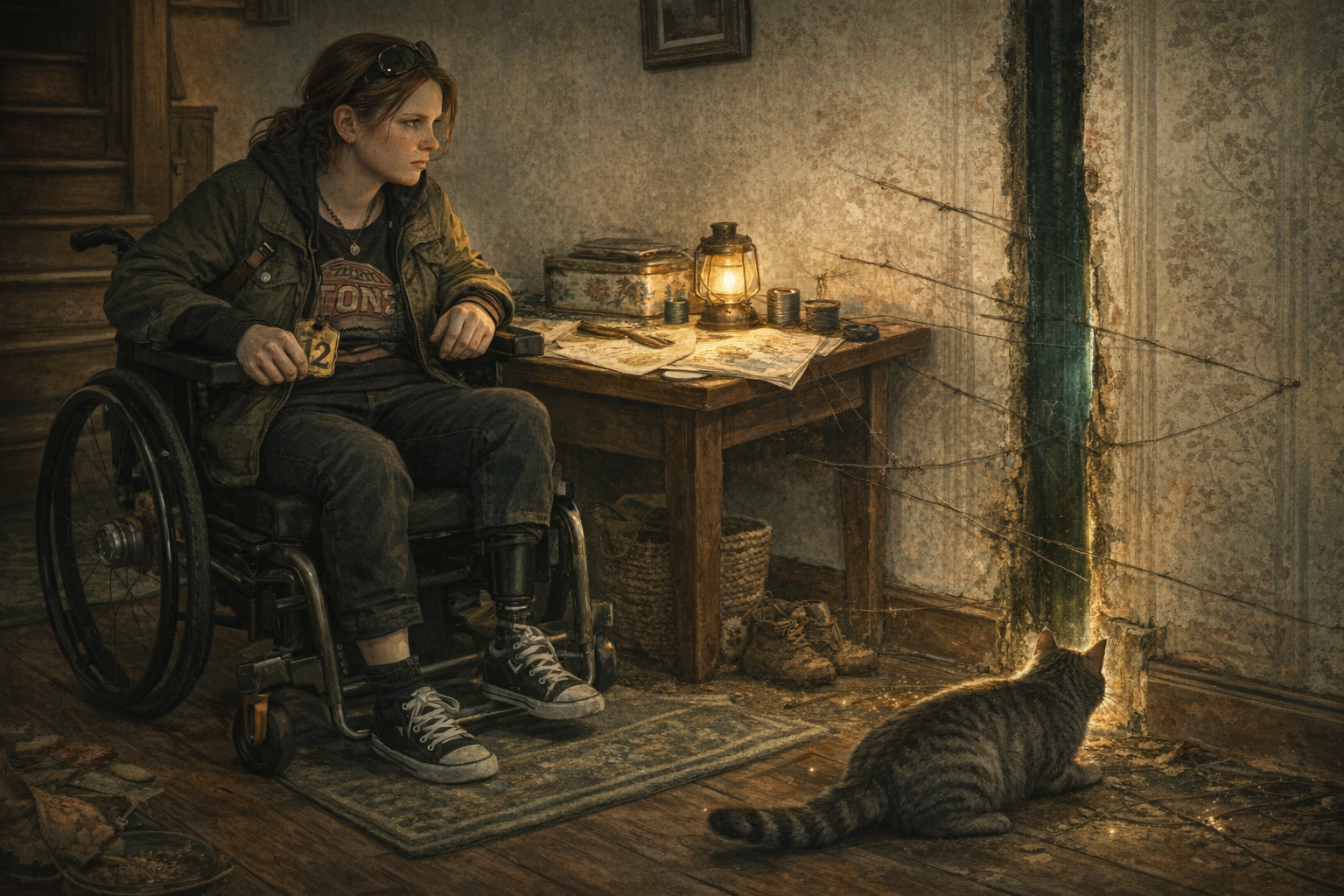](https://bookstack.thecartwrights.nz/uploads/images/gallery/2026-04/UNSimage.png)
He had been growling for nearly a minute.
Erin trusted him more than most adults she knew.
The berth-tag marked **12** lay on her lap. It was warmer than it had any business being.
The knock came again.
Not from the front door. Not from the stairs. From inside the wall, exactly where the seam had started opening toward pine-dark.
Three soft taps.
Then a pause.
Then one more.
Erin’s fingers tightened on the tag. “Well,” she said to the wall, “that’s a deeply irritating development.”
Meow Meow flattened his ears.
The wallpaper seam flexed inward. Not much. Just enough to make the line of flowers there stop looking printed and start looking nervous.
Then the voice came.
“Home?”
It was child-like. Not little-little. Older than Oakley. Younger than Ivy. Thin with distance. Thin with effort.
Erin did not answer at once.
That was the trick with bad welcomes. They relied on good manners and panic and the ordinary human urge to fill silence before it got weird enough to bite.
So she waited.
The wall did not purr reassurance. It did not tell her she was safe. It did not say her name in a voice borrowed from someone she loved.
It only waited.
Meow Meow’s growl changed.
Less threat. More misery.
Erin hated that, because it made compassion relevant.
She held the tag tighter. “Who’s asking?”
There was a shiver through the seam. Pine-dark showed for half a second in the crack between wallpaper edges. Not a place exactly. A wrong depth. Needles. Cold. The smell of wet timber left too long in shadow.
Then the voice, very carefully, said, “I’m trying.”
Not I’m coming in.
Not let me in.
Just that.
Erin looked down at the enamel tag on her lap. Twelve. The return-side berth. The answering piece. The house had been carrying it for years without anyone downstairs being given the courtesy of a proper memo.
From somewhere near the front of the house came the bright, false little trill of the doorbell.
Meow Meow whipped round so fast he nearly slid.
The cat’s hiss filled the hall.
The wall voice said, much quicker now, “Not that one.”
Erin’s head came up.
The front bell chimed again. Cheerful. Polite. A normal suburban sound made monstrous purely by timing.
Then, through the front door, a woman’s voice floated in. Warm. Easy. Almost familiar.
“Hello? Just checking in.”
Erin’s mouth went flat.
That was fair-road work. Too smooth. Too ready. Too pleased with itself.
The wall seam pulsed once under the dark thread.
The child voice said, so faint she nearly missed it, “Bright first.”
Something hot and furious moved through Erin’s chest. Not fear this time. Recognition.
“Right,” she said. “You’re him, or near enough.”
The voice did not answer.
But the tag in her lap grew warmer.
Erin pivoted her chair hard and sent a message to the family with fingers that had gone very steady.
**At Home. Doorbell = wrong. Wall voice says not that one. I think boy/return is reaching through seam. Hurry up.**
Then she wheeled toward the front hall, dragging the thread basket with her.
“Meow Meow,” she said, “guard the miserable wallpaper. Also try not to murder destiny unless it really needs it.”
Meow Meow blinked at her with the appalled expression of a cat being assigned management duties.
The bell rang a third time.
Erin did not answer it.
---
By the time they reached the first clearing, everyone was breathing hard and trying not to show it.
The car stood where Dad had left it, mud-spattered and solid and aggressively real in the dim open space beneath the pines. No caravan. No family clutter. No dangling holiday normality. Just the five seats, the chilly smell of old chips and sunscreen and child car-seat plastic, and the blunt practical miracle of an exit.
Dad could have kissed it if he hadn’t been too busy being angry at three generations at once.
The clearing itself was no longer entirely trustworthy. The chain at the threshold post shivered without wind. The cracked bronze bell above it had begun to twitch against its bindings. Not ringing. Testing.
Behind them, the false brightness in the trees had thickened. Not enough to become a full path here. Enough to suggest one. Enough to make the space around the car feel disputed.
Ben Jammin set the heel of his boot against a marker stone and slid the guitar round into his hands.
The missing string showed worse in daylight. What remained of it curled from the headstock in a useless wire loop. The other strings held, but one had gone dull from strain and another buzzed faintly in sympathy with the bound bell overhead.
Dad had the car unlocked before the rest of them had fully arrived. Oakley clambered in at once and then leaned out the back window as though this were all excellent.
“Ben! You coming?”
Ben huffed one soft laugh. “That’d be a squeeze, mate.”
“We can fold you.”
“That is not how people work,” said Ivy automatically, then looked at Ben and amended, “Probably.”
Amber stopped in front of him. “What do we do when we get there?”
Ben looked at her, then at Mum, then at the Compass in Mum’s hand, twitching toward a place it could not yet physically see.
“You don’t take the easy welcome,” he said. “You don’t use the bright way into your own house if it offers one. Homes can detour same as roads when the wrong thing gets there first.”
Dad froze with one hand on the driver’s door.
Mum said, “Ben.”
He nodded once. No softness in it this time.
“The honest answer’s already in the house,” he said. “That’s what Twelve is now. The fair’ll try the front of things. Polite. Helpful. Clean shoes on the mat. Don’t let it teach your house a cheerful lie.”
Ivy pulled the Site 23 tag from her pocket. “And him?”
Ben’s gaze flicked to it. The warmth in his expression hurt, because it carried too much pity for a child-shaped stranger nobody had been able to bring home properly.
“He’s got as far as he can without you lot finishing what the old road didn’t.” Ben reached out, not touching the tag, only indicating it. “Keep that where the house can see it.”
[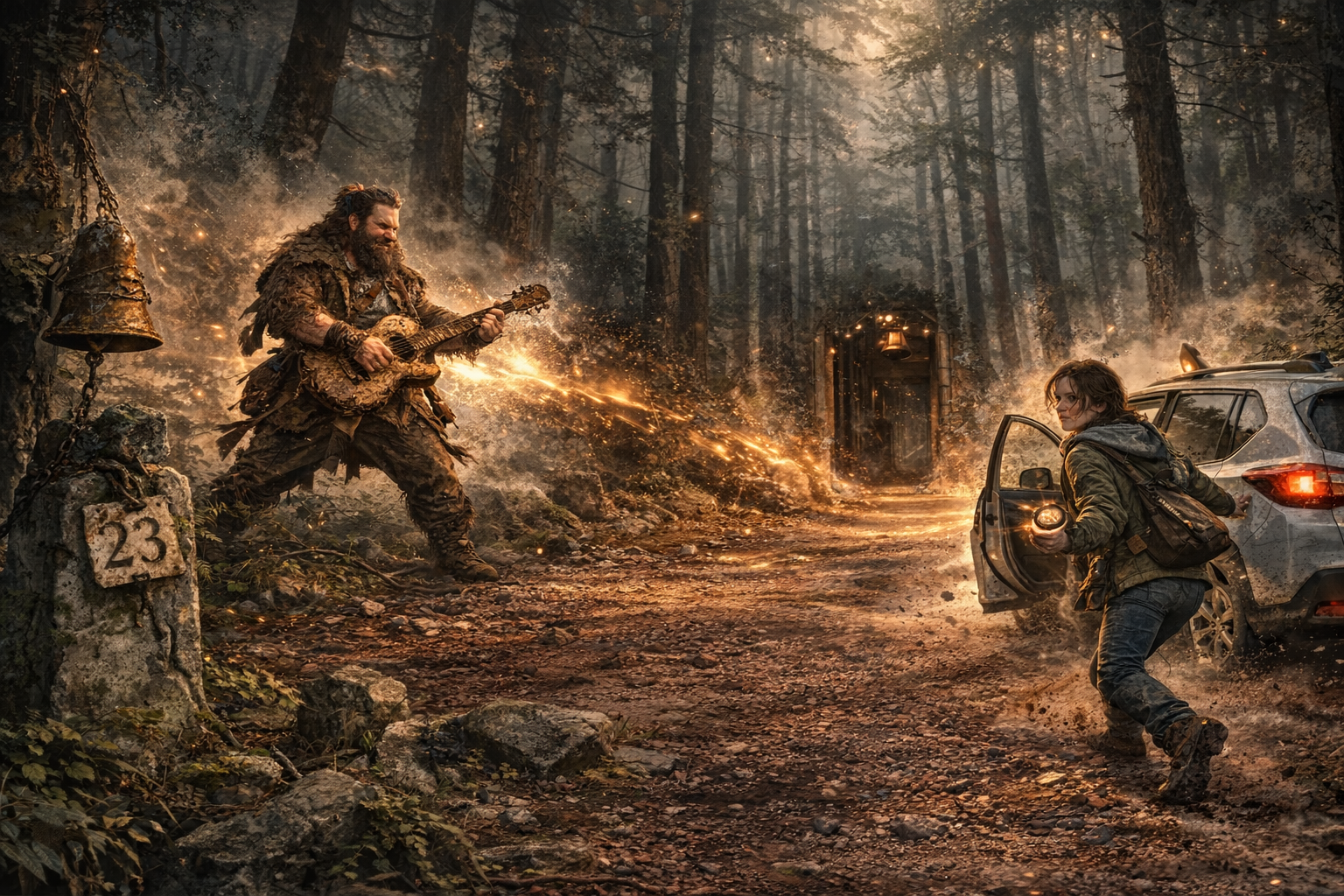](https://bookstack.thecartwrights.nz/uploads/images/gallery/2026-04/Kfhimage.png)
Dad got in behind the wheel. “That is an alarming sentence.”
“Yes,” said Mum. “Drive.”
Ben gave them a look that took in all five of them at once. Road-worn. Fond. Wary. Tired. Something else too, under the tiredness. The expression of someone who would have liked to do more and knew he shouldn’t pretend otherwise.
He lifted the guitar.
The chord he struck was ugly in the best possible way.
Not pretty magic. Not lantern sparkle. A hard, practical shudder of sound ran through the clearing and out into the trees. The false brightness jerked sideways. The bound bell overhead clanged once, dead and furious, without finding a voice. The chain settled.
“Go,” Ben said.
Dad went.
The car fishtailed once on the damp earth, caught itself, and burst out through the threshold into the real road with a spray of gravel.
Oakley twisted round in his seat until Mum hauled him back by the hoodie.
Ben Jammin was still standing in the clearing when the trees swallowed him.
Not waving.
Listening.
---
The drive home had too much road and not enough time.
Dad drove exactly the way he handled every genuinely bad thing in life: jaw set, shoulders rigid, mind turning the crisis into tasks because tasks could be survived and panic could not.
Get signal. Keep moving. Do not follow any sign that suddenly looked pleased with itself. Do not look too long at side roads. Do not discuss the fact that Granny and Kev had apparently hidden broken route architecture in the family house and then died or aged or stayed infuriatingly vague before explaining the maintenance schedule.
The phone stayed patchy. Erin’s message had come through. So had one from Kev, unhelpfully reading:
**Front answer may be compromised. Use caution.**
Dad showed it to nobody because it made him want to bite the steering wheel.
Mum sat beside him with the Compass braced against her knee. The needle no longer quivered. It held steady now, fierce and sure, dragging them toward Home with the grim confidence of something that already knew the problem had arrived before they had.
In the back, Ivy had the Site 23 tag out in the open on her palm. Amber held the torn route-strip beneath it. Neither of them had suggested putting either object away. Every now and then the tag gave a small heat-skip against Ivy’s skin, and the stitched edge of the cloth tightened in Amber’s fingers.
Oakley, buckled into place and vibrating with child-level emergency energy, kept up a low running commentary that would have been funny in any other universe.
“House fight,” he said.
“Yes,” said Dad.
“Bright one cheating.”
“Yes.”
“Boy there too?”
No one answered that at once.
Then Mum said, “Maybe.”
Oakley considered it. “Okay.”
Which was more emotional resilience than several adults in the car were currently managing.
The first false road sign appeared twenty minutes later.
Dad spotted it at the same time Ivy did.
A neat white sign at a rural turnoff, too new for the battered post it sat on, arrowing left toward WOODEND in black block letters. Only the D at the end curled a little too far around, grinning at its own cleverness.
The Compass pulled dead ahead.
Dad did not even slow.
“Not falling for budget typography,” he muttered, and drove on.
Amber let out a breath she had been holding too long. Ivy gave one startled snort that almost became a laugh.
That was the thing about terror in families. It never got the room entirely to itself.
The second attempt was meaner.
The sat-nav woke up from whatever grave Dad had left it in two days earlier and announced, in a smooth chirpy voice no one remembered selecting, “Route recalculated. Faster arrival available.”
Dad slapped it off so hard he nearly dislodged the entire unit.
“Absolutely not.”
Mum’s phone buzzed.
Erin.
Mum put her on speaker at once.
Erin did not sound panicked. She sounded offended, which in some situations was much better.
“The front door is trying to be welcoming,” she said.
Dad gripped the wheel harder. “Define trying.”
“The bell rang three times. Something at the front used a voice that wanted me to think neighbour, maybe school mum if I were stupid enough. The wall seam remains profoundly haunted, but in a more useful direction.”
Ivy leaned forward between the seats. “Useful?”
Erin paused.
Then, carefully, “I think the boy is reaching through the return side. Or what’s left of him is. He warned me not to answer the smiling one.”
Amber closed her eyes. Not in fear. In that fierce, aching concentration she got when the emotional shape of a thing snapped into place before the explanation did.
“He’s helping,” she said.
“Yes,” Erin said quietly. “That appears to be his whole tragic little hobby.”
Mum asked, “How bad is the seam?”
“Bad enough that I’ve threaded Twelve into the hold-line.”
Dad looked at the phone. “You did what?”
“I said I threaded—”
“I know what you said.”
“It was that or wait politely for the wall to develop opinions.”
“Erin—”
“Justin, with love, you are in a moving car with a haunted compass. I am downstairs with a hostile front door and a child voice in the wallpaper. Let us both be brave in the ways available.”
Dad opened his mouth, found nothing adequate, and shut it again.
Mum’s hand found his arm for half a second and squeezed.
“What happened when you used Twelve?” she asked.
Erin’s answer came lower.
“The knock changed.”
Everyone in the car went still.
“It stopped sounding like something wanting in,” she said. “Started sounding like something trying not to be pushed out of place.”
Amber pressed the route-strip tighter to her chest. Ivy stared at the tag in her palm.
Oakley said, with appalling cheer, “So house has a real door and a liar door.”
Erin made a small sound that might have been laughter if it hadn’t also been extremely tired. “Yes, actually. That’s annoyingly accurate.”
The line crackled.
Then, very faintly under Erin’s next breath, another voice slipped through speaker static.
Not hers.
“Not the front.”
Every hair on Ivy’s arms lifted at once.
Erin did not speak over it.
Neither did Mum.
The voice came again, thinner and further away than before, but unmistakably child-shaped now.
“Wrong bell.”
Then the call broke into hiss.
Dad drove faster.
---
By the time they turned into their street, the light had gone peculiar.
Not dark. Not late. Just thinned in the wrong places, as if the afternoon had been sanded down and polished by something that preferred a cleaner finish than weather usually bothered with.
Home stood where it always stood.
Two storeys. Familiar roofline. Front path. Windows. Brick. Downstairs curtains half-drawn in the front room. The ordinary, glorious sight of their actual house.
And wrong.
The front garden had been tidied.
No one in their family had done it.
Dad pulled up so hard the gravel cracked under the tyres.
For one stupid second nobody moved. They just stared.
The front path, usually a mildly chaotic run of pavers and edges that got mossy if people forgot about them for too long, had become neat. Too neat. The weeds were gone. The bins had been shifted square. The pot by the step stood dead centre. Even the doormat lay flat in a way no real family home with children ever managed for more than twenty seconds.
The front door stood open.
[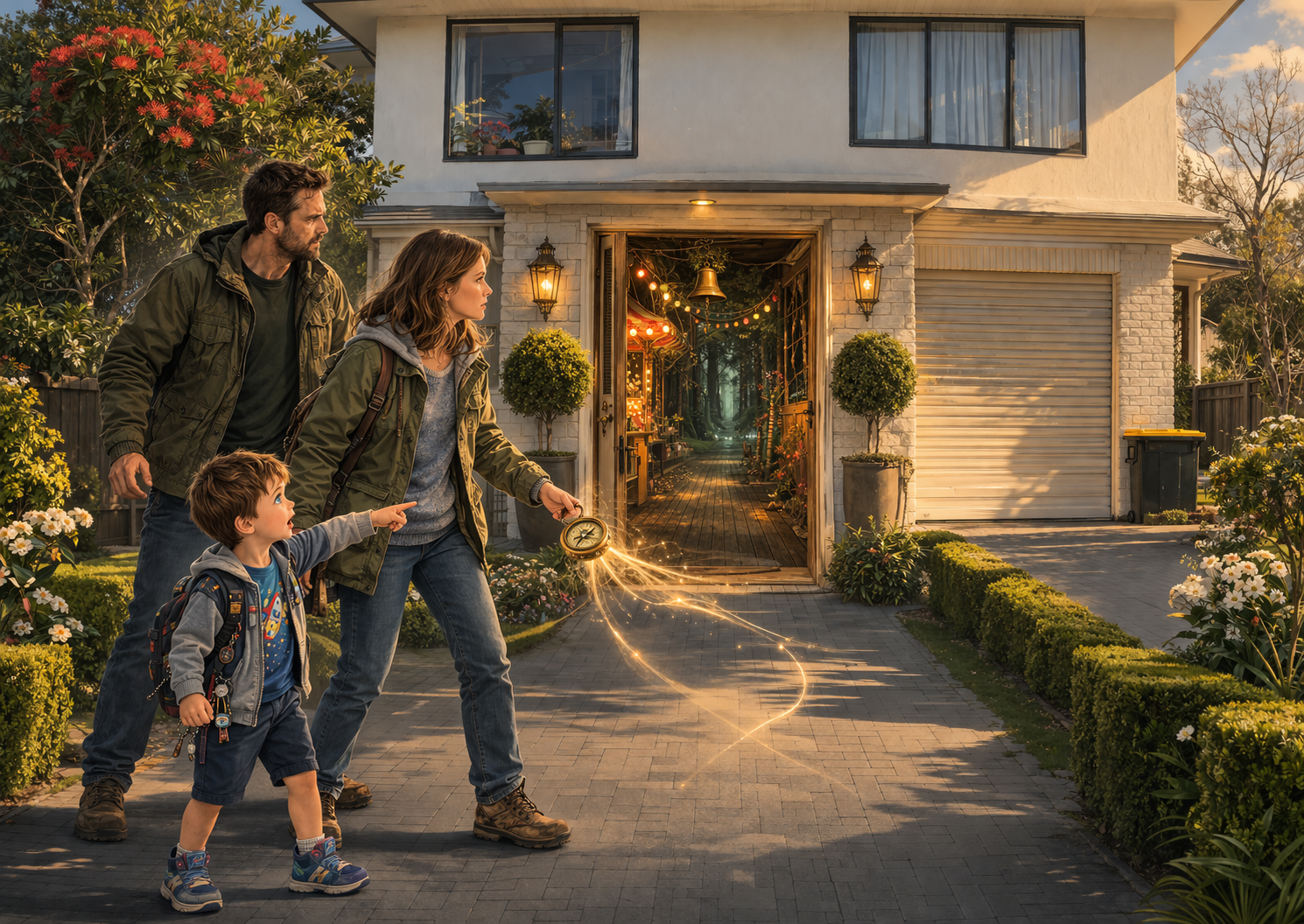](https://bookstack.thecartwrights.nz/uploads/images/gallery/2026-04/jzQimage.png)
Not wide. Invitation-wide.
And beyond it, where the hall should have been, was depth.
Pine-dark. A longer corridor than the house possessed. Damp boards under a thread of warm carnival bulbs. Something hanging overhead where their familiar hallway light ought to be — a bell, bronze and still.
Oakley made a sound of absolute delight.
Ivy caught him before he could unbuckle himself into destiny.
“Oh no you do not.”
From the downstairs side window, Auntie Erin appeared and slapped her palm against the glass.
“Wrong door!”
Meow Meow launched himself onto the sill beside her, fur blown to full villain size, and screamed his opinion into the universe.
That broke the freeze.
Dad killed the engine. Mum already had the Compass in one hand and the front passenger door open with the other. The needle was going mad now — not toward the front door, not toward the bright false hall, but sideways, pulling hard around the house toward the downstairs side entrance.
Erin banged the window again and pointed sharply left.
“Not the front!” she shouted, voice muffled by glass and distance but perfectly readable. “The honest seam’s still holding. Barely.”
[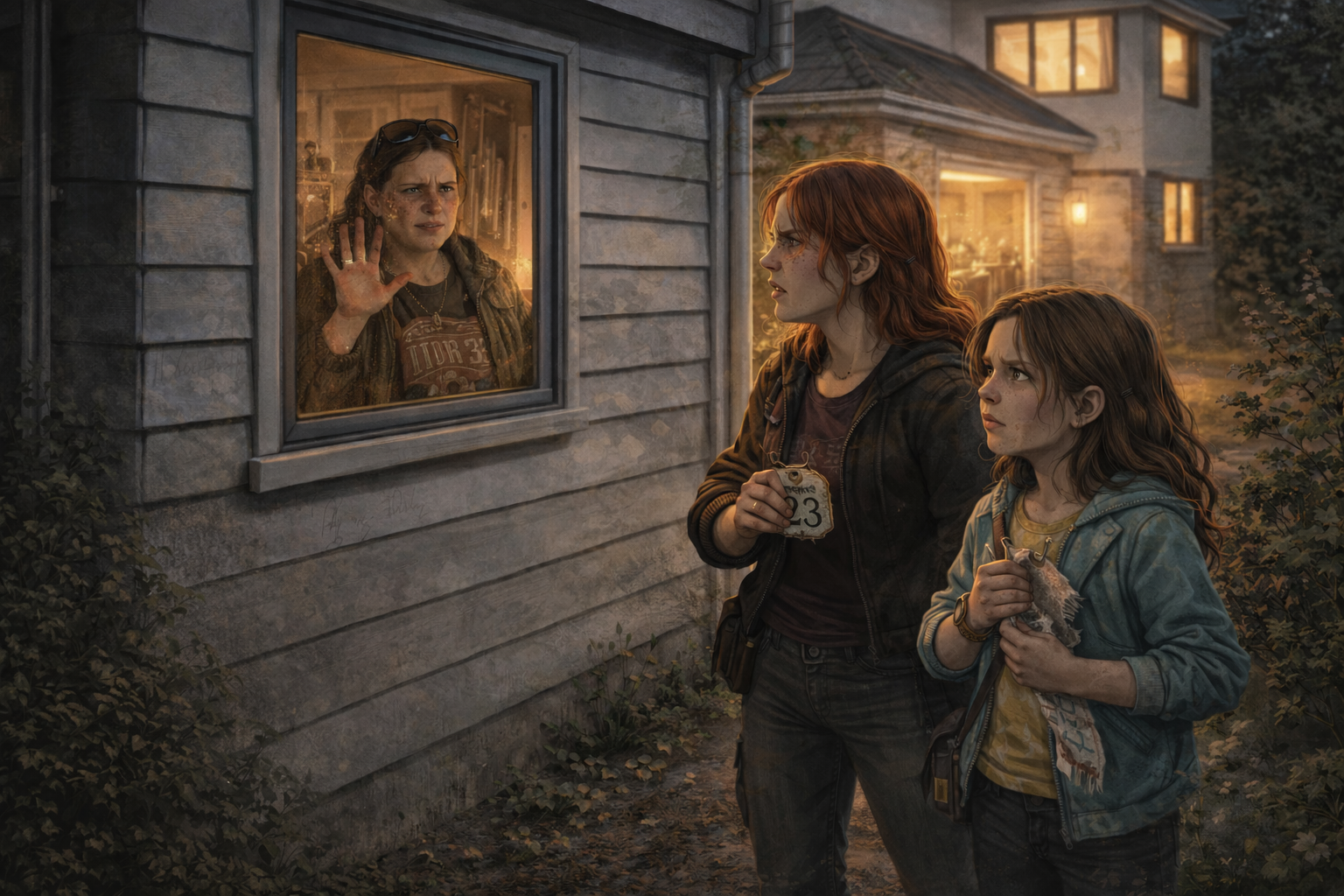](https://bookstack.thecartwrights.nz/uploads/images/gallery/2026-04/Qviimage.png)
From inside the open front door, a voice floated out.
Warm. Pleasant. Smiling without a face.
“Welcome home.”
The bell inside the impossible hall gave one delicate, polished note.
Mum slammed her own door shut behind her before the sound could settle into anyone properly.
“Round the side,” she said.
Nobody argued.
Because even Dad, furious and scared and already moving, knew a trap when it laid out a clean hallway and said the exact thing a tired family most wanted to hear.
And because at the side window, Auntie Erin was still pointing, Meow Meow was still shrieking, and somewhere inside the house — not the bright lie at the front, but deeper, stranger, truer — something unfinished was still trying to get counted home.
# Chapter 11 - The Grinning Detour
The side of **Home** looked more like itself than the front did, which was not the same thing as looking right.
The front garden had gone too tidy, too pleased with itself, every clipped edge and neat border arranged with the sort of smug care no one in the family had ever once applied to it. From the driveway, the open front door still shone with that bright, wrong invitation. Warm light. Carnival bulbs. Pine-dark depth behind it where the ordinary hallway should have been. Every few seconds, the bell inside gave a soft, polite note, the sound of a trap trying not to seem pushy.
Round the side, the light thinned. The air smelled of damp timber, cut grass, and the familiar faint laundry scent that usually drifted from downstairs if Erin had the window open. That should have been comforting. Instead it felt precious, like the last bit of normal ground before the story bit back.
“Here,” Auntie Erin snapped from the downstairs side window. “Not there. Definitely not there. In case the glowing lie wasn’t obvious enough.”
Her face was fierce behind the glass. One hand was braced flat against it. The other held a length of dark thread that ran out of sight toward the hall.
Dad had Oakley on one arm and the car keys clenched in the other hand. Mum moved first, fast and low, the Lantern Compass pulling so hard in her grip it almost looked alive. Ivy was right on her heels, the Site 23 tag hot in her fist. Amber came beside her, carrying the torn route-strip as carefully as if it might bruise.
Behind them, from the front of the house, the bell rang again.
Oakley twisted in Dad’s arms. “Liar door,” he announced to the evening, with the satisfaction of a boy naming an enemy spaceship correctly.
“Yep,” said Dad. “That one.”
The bell rang a third time.
Then, bright and neighbourly, a woman’s voice called from the front path, “Hello? Only trying to help. You’ve left the door open.”
Dad did not even look back. “Funny thing,” he muttered. “So have you.”
They hurried on.
The side entry stood half open, but not in a welcoming way. The doorway had been turned into work. Dark thread crossed the frame in a tight angled pattern, looped through old brass tacks and pinned around the trim with sewing pins that gleamed dull silver in the fading light. A little brass thimble sat on the shoe cabinet just inside. Beneath it, the old umbrella stand had been dragged across the hall to make room for a small folding table covered in biscuit-tin contents, thread cards, Granny’s photos, a torch, two pairs of scissors, and a mug of tea that had clearly gone cold hours ago.
And tied into the thread pattern, halfway up the interior wall seam, hung berth-tag **12**.
It did not look decorative. It looked structural. Like the whole answer was being held together by enamel, thread, habit, and pure bad temper.
Meow Meow was sitting just inside the side doorway in full furry gargoyle mode, tail wrapped hard around himself, ears down, glaring past them toward the front of the house with the expression of a cat who had personally judged reality and found it unfit.
“Quickly,” Erin said. “But not sloppy.”
Mum reached the step first. The Compass pulled once toward the hall, then jerked sharply left, toward the stitched seam in the downstairs wall. Its needle shivered there.
The house gave a tiny sound.
Not a groan. Not a creak.
More a breath being held.
Amber heard it too. Her head lifted. “It knows we’re here.”
“Good,” Erin said. “It can continue knowing that while everyone gets inside before the carnival tries manners again.”
Ivy hit the step and the Site 23 tag burned against her palm so suddenly she hissed.
The child voice came at once, close this time, not from the phone, not from the wall exactly, but from somewhere in the line between things.
“Wait.”
Everyone froze.
Even the bell at the front of the house went quiet for one strange second.
Dad’s grip tightened on Oakley. Mum’s head turned, quick and sharp. Amber’s face changed before anyone else’s did. Not fear. Recognition.
The voice came again, thin with effort.
“Let… Home… see.”
Ivy looked down at the tag in her hand.
Erin swore once, thoughtfully. “Right. That would be that, then.”
“How?” Dad asked.
But Ivy had already moved.
She stepped into the doorway, not all the way in, just enough to feel the line of the house against her skin. The thread-work hummed. The air in the hall changed weight. For half a second she knew, with a certainty she could not explain and did not have time to examine, exactly where the tag needed to go.
It was not logic. Not really.
It felt more like the house leaning.
“There,” she said, and pointed to the narrow strip of wallpaper between the side entry and the hall seam, just below where Twelve hung in the thread pattern. There was nothing visible there except one old scuff mark and a patch where the paper had bubbled years ago and Dad had said he’d fix it later, which in family time meant never.
Mum looked at her once.
Then at the wall.
Then back at the tag.
“How do you know?”
“I don’t.” Ivy swallowed. “I just do.”
There was no time to make that a whole separate problem.
Erin wheeled back a fraction, making space. “Well. Let’s all enjoy that development later.”
Mum held her hand out. “Go on, Ivy.”
Ivy lifted the Site 23 tag toward the wall.
The moment the lantern-marked reverse faced inward, the bubbling wallpaper flattened. The scuffed strip beneath it darkened into a neat, narrow slot that had absolutely not been there thirty seconds ago. The tag clicked into place so cleanly it was obvious the house had been waiting for it.
[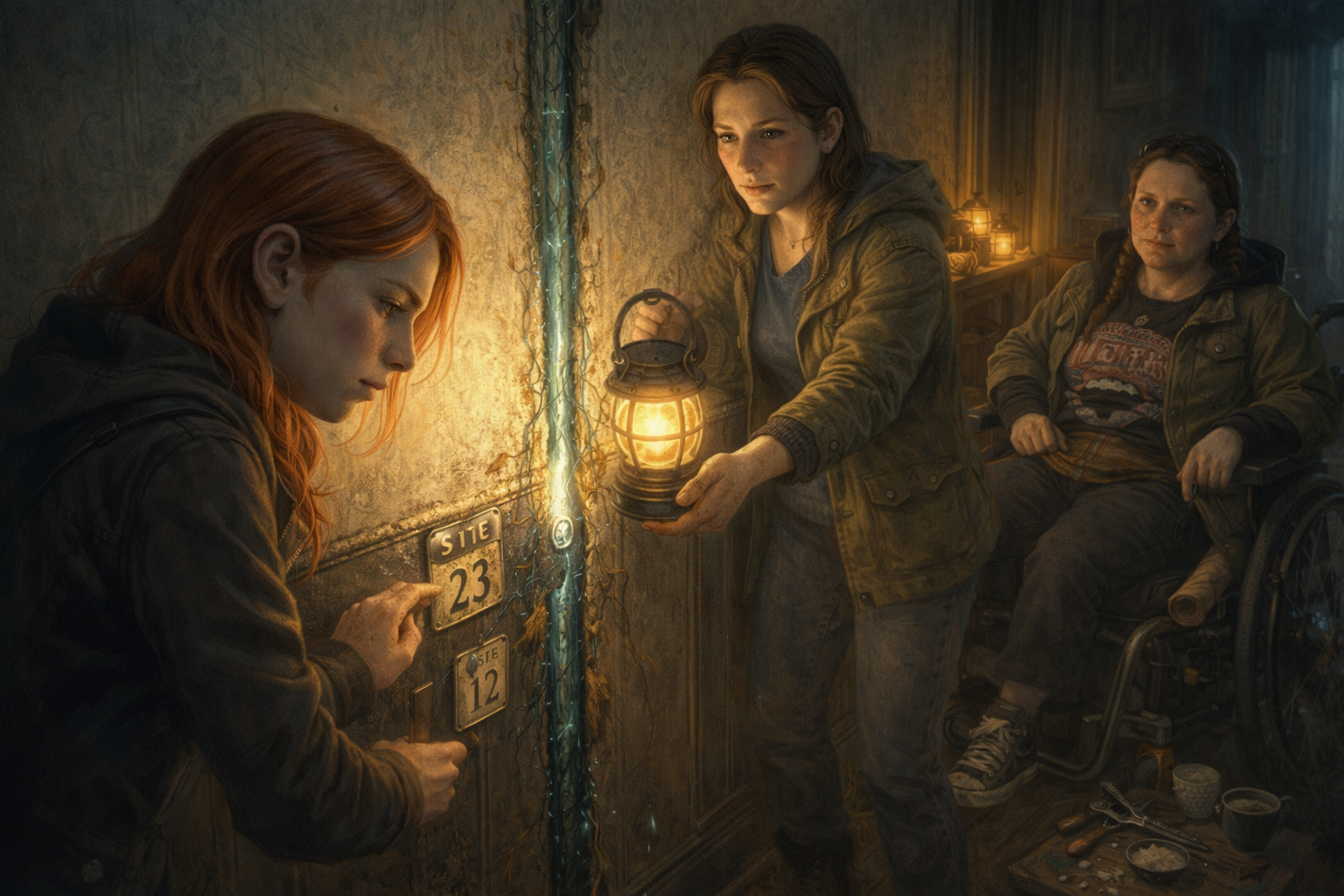](https://bookstack.thecartwrights.nz/uploads/images/gallery/2026-04/Dc9image.png)
**Ivy places Site 23 where the house can see it**
---
The sound that followed moved through every level of Home.
A deep, quiet answer.
Above them, somewhere upstairs, a door shut by itself.
At the front of the house, the bell rang hard and angry.
The side hallway lights flickered, then steadied.
Meow Meow stood up in one offended motion and stalked three steps farther inside, as if to say that if reality insisted on being dramatic, it could at least do it indoors.
Amber let out the breath she had been holding. “It worked.”
“It has started to work,” Erin corrected. “That’s a different sentence.”
Behind them, the front-door voice lost some of its suburbia and picked up polish. “You needn’t come in the shabby way,” it called. “There’s a brighter entrance waiting.”
Mum turned, still outside, and said in a voice so calm it nearly cut the air in half, “No.”
The front garden went very still.
Then, from somewhere in the false hallway, music-box bright and mean around the edges, came a laugh.
Not loud.
Not human.
Prepared.
Dad got everyone moving again. “Inside. Now.”
They crowded through the side entry with the untidy speed of a real family under pressure: Oakley protesting because he wanted to look, Amber half turning back because she could feel something, Ivy forced sideways by the shoe cabinet, Dad trying to shut the door with his elbow, Mum still keeping the Compass low and pointed away from the front as though it were a torch in a mine.
The moment Dad shoved the side door closed, the whole downstairs hall gave a tired shudder and settled.
Not safe. Not quite.
But held.
For now.
Home, even under attack, still smelled like itself once you got properly in: old timber, cat, laundry powder, toast crusts, Erin’s tea, and the faint dusty wool scent from her craft baskets. That nearly undid Ivy on the spot. The road had been one sort of frightening. Seeing her own hall turned into a battleground was worse in a quieter way.
The downstairs wall seam ran from skirting to ceiling near the hall, stitched over in dark and cream thread. Around it hung Granny’s cloth square, the lantern-marked thimble, one photo from the biscuit tin, and now both tags: Twelve in the hold-line, Twenty-Three in the wall.
Together they made the hallway look less like a house and more like an answer being assembled by people with limited materials and no patience for dying politely.
From the far end of the hall, where the ordinary path toward the front lounge should have opened, the house had gone wrong.
It was still recognisably their hallway in pieces. Same wallpaper. Same runner. Same framed family photo crooked by the front-room arch. But beyond that point the lines began slipping. The space lengthened too far. Warm bulbs hung where no bulbs should have been. Pine shadow moved behind the coat stand. The front door itself was no longer visible from inside, only a corridor of cheerful false depth and the suggestion of striped canvas somewhere beyond it.
At the end of that bright distance stood a figure.
[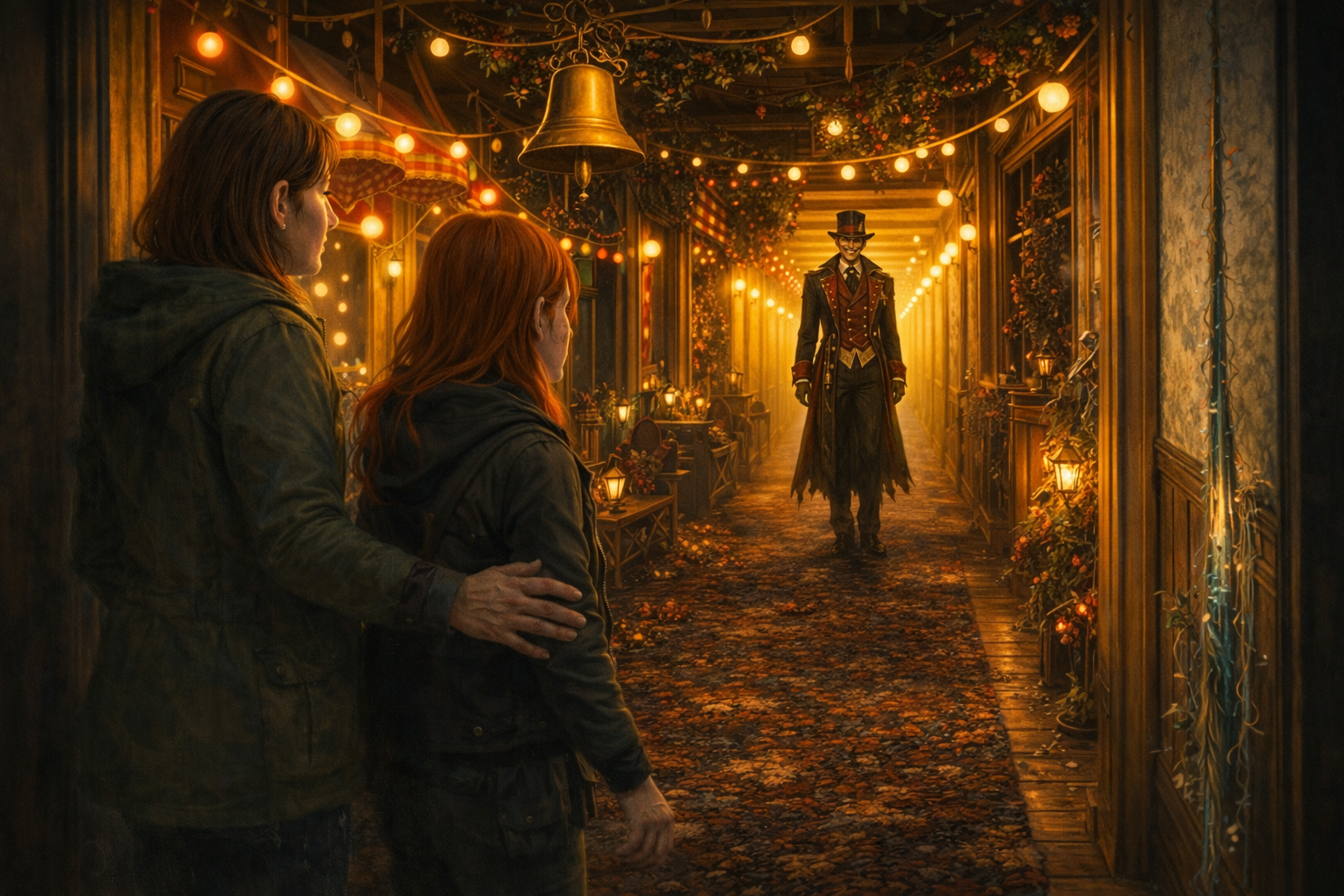](https://bookstack.thecartwrights.nz/uploads/images/gallery/2026-04/lSyimage.png)
**The Grin in the false front hallway**
---
Tall.
Still.
Smiling in a way that reached the room before the rest of it did.
Ivy’s stomach dropped.
There you are, said the shape without moving its mouth.
The voice happened in the hall rather than through it.
Not spoken. Placed.
You have all come such a long way home.
Oakley buried his face in Dad’s shoulder. “I don’t like his teeth.”
“That is because you have excellent instincts,” Erin said.
The grin widened.
I know your house now, it said. I know where it answers.
Mum did not look directly at it. She kept her eyes on the edge of the bright place instead, on the bit where the ordinary wallpaper broke. “Do not answer questions you weren’t asked,” she said quietly to the kids.
“That thing gets one sentence from me,” Dad said. “And it won’t enjoy it.”
“It does not need your full attention to be annoying,” Erin said. “Honestly, this family treats obvious predators like customer service complaints.”
Amber edged closer to the stitched seam. “What does it want?”
The child voice answered first.
“First.”
The hall seemed to listen.
Mum understood. Ivy saw it happen on her face. “It wants first welcome.”
Erin nodded. “Exactly. If the bright road gets to say what coming home means before the honest side does, the house starts believing the lie.”
“Can a house believe things?” Dad asked.
“Apparently ours can,” Erin said. “Which is awkward for all of us.”
The grinning shape at the far hall tilted its head.
A house can be taught, it said. A family too.
Its voice changed on the word family. Softer. More intimate. Nearly kind. For a sickening second it wore the edges of someone trustworthy. Not anyone exactly. Just the shape of someone you would open a door for when tired.
“We don’t need to teach them,” it said. “We only need them tired enough to agree.”
Dad’s expression went completely flat. That was when he was at his most dangerous and least theatrical.
“No,” he said.
The smile held.
I could give back what was lost.
No one spoke.
The hall felt smaller.
The shape looked straight at Ivy then, because of course it did.
I could tell you the boy’s name.
Amber made a tiny frightened sound. Mum stepped in front of Ivy without looking dramatic about it, which was somehow more effective.
“No bargains,” she said.
It is not a bargain.
“It is if you’re saying it.”
The smile sharpened at the corners.
I could tell you your own proper road-name, it said. The one things like me could not touch.
That landed harder than Ivy wanted it to.
Not because she believed it.
Because some part of her did.
The family had been dodging names since the holiday park. Half-right names. Wrong welcomes. Things that wanted to take hold. A name that could not be touched sounded horribly useful.
Dad heard the shift in the room and swore under his breath.
Erin’s voice went dry as old paper. “And there we are. Thank you for bringing future problems into the current crisis.”
Mum didn’t turn from the false hall. “Future problem?”
“Old road families sometimes kept travel-names,” Erin said. “House-names, line-names, call-names. Not the same as your private actual self. Safer for route work. Granny mentioned it once and then got annoyingly mysterious.”
Dad looked at her. “You might have led with that.”
“I had meant to bring it up at a time with fewer smiling hall-monsters.”
The grin at the far end barely moved.
Choose one now, it murmured. I’ll wait.
“Excellent,” Erin said. “We will not.”
The child voice came thin and urgent from the seam.
“Don’t.”
That settled it more completely than any adult argument could have.
Mum exhaled once. “Right. Not tonight.”
The grinning thing’s eyes flickered toward the wall where Twenty-Three sat. Something ugly moved across its face then. Not anger exactly. Annoyance.
It had not expected the house to accept that tag.
Good.
Ivy, still staring too hard at the far end of the hall, became aware of another feeling under all the fear. A pull. A pattern. The same impossible certainty she had felt at the side door, only quieter now, closer to the bones of the house. It ran from the stitched seam to Twenty-Three, from Twenty-Three to Twelve, and from both of them toward the bright false hall where the grin stood waiting.
Not random.
Not foggy.
Connected.
She took one step sideways before she knew she meant to. Then another.
“Ivy,” Dad said at once.
“I know.” She held up a hand. “I know. I’m not going in there.”
But she could see something now.
Not with her eyes exactly.
With that same horrible useful knowing.
“The house is short,” she said.
Everyone looked at her.
“Short what?” Dad asked.
“An answer.” Ivy pointed, first at Twelve in the thread-line, then at Twenty-Three in the wall. “It’s got the return side held. It can see the missing berth. But it doesn’t know what to do with him except keep him outside the count. That’s what he’s been trying to fix.”
Amber went pale. “He’s still not in.”
The child voice in the seam made the smallest sound. Not quite yes. More the shape of it.
Erin stared at the two tags, then at the photo clipped into the thread-line. “Oh, you stubborn little architecture.”
Mum turned fast. “Can we count him without naming him?”
The grin at the end of the hall moved before Erin answered. One deliberate step forward into the false light. The bulbs above it brightened. The wallpaper in the ordinary hall lifted at the edges.
No, it said pleasantly. That is exactly the sort of thing names are for.
Oakley peered over Dad’s shoulder. “He lies loads.”
“He does,” said Mum.
Then, to Erin: “Can we?”
Erin’s eyes had gone sharp and distant. Pattern-working eyes. “Maybe. If the line accepts relation where a name won’t hold.”
Dad frowned. “Meaning plain English, please.”
“Meaning,” Erin said, “the road broke his name. But not his place in the break.”
Amber was already there. “He’s the unfinished return from Twenty-Three.”
“Yes.”
“And Twelve is the nearer answer.”
“Yes.”
Mum looked at the hall, then at the stitched seam, then at Ivy. “The house can see both.”
Ivy felt the pull again, stronger this time. It ran through her fingertips and up her wrist, cold and silver and not painful, just exact. The sort of exact that made her want to move before anyone else had finished speaking.
That was new.
She hated that it was new.
And she hated more that some part of her didn’t.
“The route-strip,” she said.
Amber had it ready instantly.
Mum took it, glanced once at the stitched wording, then handed one end back to Amber and the other to Ivy. “Show me.”
Ivy moved to the wall as if she had practised it, which she obviously had not, and yet. Amber came with her. The two of them held the torn strip between Twenty-Three in the wall and Twelve in the hold-line. For one silly second it looked nothing like magic and entirely like two sisters helping with a very tense sewing problem.
Then the reverse stitching on the route-strip lit in dull gold.
The hall went silent.
Even the false bell stopped.
The child voice whispered, amazed and frightened all at once.
“Oh.”
[](https://bookstack.thecartwrights.nz/uploads/images/gallery/2026-04/ZDgimage.png)
**Amber and Ivy bridge Twelve and Twenty-Three**
---
The route-strip threads shifted against the cloth, rearranging themselves into three clean bars between the two berth-tags. Join-path logic. Approach logic. Return logic. Ivy did not know how she knew that either.
The grinning figure in the false hall did.
It changed shape then, not fully, but enough to show what sat behind the pleasantness. Too much height. Too much readiness. A smile that had eaten its way into the face and found it roomy.
No, it said.
Mum stepped up beside the girls.
Her voice, when it came, was not loud. It did not need to be.
“This house answers honestly,” she said. “Twelve holds return. Twenty-Three is seen. The unfinished one is not yours.”
The wallpaper along the bright hall split with a sound like something tearing silk underwater.
The grin leaned forward.
Then count him, it said. Properly. If you dare.
The challenge landed in the room with all its little hooks exposed.
Dad shifted Oakley to Erin’s lap without asking permission and moved to Mum’s other side. “Tell us what to say.”
That was to Erin.
Erin’s eyes flicked from tag to strip to seam to false hall and back. “Not a name. Not a bargain. Count relation, not possession.”
Amber nodded once, fiercely. “He’s trying to come home.”
The child voice gave a tiny, shaky answer.
“Yes.”
Mum drew a breath.
“Home knows the nearer berth,” she said. “Home sees the outer berth. Home counts the unfinished return.”
The stitched seam shone.
The false hallway pushed back at once, brightening hard enough to hurt. The grin widened in pain or fury or hunger. The bell rang three savage notes.
Not enough, it said.
The house trembled.
Dad put one hand flat against the wall beside the tags. Practical, human, solid. “Then add the obvious bit,” he said. “He comes in with us.”
Ivy looked at him.
So did Mum.
Dad grimaced, because now he had everyone’s attention and hated it. “What? He’s been trying to get here since the campground.”
“Justin,” Mum said softly.
“He doesn’t mean through the front door,” Erin snapped. “Continue before the house explodes.”
Mum almost smiled. Then the moment took her back.
She said, clearer now, “This house counts the ones who came home. This house counts the one still trying. Return counted.”
Amber echoed her at once. “Return counted.”
Ivy felt the words go through the strip and into the wall. Not just sound. Fit.
Dad joined in, rough and certain. “Return counted.”
Oakley, from Erin’s lap, shouted, “Count him in!”
“Close enough,” Erin muttered, and added, “Return counted.”
The child voice broke on the last word.
And the house answered.
The sound that came out of the seam was bigger than the hallway had any right to hold. Deep timber. Old brass. A latch lifting somewhere miles below the floor. The tags both flashed at once. Twenty-Three burned gold. Twelve rang once, not like the fair bell at all, but like metal touching its true place.
At the end of the hall, the bright false corridor folded.
Not vanished. Folded.
The grin was there one second, tall among carnival bulbs and pine-dark, and the next it was too far away too fast, pulled backward through its own smiling lie. The wallpaper rolled flat over striped canvas. The bulbs popped out one by one. The hanging bell gave a strangled, furious jolt and flew sideways into nothing.
Then the ordinary front hall slammed back into being.
The family photo near the archway fell off the wall.
Everyone jumped.
Dad swore.
Meow Meow launched himself straight up the hall with the pure violent conviction of a cat avenging metaphysics, skidded on the runner, and vanished into the front room.
The whole house groaned, settled, and stayed itself.
For three full seconds no one moved.
Then Oakley said, with calm wonder, “The liar door got folded.”
That broke the spell just enough for breathing to resume.
Dad went first, crossing the hall at speed and checking the front room, the archway, the front door, every ordinary bit of architecture with the expression of a man prepared to fight the floorboards if necessary. Mum followed with the Compass. Erin stayed by the seam, one hand already on the thread-line. Amber and Ivy still held the route-strip between the tags, both of them only just realising their hands were shaking.
From the front hall Dad called, “Door’s back. I think.”
“You think?” Erin shouted.
“It’s a door again!”
“That is better.”
Mum’s laugh came out half wild with relief. “I’ll take it.”
Ivy let go of the route-strip too quickly and had to catch herself against the wall. The cold exact feeling was still in her hand, a faint after-image of pattern and place. Mum noticed at once.
“You all right?”
“Yeah.” Ivy looked at her fingers. “I just knew where things went.”
Mum’s expression changed very slightly. Not alarm. Not surprise. More the look of someone noticing a line on a map where there had not been one before.
“We’ll talk about that later,” she said.
Which meant she had noticed it too.
Great.
Amber was staring at the seam.
“What happened to him?”
No one answered at first.
Then the child voice came once more from the wall, faint now, but steadier than before.
“Closer.”
Amber nodded with sudden fierce relief. “Okay.”
Erin sat back in her chair and scrubbed a hand over her face. “Well. That was horrible.”
Dad returned from the front hall looking wrung out and furious and relieved all at once. “The front door is normal again.”
“Surface normal,” Mum corrected automatically.
“Sure. Fine. It is a more acceptable category of door.”
Oakley wriggled off Erin’s lap and ran down the hall to inspect it, because no one in the family had enough spare capacity left to stop him in time. He opened the front room, peered, then turned back with the solemnity of an astronaut reporting from orbit.
“No carnival,” he announced. “Only couch.”
“Strong result,” said Dad.
Meow Meow reappeared from the front room with his tail up and his dignity fully restored, which everyone took as the best available house inspection.
The relief did not last long.
Nothing burst in. Nothing rang. The house did not immediately go wrong again.
Instead the Compass turned in Mum’s hand.
Slowly.
Decisively.
Away from the front.
Away from the stitched seam.
East.
Everybody saw it.
Erin closed her eyes for one brief second. “Of course it did.”
Dad’s shoulders dropped. “No.”
Mum looked at the needle, then at Twelve in the hold-line, then at Twenty-Three in the wall. “We held the house. We didn’t finish the line.”
Amber understood first. She usually did with the things that hurt. “He’s closer,” she said quietly. “But he’s not home.”
The child voice did not deny it.
Ivy felt that exact pattern flicker in her hand again, and with it came a picture of the stone plinth on the east line, the empty slot, the half-erased **RET—**, the sense of something waiting for its last piece.
She didn’t say how clearly she could see it.
She was not volunteering that information into the room yet.
Erin was already there anyway. “Twelve is still doing two jobs at once,” she said. “Holding the answer here and not being where the return mechanism expects it.”
Dad rubbed both hands over his face. “You’re telling me we’ve just fought our own front hall and the prize is finding out we still have to go back.”
“Yes,” said Erin. “You’re welcome.”
“That was not thanks.”
“I know.”
From the kitchen bench, where Mum had dropped the map bundle in the rush, paper rustled.
Nobody had touched it.
The old road map pulled itself half open. A red line, faint at first, then stronger, redrew from **Home** back through the pines toward the east line. At the far end, near where the plinth should be, a lantern mark opened like an eye.
Beneath it, new words appeared.
**RETURN NOT FINISHED**
Then, after a pause:
**NAME NOT SAFE**
The room went very quiet.
Dad looked at Erin.
Erin looked at Mum.
Mum looked at the kids.
Oakley looked delighted to be included and said, “We need a secret space name.”
No one laughed.
Not because it was not funny.
Because it was exactly the sort of thing that would probably become a problem later.
Dad made a noise halfway between a groan and a sigh. “Brilliant. Fantastic. Apparently we’re one magical siege away from needing a family codename.”
Erin tilted her head. “Not tonight.”
Mum nodded. “Not tonight.”
The words on the map darkened once more.
Not a new sentence this time.
Just a final mark beneath the first.
A curved little grin.
Then it vanished.
Amber saw something move above the hall arch.
[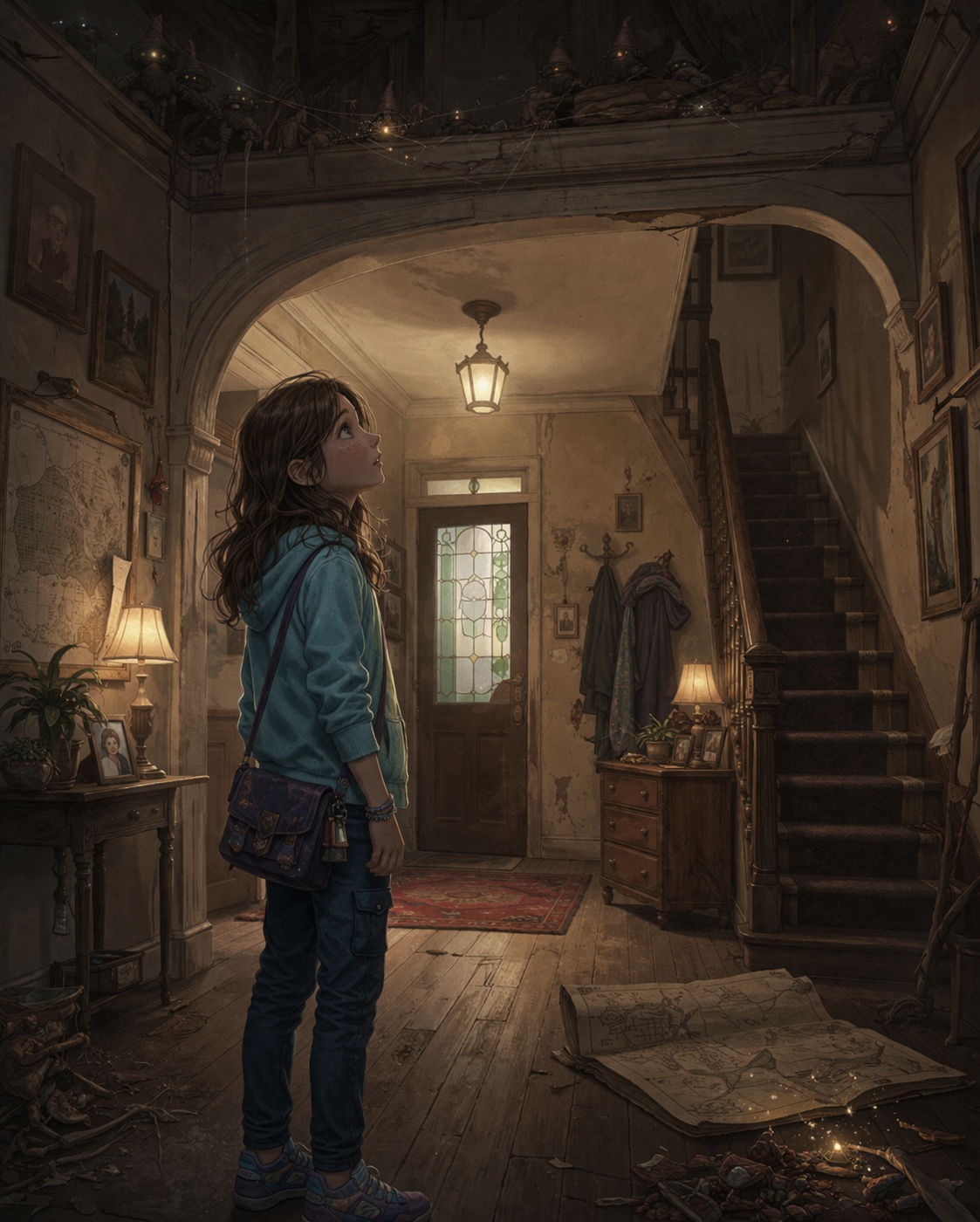](https://bookstack.thecartwrights.nz/uploads/images/gallery/2026-04/Rogimage.png)
Amber thinks she sees something
---
Tiny.
Quick.
A metal glint. A squat little silhouette no bigger than a lunchbox crouched near the upstairs edge where the wall met the ceiling, one hand to the side of its head as though adjusting a visor. For half a second it looked down into the hall with terrible concentration, muttered something too small to catch, and slipped into the narrow crack above the hot-water cupboard door.
Gone.
Amber blinked.
“Oakley,” she said carefully, “did you see—”
“Gnome soldier,” he said at once, pointing upward. “He did a sneaky.”
Everyone else was still looking at the map.
Amber looked back at the crack in the wall.
Nothing there now. Nothing except shadow.
She decided, with deep unhappiness, to save that for later as well.
The chapter could only survive so many fresh disasters at once.
Dad had slumped against the hall wall under the family photo, which he had picked up and not rehung. Mum was still holding the Compass. Erin was checking the thread-line for slack with hands that had not stopped working all day. Ivy stood near Twenty-Three with the cold exactness still ghosting through her fingers. Amber kept one eye on the ceiling and one on the map. Oakley sat on the floor under everyone’s knees, building an imaginary rocket out of two shoes and a tea towel. Meow Meow washed one paw with furious concentration.
Home looked battered and crowded and real.
That mattered.
Mum read the map again, then folded it shut before the red line could redraw any farther.
“We’re not doing anything else tonight,” she said.
Dad stared at her. “We are absolutely not.”
“We barricade the front properly,” Erin said. “We reinforce the side. We keep Twelve where it is. We do not answer bells, knocks, smiles, or administrative advice from impossible hallways.”
Dad pointed at her. “That one. Good. All of that.”
Mum leaned against the wall beside him at last, tired enough now for it to show. “Tomorrow we work out how to finish it.”
No one argued.
The child voice came once more from the seam, so faint it nearly disappeared into the house settling around them.
“Thank you.”
Then silence.
Not ominous silence.
Not listening silence.
Just the house, at last, being a house again.
Almost.
Ivy looked at Twenty-Three in the wall and then at the map in Mum’s hand. Somewhere deeper than thought, the pattern moved once more, patient and unfinished.
Closer, the voice had said.
Not home.
Not yet.
And from somewhere above, deep in the walls where no one sensible wanted extra tenants, there came the tiniest metallic clink.
Amber shut her eyes for one second.
Then opened them again.
Tomorrow had just become crowded.
# Chapter 12 - The Road That Wasn’t on Any Map
Nobody moved for nearly a full minute after the house went still.
The silence had weight to it. Not empty silence. After-something silence. The kind that arrived only once a thing had finished trying to get inside you.
The downstairs hall smelled of thread, damp shoes, dust, cold air from the side entry, and the bitter edge of Auntie Erin’s tea going forgotten on a little table beside her chair. The front of the house looked ordinary again. That should have been a comfort. It was, a bit. But it was the sort of comfort that stood on one leg and kept glancing over its shoulder.
Meow Meow sat in the doorway with his tail wrapped around his paws and the expression of a cat who had personally saved civilisation and resented how little fuss was being made about it.
Oakley was the first one to break.
“Can I have a biscuit,” he said, in the croaky, deeply offended voice of a child who had survived several forms of impossible danger and felt the adults were now neglecting the obvious next step.
Dad laughed once. It came out tired and rough, but it was a laugh. “That,” he said, rubbing a hand over his face, “is the most reasonable thing anybody has said in the last three hours.”
Mum let out a breath that almost became a giggle and almost became crying and did neither. “Kitchen,” she said. “Tea. Water. Biscuits. Nobody wander off.”
“That is not a sentence you should have to say in your own house,” said Ivy.
“And yet,” said Erin.
The family drifted, not neatly, but in the slow battered clump of people who had earned the right to be a mess. Mum gathered Oakley before he could head for the stairs. Dad checked the front hall one more time, because he was Dad and because ordinary was something he now inspected like faulty wiring. Ivy stayed nearest the wall-slot where Site 23 sat lantern-side in the seam, as if moving too far away might make the house forget. Amber followed Mum into the kitchen, then slowed when something caught her eye above the doorway.
Only for a moment.
A tiny shape crouched on the top trim, no taller than Mum’s hand. It had a squat body, a round head, and something shiny strapped over its eyes. It seemed to be staring into the room with terrible seriousness. Then it ducked backwards so fast Amber almost convinced herself it had been a shadow from the light fitting.
She stopped dead.
“Amber?” Mum glanced back, already opening a cupboard. “You all right?”
Amber looked up again. Nothing there. Just the familiar bit of paint Dad always said he would touch up and never did.
“Yeah,” she said. “I thought I saw—”
Oakley, half over Mum’s shoulder, pointed at the biscuit tin. “Chocolate ones.”
Which was not remotely the same topic, but it was enough to break the moment apart.
By the time tea was poured and Oakley was installed with two chocolate biscuits and strict warnings about crumbs near magical architecture, the Lantern Compass had still not settled.
It lay on the kitchen table among Tane’s map, the torn route-strip, Erin’s thread card, and a scatter of mugs. Its needle held east with stubborn, unfriendly certainty.
Mum looked at it. Then at Erin. “How long do we have?”
Erin did not pretend not to understand.
“Not forever,” she said.
“That is also not a useful unit of time,” said Ivy.
“It’s the one we’ve got.”
Dad came back in from the front hall. “Still a normal hallway,” he said. “Which I hate having to report out loud.”
“That means the fold held,” Erin said. “For now.”
Dad leaned both hands on the back of a chair. He looked older than he had that morning. “You said closer,” he said to nobody and everybody. “Not finished. Fine. What does finished actually mean?”
No one answered at once.
Then, from somewhere low in the house, not from a room and not from the wall exactly, came the child-voice again.
“Home,” it said quietly.
Nobody flinched this time.
It was still strange. Still impossible. Still the sort of thing that would once have snapped the whole evening in half. But now the voice carried something none of the others did.
Need.
Not hunger. Not trickery. Not politeness sharpened into a knife.
Need.
Mum set her cup down carefully. “We hear you.”
A warmth moved through the seam-wall where Site 23 sat. The enamel tag gave one small click, as if answering with its own metal tongue.
Erin looked at the wall, then at the map.
Tane’s old paper had redrawn again. The warning words were still there.
RETURN NOT FINISHED
NAME NOT SAFE
But beneath them, faint and new, another line had appeared, like something worked out by a hand that did not fully trust itself to be seen.
ANSWER AT PLINTH
BEFORE FIRST BELL
[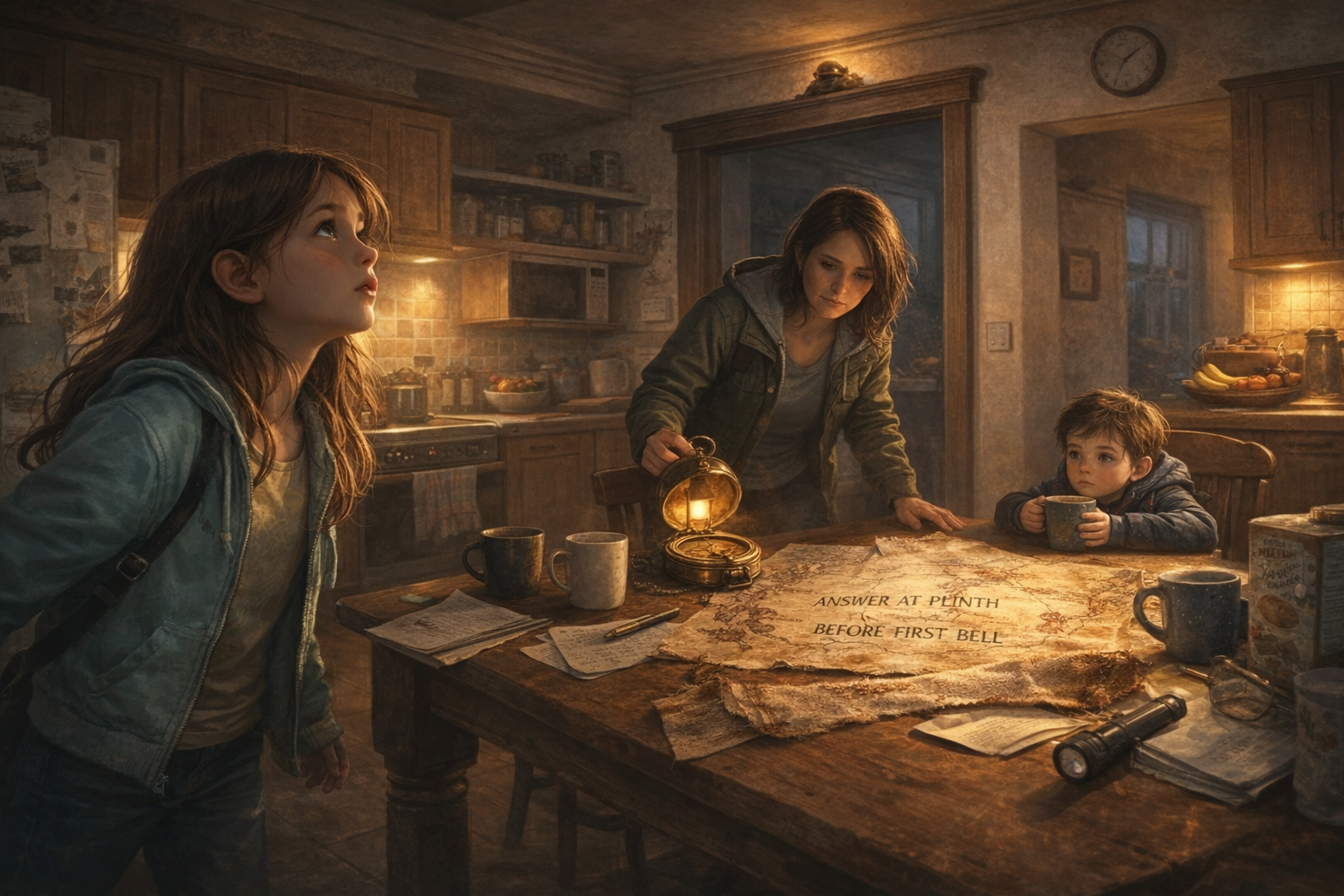](https://bookstack.thecartwrights.nz/uploads/images/gallery/2026-04/3paimage.png)
**Kitchen warning / unfinished business at Home**
---
Dad stared at it. “Right,” he said. “No. Excellent. Terrible. Great. We’re doing a final haunted infrastructure errand before sunrise.”
“Put that on the family crest,” said Ivy.
“We do not yet have a family crest,” said Erin.
“Good,” Dad said. “Because that would be weird.”
Mum was already reading faster than the others could speak. “The plinth,” she said. “The east-line one.”
Erin nodded. “Twelve stays here. It has to. Home is still the nearer berth. But the road end needs its answer finished properly.” She tapped the route-strip with one finger. “We advanced the count in the house. We didn’t close the line.”
Amber looked from the map to the seam-wall. “So he’s still stuck in the middle.”
“Closer,” said Erin, softer now. “But yes.”
Dad let out a long breath through his nose. “Can we finish it without his name?”
“We’d better,” said Erin. “Because the map is being uncharacteristically plain about how bad an idea the other option would be.”
Ivy looked at the Compass. “Ben said the house needed to see Twenty-Three. He didn’t say the house needed to keep it.”
Erin’s eyes sharpened. “No.”
“I’m not saying take it out now,” Ivy said quickly. “I’m saying maybe the plinth doesn’t need the tag. Maybe it just needs the road to know Home has seen it.”
That landed.
Not because it was dramatic. Because it sounded right.
Mum looked at Ivy for a second too long, the way she had begun to when the roads did something back at her eldest daughter. Not fear. Not quite. Something more careful than that.
“Relation,” Mum said. “Like before.”
“The nearer berth answers,” Amber said slowly. “And the outer berth returns.”
Dad frowned. “That still sounds like half a sentence.”
“It’s road-logic,” said Erin. “Half the problem with it is that it thinks being emotionally devastating counts as clarity.”
The child-voice came again, weaker this time.
“Please.”
That did it.
Dad straightened at once. “Fine,” he said. “We go now.”
Oakley looked up from his biscuit. “Night mission?”
Mum gave him a look. “Unfortunately, yes.”
“Can I bring my torch?”
Dad looked at the tiny plastic rocket torch on the bench, then at everything else on the table, then at the universe in general. “At this point,” he said, “I’d be surprised if not.”
---
By the time they were in the car, Woodend had that deep, brittle pre-dawn darkness that made even familiar streets look held in a different shape.
Dad drove.
Mum sat beside him with the map and the Compass.
Ivy and Amber were in the back with Oakley between them in a puffer jacket zipped wrong in his hurry. Erin stayed at Home, because Home still needed Twelve threaded into the hold-line and because not every brave thing involved charging into the trees. Meow Meow remained downstairs with her like a furry deputy.
Erin stayed on speaker through the first stretch of the drive. Her voice came in and out under the tyres on the road and the whisper of the heater.
“Do not answer any bell before the road is closed,” she said.
“We’ve done bells,” Dad muttered.
“We have survived bells,” Erin corrected. “That is not the same as having done them.”
Mum kept one hand on the map. “Home’s all right?”
“For a very flexible version of all right, yes.”
“Comforting.”
“You married a systems man,” said Erin. “That is as close as you were ever getting.”
In the back, Amber watched the dark slide past the windows and thought she saw movement twice where there should have been none. Not big movement. Not road movement. Small. Quick. Above things. Perched where nothing should perch.
At one point, when they turned near a line of hedges silvered by cold, she could have sworn there was a tiny figure sitting on a letterbox, visor gleaming faintly, little feet braced as if waiting for a signal.
She blinked and it was gone.
She did not say anything.
Not because she was sure she had imagined it.
Because she was beginning to think she hadn’t.
The pine turnoff appeared before dawn fully admitted it was coming. No false brightness. No fair lights. Just the old posts, the chain, the cracked bell with its bound clapper, and beyond it the dark throat of the hidden track.
And Ben Jammin, waiting on his stump as if he had always been part of the place and the place knew better than to start without him.
[](https://bookstack.thecartwrights.nz/uploads/images/gallery/2026-04/3u9image.png)
**Ben Jammin and Gampa Kev at the pine entrance**
---
He lifted one huge hand in a sheepish wave when the car lights found him.
“Morning,” he said.
“It is absolutely not,” said Ivy, climbing out.
Ben gave a faint hum that might have been agreement.
Beside him stood Gampa Kev, thick jacket zipped up, thermos in one hand, old torch in the other. He looked exactly like a man who had spent half his life on cold roadside verges and had discovered, too late, that some of them remembered him.
Dad got out and shut the car door a bit harder than necessary.
Kev nodded once. “Justin.”
“Kev.”
Not warm. Not shouting either. Just the kind of flat that came before either forgiveness or much worse.
Ben looked between them and decided, wisely, to speak first.
“Road’s thin,” he said. “Still honest. That helps.”
“Does he?” said Dad.
Kev took that without flinching. “Fair enough.”
Mum was already around the side of the car with Oakley’s torch and the clue bundle. “We can do family feelings after we stop the haunted return system from breaking the house again,” she said. “Move.”
That, more than anything, got them going.
---
The east line felt different now.
Still damaged. Still old. Still carrying the memory of bells it had not wanted. But the worst of the false brightness had gone. The pines stood tall and black against the paling dark. Cold damp gathered in the mossy edges of the stones. Somewhere far off, a real bird tried one note and stopped, as if waiting to be told whether dawn had permission yet.
Ben walked ahead, guitar in his hands.
It looked rougher than before. One string fully gone. Another slightly out of true. Yet when his fingers brushed the remaining strings, the path settled under their feet, not opening exactly, but agreeing not to argue.
Ivy kept close enough to the front to see what he saw. Amber stayed a little farther back, where the road felt more emotional and less practical. Oakley held Dad’s hand and his rocket torch with equal seriousness.
Halfway in, the boy appeared.
Not in a jump-scare blur. Not as a vanishing glimpse between trunks. He was simply there, a little ahead on the left side of the path, child-shaped and damp-edged and thin in the strange way unfinished things sometimes were. He looked less broken than before. Less dragged apart by wrong places. More like a real boy being badly held by bad rules.
He looked first at Mum.
Then at Amber.
Then at the path ahead.
“Nearly,” he said.
Amber’s throat tightened.
Mum stopped, but not so fully the road cooled beneath them. “We’re going to finish it.”
The boy looked at her, and for a second there was such fierce hope in his face that Amber wanted to cry on the spot.
Then he turned and kept moving, never quite touching the ground.
Kev made a sound in the back of his throat. Regret, probably. Older than words.
Dad heard it. So did Ivy. But neither said anything yet.
The plinth stood where it had before, deeper on the east line where the pines thinned around a stone clearing. Moss furred its base. The half-erased carving still read RET—. The slot in the centre waited dark and narrow.
The moment the family entered the clearing, the air changed.
Amber felt it first.
Not sound. Not exactly.
Expectation.
Then, from somewhere just beyond the trees, came a bell.
One bright, tidy note.
Ben swore under his breath so mildly it almost became politeness.
“Of course,” said Dad.
The second bell sounded from the other side.
A path tried to appear to their right.
It looked easier than the real clearing. Dryer. Cleaner. Lit by soft golden bulbs that had no business being there at dawn. For half a second it showed a gate, a painted sign, a smiling lantern, and a road smooth enough to trust.
Mum did not even look at it properly.
“No.”
The bright path shivered.
The grin came next.
Not a whole body. Not fully. The sort of thing that liked to be seen in parts first. A smile in the wrong light. A shoulder leaning where there was no wall. Fingers resting on the suggestion of a gate that did not belong.
“Oh, don’t be dull now,” said the Grin from the false path. His voice was warm enough to make warmth suspicious. “You’ve done the hard part. I can make the rest easy.”
“No bargains,” Mum said.
“No bells,” said Ben, and struck a chord so rough and stubborn the bright path buckled at its edges.
The Grin’s smile widened.
“You still haven’t chosen a safe way to be called,” he said. “You know that matters now.”
Ivy went still.
Amber saw it. So did Mum.
The smile turned a fraction toward the eldest girl. “Names are fragile things on these roads. Families ought to travel better protected. I could help with that. One word each. One true road-name. One clean answer when the dark comes asking.”
Dad stepped in front of Ivy so fast it would have been funny in any less magical circumstance. “Absolutely not.”
Kev spoke then, sudden and harsh. “That’s how it starts.”
The clearing stilled.
Even the false light seemed to listen.
Kev did not look at the Grin. He looked at the plinth instead. At the stone. At the slot. At the place where years ago he had failed to finish what should have been finished.
“That’s how it starts,” he said again, quieter now. “You take the neat answer because the real one’s harder. You tell yourself you’ll sort the rest once everyone’s safe. Then the rest sits there for years with a child caught in it.”
Dad stared at him.
Kev swallowed. “I thought shutting the line would hold. I thought moving the answer would be enough. It wasn’t.”
The boy stood at the edge of the clearing, listening.
Ben’s fingers stayed on the strings, keeping the bright path thin and unhappy.
Mum looked at Kev once, not forgiving, not yet, but not turning away either. “Then help now.”
He nodded once.
That was all.
Then the road began.
The plinth lit from within, faint lantern-gold threading through the carved cracks. Back at Home, on speaker in Erin’s kitchen, something answered with a low chiming click.
Erin’s voice came through the phone. “Home is holding.”
Mum stepped to the stone. “Tell us what to say.”
“Not names,” Erin said. “Relation. Direction. Return.”
Ivy was already staring at the slot.
Not the slot itself.
The stone around it. The way the moss had been pushed back once and then grown wrong. The faint grooves at the base. The place the route-strip ought to lie.
She moved before anyone could tell her to.
[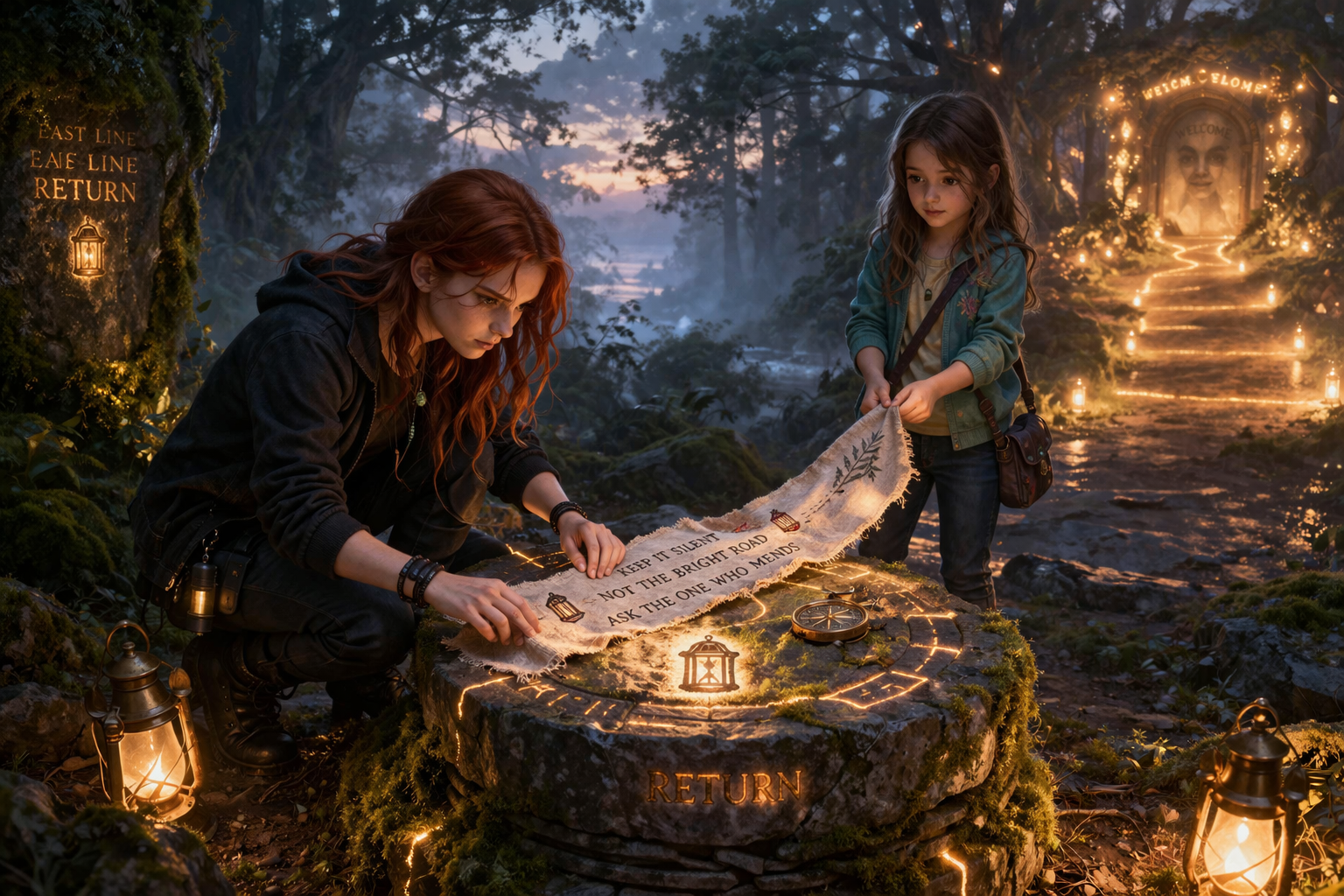](https://bookstack.thecartwrights.nz/uploads/images/gallery/2026-04/aSDimage.png)
**Ivy and Amber at the plinth while the fair presses in**
---
She dropped to one knee and smoothed the torn route-strip from the plinth’s lower edge toward the east-facing seam in the stones, laying it not by guesswork but by something quicker and stranger. The cloth settled. The gold threads in it woke.
Dad saw it happen.
So did Mum.
Neither interrupted.
Amber stepped in at once, understanding before she could have explained. She took the free end of the strip and held it steady with both hands, making a bridge of it.
Ben struck another chord. The false path hissed brighter, then thinner.
The Grin spoke again, softer now. More dangerous.
“You do not even know who you’re bringing home.”
Amber looked up at the boy.
That was the trick, she realised.
Not only the unsafe name.
The loneliness.
The idea that if you could not say exactly who someone was, maybe you could pretend they did not properly belong anywhere.
That was the nasty bit. The bit under all the polished welcome and tidy offers and clever road-names. The bit that wanted people unclaimed.
She stood straighter.
“We know enough,” she said.
For once, nobody treated that as a child’s brave line.
Because it was correct.
Erin’s voice came through the phone again, clear and sharp. “Nearer berth holds.”
Mum answered at once. “Outer berth presents return.”
The plinth brightened.
Kev stepped forward, old shame plain on his face. “Return was owed,” he said.
Dad took Oakley’s shoulder and drew him close. “Return is still owed.”
The boy looked at them as if he could hardly bear it.
The Grin’s smile sharpened. “And what will you call him, then?”
Nobody answered that.
Oakley did.
“You don’t gotta,” he said scornfully, as if explaining something obvious to a slow adult. “He’s the kid coming home.”
The clearing changed.
It was tiny, the shift. Yet it ran through the whole place.
Ben looked down with startled respect.
Erin made a sound over the phone that might have been a laugh.
Mum’s eyes filled and stayed steady anyway. “Yes,” she said. “He is.”
Then she raised her voice, not loud, but with the clean authority she used when frightened children needed the truth before anything else.
[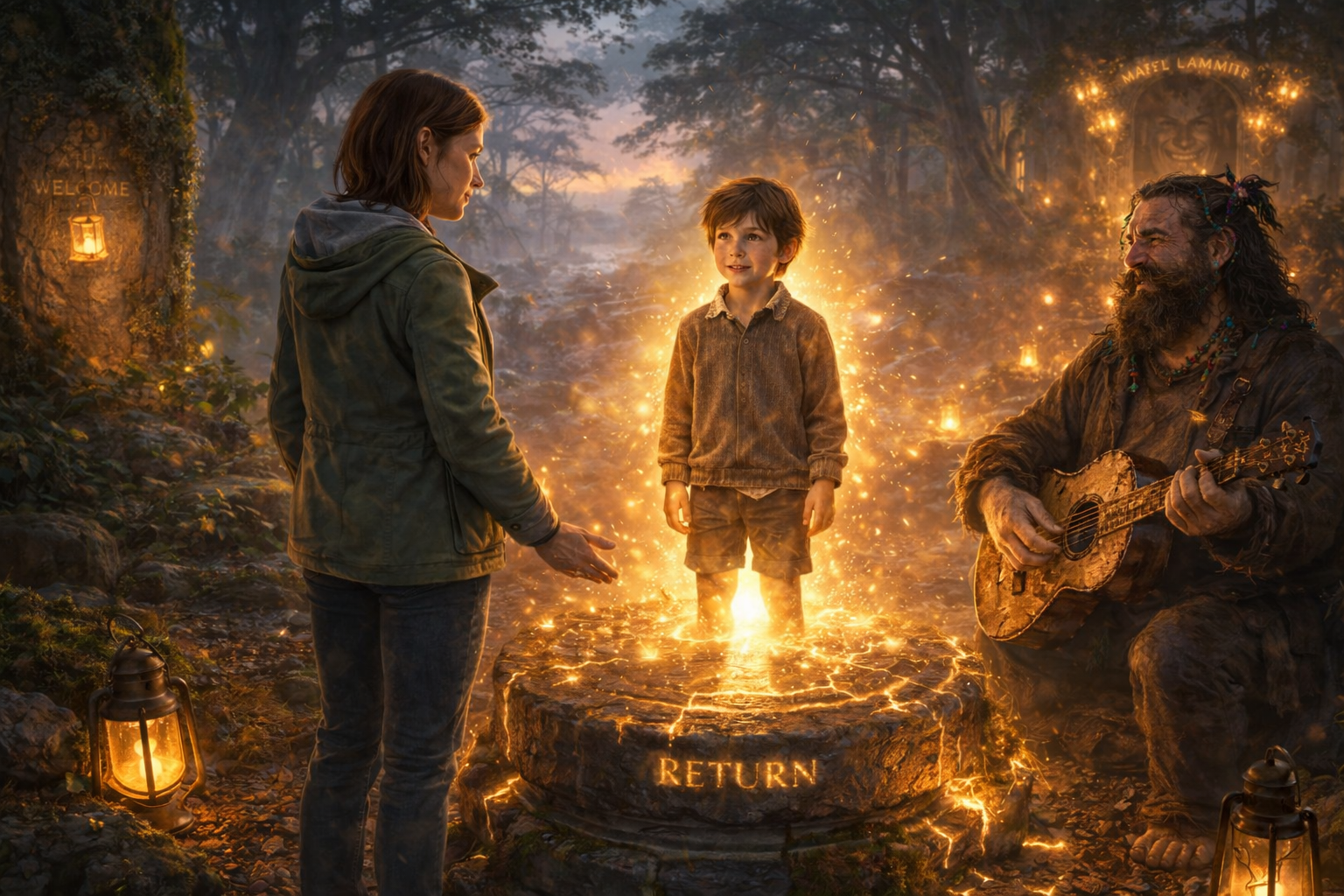](https://bookstack.thecartwrights.nz/uploads/images/gallery/2026-04/ahUimage.png)
**The child finally counted home**
---
“Home knows the nearer berth,” she said.
Dad answered, strong as stone. “Home sees the outer berth.”
Ivy, one hand on the plinth, felt the line through the route-strip and said the next part with no hesitation at all.
“The unfinished return is counted.”
Amber held the cloth and looked at the boy.
“Return counted,” she said.
From the phone in Dad’s pocket, Erin spoke the last answer from Home.
“Come in honestly.”
The world took a breath.
The false path cracked like painted glass.
The Grin’s smile held one impossible second longer than the rest of him, then folded back into the dark between the trees.
Ben hit the final chord.
Not pretty. Not magical in the flashy way. More like a thing being nailed back where it belonged.
The plinth flared gold.
Back at Home, through the phone, there came the bright answering click of Twelve in the hold-line and the softer metal note of Twenty-Three in the wall.
The boy stepped forward.
For one heartbeat he looked wrong and water-edged and unfinished.
For the next he looked only like a child.
Not named. Not explained. Not reduced to a tidy bit of lore.
Just a boy who had been waiting far too long to hear that he was allowed in.
He looked at Mum.
At Dad.
At Ivy.
At Amber.
At Oakley.
At Kev last of all.
Kev’s face broke open.
“I’m sorry,” he said.
The boy’s expression shifted. Not forgiveness exactly. Not blame either. Something sadder and gentler and far older than either of those things.
Then he looked past them all, toward Home, though Home was nowhere visible from the clearing.
And smiled.
Not a grin.
A real smile.
He stepped into the gold.
The light folded.
The clearing went still.
No bells.
No bright path.
No pressure behind the eyes.
Only cold dawn air, damp pine, and somewhere above them the first proper morning tui beginning to sing as if nothing in the world had ever been wrong.
For a long moment nobody moved.
Then the stone plinth gave one low settling sound and the carving finished itself under the moss.
RETURN
The Lantern Compass, in Mum’s hand, shuddered once and then went calm.
Tane’s map redrew on the spot. The old warning lines faded.
In their place came new words, spare and certain.
RETURN COUNTED
LINE ANSWERED
Then, lower on the page, in thinner red:
OTHERS WAIT
Dad read that and closed his eyes briefly. “That,” he said, “had better not be tonight’s problem.”
Ben peered at the map. “No,” he said. “That’s tomorrow’s, or next month’s, or some other badly timed day entirely.”
“That is the nicest thing anyone has ever said to me,” said Dad.
Kev sat down very suddenly on a low stone as if his knees had decided enough was enough. He took his cap off and scrubbed at his face. Nobody hurried him.
Mum crouched beside Oakley. “You did well.”
Oakley looked pleased with himself in the grave, holy way of small boys who have accidentally said something structurally important. “I know.”
Ivy was still staring at the finished carving.
Mum touched her shoulder. “You all right?”
Ivy let out a breath. “No, but in a better way.”
Amber looked once toward the pines beyond the clearing.
Nothing moved there now except dawn.
Still, just before she turned away, she thought she saw something tiny and hunched on a branch above the path out, visor glinting, both little hands clasped around what looked suspiciously like one of Oakley’s spare torch batteries.
It gave a solemn nod.
Then dropped backwards out of sight.
Amber blinked.
“Amber?” said Dad.
She looked at him. At the map. At everyone else standing in the real morning.
“Nothing,” she said.
This time, she knew she was lying.
Only a bit.
---
The drive back to Home felt completely different.
Not safe in the silly story way where everything was fine forever and no one had to think again. Safe in the human way. In the tired, real, deeply earned way.
The road back was just a road.
The sky over Canterbury was paling from charcoal to silver-blue. Paddocks held low white mist. Real fences stayed fences. Real signposts did not smile. Someone somewhere had already lit a kitchen and started a day that had absolutely nothing to do with broken berths or false welcomes, which Dad seemed to find personally offensive and comforting at the same time.
Kev followed behind them in his own vehicle after all, because there were things still to do and because leaving again now would have felt cowardly.
Ben did not come out to the road.
He stood back at the pine entrance with his one-string-short guitar and raised a hand as the car pulled away.
“Road’ll know you now,” he called.
Dad rolled down the window. “That,” he said, “continues to sound threatening.”
Ben smiled. “Only partly.”
Then the pines took him back.
---
Home looked like Home.
That was enough to make Amber’s chest hurt.
The front garden was untidy again in a normal way. The side entrance was just the side entrance. The downstairs hall smelled of tea, wool, and the sort of overnight worry that had not fully left yet but had at least changed its shoes.
Erin was waiting in the kitchen with fresh toast and the expression of someone who had spent the last several hours holding a house together by intellect and spite and would now like everyone to appreciate that properly.
The moment Mum stepped inside, the Lantern Compass needle settled.
Not east. Not front. Not wrong.
Still.
Erin saw that and nodded once.
“That,” she said, “will do.”
Only then did the family finally begin to land.
Dad made more tea because making tea was what Dad did when the universe had been unreasonable and he needed something, anything, to obey known laws. Mum found blankets. Oakley fell asleep sideways on the couch with one sock missing and the rocket torch still clutched in his hand. Ivy sat on the floor by the wall-slot for a while, not guarding it exactly, just being near it until she no longer had to. Kev stood awkwardly by the bench and apologised to Erin first, which was perhaps wise.
She accepted the apology in the tone of someone noting a weather report.
Later, when Oakley was snoring faintly and the windows had turned properly gold with morning, Dad and Kev went to collect the caravan from the holiday park. The trip was long, boring, and gloriously ordinary, which made it one of the best drives Dad had ever had. By the time the Coachman Pastiche was back in the driveway and the family had begun the terrible holy ritual of unpacking, the book had finally remembered how to breathe.
Wet towels appeared.
Half-dead road snacks emerged from bags.
A charger nobody could find turned out to be in a perfectly stupid place.
Mum found three separate pine needles in the washing pile and did not ask how.
Erin reclaimed her downstairs spaces from active magical siege and returned them to their more usual state of creative chaos.
Meow Meow inspected every room as if checking repair work.
By late afternoon the house looked lived in again rather than held.
That mattered.
It mattered almost as much as the answers.
Because they did have answers now.
Site 23 had been a broken berth, not just a haunting.
The east line had been built to bring people home.
Twelve and Twenty-Three had belonged to the same damaged return.
Kev and Granny had moved the answering seam to Home to save what they could.
The fair had tried to define return through false welcome.
The Grin wanted names because names let him hold things.
And the child from the broken berth — unnamed still, safely unnamed — had finally been counted home.
Not every mystery was solved.
But this one was.
That evening, after actual dinner at an actual table in an actual house that was not currently lying about its doors, the family gathered in the kitchen while the last of the light faded outside.
Tane’s map lay open on the bench.
The warning about the unfinished return was gone.
The route they had travelled was still there in fading red, from campground to dairy to beach to pines to Home. But now it no longer looked like a random chain of accidents. It looked like one branch of something bigger.
Much bigger.
Fine red lantern marks glimmered faintly across the whole map of New Zealand. One near a coastline they had never visited. One inland. One high in the central North Island. One so far south it made Amber shiver just to imagine it.
And beside the line they had already lived through sat a new symbol:
a tiny caravan shape in red-gold ink.
It was them.
The network knew them now.
Dad looked at it for a long time. “I hate that,” he said.
Mum smiled into her tea. “You hate it less than you did yesterday.”
“That is not the same as liking it.”
“No,” said Erin. “That would be medically concerning.”
Ivy leaned closer. “So we did one road.”
“One return,” Erin corrected.
“Which means,” said Amber quietly, “there are more.”
Nobody said otherwise.
Oakley, who had recovered enough energy to exist dangerously again, pointed at the little caravan mark. “That’s us.”
“Yes,” said Mum.
“We need a cool road name.”
Dad groaned. “We are not doing this at the dinner table.”
“We are absolutely doing this eventually,” said Erin.
“Not tonight.”
“Agreed,” said Mum. “Not tonight.”
That settled it, for now. Which was all anyone sensible had been hoping for.
Amber looked back at the map.
There, near the top corner, one of the new lantern marks flickered.
Not with route-light.
With movement.
Her eyes narrowed.
On the shelf above the bench, balanced beside an old cereal box and a stack of paper napkins, crouched the tiny visor-wearing creature again.
A gnome. Or something very like one.
Its headset covered most of its face. Its boots were ridiculous. A belt of overbuilt little gadgets crossed its middle. It was holding one AA battery in both hands with the grave concentration of a soldier guarding sacred technology.
It was not looking at the family.
It was looking at the map.
Another tiny shape appeared half a second later from behind the fruit bowl, equally serious, equally ridiculous. One pointed at the glowing caravan symbol. The first nodded sharply.
Then, as if feeling Amber’s stare, the visor-wearer turned its whole head toward her.
It froze.
Amber froze back.
Very slowly, the gnome raised one hand and tapped two fingers against the side of its headset in what looked horribly like a salute.
Then both creatures vanished into the wall behind the pantry with almost no sound at all.
[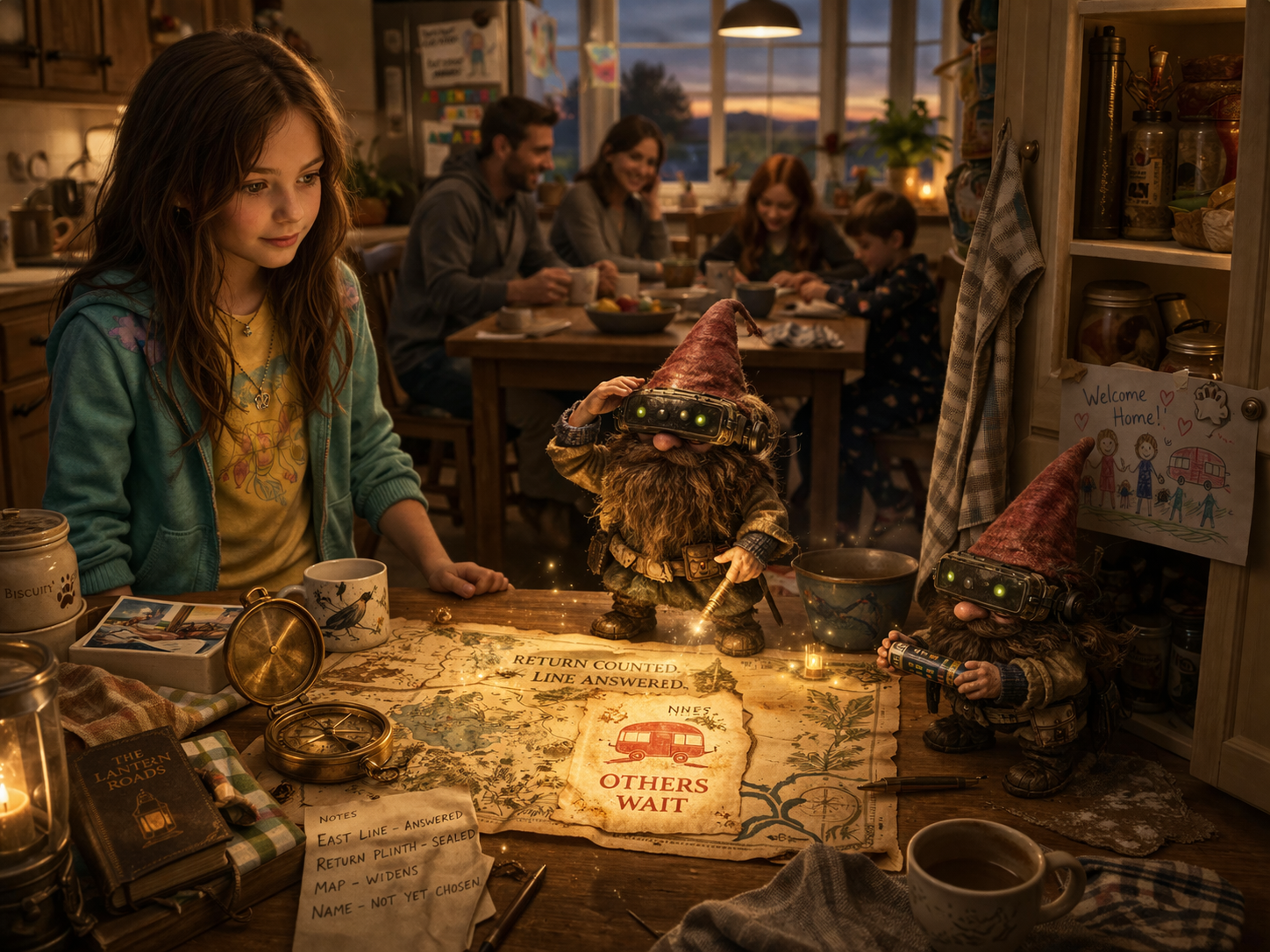](https://bookstack.thecartwrights.nz/uploads/images/gallery/2026-04/c65image.png)
**Amber see's gnomes**
---
Amber sat very still.
“Amber?” said Mum.
She blinked and looked down at her plate.
“Nothing,” she said again.
This time she was not sure whether that was true, false, or the sort of answer the Lantern Roads enjoyed most.
Outside, evening settled over Woodend in the ordinary way.
Inside, Home held.
On the bench, the Lantern Compass stayed quiet.
On the map, the one finished line remained calm.
And around it, far beyond campgrounds and beaches and hidden pine roads, the rest of the Lantern Roads waited.
The road that wasn’t on any map, Amber thought, had turned out not to be one road at all.
It was the beginning of all of them.
# Characters
# Ivy
[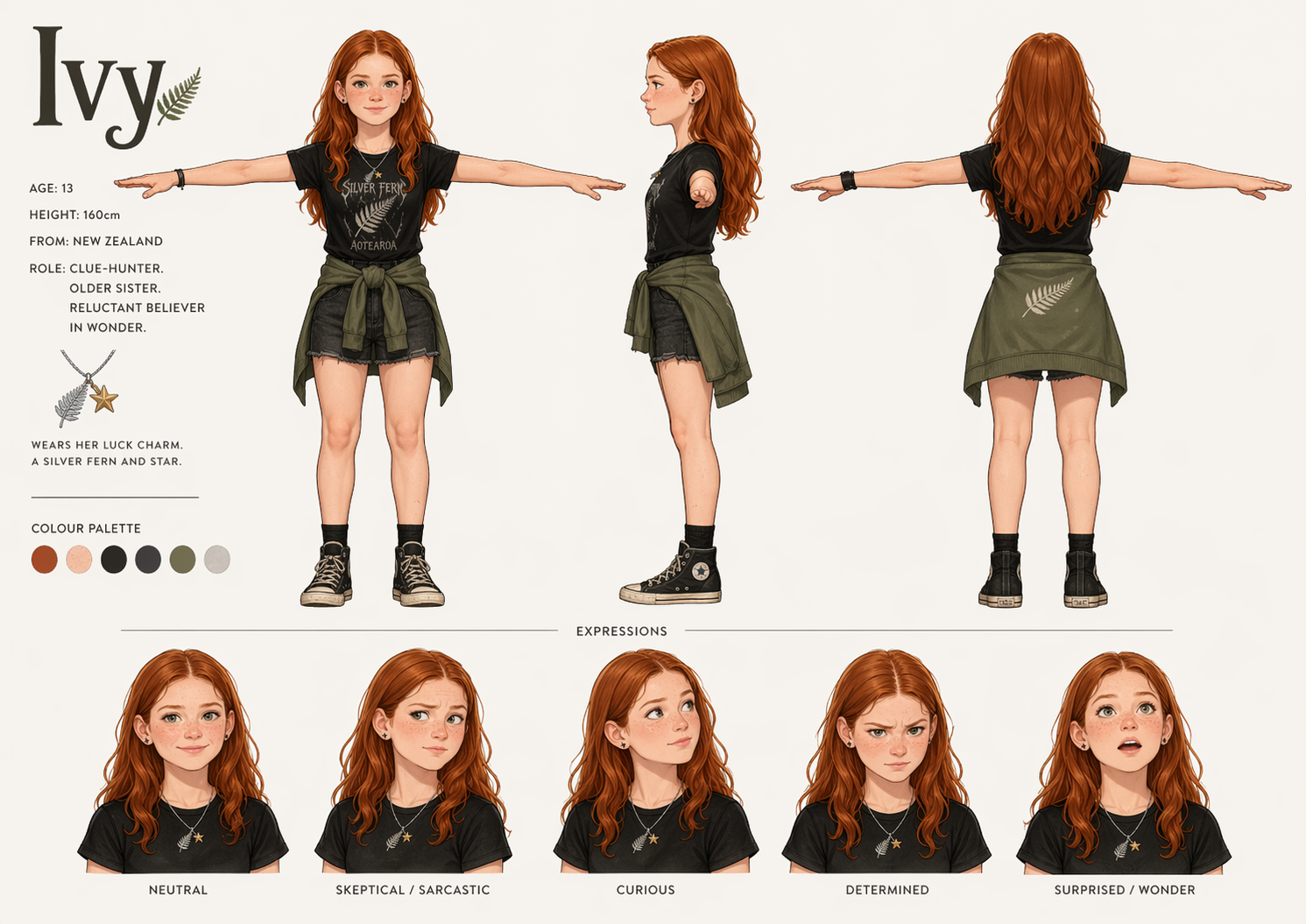](https://bookstack.thecartwrights.nz/uploads/images/gallery/2026-04/yjRimage.png)
[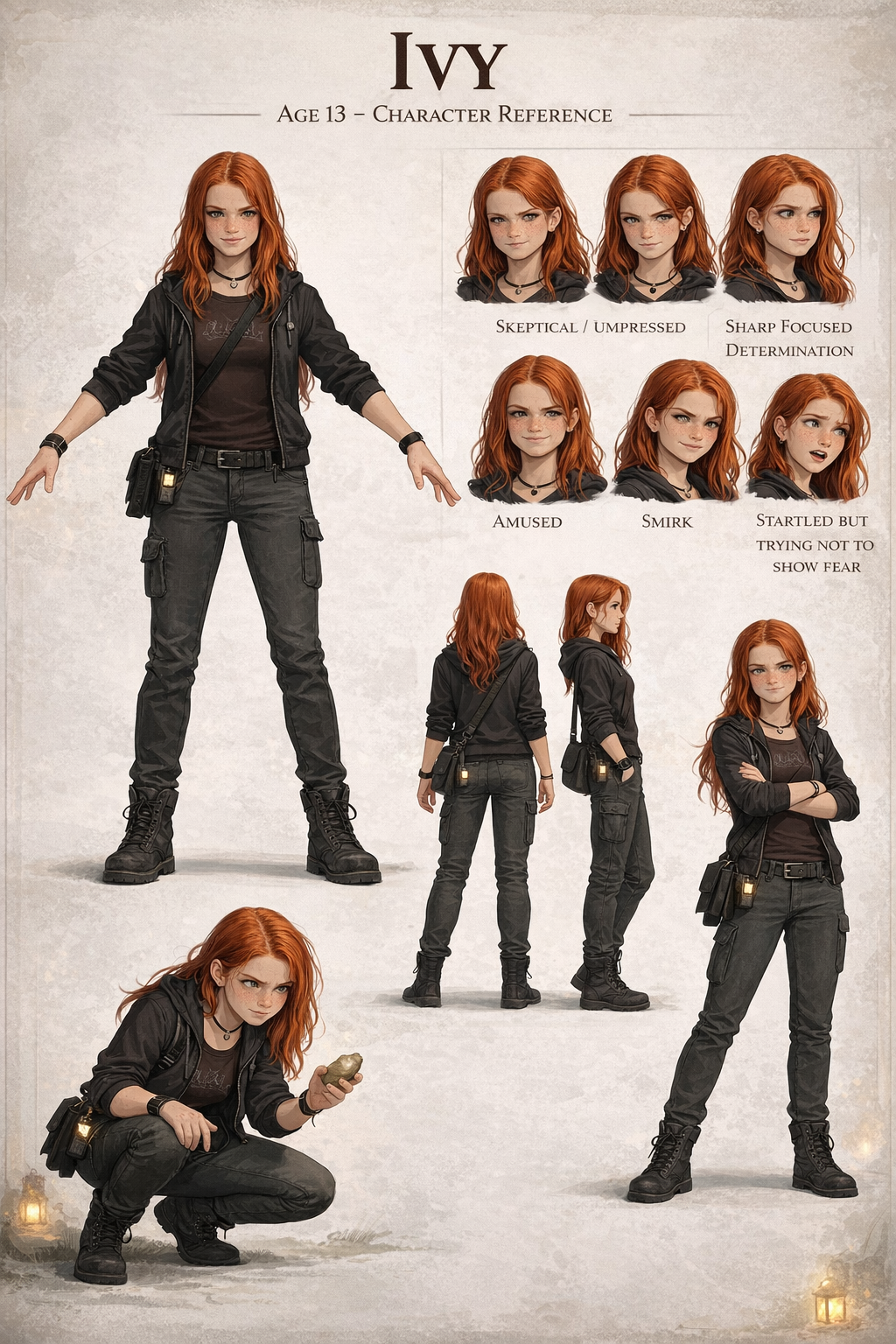](https://bookstack.thecartwrights.nz/uploads/images/gallery/2026-04/429fc717-fb90-455b-b7cd-de4b685b371c.png)
# Amber
[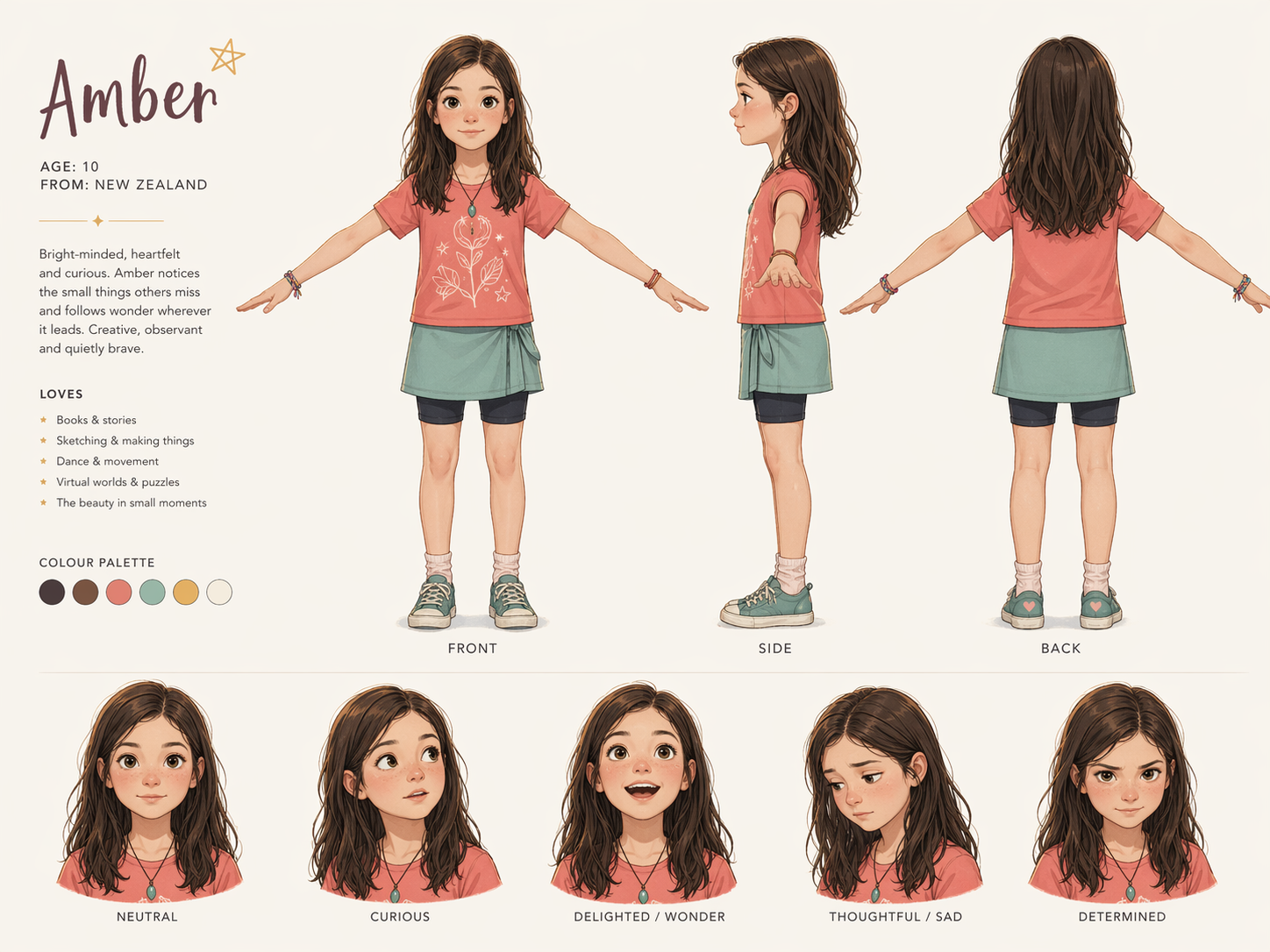](https://bookstack.thecartwrights.nz/uploads/images/gallery/2026-04/aBvimage.png)
[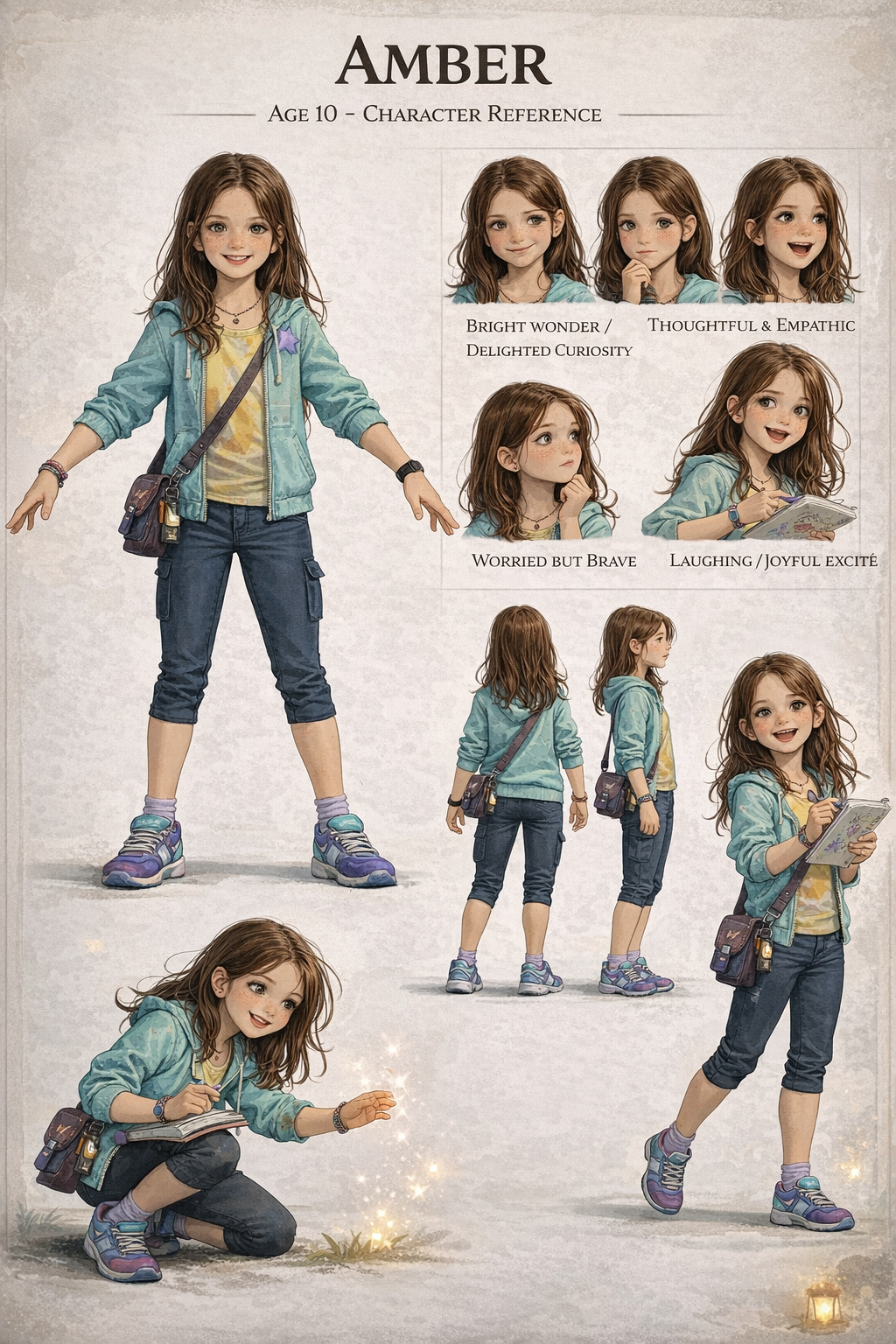](https://bookstack.thecartwrights.nz/uploads/images/gallery/2026-04/image.png)
# Oakley
[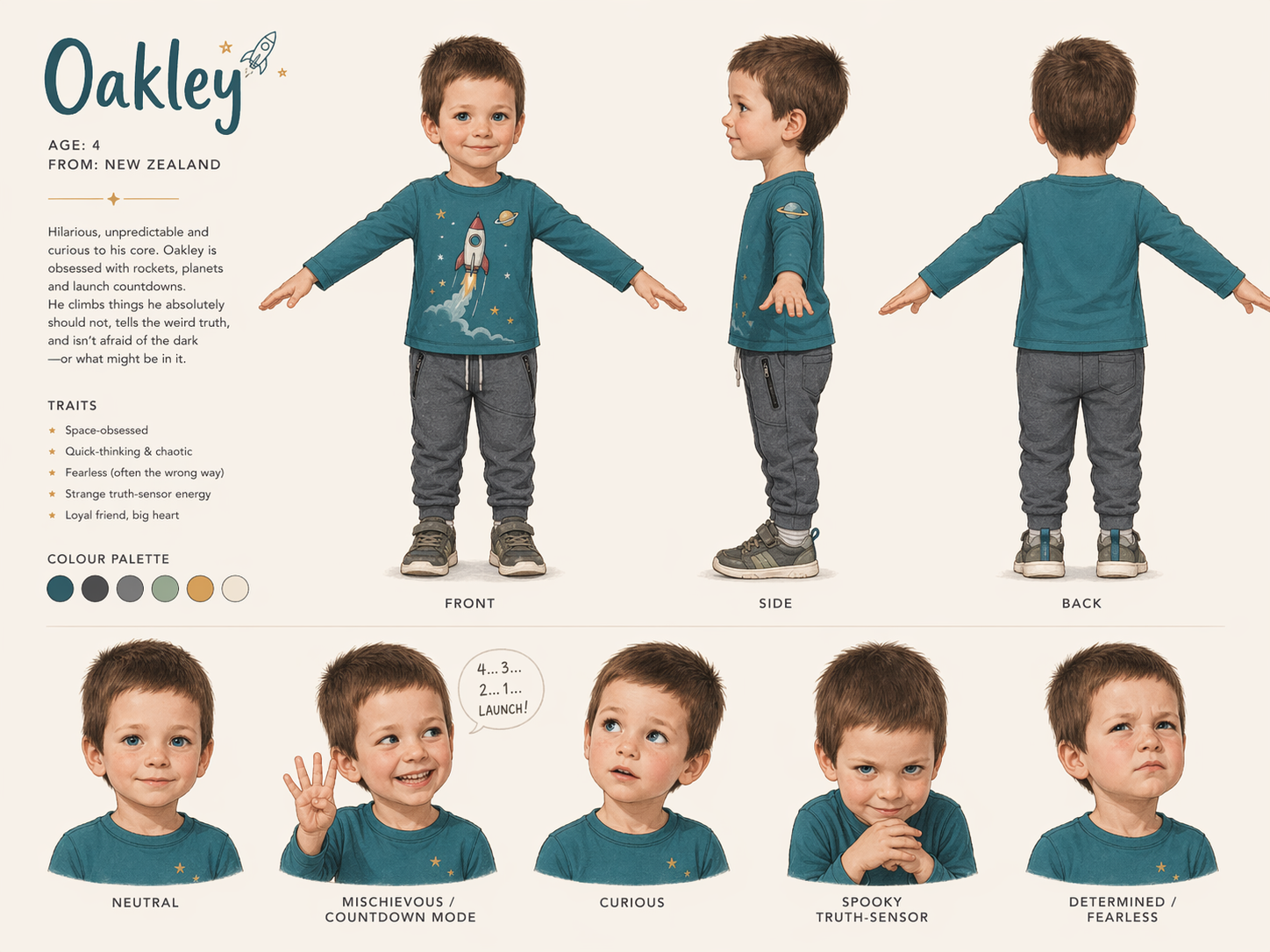](https://bookstack.thecartwrights.nz/uploads/images/gallery/2026-04/i0Pimage.png)
[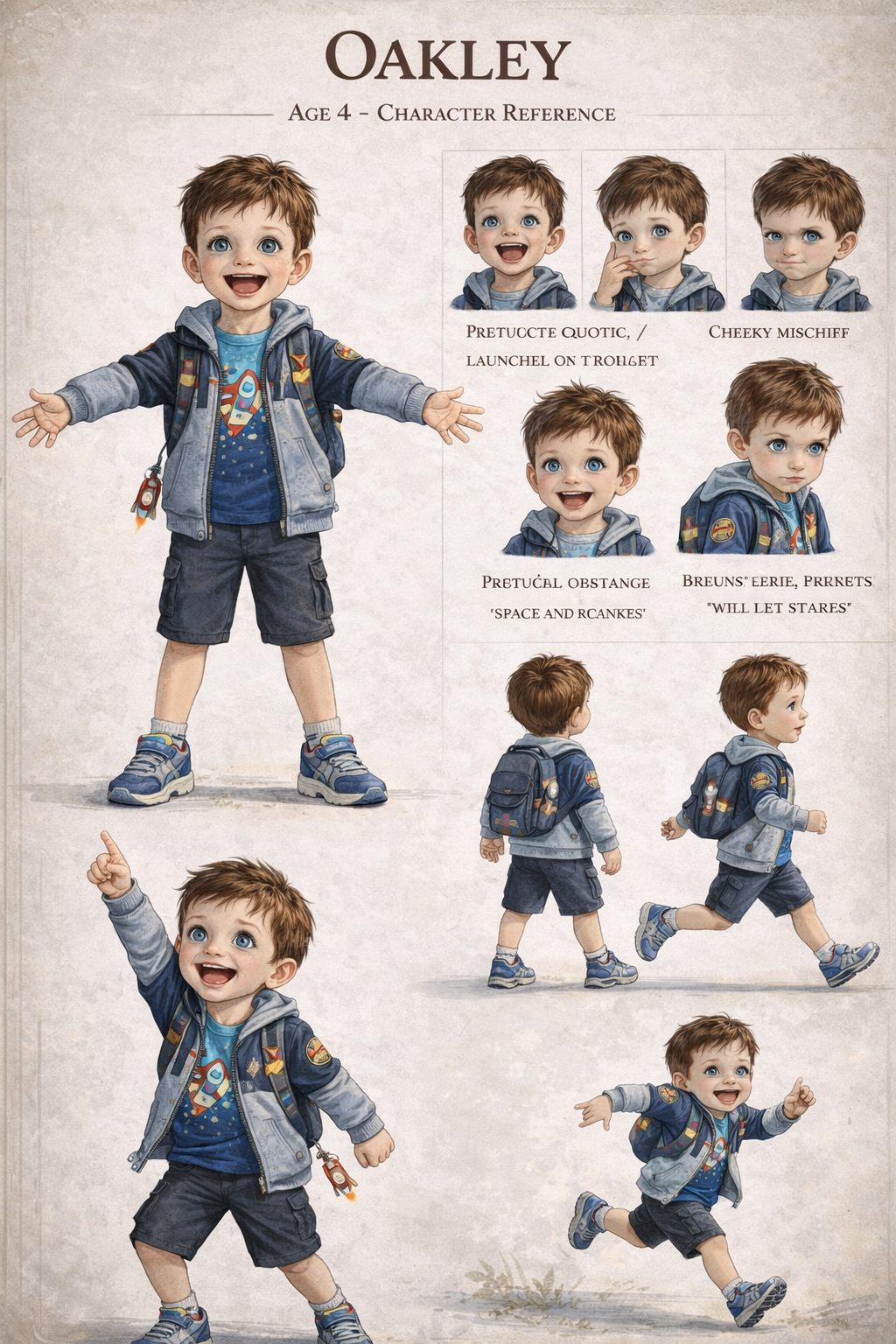](https://bookstack.thecartwrights.nz/uploads/images/gallery/2026-04/Qwcimage.png)
# Mo
[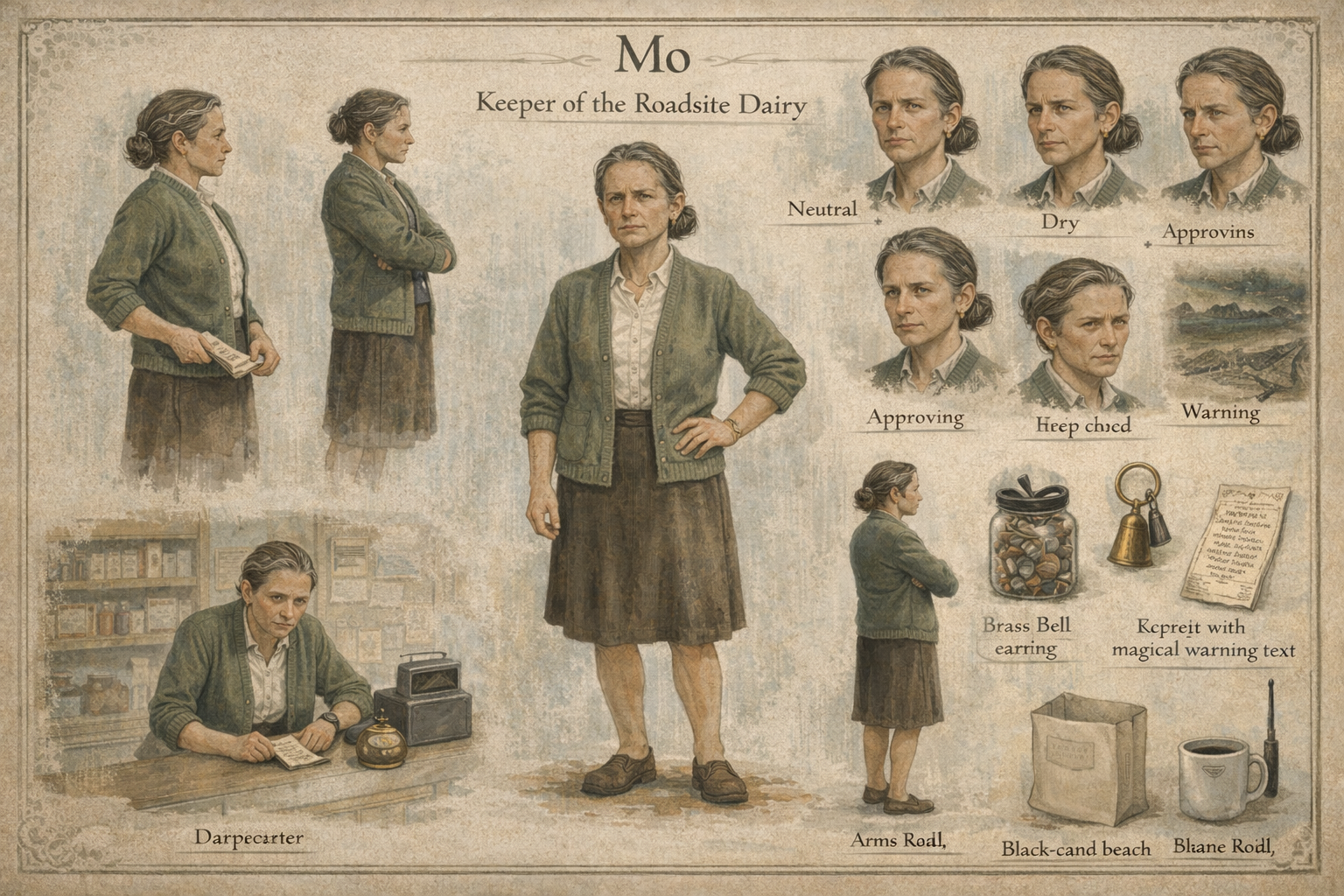](https://bookstack.thecartwrights.nz/uploads/images/gallery/2026-04/aA3image.png)
# Mum / Belinda
[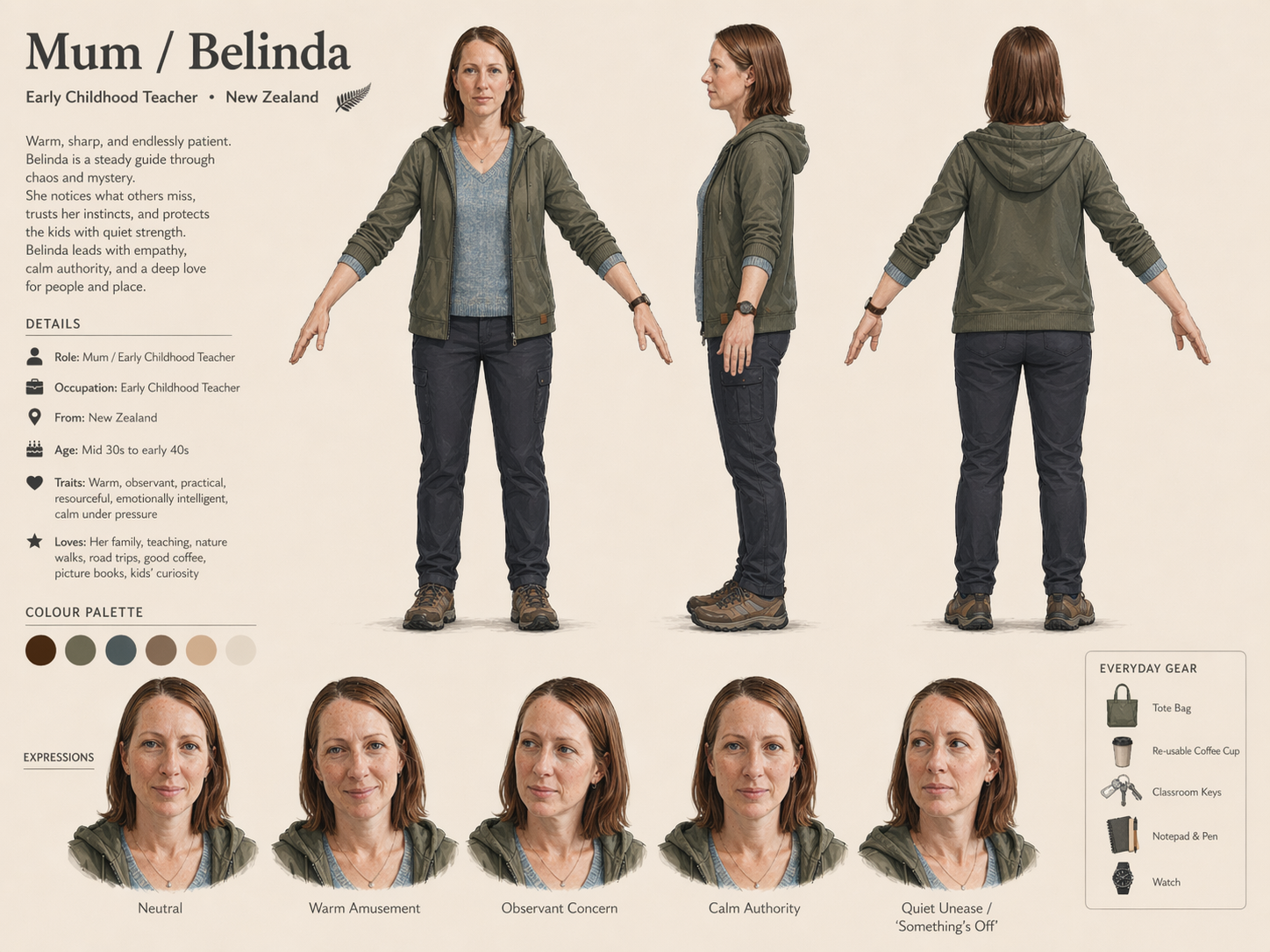](https://bookstack.thecartwrights.nz/uploads/images/gallery/2026-04/sHoimage.png)
[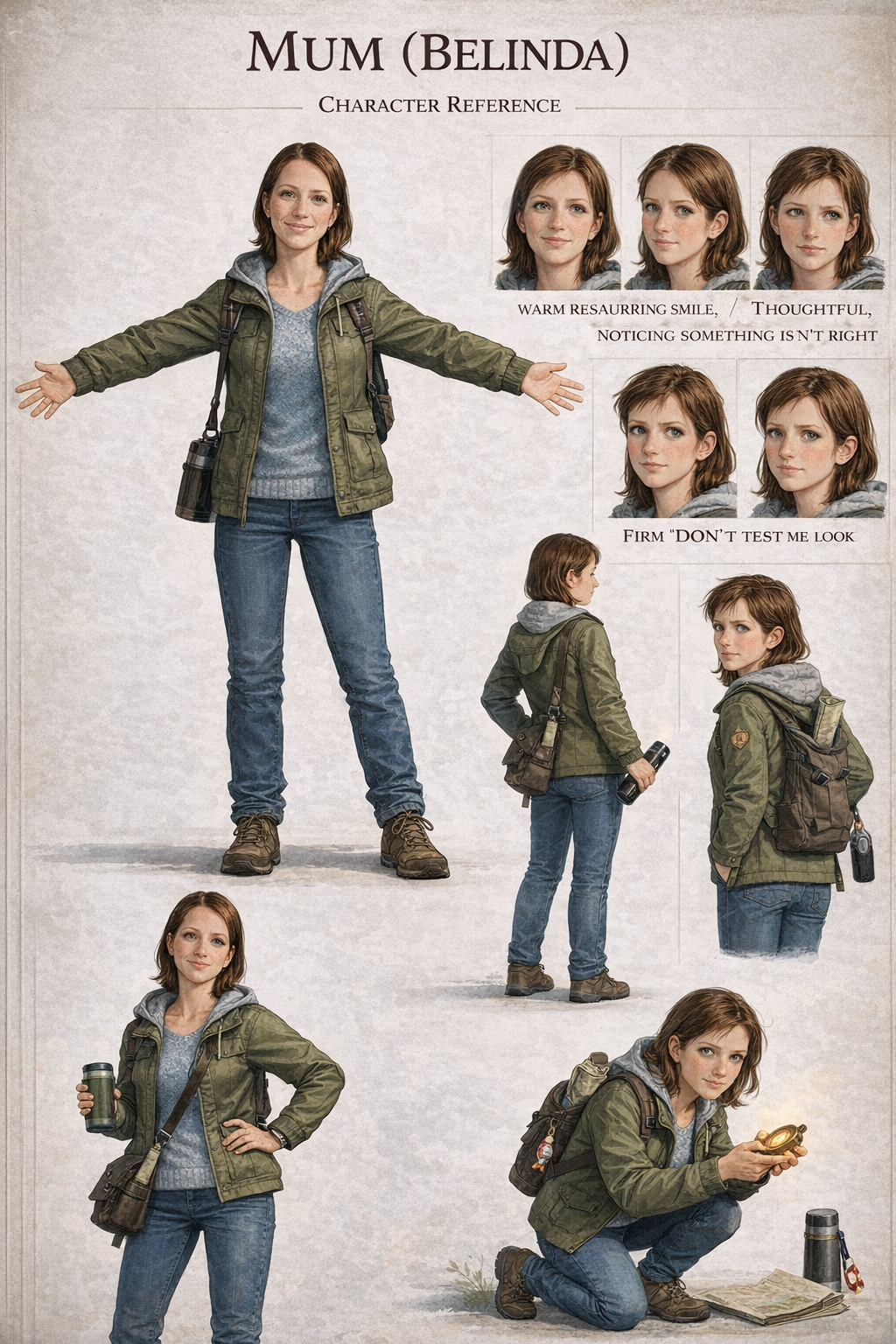](https://bookstack.thecartwrights.nz/uploads/images/gallery/2026-04/gn5image.png)
# Dad / Justin
[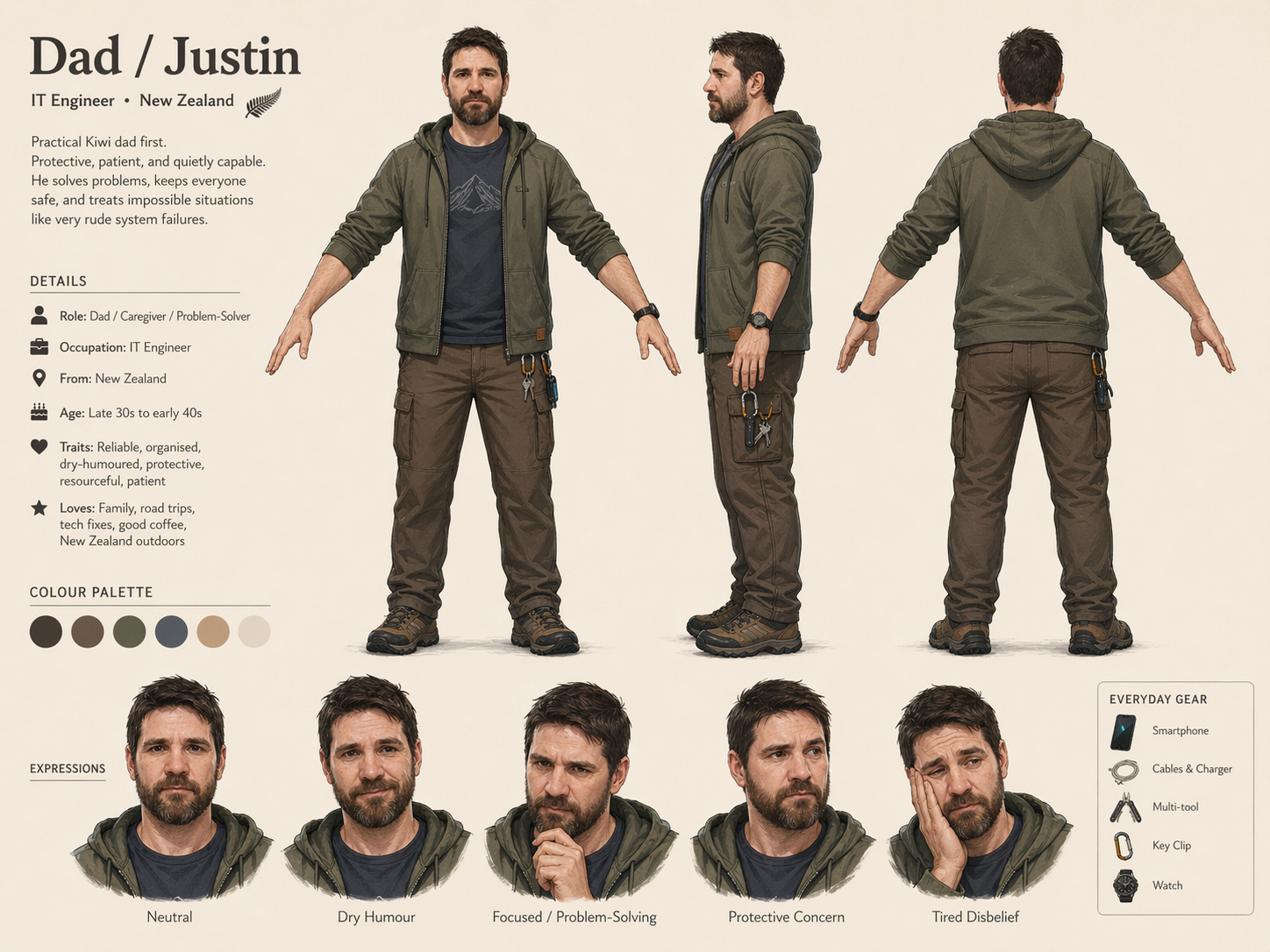](https://bookstack.thecartwrights.nz/uploads/images/gallery/2026-04/Fs6image.png)
[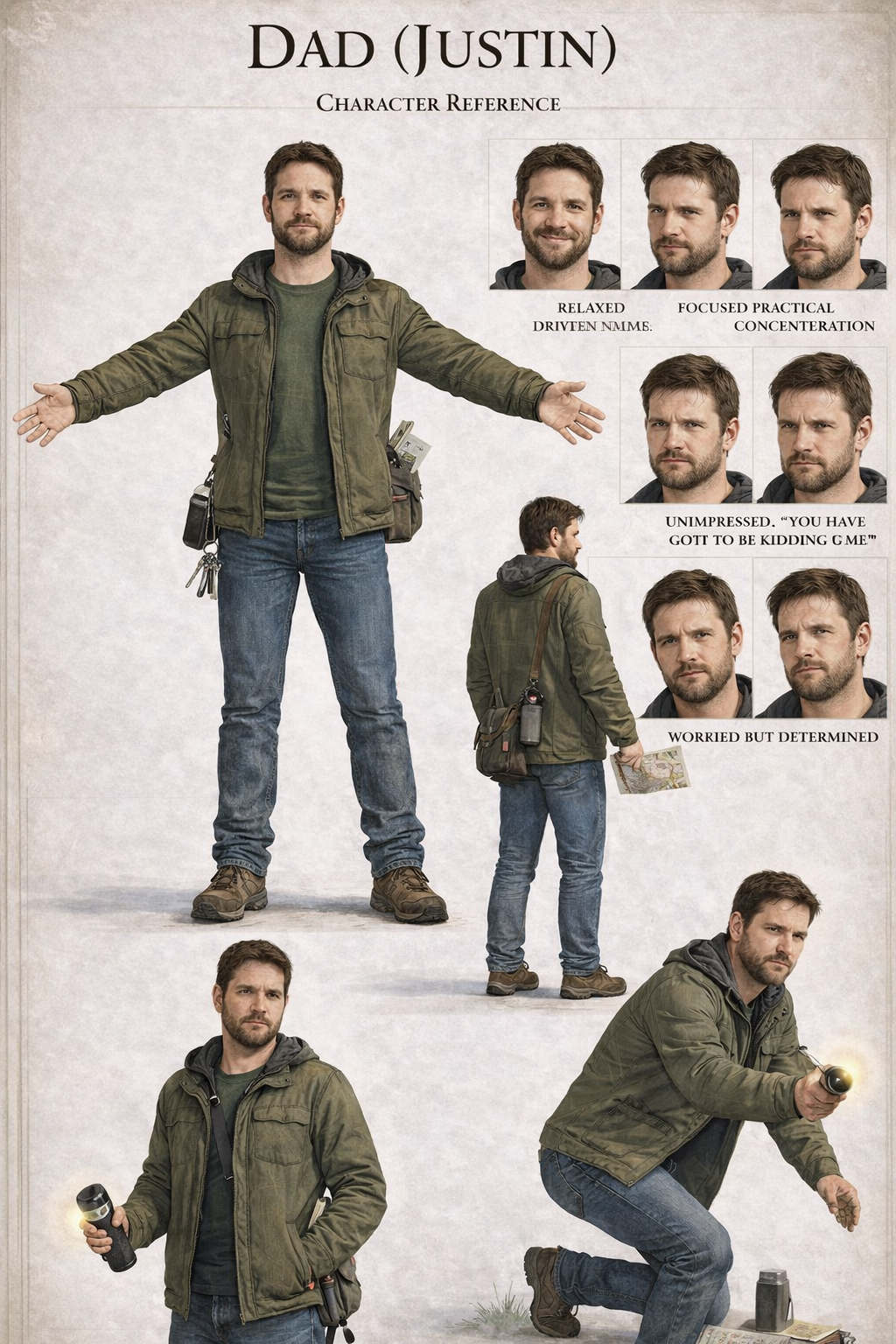](https://bookstack.thecartwrights.nz/uploads/images/gallery/2026-04/YeLimage.png)
# Auntie Erin
[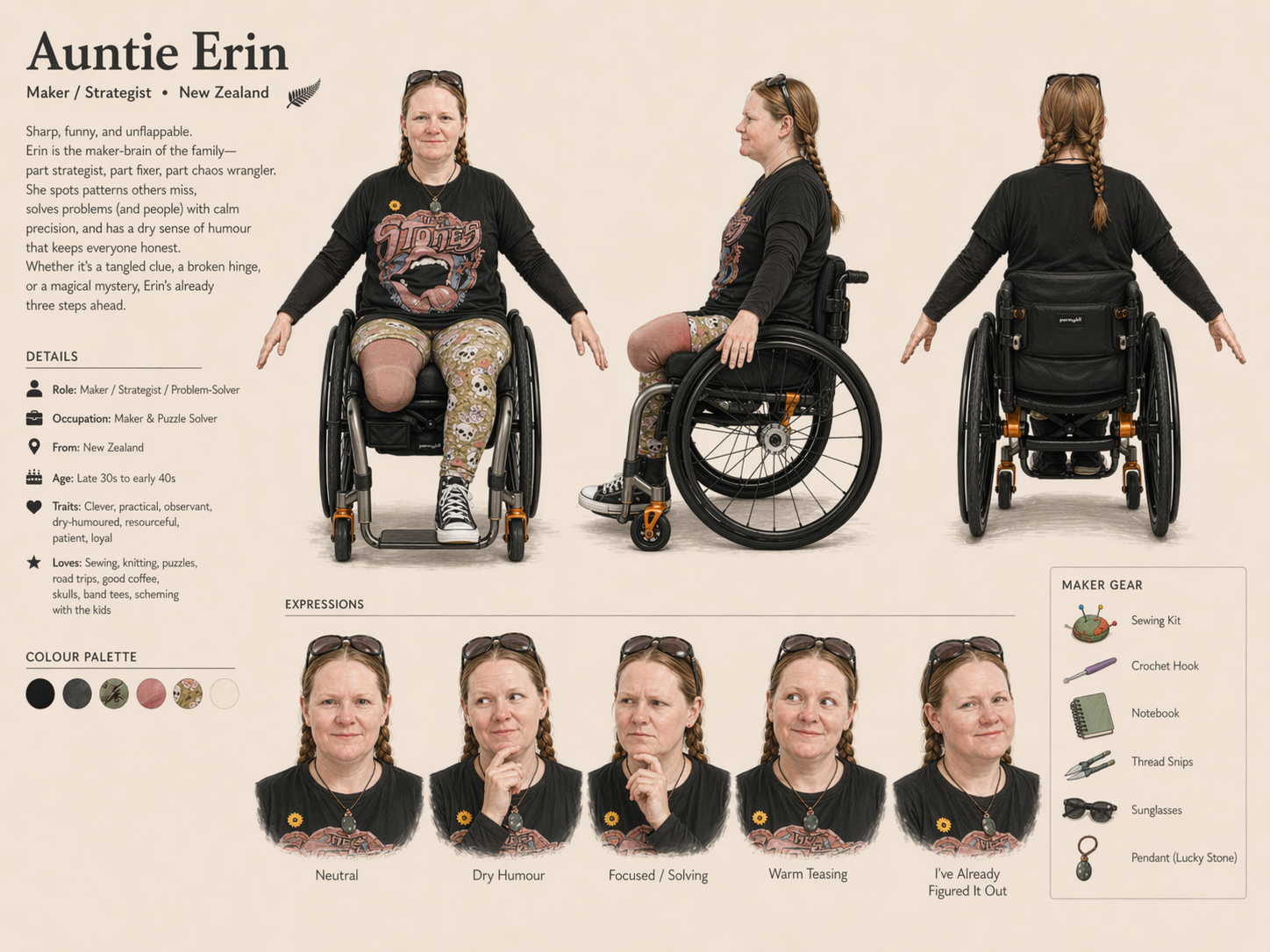](https://bookstack.thecartwrights.nz/uploads/images/gallery/2026-04/kiKimage.png)
[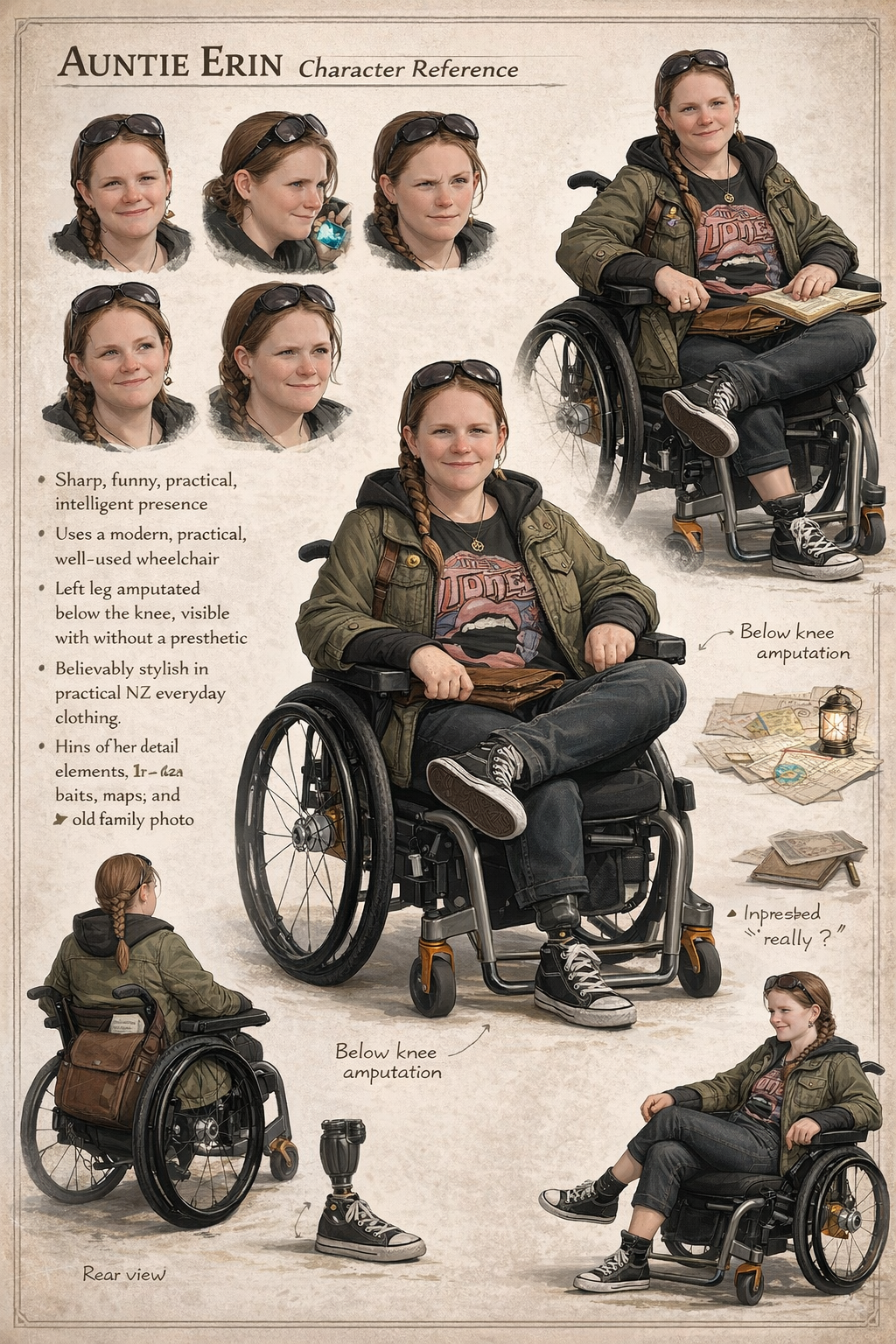](https://bookstack.thecartwrights.nz/uploads/images/gallery/2026-04/O9yimage.png)
# Meow Meow
[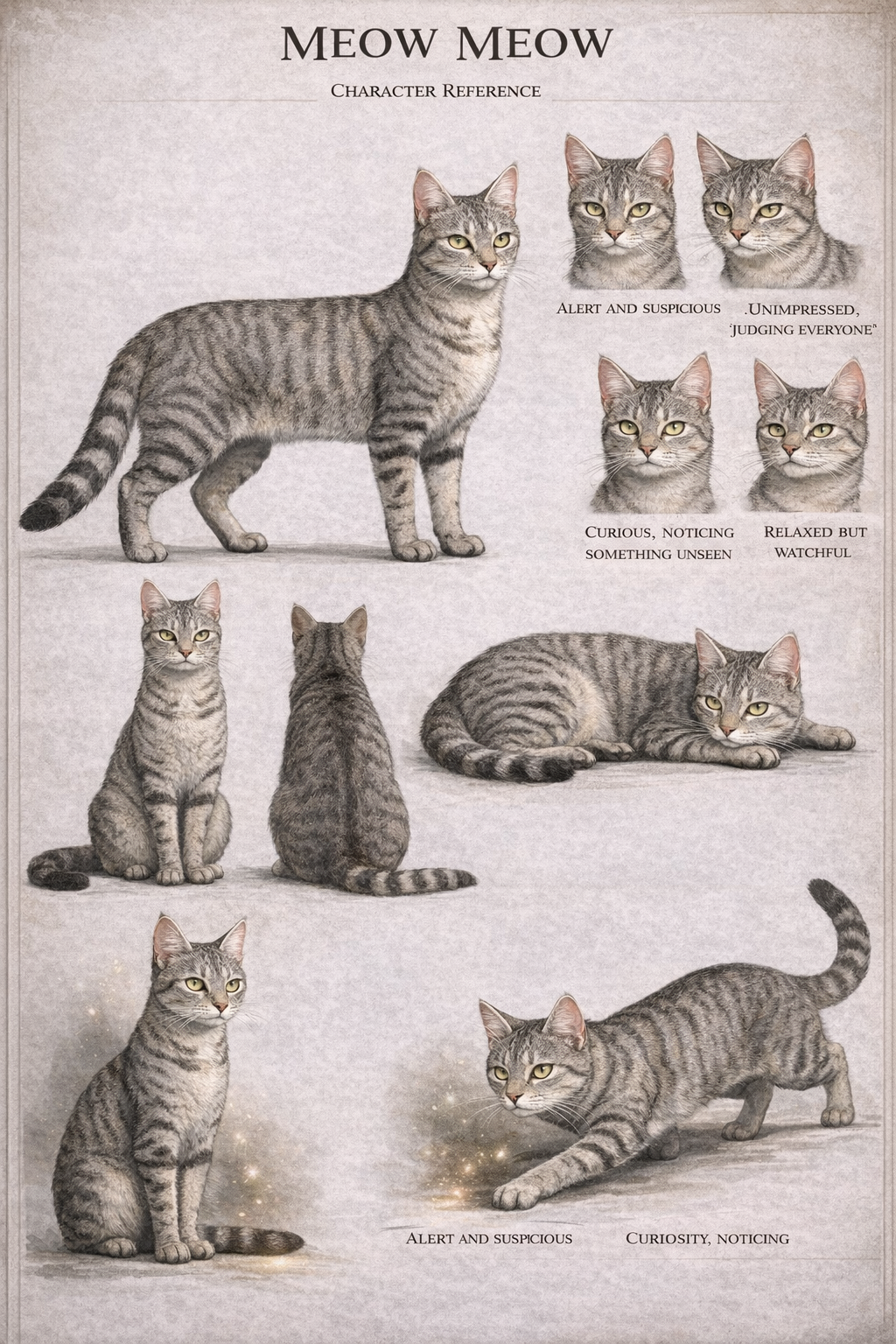](https://bookstack.thecartwrights.nz/uploads/images/gallery/2026-04/RHgimage.png)
# The Boy from Site 23
[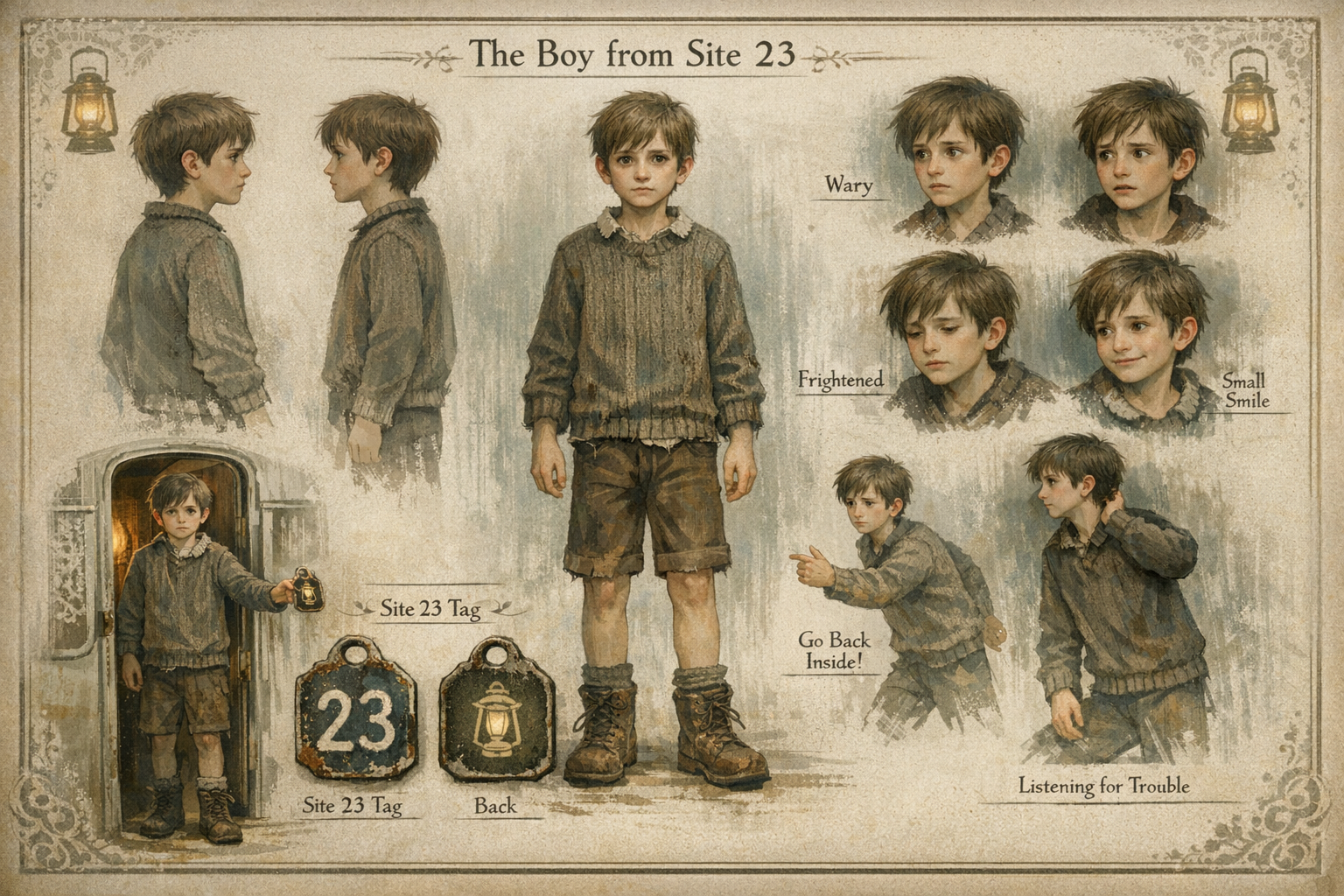](https://bookstack.thecartwrights.nz/uploads/images/gallery/2026-04/87Zimage.png)
# Tane Rook
[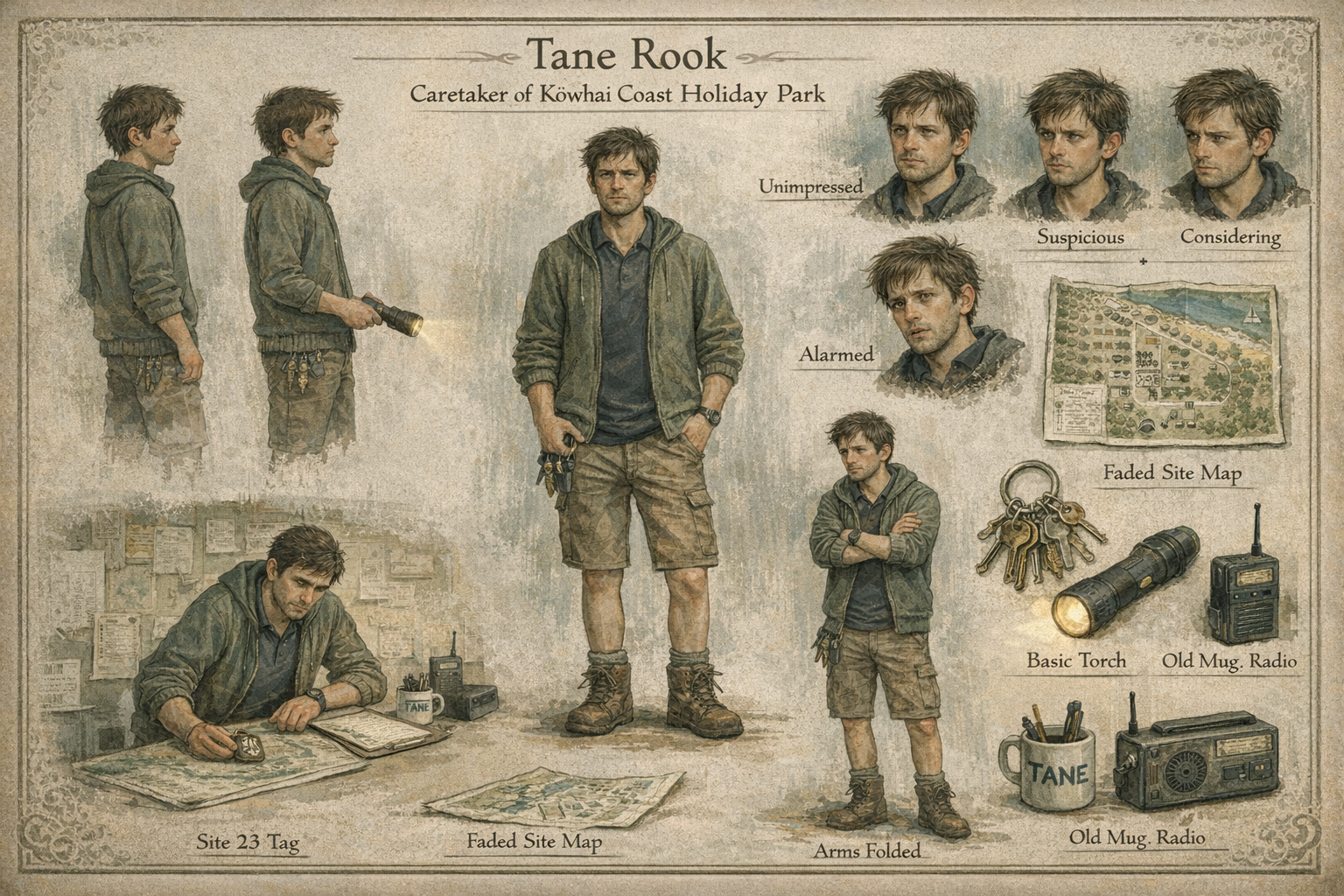](https://bookstack.thecartwrights.nz/uploads/images/gallery/2026-04/Nw3image.png)
# Gampa Kev
[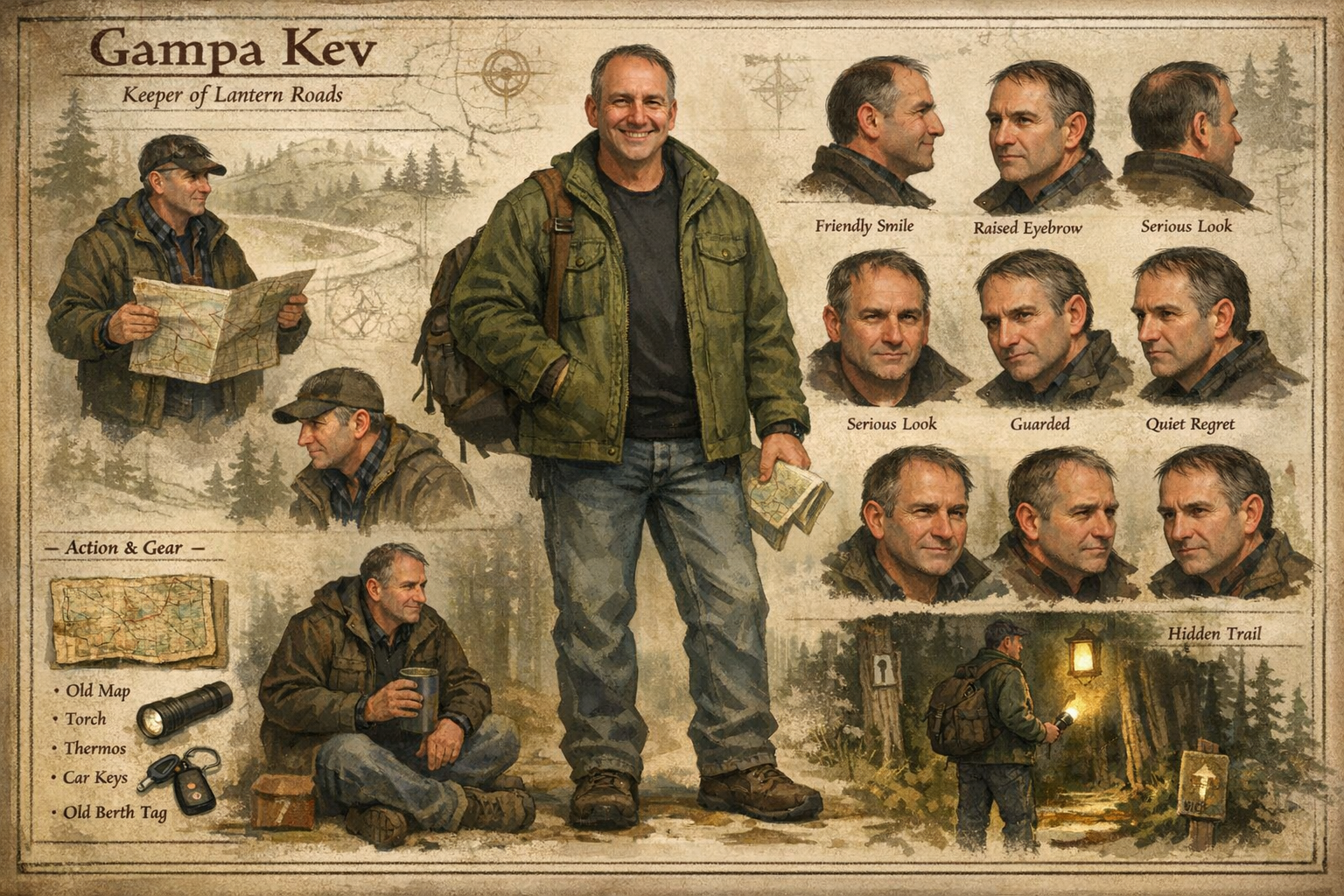](https://bookstack.thecartwrights.nz/uploads/images/gallery/2026-04/s8Wimage.png)
# Gammy Debs
[](https://bookstack.thecartwrights.nz/uploads/images/gallery/2026-04/UfPimage.png)
# Caravan Chronicles Codex
The Caravan Chronicles Codex is the central reference collection for the world of Caravan Chronicles — a curated archive of characters, locations, items, symbols, documents, creatures, clues, and visual references. It serves as the living lorebook behind the story, gathering the details that shape the road, its mysteries, and the people who travel it.
# Caravan External
[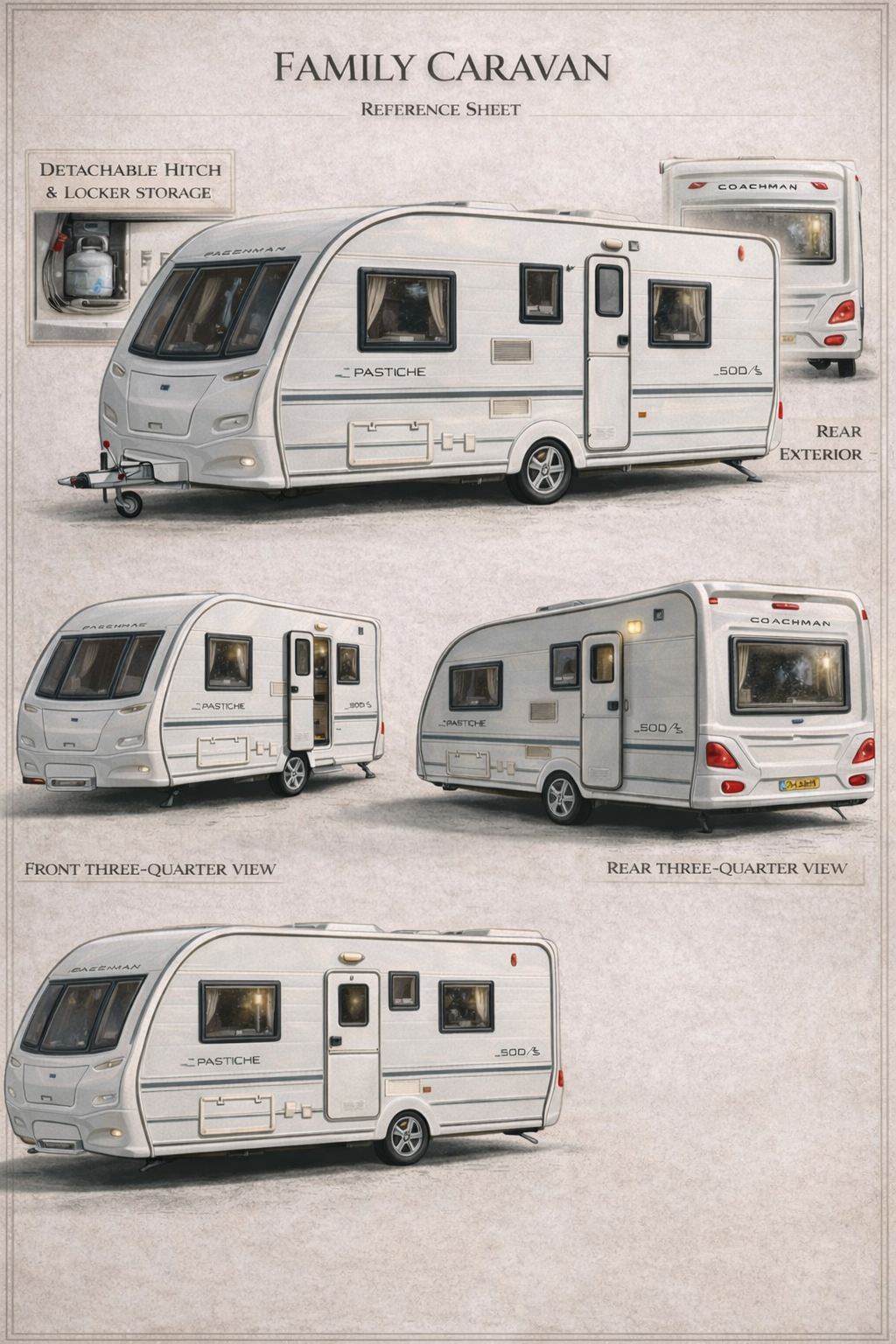](https://bookstack.thecartwrights.nz/uploads/images/gallery/2026-04/wzOimage.png)
# Caravan Internal
[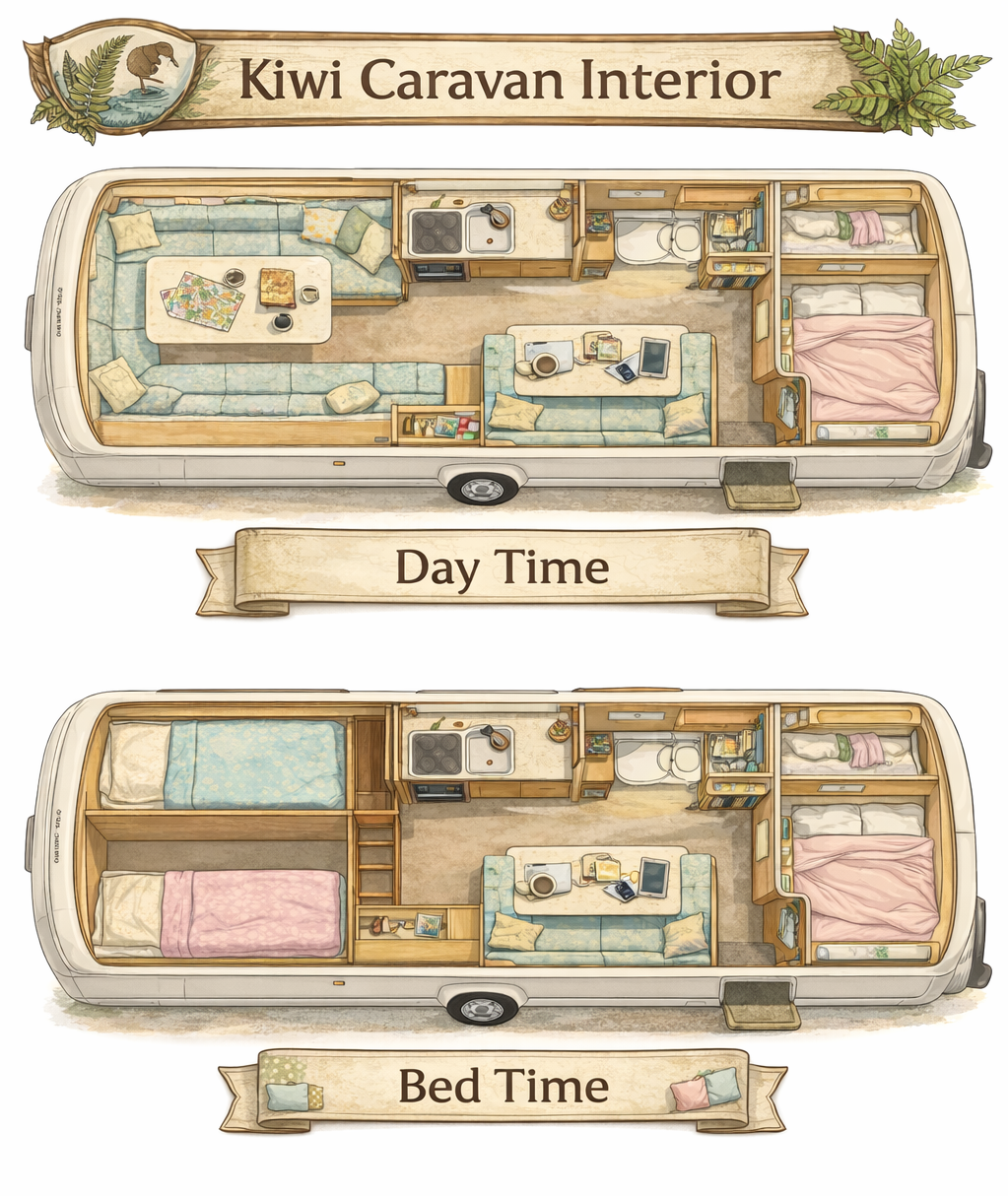](https://bookstack.thecartwrights.nz/uploads/images/gallery/2026-04/uJLimage.png)
# Lantern Compass
[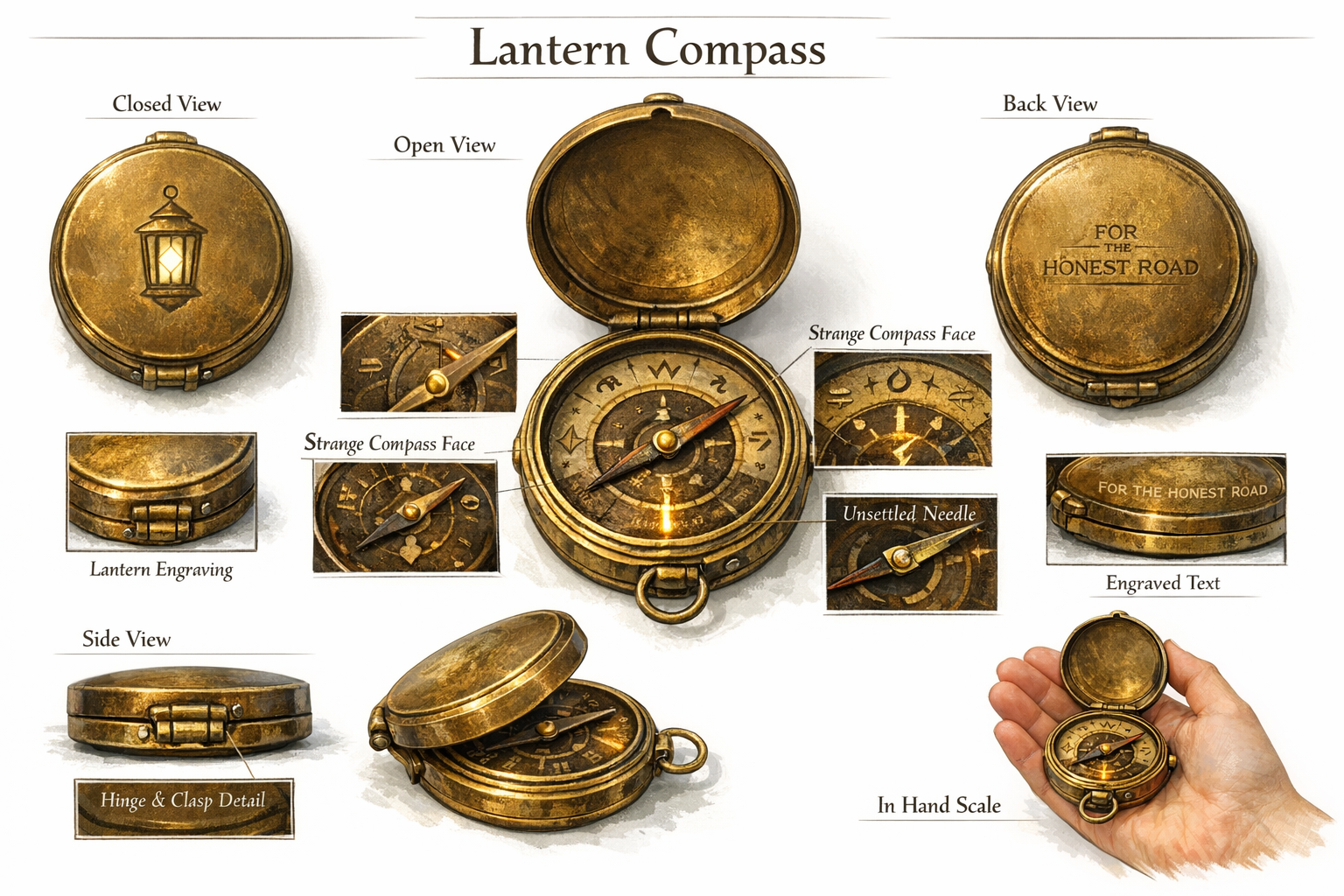](https://bookstack.thecartwrights.nz/uploads/images/gallery/2026-04/Kxqimage.png)
# Car (Rav4)
[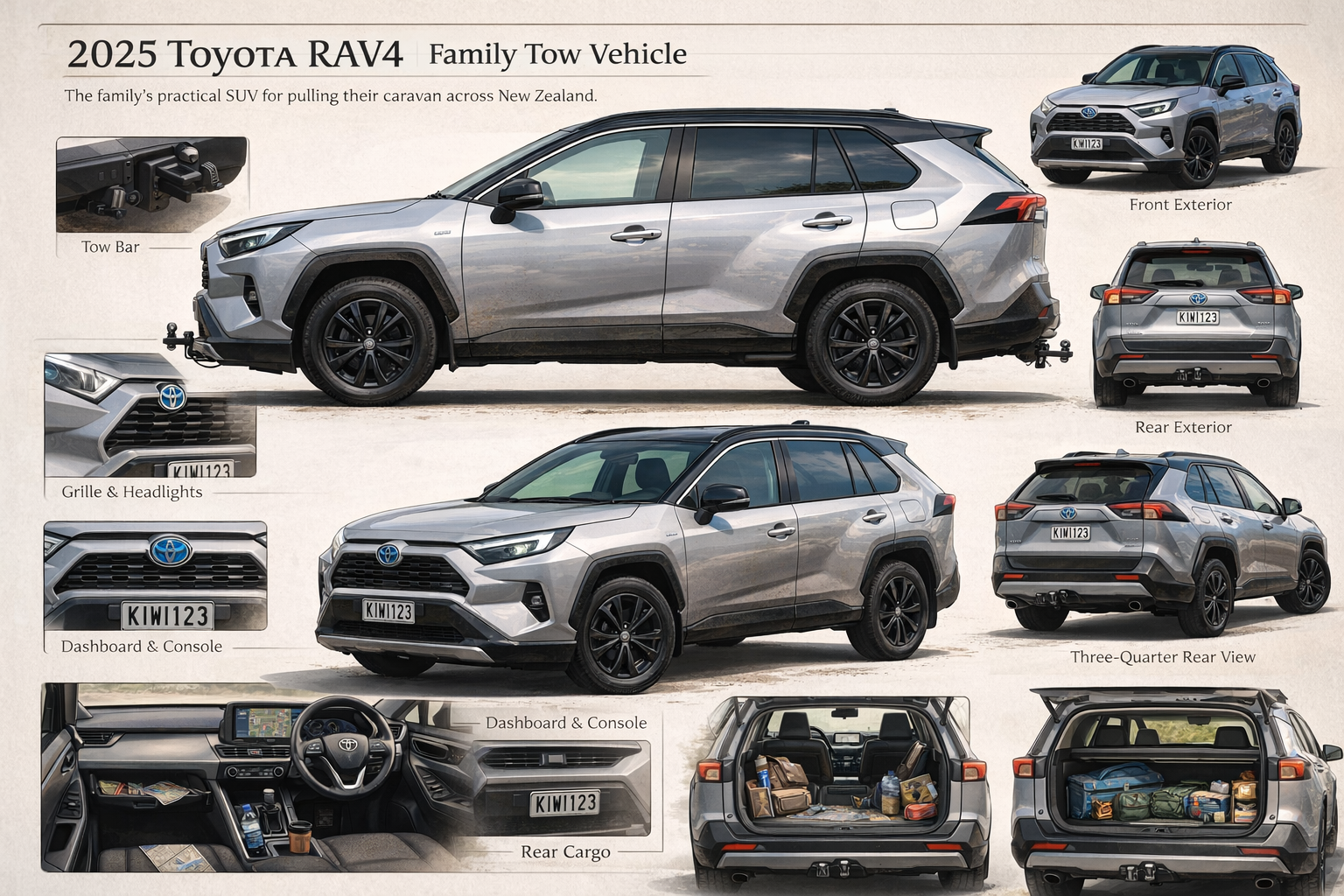](https://bookstack.thecartwrights.nz/uploads/images/gallery/2026-04/zFNimage.png)
# Tane Rook’s old local road map
[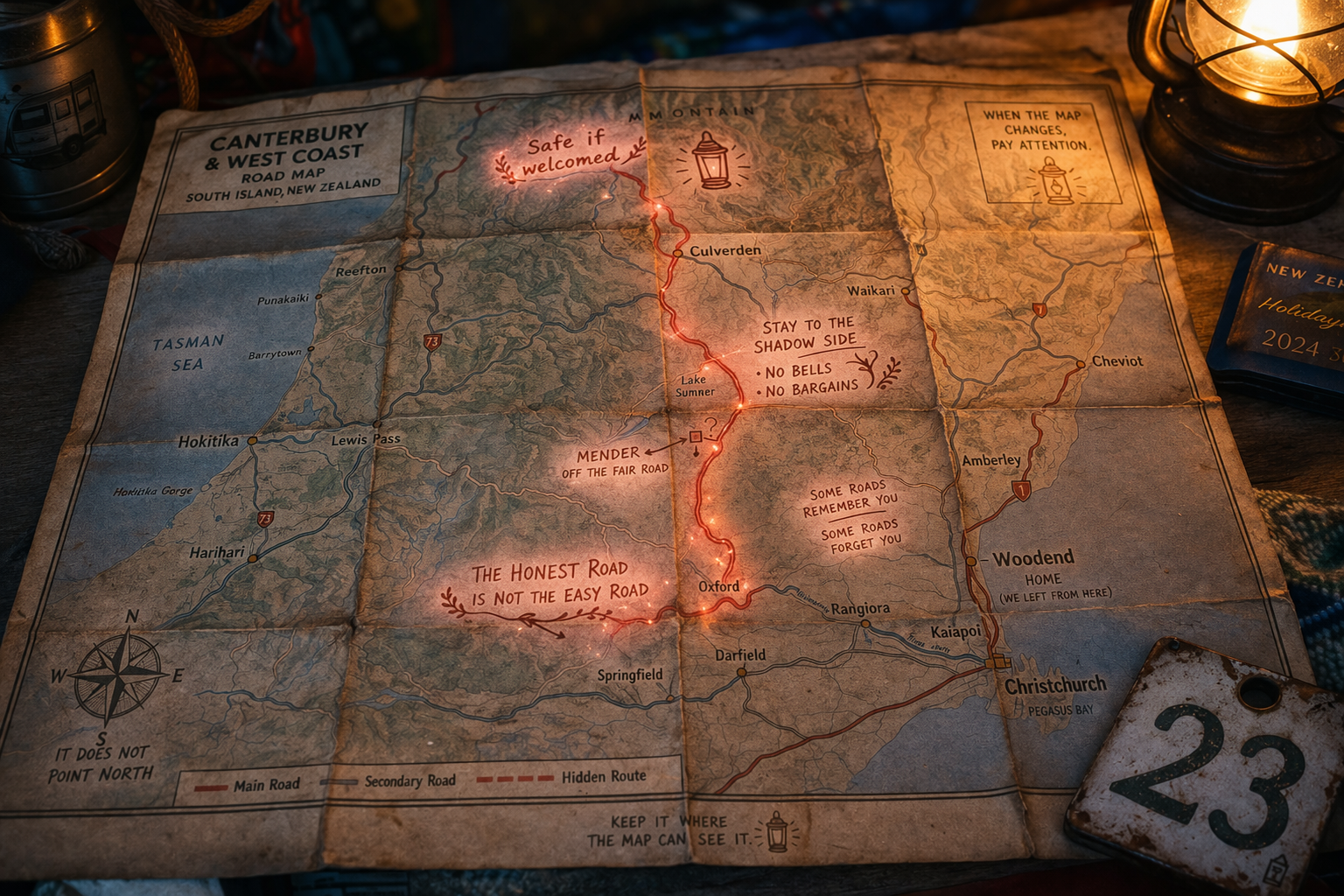](https://bookstack.thecartwrights.nz/uploads/images/gallery/2026-04/2uwimage.png)
# The Site 23 enamel tag
[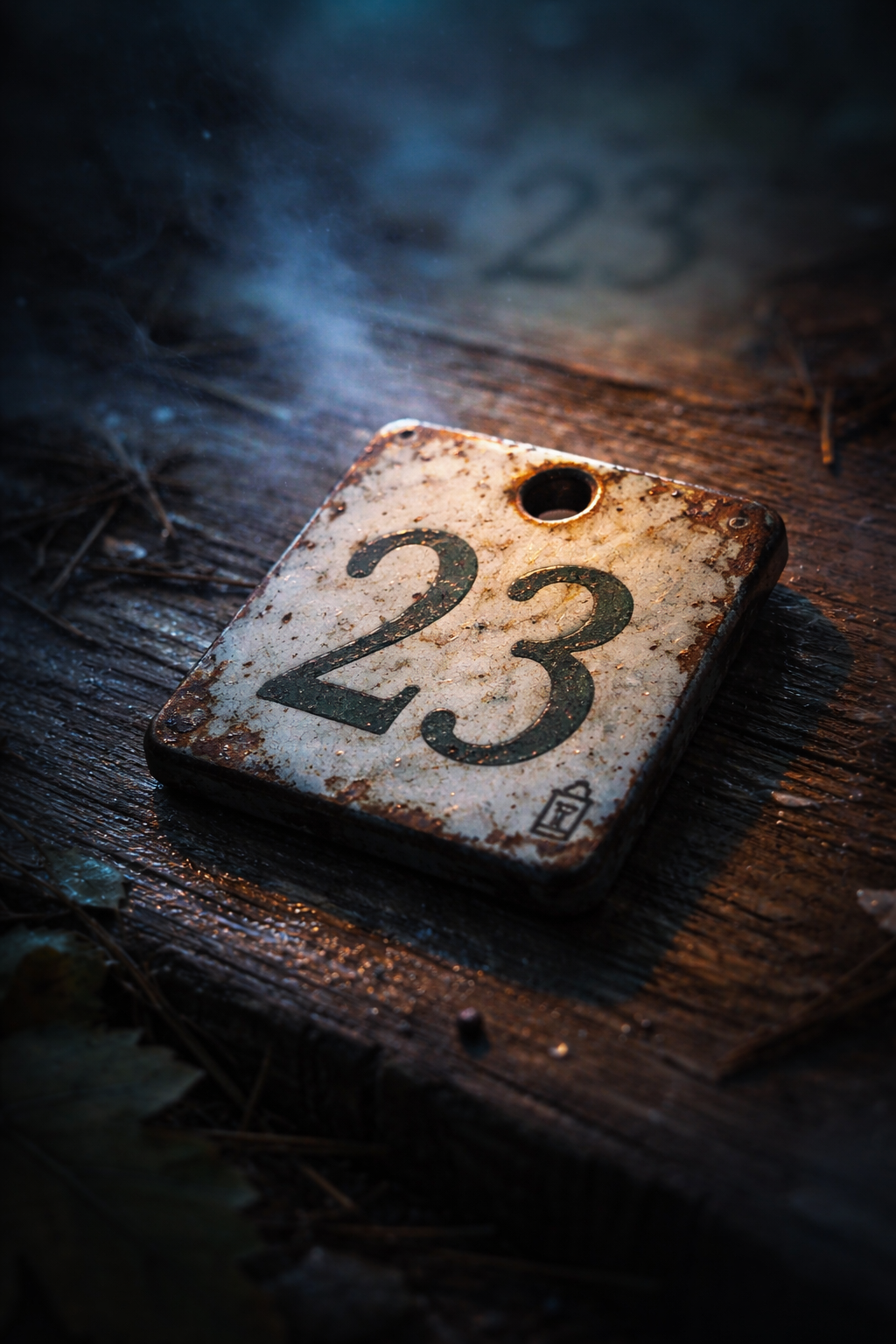](https://bookstack.thecartwrights.nz/uploads/images/gallery/2026-04/EUVimage.png)
# The black-sand beach postcard
[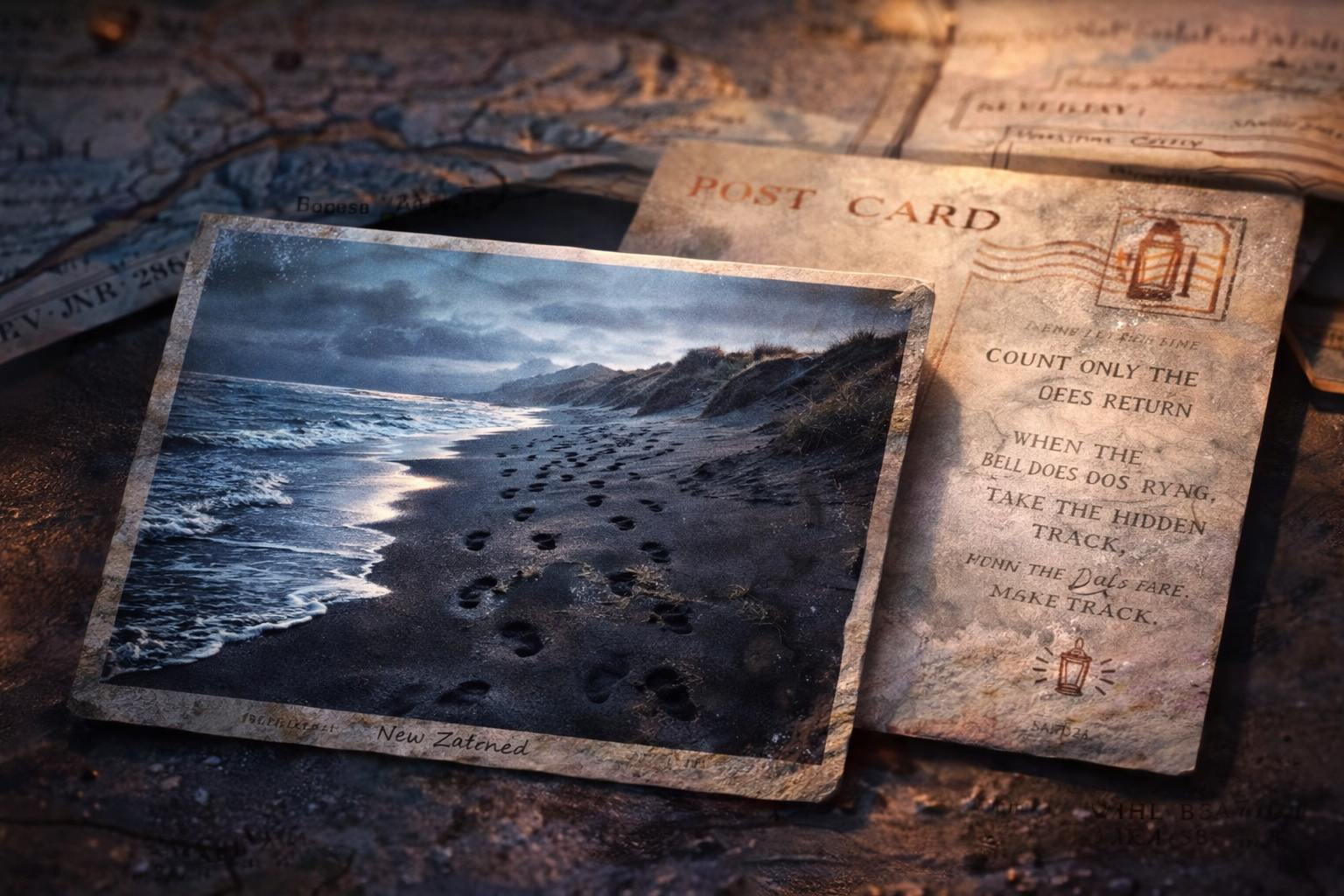](https://bookstack.thecartwrights.nz/uploads/images/gallery/2026-04/d8uimage.png)
# The magical dairy receipt
[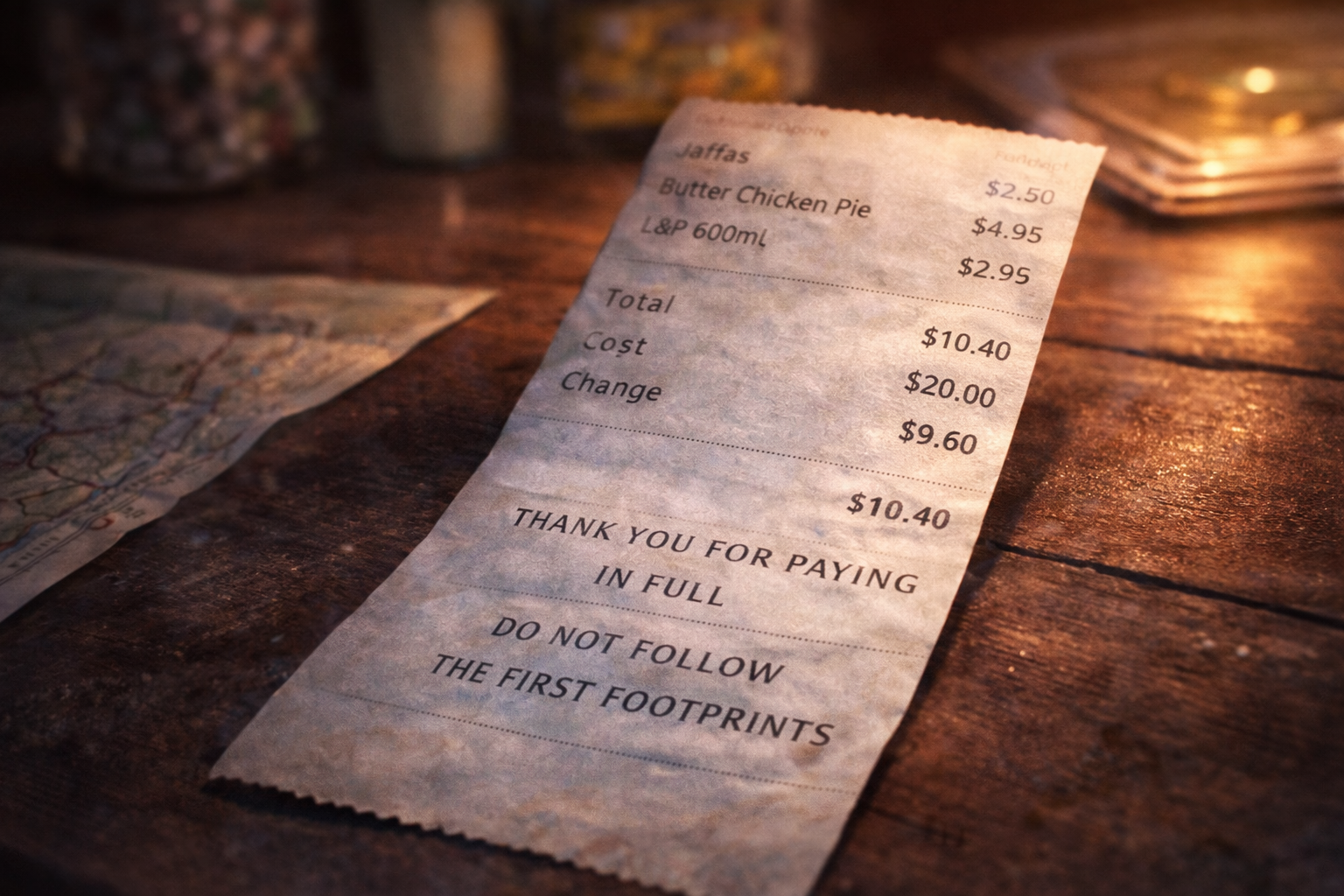](https://bookstack.thecartwrights.nz/uploads/images/gallery/2026-04/Supimage.png)
# The embroidered route-strip
[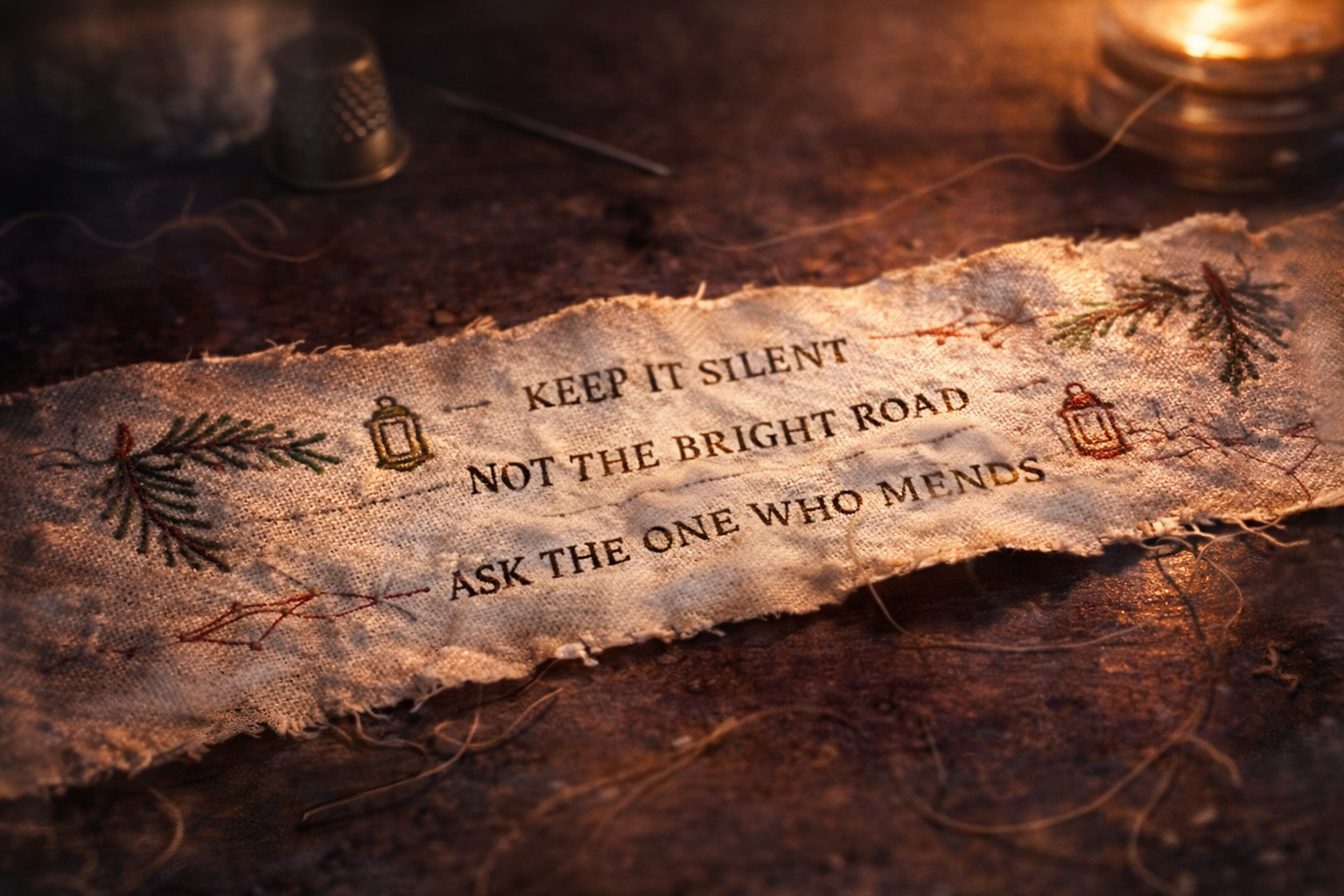](https://bookstack.thecartwrights.nz/uploads/images/gallery/2026-04/GZzimage.png)
# The PINES marker plate
[](https://bookstack.thecartwrights.nz/uploads/images/gallery/2026-04/6HSimage.png)
# The full embroidered route-cloth
[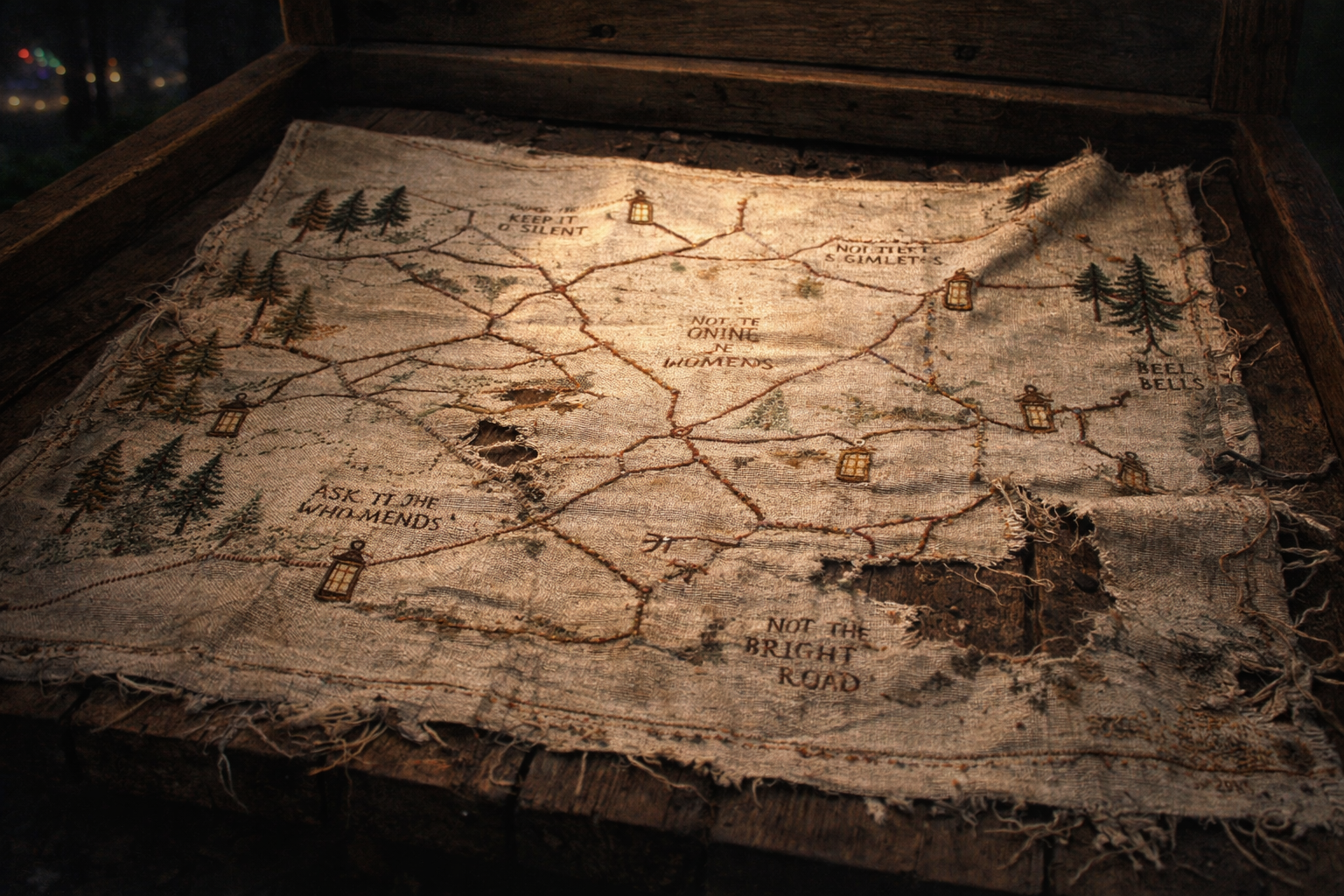](https://bookstack.thecartwrights.nz/uploads/images/gallery/2026-04/PBDimage.png)
# The storm marble
[](https://bookstack.thecartwrights.nz/uploads/images/gallery/2026-04/BPdimage.png)
# Paint.NET Ref images
# Magical Creatures / People
# Ankle-Biting Pixies
[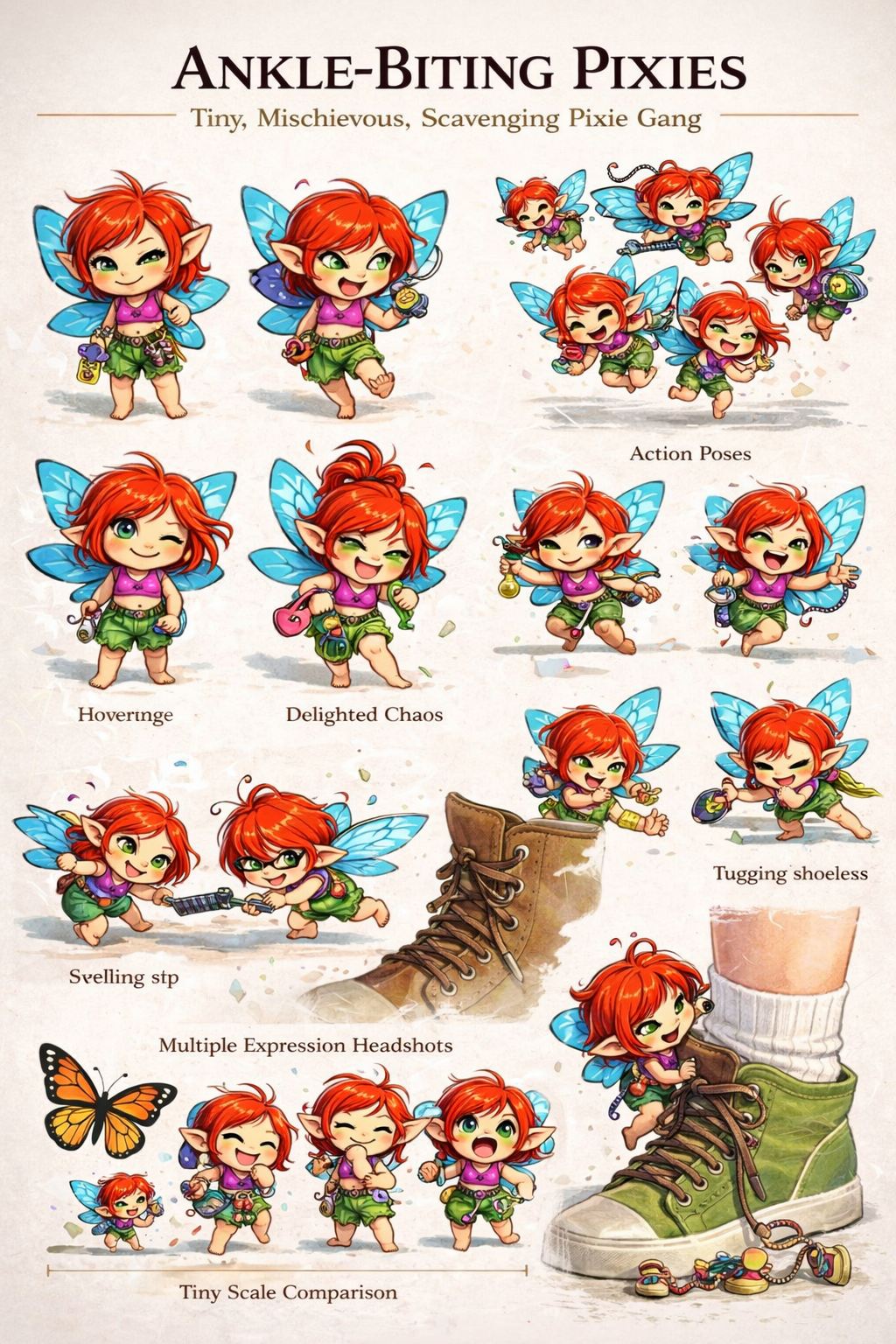](https://bookstack.thecartwrights.nz/uploads/images/gallery/2026-04/FWPimage.png)
# Ben Jammin
[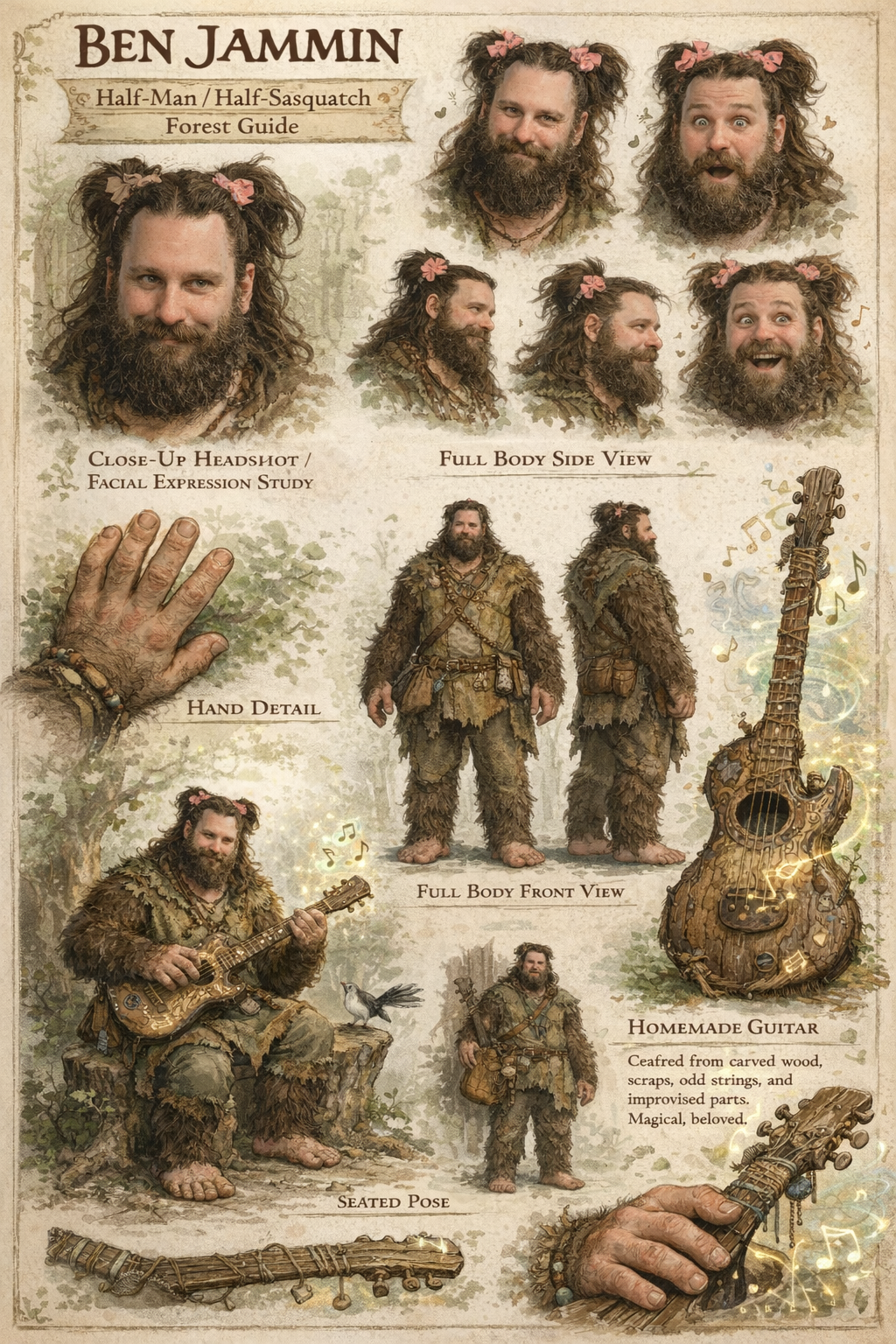](https://bookstack.thecartwrights.nz/uploads/images/gallery/2026-04/16simage.png)
# Rainbow Pooping Tigers
[](https://bookstack.thecartwrights.nz/uploads/images/gallery/2026-04/fhiimage.png)
# Queen Rose
[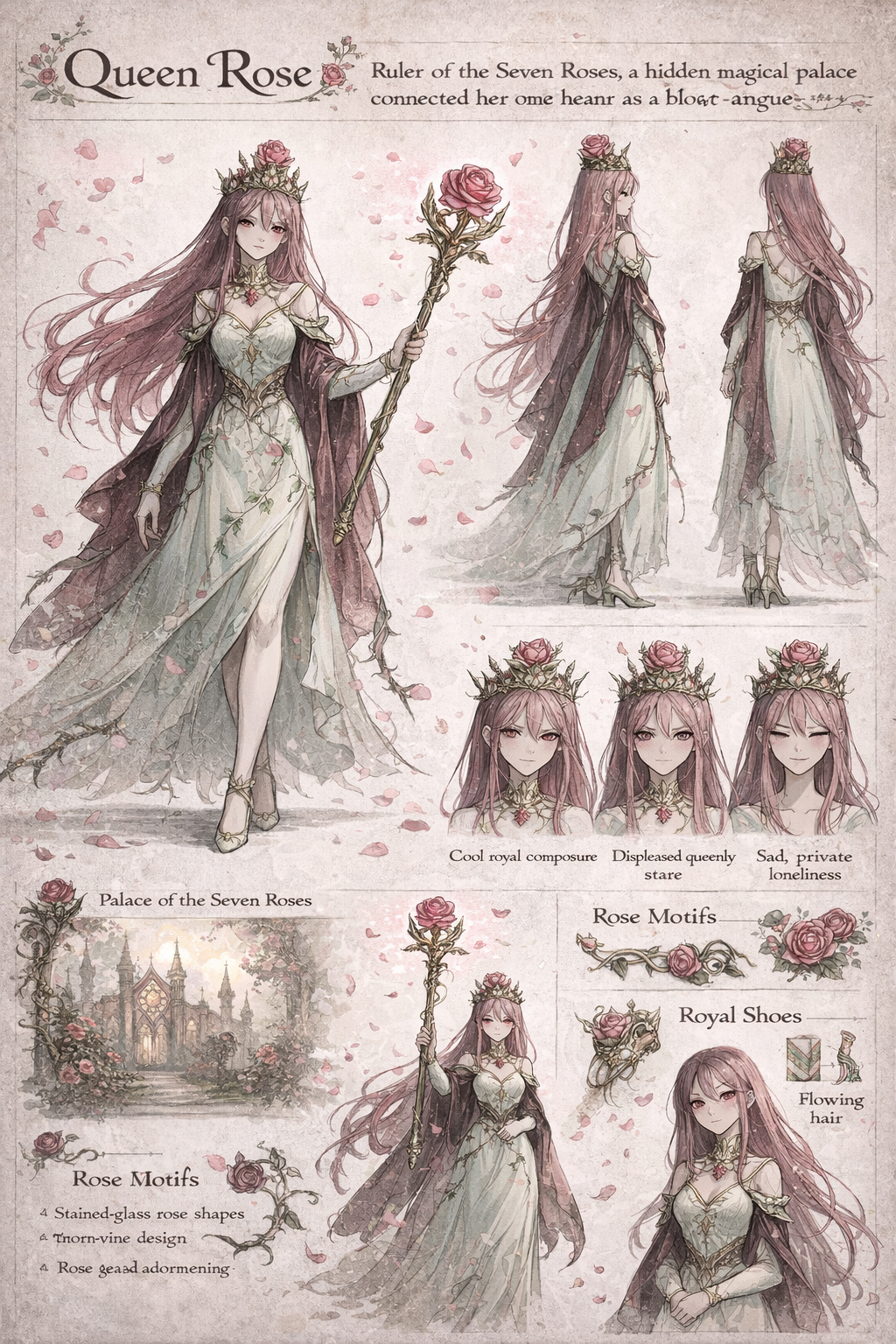](https://bookstack.thecartwrights.nz/uploads/images/gallery/2026-04/chatgpt-image-apr-3-2026-03-42-12-pm.png)
# The Shape Shifter
[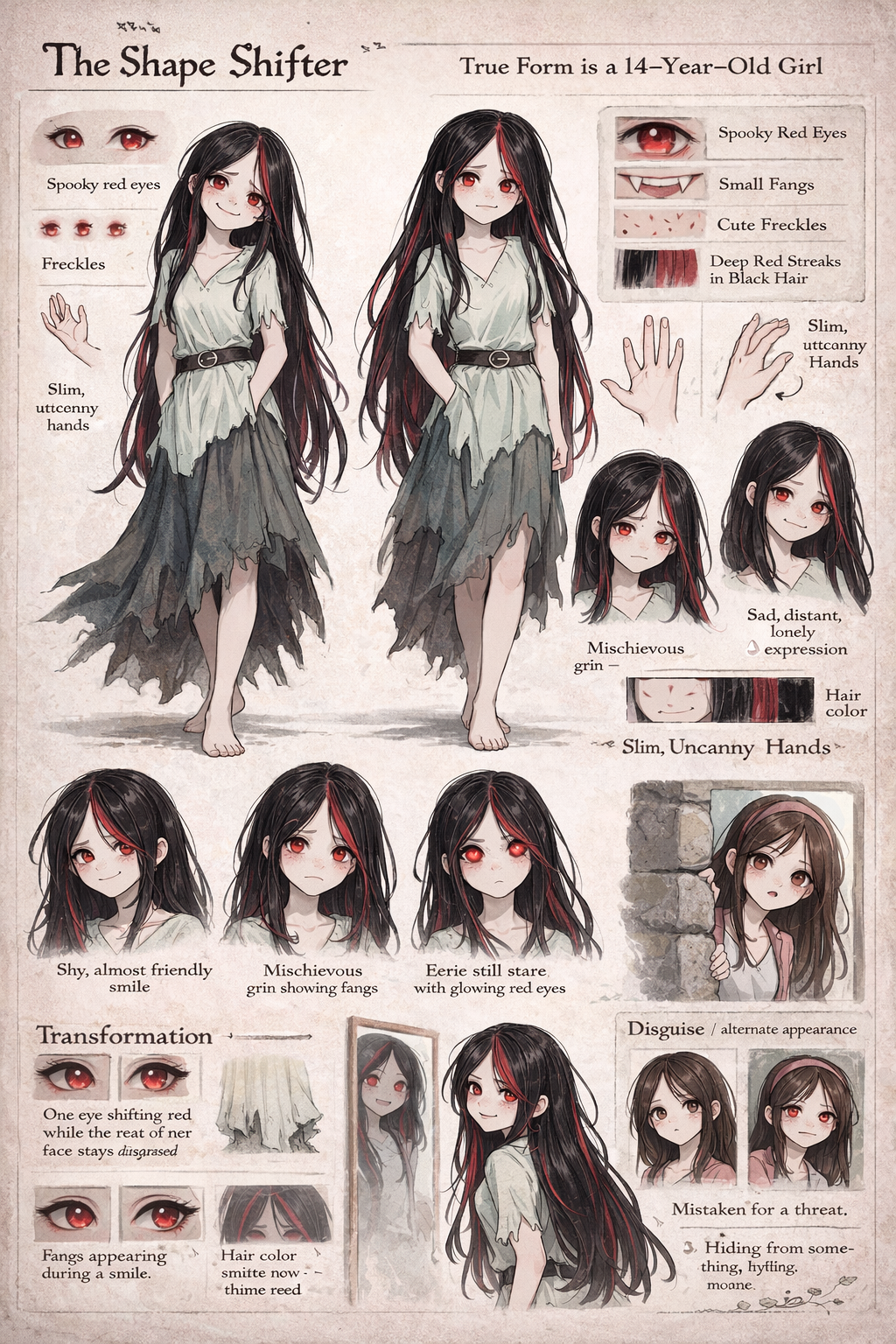](https://bookstack.thecartwrights.nz/uploads/images/gallery/2026-04/chatgpt-image-apr-3-2026-03-32-46-pm.png)
# VR Gnomes
[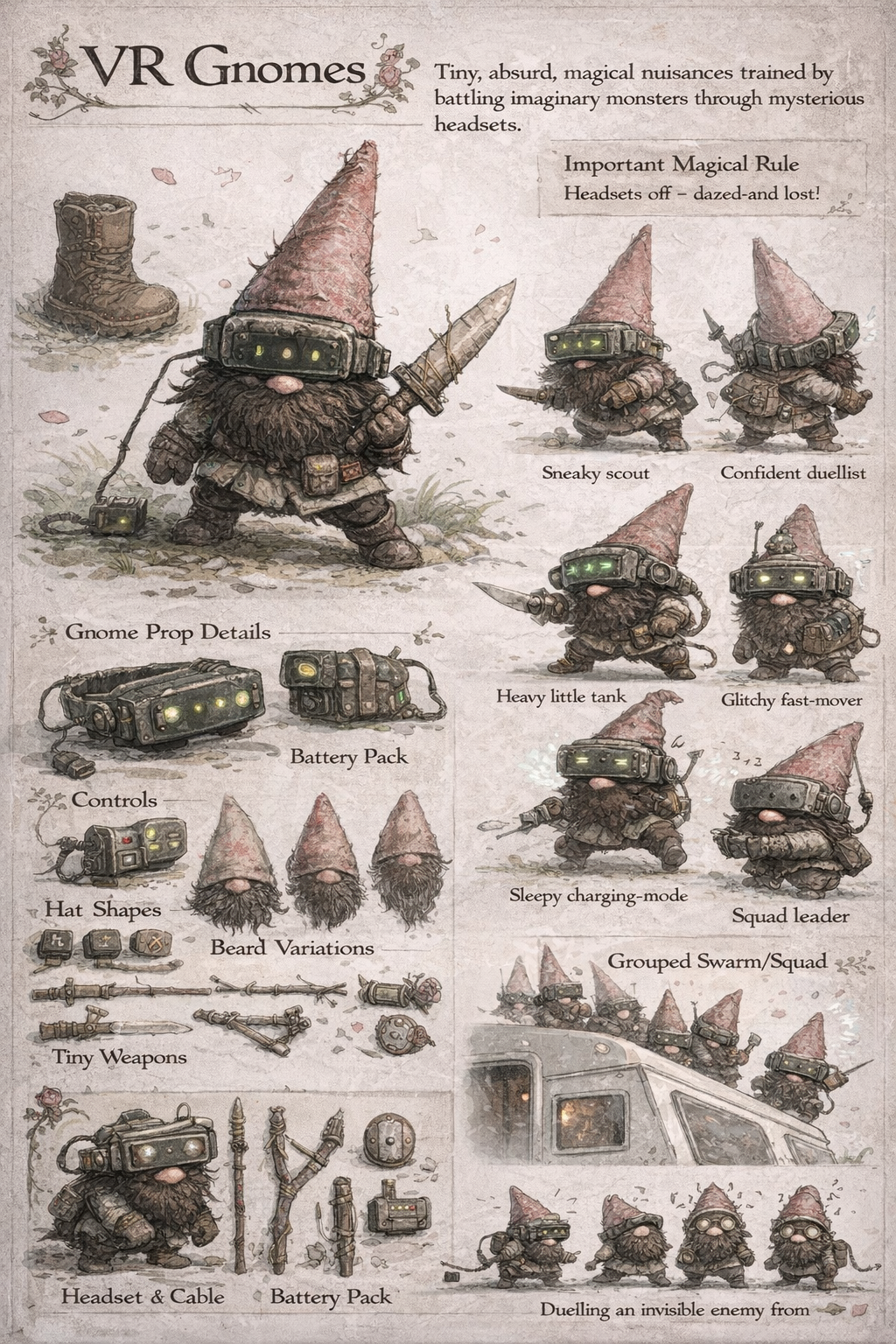](https://bookstack.thecartwrights.nz/uploads/images/gallery/2026-04/chatgpt-image-apr-3-2026-03-54-26-pm.png)
# Millie The Bear
[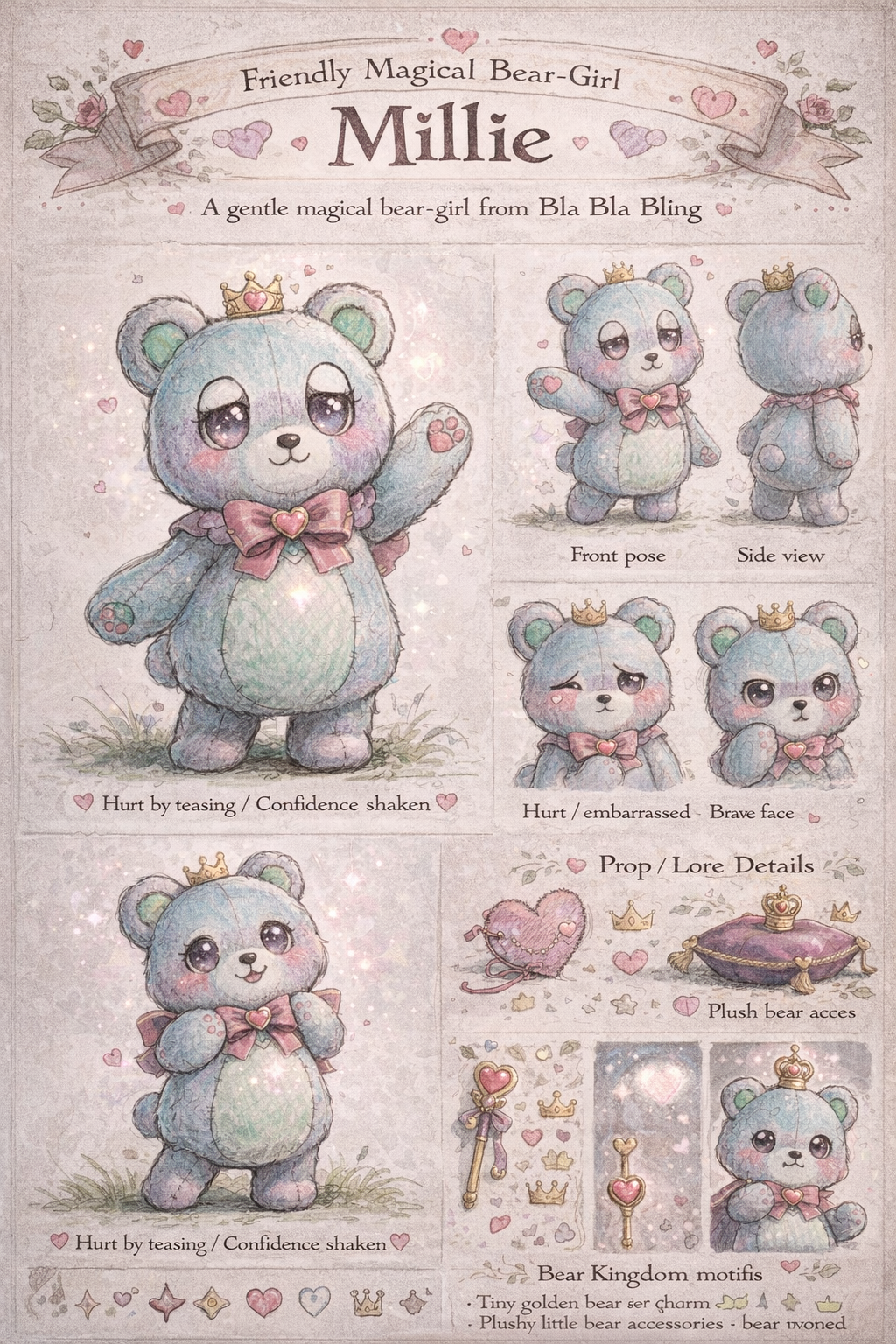](https://bookstack.thecartwrights.nz/uploads/images/gallery/2026-04/chatgpt-image-apr-3-2026-04-05-22-pm.png)
# The Track Eater
[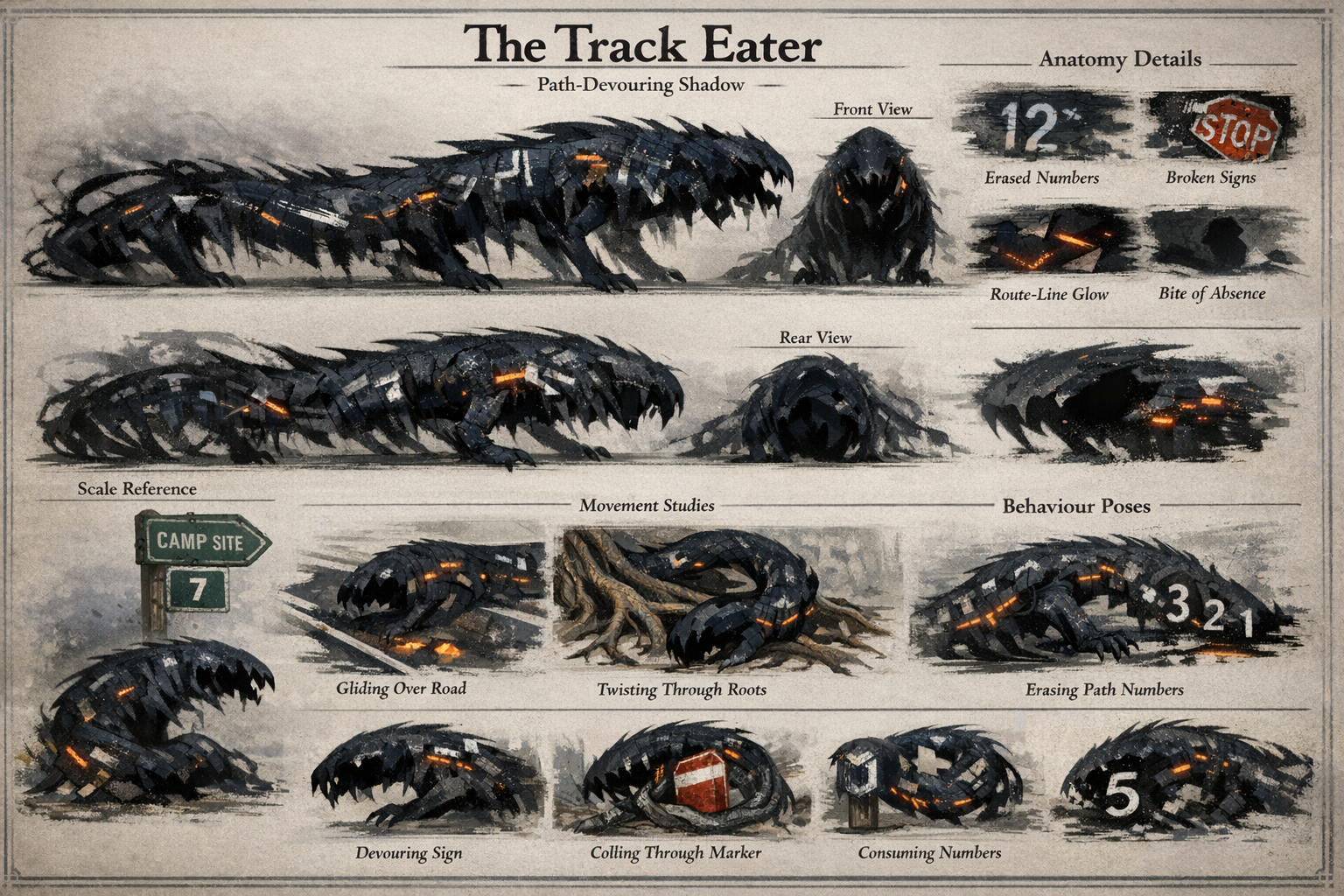](https://bookstack.thecartwrights.nz/uploads/images/gallery/2026-04/GASimage.png)
# The Grin
[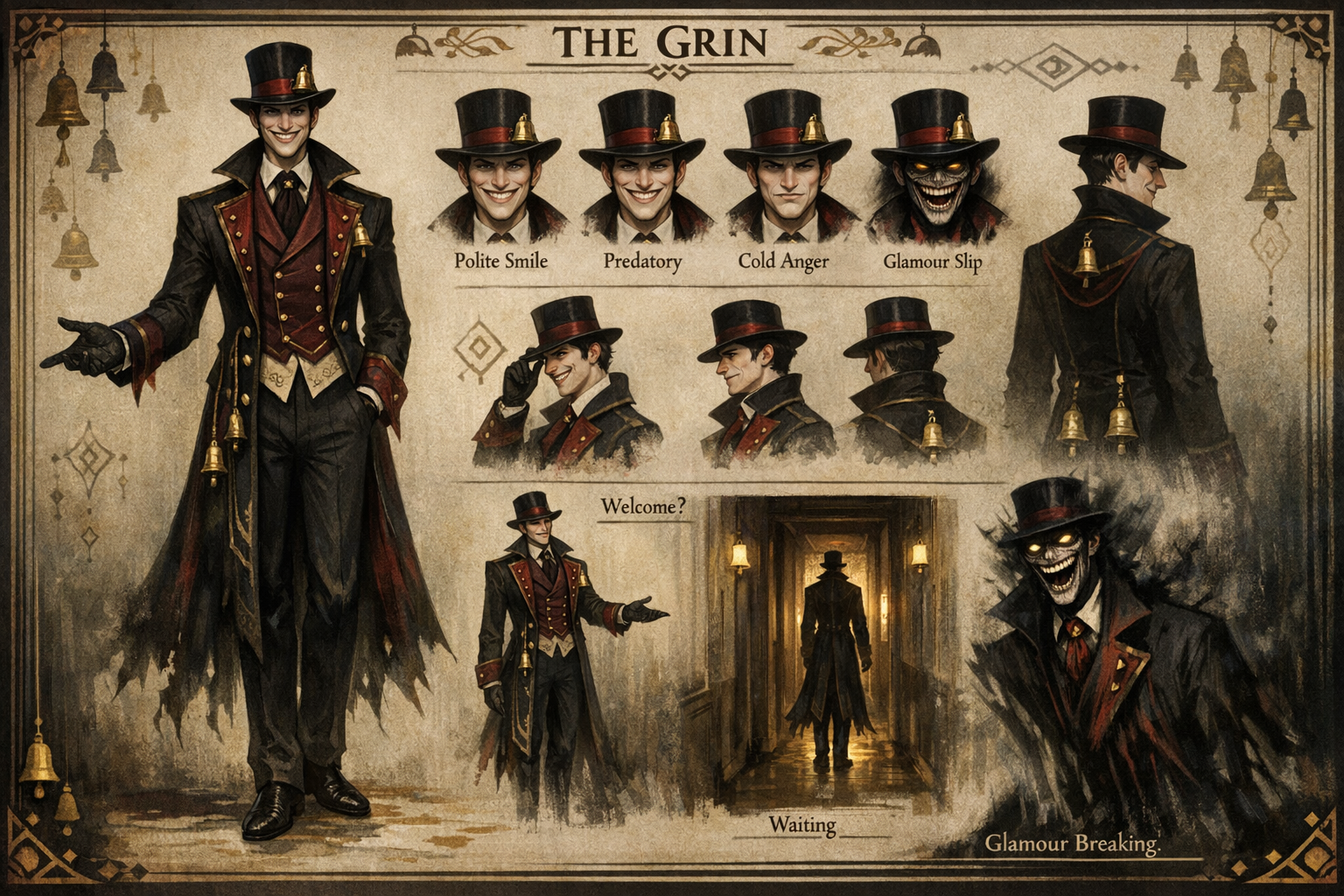](https://bookstack.thecartwrights.nz/uploads/images/gallery/2026-04/TsIimage.png)
[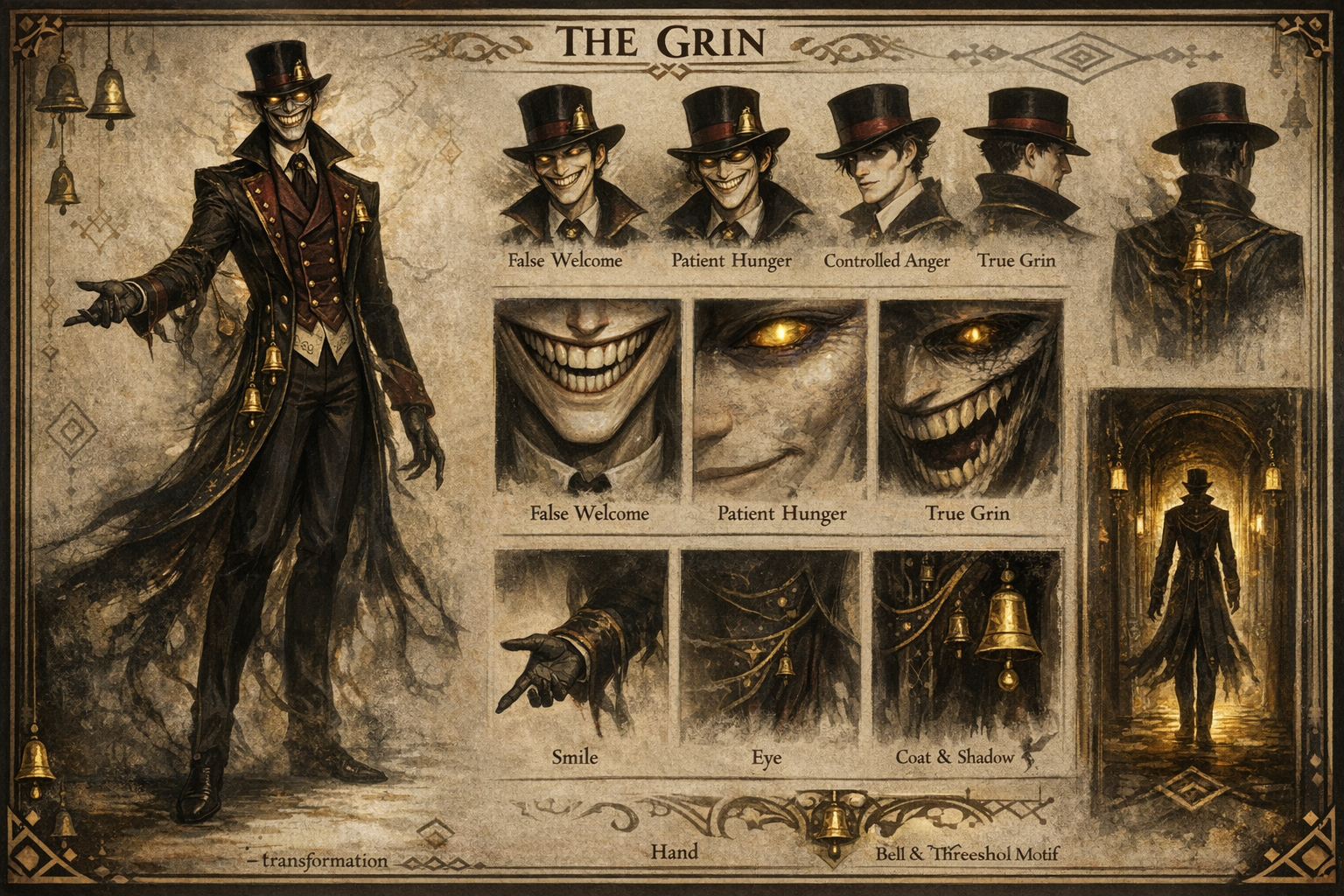](https://bookstack.thecartwrights.nz/uploads/images/gallery/2026-04/F9pimage.png)
# Locations
# Home
### Downstairs
[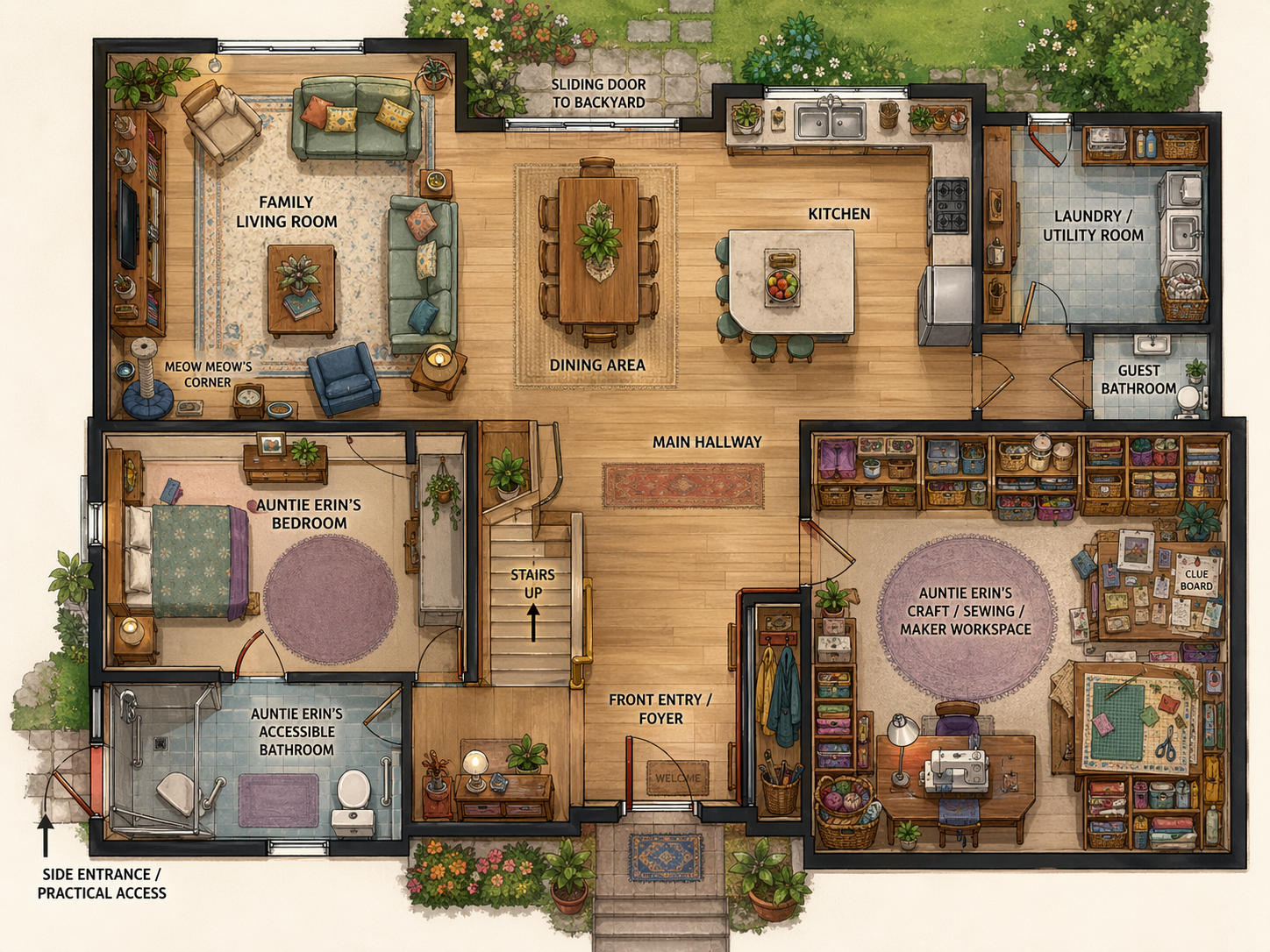](https://bookstack.thecartwrights.nz/uploads/images/gallery/2026-04/W5Iimage.png)
---
### Upstairs
[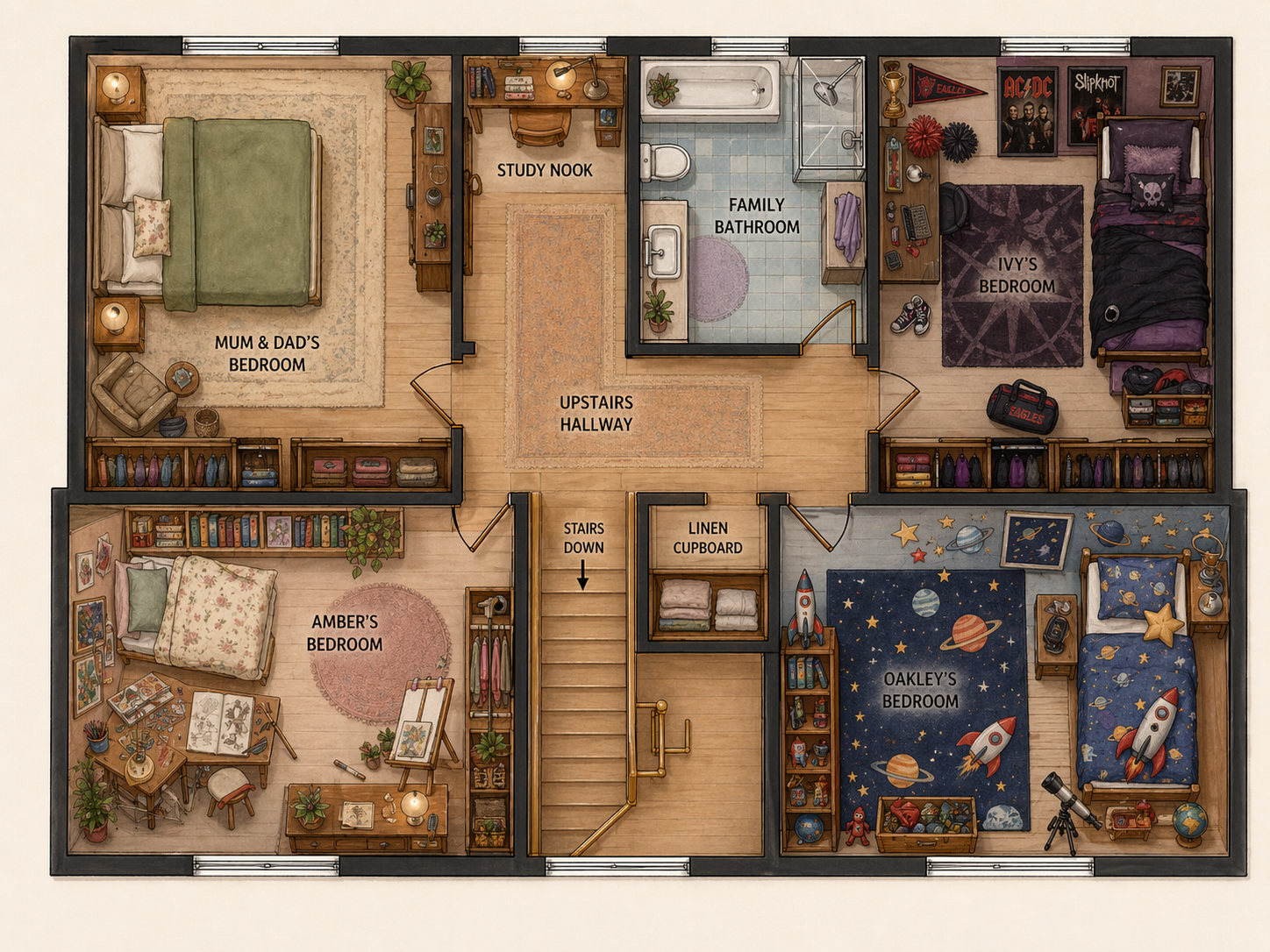](https://bookstack.thecartwrights.nz/uploads/images/gallery/2026-04/w4Nimage.png)